Home of Performance and AVANTCHA Unite to Transform Digital Tea Marketing

Dubai, UAE – July 2, 2024 – Home of Performance (HOP), Dubai’s go-to digital marketing consultancy, is excited to announce its new collaboration with AVANTCHA, a leading tea brand dedicated to redefining the modern tea experience. This collaboration is set to transform the digital presence of AVANTCHA through innovative Paid Media and SEO strategies.

With a mission to help consumers distill the beauty of tea, AVANTCHA redefines tea consumption through high-quality leaves, minimalist accessories, modern tea ceremonies, and educational programs. With brand offices in the UK, Switzerland, and Thailand, and a logistical headquarters in Dubai, AVANTCHA has established itself as a global player in the tea industry.

Home of Performance (HOP) is known for its data-driven approach to digital marketing, specializing in SEO, PPC, social media, content, email, web design, and analytics. By partnering with AVANTCHA, HOP aims to enhance the brand’s digital footprint, attract new customers, and increase online sales through tailored digital strategies.

“At Home of Performance, we pride ourselves on our ability to drive high-impact results through customer-focused strategies. Our partnership with AVANTCHA is a testament to our commitment to innovation and excellence in digital marketing,” said John von Hofsten, Managing Director at Home of Performance.

Home of Performance aims to enhance AVANTCHA’s online visibility through targeted SEO efforts to drive organic traffic, utilize paid media to reach a wider audience and boost brand awareness and leverage data to optimize digital journeys and guarantee exceptional service and results.

“With our combined expertise, we are confident that AVANTCHA will continue to set new standards in the tea industry, both online and offline,” added John von Hofsten from Home of Performance.

About Home of Performance

Home of Performance is a boutique digital marketing consultancy that employs a ‘Digital Partner’ approach. Specializing in digital transformation, HOP focuses on attracting clients and increasing online sales through comprehensive strategies covering SEO, PPC, social media, content, email, web design, analytics, and more.

Home of Performance Partners with Aesthetic International for Advanced Paid Media Services

Dubai, UAE – July 2, 2024 – Home of Performance (HOP), a leading digital marketing consultancy, proudly announces its latest partnership with Aesthetic International Plastic Surgery Clinic. This collaboration aims to enhance Aesthetic International’s digital presence through advanced paid media services, reinforcing HOP’s commitment to driving high-impact results in the digital marketing landscape.

Aesthetic International, established in 2011 by Dr. Jaffer Khan, has set the gold standard in plastic surgery, beauty, and wellness. The clinic is renowned for its quality, patient safety, and innovative techniques within a holistic, spa-like environment. Dr. Khan’s leadership and the clinic’s permanent team of expert physicians ensure consistent, high-quality care for all patients.

The partnership between Home of Performance and Aesthetic International signifies a major leap forward in digital marketing for the clinic. As Aesthetic International continues to uphold its reputation for excellence in plastic surgery, HOP’s data-driven strategies and expertise in paid media will further amplify the clinic’s reach and engagement with potential patients.

Home of Performance has consistently been at the forefront of digital marketing innovation. Known for its ‘Digital Partner’ approach, HOP leverages data to craft customer-focused strategies that drive online sales and enhance client engagement. This partnership will integrate HOP’s cutting-edge digital solutions with Aesthetic International’s renowned services, creating a seamless and impactful online presence.

“Our partnership with Aesthetic International represents a significant milestone for Home of Performance,” said John von Hofsten, Managing Director of HOP. “We are excited to bring our digital marketing expertise to such a prestigious clinic. This collaboration aligns perfectly with our commitment to delivering innovative and effective digital solutions.”

About Home of Performance

Home of Performance is a boutique digital marketing consultancy known for its ‘Digital Partner’ approach. We prioritize tangible value through data-driven strategies, helping businesses achieve digital transformation and increased online sales. Our experienced team excels in rapid client engagement, delivering high-impact results across SEO, PPC, social media, content marketing, web design, and analytics.

Home of Performance Teams Up with AEON Clinic for Paid Media Services

Dubai, UAE – July 2, 2024 – Home of Performance (HOP), a leading digital marketing agency, is thrilled to announce a new partnership with AEON Clinic, renowned for its cutting-edge regenerative treatments. This exciting collaboration aims to revolutionize the healthcare sector by leveraging advanced paid media services to enhance AEON Clinic’s reach and patient engagement.

At AEON Clinic, the journey towards optimal health begins with a thorough consultation, where a comprehensive review of medical history and a detailed physical assessment are conducted. This is followed by an extensive analysis using advanced medical tests to establish a complete health baseline. Based on this data, a personalized treatment plan is crafted, considering all aspects of the patient’s well-being. AEON Clinic’s follow-up program ensures sustained overall health and long-term benefits.

With this partnership, AEON Clinic and Home of Performance aim to bridge the gap between advanced medical treatments and effective digital marketing strategies. This collaboration will empower AEON Clinic to reach a broader audience and provide vital information about their groundbreaking treatments to those in need.

Home of Performance has a proven track record in digital marketing, specializing in maximizing the potential of marketing budgets through strategic planning and execution. By integrating HOP’s expertise with AEON Clinic’s medical excellence, the partnership is set to create transformative results in patient engagement and clinic growth.

“This partnership represents a major milestone for both AEON Clinic and Home of Performance,” said John von Hofsten, Managing Director at Home of Performance. “By combining our digital marketing expertise with AEON Clinic’s innovative medical treatments, we are poised to set a new standard in healthcare marketing and patient outreach.”

Home of Performance is committed to pushing the boundaries of digital marketing, ensuring that their clients achieve maximum visibility and engagement. This partnership with AEON Clinic is a testament to HOP’s dedication to delivering exceptional results through innovative strategies and personalized marketing solutions.

About Home of Performance

Home of Performance (HOP) is a leading digital marketing agency that offers a wide range of services, including digital marketing, web and mobile app development, and inbound marketing. With a team of experienced professionals and a focus on performance marketing, HOP helps businesses maximize their marketing budgets and achieve their goals. 

The Power of User-Generated Content: Turning Customers into Advocates

As opposed to the Black Box theory, User-Generated Content is part of the strategic mindset of an everyday marketer. The power of UGC is on the threshold where impressions, consumer retention and Customer Lifetime Value are essential factors for global brands making it to the big time. 

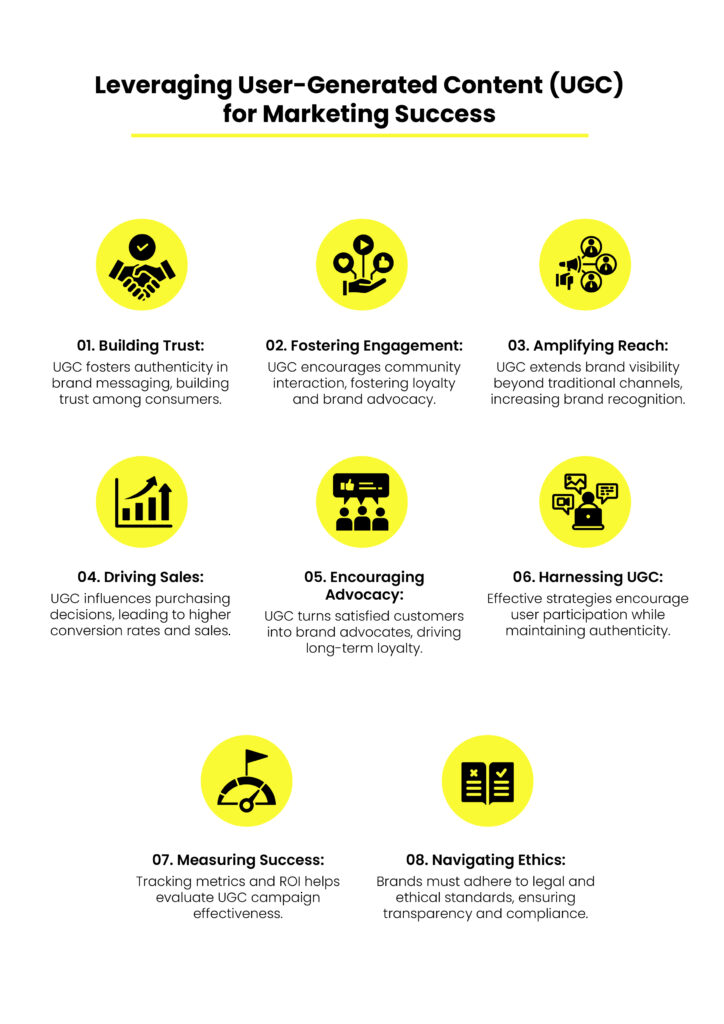
Essentially, UGC is defined by consumer advocates who craft lasting testimonials about your brand where active reach & engagement are core factors towards progressive marketing. From customer reviews to social media posts, UGC has evolved into a powerful tool for building trust, fostering community engagement, and driving brand advocacy. In today’s digital landscape, where consumers crave authenticity and genuine connections, UGC has emerged as a key driver of marketing success, influencing purchase decisions and shaping brand perception.

In this blog, we will explore how UGC has an unprecedented role in gaining loyal customer advocates, and its scope towards contemporary marketing strategies. 

Building Trust through Authenticity

User-Generated Content serves as a testament to the authenticity of a brand’s messaging. Authenticity is essential in today’s marketing landscape, with consumers seeking genuine experiences and connections with the brands they support. UGC, such as user stories and reviews, adds credibility and trustworthiness to brand messaging by showcasing real-life experiences and perspectives. When consumers see authentic content generated by their peers, they are more likely to trust the brand’s claims and form positive associations with the products or services offered.

Fostering Community Engagement

UGC plays a crucial role in fostering community engagement and strengthening relationships between brands and their customers. By encouraging users to share their experiences, opinions, and creative expressions, brands can create a sense of belonging and camaraderie within their community. Whether through social media platforms, online forums, or brand-sponsored events, UGC encourages participation and interaction, turning customers into active members of a brand’s community. This engagement deepens customer loyalty and provides valuable insights and feedback for brand improvement.

Amplifying Brand Reach and Awareness

One of the most significant benefits of UGC is its ability to extend brand reach beyond traditional marketing channels. When consumers share content related to a brand, they essentially become brand ambassadors, amplifying its message to their networks. UGC has a viral potential, capable of reaching audiences far beyond the brand’s immediate reach. Whether it’s a user-generated video going viral on social media or a blog post shared by influential users, UGC has the power to significantly increase brand awareness and recognition in the digital sphere.

Driving Conversion and Sales 

User-generated content plays a role in guiding purchase decisions and driving conversion rates. Customer testimonials, reviews, and visual UGC provide social proof and reassurance to potential buyers, influencing their purchasing behaviour. Studies have shown that consumers are more likely to trust recommendations from their peers than traditional advertising. By leveraging UGC in marketing campaigns, brands can create a sense of trust and credibility, leading to higher conversion rates and increased sales.

Encouraging Advocacy and Loyalty

UGC has the unique ability to turn satisfied customers into brand advocates, promoting loyalty and advocacy in the long run. When customers share their positive experiences with a brand, they not only endorse its products or services but also contribute to its reputation and credibility. Brand advocates are more likely to recommend the brand to others, defend it against criticism, and remain loyal customers over time. By fostering a community of brand advocates through UGC, brands can create a sustainable source of word-of-mouth marketing and drive long-term growth.

Harnessing UGC for Marketing Campaigns

To effectively leverage UGC in marketing campaigns, brands must implement strategies that encourage user participation and creativity. This may involve creating branded hashtags, running contests or challenges, or showcasing user-generated content on official brand channels. By actively involving customers in the creation and sharing of content, brands can harness the power of UGC to amplify their message and increase engagement. Additionally, brands should ensure that UGC aligns with their brand values and messaging to maintain authenticity and relevance.

Measuring Success and ROI

Measuring the success of UGC campaigns requires tracking key metrics that indicate engagement, reach, and conversion. Metrics such as engagement rates, shares, conversions, and customer acquisition costs can provide valuable insights into the effectiveness of UGC initiatives. Additionally, calculating UGC campaigns’ return on investment (ROI) involves comparing the costs associated with generating and promoting UGC against the resulting benefits, such as increased sales or brand loyalty. By monitoring these metrics and analysing the performance of UGC, brands can refine their strategies and optimise their marketing efforts for maximum impact.

Navigating Legal and Ethical Considerations

While UGC offers numerous benefits, brands must navigate legal and ethical considerations to ensure compliance and protect consumers and themselves. Issues such as copyright infringement, privacy violations, and misleading advertising can arise when using UGC in marketing campaigns. To mitigate these risks, brands should establish clear guidelines for user-generated content creation and distribution, obtain permission from content creators, and adhere to relevant laws and regulations. Transparency and honesty are crucial in maintaining ethical standards and building trust with consumers.

Future Trends and Innovations

The evolution of UGC in marketing strategies is expected to continue, driven by emerging technologies and changing consumer behaviours. Innovations such as augmented reality (AR), virtual reality (VR), and interactive content will offer new avenues for user engagement and creativity. Additionally, the rise of social commerce and influencer marketing will reshape how brands leverage UGC to drive sales and brand advocacy. By keeping track of trends and embracing technological innovations, brands can remain competitive and relevant in an ever-evolving digital landscape.

Through authenticity, community engagement, amplified brand reach, and measurable impact on conversions and loyalty, UGC has proven its effectiveness time and again. As brands navigate the evolving landscape of digital marketing, embracing UGC not only enhances brand credibility but also fosters genuine relationships with consumers. 

By leveraging UGC strategically, brands can harness the power of authentic storytelling and advocacy to drive marketing success in the digital age. As technology advances and consumer behaviours evolve, the role of UGC will continue to grow, shaping the future of marketing strategies and redefining the way brands engage with their audience.

The Evolving Role of Chatbots: Enhancing Customer Experience in 2024

Where would we be if chatbots didn’t deliver the follow-up protocol in website campaigns and promotional offers? Surely, marketers would probably be floundering in excessive and obsolete roles. In 2024, chatbots have delivered the stellar customer experience by supplementing the role of adjunct where user queries become their bottom-line powerhouse. Essentially, chatbots receive, iterate and communicate the logistics role like a machine-learning superior. 

In today’s digital landscape, chatbots have emerged as powerful tools for businesses to enhance customer satisfaction and streamline operations. Acknowledging the ongoing evolution of chatbots, it’s crucial to understand their impact on customer interactions and the role they play in shaping the overall customer experience. 

In this blog, we will highlight the relationship and role of chatbots in enhancing customer experience as of 2024, spotlighting the benefits they provide. 

Advanced Conversational Capabilities

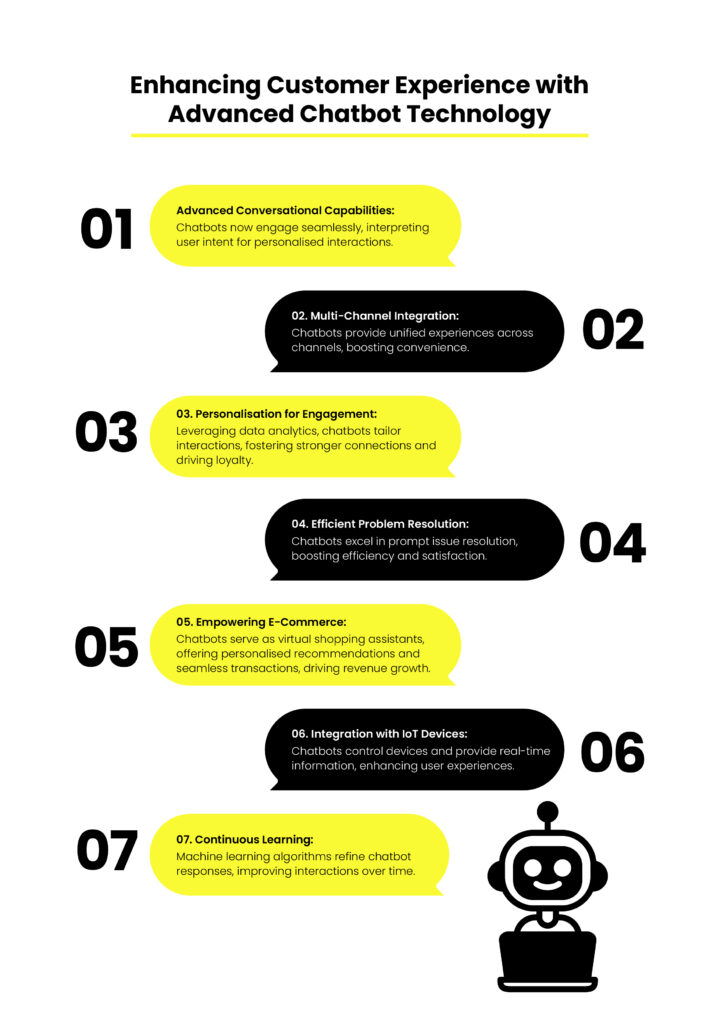
With advancements in artificial intelligence and natural language processing (NLP), chatbots have significantly enhanced their conversational skills. These technological advancements enable chatbots to understand and respond to user queries with human-like fluency, facilitating seamless interactions. Through NLP, chatbots can interpret user intent, context, and sentiment, allowing for more personalised and contextually relevant conversations.

Multi-Channel Integration

Chatbots extend their reach across various communication channels, ensuring consistent and engaging conversations regardless of the platform. Whether through websites, mobile apps, social media platforms, or messaging applications, chatbots provide users with a unified experience across channels. By integrating seamlessly into multiple channels, chatbots enable businesses to meet customers wherever they are, enhancing accessibility and convenience.

Personalisation for Improved Engagement

One of the key strengths of chatbots lies in their ability to personalise conversations based on user preferences and history. By leveraging data analytics and machine learning algorithms, chatbots can tailor interactions to each user’s unique needs, preferences, and past behaviour. This personalised approach not only increases engagement but also fosters stronger connections between businesses and their customers, ultimately driving loyalty and retention.

Efficient Problem Resolution

Chatbots excel in addressing customer queries and issues promptly, contributing to streamlined customer support processes. Through instant responses and round-the-clock availability, chatbots ensure that customers receive timely assistance, leading to faster problem resolution and improved satisfaction levels. By automating routine tasks and handling common inquiries, chatbots free up human agents to focus on more complex and high-value interactions, maximising efficiency and productivity.

Empowering E-Commerce Experiences

In the realm of e-commerce, chatbots serve as virtual shopping assistants, guiding customers through their purchase journey and providing personalised recommendations. By leveraging customer data and product information, chatbots offer tailored product suggestions, answer product-related queries, and facilitate transactions seamlessly. This interactive and personalised shopping experience enhances user satisfaction and increases conversion rates, driving revenue growth for businesses.

Ensuring Data Security and Privacy

Businesses must implement robust measures to safeguard customer information, including encryption protocols, data anonymisation techniques, and secure authentication processes. By prioritising data security and privacy, businesses can build trust with customers, mitigating the risk of data breaches and ensuring compliance with regulatory requirements such as GDPR.

Integration with IoT Devices

Chatbots play a pivotal role in enhancing user experiences in IoT ecosystems, particularly in smart homes and offices. By integrating with IoT devices, chatbots can control connected devices, such as smart thermostats, lights, and appliances, through voice commands or text-based interactions. Additionally, chatbots provide users with real-time information about device status, energy consumption, and usage patterns, empowering them to make informed decisions and optimise their smart home or office environment.

Continuous Learning and Adaptation

One of the key strengths of chatbots is their ability to learn from interactions and adapt to changing customer needs. Through machine learning algorithms, chatbots analyse past interactions, identify patterns, and continuously improve their responses over time. By leveraging user feedback and data analytics, chatbots can refine their conversational skills, understand user preferences better, and anticipate future inquiries, leading to more effective and personalised interactions.

Measuring Success Through Analytics

Analytics play a crucial role in measuring the effectiveness of chatbot interactions and optimising performance. Businesses can track key metrics such as conversation completion rates, response times, customer satisfaction scores, and conversion rates to evaluate the impact of chatbots on business outcomes. By analysing these metrics, businesses can identify areas for improvement, refine conversational flows, and optimise chatbot functionality to better meet customer needs and drive desired outcomes.

Ethical Considerations and Transparency

As chatbots become more pervasive in customer interactions, addressing ethical concerns and promoting transparency is essential. Businesses must be mindful of potential biases in chatbot algorithms and ensure fairness and equity in their interactions with users. Moreover, transparency in chatbot interactions, including disclosing the use of AI and providing clear information about data handling practices, helps build trust and credibility with users, fostering positive relationships and enhancing the overall customer experience.

Future Trends and Innovations

Looking ahead, the future of chatbot technology holds exciting possibilities for enhancing customer experiences. Emerging trends such as voice-enabled chatbots, powered by natural language understanding and speech recognition technologies, offer a more intuitive and hands-free interaction experience for users. Additionally, AI-driven personalisation enables chatbots to deliver highly tailored recommendations, content, and experiences, further enriching the customer journey and driving business success. As chatbots continue to evolve, businesses must stay abreast of these innovations to remain competitive and deliver exceptional customer experiences in the years to come.

In conclusion, chatbots have emerged as indispensable tools for businesses seeking to enhance customer experience and drive business success in 2024. From advanced conversational capabilities to personalised interactions and continuous learning, chatbots offer a myriad of benefits for both businesses and consumers alike. 

Chatbots are essentially a marketer’s ally in overlooking the social sustenance of a brand’s presence, where they can be programmed to meet the KPI standards and the dynamic scale for which they are built. By embracing ethical practices, prioritising data security and privacy, and leveraging emerging technologies, businesses can harness the full potential of chatbots to create meaningful connections with customers and stay ahead in today’s competitive market landscape. For more on marketing advancements tailored to your business, contact us today!

Voice Search Optimization: A Must-Have for Digital Marketers in 2024

In the ever-evolving landscape of digital marketing, staying ahead of the curve is essential. As we venture into 2024, one trend continues to gain momentum and shape the way consumers interact with technology: voice search. With the proliferation of smart devices and virtual assistants, optimizing for voice search has become a paramount strategy for digital marketers looking to stay relevant and visible to their target audience.

Voice search has rapidly transformed from a novelty to a mainstream method of accessing information. Whether it’s through smart speakers, smartphones, or even smart home appliances, people are increasingly turning to voice commands to perform searches, make inquiries, and execute tasks. This shift in consumer behavior presents both challenges and opportunities for marketers.

So, what exactly is voice search optimization (VSO), and why is it crucial for digital marketers in 2024?

Understanding Voice Search Optimization

Voice search optimization involves tailoring your digital content and SEO strategies to better align with the way people speak and ask questions when using voice-enabled devices. Unlike traditional text-based searches, voice queries tend to be more conversational and natural-sounding. Therefore, optimizing for voice search requires a different approach than traditional SEO tactics.

Why Voice Search Matters in 2024

The continued rise of voice search can be attributed to several factors:

Growing Adoption of Voice-Activated Devices: Smart speakers like Amazon Echo and Google Home are becoming ubiquitous in households worldwide. Additionally, voice assistants like Siri, Google Assistant, and Alexa are integrated into smartphones and other devices, further driving the adoption of voice search.

Convenience and Efficiency: Voice search offers a hands-free and efficient way to access information, especially in situations where typing is impractical or unsafe, such as while driving or cooking.

Improvements in Natural Language Processing (NLP): Advances in NLP technology have made voice assistants more adept at understanding and interpreting conversational queries, enhancing the user experience and encouraging more people to embrace voice search.

Mobile Search Dominance: With the increasing prevalence of smartphones, voice search has become an integral part of mobile search behavior. As mobile usage continues to soar, optimizing for voice search is essential for maintaining visibility in search engine results.

Key Strategies for Voice Search Optimization

To effectively optimize for voice search in 2024, digital marketers should consider the following strategies:

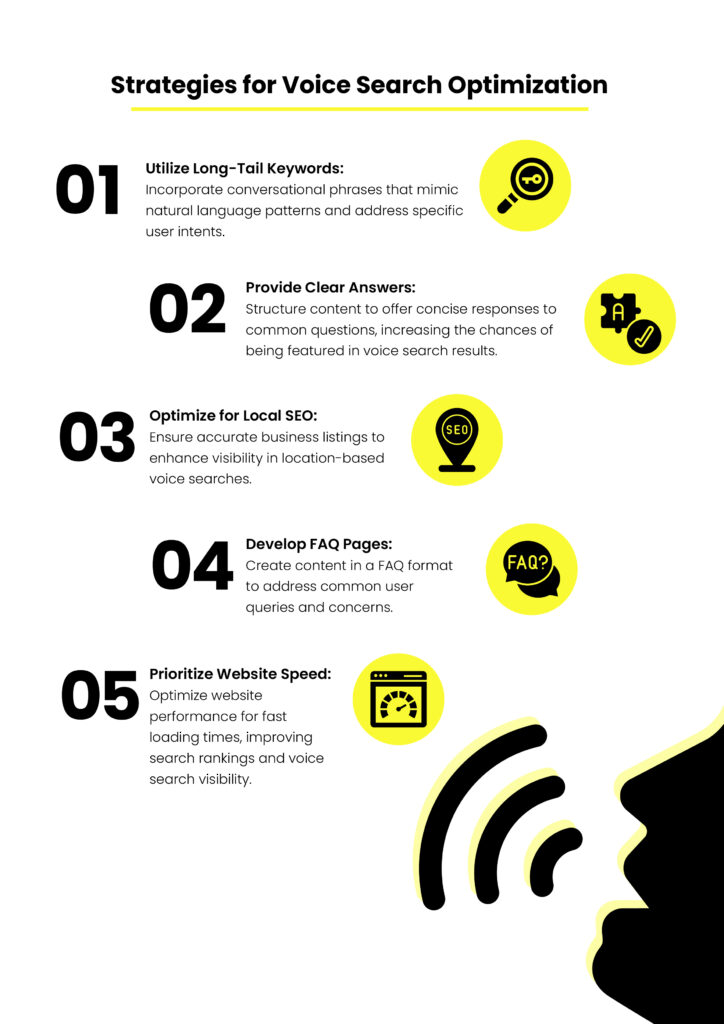
Focus on Long-Tail Keywords: Voice searches tend to be longer and more conversational than text-based queries. Incorporate long-tail keywords and phrases that mimic natural language patterns and address specific user intents.

Provide Concise and Direct Answers: Voice assistants often prioritize featured snippets or direct answers from search results. Structuring your content to provide clear and concise answers to common questions can increase the likelihood of being featured in voice search results.

Optimize for Local Search: Many voice searches are location-based, with users seeking information about nearby businesses, services, or attractions. Ensure your business listings are accurate and optimized for local SEO to improve visibility in voice search results.

Create FAQ Pages and Conversational Content: Develop content that addresses common questions and concerns related to your industry or niche. Structuring this content in a FAQ format or using conversational language can enhance its compatibility with voice search queries.

Improve Website Loading Speed: Fast-loading websites are essential for a positive user experience, particularly on mobile devices. Optimize your website’s performance to ensure quick loading times, which can positively impact your search rankings and visibility in voice search results.

Emerging Technologies in Voice Search

Voice search has emerged as a transformative technology, revolutionizing how users interact with the digital world. This paradigm shift in search behavior has profound implications for businesses and marketers, as they strive to adapt their strategies to meet the evolving needs of consumers.

Integration of Artificial Intelligence (AI)

The advent of Artificial Intelligence (AI) has revolutionized voice search technology. AI algorithms power voice recognition systems, enabling devices to understand and respond to natural language queries effectively. As AI continues to evolve, voice search capabilities are becoming increasingly sophisticated, providing more accurate and personalized results to users.

Voice-Activated Devices and Smart Assistants

Voice-activated devices and smart assistants have become ubiquitous in modern households. From smartphones to smart speakers, these devices allow users to perform a wide range of tasks simply by speaking commands. As the technology behind these devices advances, they are becoming integral parts of daily life, influencing how people search for information and interact with technology.

Impact on SEO and Content Creation

Adapting Keyword Strategies for Conversational Queries

Traditional keyword strategies are evolving to accommodate conversational queries in voice search. Unlike typed searches, voice queries tend to be more conversational and natural-sounding. SEO practitioners must adapt by optimizing content for long-tail keywords and phrases that reflect how people speak rather than type.

Crafting Concise and Informative Responses

In the realm of voice search, brevity is key. Content creators must focus on delivering concise yet informative responses to voice queries. By providing direct answers to questions, websites can enhance their chances of being featured as a top result in voice search results, thereby improving their visibility and traffic.

Challenges and Opportunities in Voice Search Optimization

Next, we will delve into some challenges and opportunities we currently face when using Voice Search Optimization.

Addressing Privacy Concerns

As voice search technology becomes more prevalent, concerns about privacy and data security have arisen. Users may be apprehensive about sharing personal information with voice-enabled devices. Optimizing voice search strategies involves addressing these concerns by implementing robust privacy measures and transparent data policies.

Harnessing the Potential for Local Businesses

Voice search presents significant opportunities for local businesses to reach their target audience. Optimizing for local SEO and ensuring accurate business information across online directories and platforms can help businesses capitalize on voice search queries related to local products and services.

User Experience and Accessibility

Ensuring that websites are designed to be accessible to all users, including those with disabilities, and providing an intuitive and seamless experience for voice-enabled devices are crucial aspects of optimizing for voice search. In this section, we will explore how prioritizing user experience and accessibility can enhance the effectiveness of voice search strategies and improve overall engagement with your digital content.

Prioritizing Website Accessibility

Accessibility is a crucial aspect of voice search optimization. Websites must be designed and developed to ensure compatibility with screen readers and other assistive technologies. By prioritizing accessibility, businesses can cater to a wider audience and improve the overall user experience.

Enhancing User Experience for Voice-Enabled Devices

Optimizing the user experience for voice-enabled devices involves designing intuitive interfaces and streamlined interactions. Websites should be optimized for voice navigation, ensuring that users can easily access and interact with content using voice commands.

Cross-Platform Integration

Cross-platform integration is becoming increasingly vital in the era of voice search optimization. As users interact with various devices and platforms, consistency in information and user experience across different channels is essential. In this section, we will discuss the importance of coordinating voice search efforts across platforms and ensuring uniformity in information to maximize visibility and effectiveness in reaching your target audience.

Coordinating Voice Search Efforts Across Platforms

Consistency is key when optimizing for voice search across multiple platforms. Businesses must coordinate their voice search efforts to ensure uniformity in information and user experience across different devices and platforms.

Ensuring Consistency in Information

Inconsistencies in business information can negatively impact voice search performance. It’s essential to maintain accurate and up-to-date information across all online channels, including websites, directories, and social media platforms, to improve visibility and credibility in voice search results.

Metrics and Analytics for Voice Search

By developing key performance indicators (KPIs) tailored to voice search metrics and leveraging analytics tools, businesses can gain valuable insights into user behavior and optimize their content accordingly. In this section, we will explore the metrics used to measure voice search performance and discuss how analytics can be utilized to refine optimization strategies and drive success.

Developing KPIs for Voice Search Performance

Measuring the effectiveness of voice search optimization requires the development of key performance indicators (KPIs) tailored to voice search metrics. Metrics such as voice search traffic, conversion rates, and position in voice search results can provide valuable insights into the success of optimization efforts.

Utilizing Analytics to Refine Optimization Strategies

Analyzing voice search data can help businesses refine their optimization strategies over time. By identifying patterns and trends in user behavior, businesses can make data-driven decisions to improve their voice search performance and enhance overall visibility and engagement.

Voice Search in E-Commerce

In this section, we will explore how voice search is transforming the way people discover and purchase products online. From optimizing product listings for voice queries to leveraging AI-driven recommendation engines, we will delve into the strategies that e-commerce businesses can employ to capitalize on the growing popularity of voice search and enhance their competitiveness in the digital marketplace.

Streamlining Voice-Enabled Shopping Experiences

Voice search is reshaping the e-commerce landscape by offering seamless shopping experiences through voice-enabled devices. E-commerce businesses can optimize product listings and checkout processes for voice search, allowing users to browse, search, and purchase products using voice commands.

Leveraging Voice Search for Product Discovery

Voice search presents opportunities for e-commerce businesses to enhance product discovery and recommendation processes. By implementing AI-driven recommendation engines and personalized shopping experiences, businesses can leverage voice search to showcase relevant products to users based on their preferences and browsing history.

Future Trends in Voice Search

As technology continues to advance and consumer behavior evolves, voice search optimization will remain a critical focus for digital marketers. The integration of AI, machine learning, and natural language processing will further refine voice assistants’ capabilities, making voice search an even more integral part of everyday life.

Predictive Insights and Anticipatory Search

The future of voice search lies in predictive insights and anticipatory search capabilities. AI-powered algorithms will analyze user data and behavior to anticipate their needs and provide proactive assistance before they even voice a query. This anticipatory approach will further streamline the user experience and drive greater efficiency in information retrieval.

Evolving Role of Voice Search in Emerging Technologies

Voice search is poised to play a central role in emerging technologies such as augmented reality (AR) and virtual reality (VR). As these technologies become more integrated into everyday life, voice commands will serve as a natural and intuitive means of interaction, allowing users to control and navigate virtual environments with ease.

As voice search continues to evolve and reshape the digital landscape, businesses must adapt their strategies to capitalize on its potential and provide seamless experiences to users across all touchpoints. By staying abreast of emerging trends and leveraging innovative technologies, businesses can position themselves for success in an increasingly voice-driven world.

In conclusion, embracing voice search optimization is no longer optional for digital marketers—it’s a necessity for staying competitive and reaching your target audience in 2024 and beyond. By understanding the nuances of voice search behavior and implementing targeted strategies, businesses can position themselves for success in an increasingly voice-centric digital landscape.

The Role of Influencer Marketing in 2024: Trends and Best Practices

In recent years, influencer marketing has transformed the landscape of digital advertising, offering brands a unique opportunity to connect with their target audience through trusted personalities on social media platforms. 

As we step into 2024, the evolution of influencer marketing continues to unfold, presenting new trends and strategies that redefine the way brands engage with consumers. Gone are the days of traditional advertising methods; today, consumers crave authenticity and genuine connections with the brands they support. Influencer marketing has emerged for its authenticity in the digital age, offering brands the opportunity to leverage the trust and credibility of influential personalities on social media platforms to drive engagement, boost brand awareness, and ultimately, increase sales. 

In this blog post, we will explore the latest trends shaping the influencer marketing landscape in 2024, from the rise of micro-influencers to the integration of advanced analytics and metrics, highlighting the strategies brands are employing to stay ahead in this ever-evolving field.

Rise of Micro-Influencers

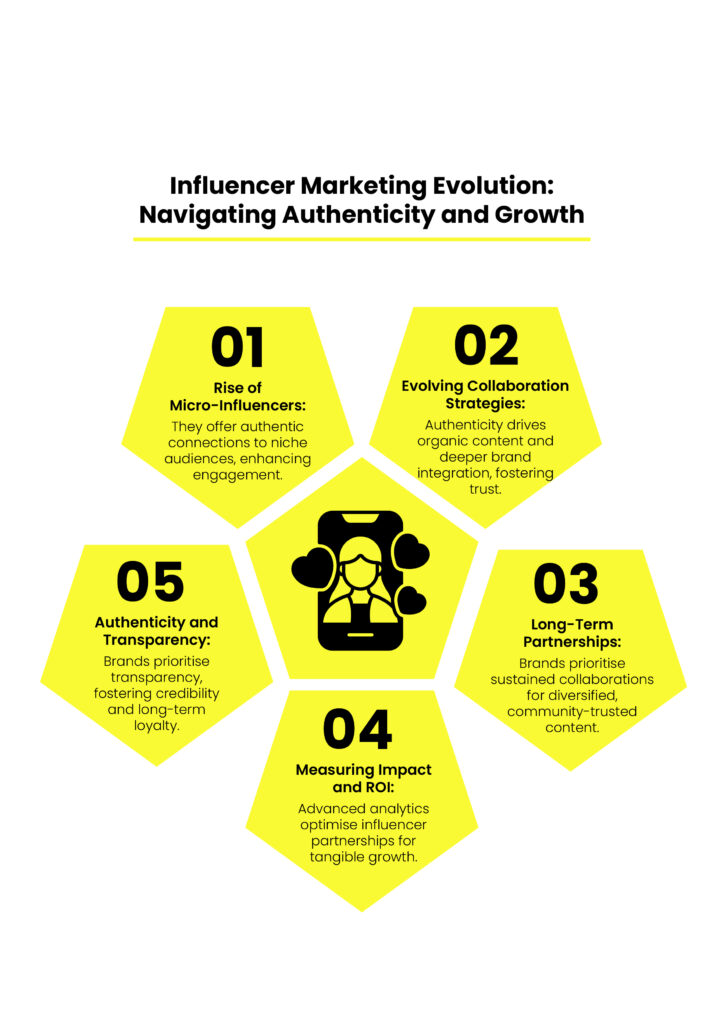
In recent years, the influencer marketing landscape has seen the rise of micro-influencers, offering brands a chance to connect with niche audiences authentically. Collaboration strategies are evolving to prioritise authenticity, leading to more organic content and deeper brand integration, fostering higher levels of consumer engagement and trust.

  • Emergence of New Platforms

In recent years, we’ve witnessed the rise of micro-influencers as a driving force in the influencer marketing landscape. These individuals, with smaller yet highly engaged followings, offer brands an opportunity to reach niche audiences more authentically and cost-effectively. With the emergence of new platforms catering to micro-influencers, such as TikTok, brands now have access to a diverse pool of content creators who can deliver targeted and relatable messaging to their audience.

  • Evolving Collaboration Strategies

As brands embrace micro-influencers, collaboration strategies are evolving to prioritise authenticity and genuine connections. Rather than focusing solely on reach and engagement metrics, brands are now seeking partnerships with influencers who align with their values and resonate with their target audience. This shift towards authenticity has led to more organic and relatable content, driving higher levels of engagement and trust among consumers. Additionally, brands are exploring long-term partnerships with micro-influencers, allowing for deeper integration of their products or services into the influencer’s content, thereby enhancing brand affinity and loyalty.

Long-Term Partnerships

In 2024, influencer marketing is witnessing a notable shift towards long-term partnerships, allowing brands to diversify content and foster deeper engagement with their audience. Brands are increasingly prioritising accurate measurement of impact and return on investment (ROI), leveraging advanced analytics to optimise influencer partnerships and drive sustainable growth.

  • Diversification of Content

In 2024, long-term partnerships between brands and influencers are becoming increasingly prevalent as businesses recognise the value of sustained and authentic collaborations. These partnerships go beyond simple one-off campaigns, allowing brands to diversify their content and engage with their audience on a deeper level. By working closely with influencers over an extended period, brands can co-create content that resonates with their target demographic, fostering a sense of community and trust around the brand.

  • Measuring Impact and ROI

As brands invest more heavily in long-term partnerships with influencers, the need for accurate measurement of impact and return on investment (ROI) becomes integral. In 2024, brands are leveraging advanced analytics and metrics to track the effectiveness of their influencer marketing campaigns, from brand awareness and engagement metrics to actual sales attribution. By analysing key performance indicators (KPIs) and refining their strategies based on data-driven insights, brands can optimise their influencer partnerships to achieve tangible business objectives and drive sustainable growth.

Advanced Analytics and Metrics

Influencer marketing sees a significant advancement with the integration of advanced analytics and metrics into e-commerce platforms, enabling brands to track the impact of influencer collaborations on sales conversions. Brands prioritise collaborations with influencers who prioritise authenticity and transparency, fostering trust and credibility with their audience and driving long-term loyalty.

  • Integration with E-commerce

One of the most significant advancements in influencer marketing in 2024 is the integration of advanced analytics and metrics with e-commerce platforms. Brands are leveraging data-driven insights to track the entire customer journey, from initial engagement with an influencer’s content to the final purchase decision. By integrating influencer marketing efforts with e-commerce platforms, brands can attribute sales directly to specific influencer collaborations, providing a clear ROI and enabling more targeted and efficient marketing strategies.

  • Authenticity and Transparency

In an age of heightened consumer awareness, authenticity and transparency have become intrinsic to influencer marketing. Brands are placing a greater emphasis on working with influencers who embody these values and are willing to disclose sponsored content transparently. Influencers, in turn, are prioritising authenticity in their collaborations, ensuring that sponsored content aligns with their personal brand and resonates with their audience. By fostering genuine connections and transparent communication, brands can build trust and credibility with their target audience, ultimately driving long-term loyalty and brand advocacy.

Focus on Authenticity

As influencer marketing regulations continue to evolve, brands and influencers must prioritise understanding their legal obligations and responsibilities. This includes accurately disclosing sponsored content, adhering to advertising standards, and complying with consumer protection laws. By staying informed about the latest regulations and seeking legal counsel when necessary, brands and influencers can mitigate the risk of facing penalties or damaging their reputation due to non-compliance.

To maintain authenticity and trust with their audience, brands and influencers are increasingly implementing transparency measures in their influencer marketing campaigns. This includes clearly labelling sponsored content, providing honest reviews and opinions, and disclosing any material connections between the influencer and the brand. By prioritising transparency, brands and influencers comply with regulatory requirements and foster genuine relationships with their audience based on honesty and authenticity.

In conclusion, influencer marketing in 2024 is characterised by a focus on authenticity, data-driven strategies, and long-term partnerships. As brands continue to adapt to the evolving landscape of digital advertising, influencer marketing remains a powerful tool for connecting with consumers in meaningful and impactful ways. By embracing emerging trends and prioritising genuine connections with influencers and their audience, brands can drive engagement, foster loyalty, and achieve sustainable growth in the ever-changing world of influencer marketing.

Hyper-Personalisation – Crafting Targeted Campaigns for Maximum Impact

Where consumers wield unprecedented control over their online experiences, traditional one-size-fits-all marketing approaches are quickly becoming obsolete. As the demand for tailored interactions continues to soar, brands are turning to hyper-personalisation as the essential driver of their marketing strategies. 

This evolution into hyper-personalisation has rendered marketers to question their mechanised approaches in spearheading campaigns, where stellar agent-customer relationships, divergent web mock-ups and the phygital scenario are now dominating the marketing field. We aim to divulge insights into individual preferences, behaviours, and interests to craft highly targeted campaigns that resonate with each customer on a profoundly personal level.

 In this blog on hyper-personalisation’s power, we delve into its transformative potential, from redefining consumer expectations to revolutionising the very fabric of customer engagement and brand loyalty.

The Power of Hyper-Personalisation

As digital consumers raise the bar for personalised interactions, hyper-personalisation becomes an important facet of effective marketing strategies, offering brands the key to unlocking lasting engagement and loyalty.

  • Defining Hyper-Personalisation

Hyper-personalisation goes beyond basic personalization by diving into the intricate details of individual preferences, behaviours, and interests. It involves crafting highly targeted marketing messages and experiences that resonate with each customer on a personal level, fostering stronger connections and driving meaningful interactions. Unlike traditional marketing approaches, which often rely on generalised messaging, hyper-personalisation recognises that one size does not fit all and tailors content to match the unique needs of each consumer.

  • Understanding Consumer Expectations

In the digital age, consumer expectations have undergone a significant transformation. Audiences now expect personalised experiences across all touchpoints, from the moment they interact with a brand to the post-purchase journey. This shift is driven by an increasing desire for relevance, authenticity, and convenience. Consumers want brands to understand their preferences, anticipate their needs, and provide solutions that cater to their individual lifestyles. Hyper-personalisation addresses these evolving expectations by delivering tailored content, recommendations, and offers that resonate with each customer on a personal level.

Leveraging Data for Precision

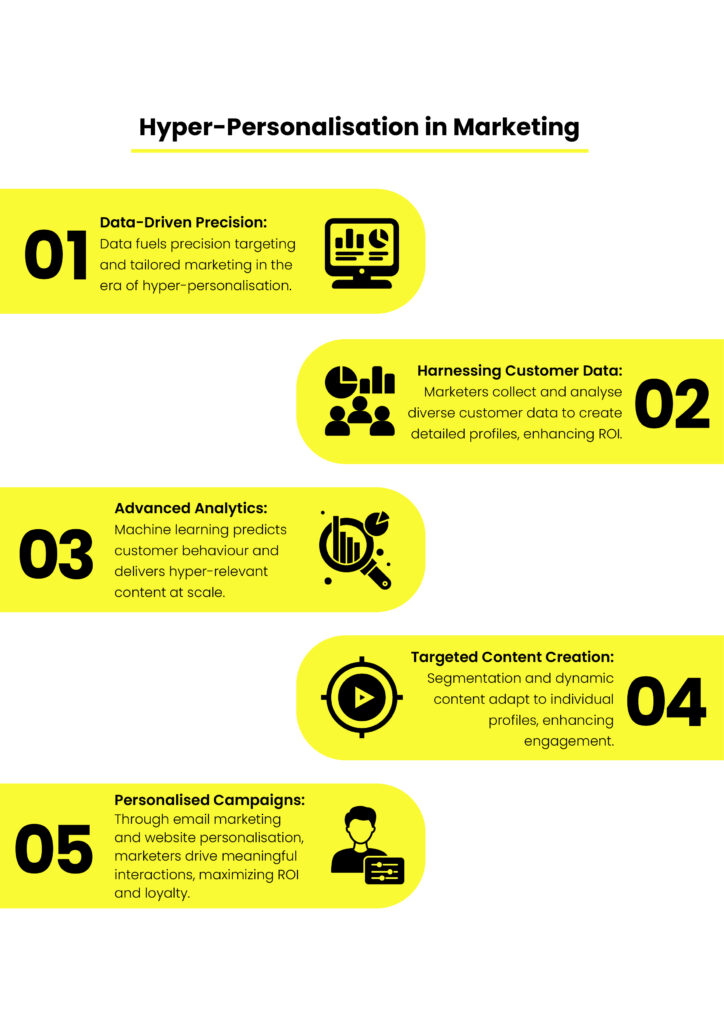
In the era of hyper-personalisation, data is the fuel that drives precision targeting and tailored marketing campaigns. By harnessing a diverse array of customer data sources, marketers gain invaluable insights into consumer preferences and behaviours, enabling them to create personalised experiences that resonate deeply with their audience.

  • Harnessing Customer Data

At the core of hyper-personalisation lies the effective collection and analysis of customer data. Marketers rely on a myriad of data sources, including behavioural, demographic, and psychographic data, to gain insights into customer preferences and behaviours. By harnessing these data points, marketers can create detailed customer profiles and segment their audience based on shared characteristics or behaviours. This segmentation enables marketers to deliver more targeted and relevant content that speaks directly to the unique needs and interests of each segment, thereby enhancing engagement and driving conversions.

  • Implementing Advanced Analytics

Advanced analytics and machine learning play a pivotal role in hyper-personalisation by processing vast amounts of data and deriving actionable insights. These technologies enable marketers to predict customer behaviour, identify patterns, and anticipate future needs with unprecedented accuracy. By leveraging advanced analytics, marketers can refine their targeting strategies and deliver hyper-relevant content that resonates with each individual customer. From predicting purchasing behaviour to personalising product recommendations, advanced analytics empower marketers to stay one step ahead of customer expectations and deliver truly personalised experiences at scale.

Crafting Targeted Content

Through segmentation strategies, marketers divide their audience into distinct groups, ensuring that each targeted message resonates with its intended recipients. Let’s delve into how targeted content can boost impact and ROI.

  • Segmentation Strategies

Segmentation is an ally of hyper-personalisation, allowing marketers to divide their audience into distinct groups based on shared characteristics or behaviours. By segmenting audiences, marketers can deliver more targeted and relevant content that addresses the specific needs and interests of each segment. This targeted approach enhances engagement and drives conversions by ensuring that each message resonates with its intended audience. From demographic segmentation to behavioural segmentation, there are various strategies that marketers can employ to effectively segment their audience and deliver personalised experiences.

  • Dynamic Content Creation

Dynamic content takes personalisation to the next level by dynamically adapting to individual user profiles in real time. Unlike static content, which remains the same for all users, dynamic content changes based on factors such as past behaviour, preferences, and demographics. This allows marketers to deliver highly relevant and engaging content that aligns with each user’s unique interests and needs. Whether it’s personalised product recommendations, dynamically generated email content, or tailored website experiences, dynamic content enhances user engagement by delivering content that speaks directly to each customer.

Implementing Personalised Campaigns

Implementing personalised campaigns is key to capturing the attention and loyalty of today’s discerning consumers. Through email marketing excellence, marketers can leverage hyper-personalisation to craft highly targeted and engaging campaigns that drive meaningful interactions and conversions.

  • Email Marketing Excellence

Hyper-personalisation has revolutionised email marketing, enabling marketers to create highly targeted and relevant email campaigns that resonate with recipients. By personalising subject lines, content, and offers based on individual preferences and behaviours, marketers can significantly increase open rates, click-through rates, and overall campaign effectiveness. Personalised email campaigns have been shown to drive higher engagement and conversion rates compared to generic campaigns, making them a valuable tool for marketers looking to maximise their ROI.

  • Website Personalisation

Personalised website experiences are crucial in today’s digital landscape, where consumers expect tailored interactions at every touchpoint. Successful website personalisation involves dynamically adjusting content, recommendations, and messaging based on individual user behaviour and preferences. By delivering personalised experiences, brands can enhance user engagement, drive conversions, and foster long-term customer loyalty. From personalised product recommendations to dynamically generated landing pages, website personalisation allows marketers to create seamless and intuitive user experiences that resonate with each visitor.

Hyper-personalisation represents a paradigm shift in digital marketing, offering unprecedented opportunities to create meaningful and impactful interactions with customers. By leveraging data-driven insights and advanced technologies, businesses can craft targeted campaigns that resonate with individual preferences and behaviours, driving higher engagement, conversion rates, and overall marketing effectiveness. 

Embracing hyper-personalisation isn’t just about meeting consumer expectations; it’s about exceeding them and forging deeper connections that foster lasting relationships with your audience. As consumer expectations continue to evolve, hyper-personalisation will remain a critical strategy for brands looking to stay ahead of the curve and deliver truly personalised experiences that drive results.

How to Handle Negative Reviews on Google My Business Like a Pro

Without concise, effective brand offerings on Google My Business, it’s easy to become subject to negative feedback, leaving you questioning your prospects and your business’s bottom line. From slip-ups in brand consistency, conveyance and quality control, brand sentiment analysis is teetering on a long-forgotten pedestal. 

These critiques can be viewed as daggers to a business’s credibility, but when handled adeptly, they can serve as catalysts for growth and improvement. Typically, Google My Business shows the value you put to the table in discoverability, rendering an eye-opener as to what went wrong in the keyword search process. In this guide, we’ll delve into strategies on how to navigate negative reviews on platforms like Google My Business with finesse, turning them from potential liabilities into opportunities for building stronger customer relationships and enhancing your brand’s reputation.

Understanding the Value of Negative Reviews

Negative reviews, when in reception early on, form the social brand health check that can cleanse service associate protocol and improve the robustness of future marketing strategies, avoiding the frequency of pitfalls. 

  • The Learning Opportunity

Negative reviews, though initially disheartening, offer a wealth of insight into areas where businesses can improve. Each critique is a learning opportunity, providing valuable feedback on aspects of your product or service that may need refinement. Embracing a positive mindset, where criticism is seen as a pathway to growth rather than a setback, is crucial in leveraging negative reviews to your advantage. By addressing these issues head-on, businesses can demonstrate their commitment to excellence and customer satisfaction.

  • Timely Response Strategies

One of the most critical aspects of managing negative reviews is the timeliness of your response. Customers appreciate prompt attention to their concerns, which can help defuse potential conflicts and showcase your dedication to resolving issues. Establishing a timeframe for responding to reviews is essential, ensuring that no feedback goes unacknowledged. Whether it’s within 24 hours or sooner, setting clear guidelines for response times helps maintain trust and credibility with your audience.

  • Crafting a Thoughtful Response

When formulating responses to negative reviews, it’s essential to conduct a mix of professionalism and empathy. Start by acknowledging the customer’s concerns and expressing genuine regret for any inconvenience they may have experienced. Avoid being defensive or dismissive, as this can escalate tensions further. Instead, offer a sincere apology and assure the customer that their feedback will be taken seriously. Provide a clear plan of action for addressing the issue and invite further communication to resolve any remaining concerns.

Operational Segment for Handling Negative Reviews

Where there is a distinct difference between reasonable to no customer service, it is important to be empathetic, constructive and express full disclosure for Google My Business publications, where you are in step with your customers’ ordeals. Google My Business offers insights into the keyword exploration reports that rendered past glitches, positioning you with extensive information and backup.

  • Moving the Conversation Offline

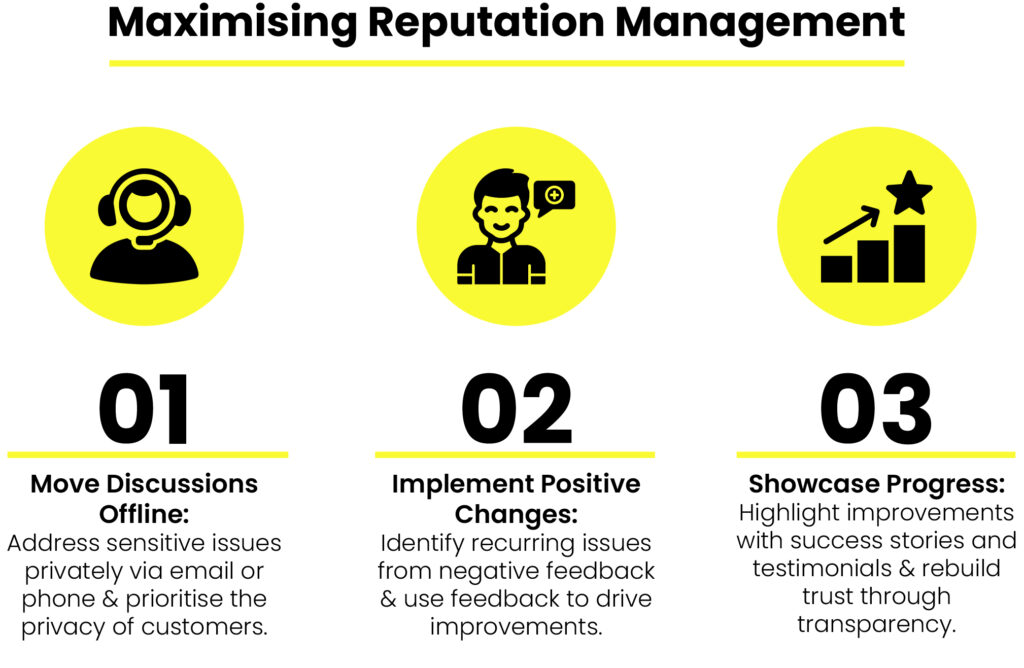
While it’s essential to address negative reviews publicly, some issues are best handled through private channels. Encourage disgruntled customers to reach out via email or phone to discuss their concerns in more detail. This demonstrates a commitment to resolving issues while also safeguarding the privacy of the customer. By taking the conversation offline, businesses can engage in more meaningful dialogue and work towards a satisfactory resolution without airing grievances in a public forum.

  • Implementing Constructive Changes

Negative reviews often highlight recurring issues that need to be addressed within the business. Establishing an internal feedback loop allows businesses to identify these pain points and implement constructive changes accordingly. By soliciting feedback from customers and frontline staff, businesses can gain valuable insights into areas needing improvement and take proactive measures to address them. This continuous improvement mindset not only enhances the customer experience but also fosters a culture of innovation and adaptation within the organisation.

  • Showcasing Positive Changes

Once constructive changes have been implemented, it’s essential to showcase these improvements publicly. Share success stories and testimonials from satisfied customers to illustrate the positive impact of your efforts. By transparently acknowledging past shortcomings and highlighting the steps taken to rectify them, businesses can turn negative experiences into positive narratives. This not only rebuilds trust with existing customers but also attracts new customers who value transparency and accountability.

Post Negative Review Rectification Process

Once you’ve rectified issues and misconceptions showcased on Google My Business, the inherent capabilities to spotlight products back on track require rehabilitating past successes that have rendered happier audiences. Coincidentally, adverse setbacks may encompass brand improvements that can prove beneficial in the long term where future onboarding is seamless. Bear in mind that negative reviews are not necessarily extensive and can require minimal effort to adapt. 

  • Encouraging Positive Reviews

While addressing negative reviews is crucial, businesses should also focus on generating positive feedback from satisfied customers. Proactively encourage happy customers to leave reviews on platforms like Google My Business by making the process as seamless as possible. Consider sending follow-up emails or including review prompts on receipts to remind customers to share their experiences. By actively seeking out positive reviews, businesses can dilute the impact of negative feedback and showcase the overall satisfaction of their customer base.

  • Highlighting Positive Experiences

In addition to generating positive reviews, businesses should leverage satisfied customer testimonials in their marketing efforts. Share glowing testimonials on your website, social media channels, and marketing materials to highlight the positive experiences of past customers. By amplifying these success stories, businesses can counterbalance the negative reviews and showcase the value they provide to their customers. Positive word-of-mouth remains one of the most powerful marketing tools, and by harnessing the goodwill of satisfied customers, businesses can bolster their online reputation and attract new clientele.

Navigating negative reviews on platforms like Google My Business requires a proactive and constructive approach. By viewing criticism as an opportunity for growth, responding promptly and professionally, and implementing constructive changes, businesses can turn negative experiences into positive outcomes. By prioritising customer satisfaction and transparency, businesses can build a stronger and more resilient online reputation that withstands the occasional critique and fosters long-term success.

Home of Performance Marketing Expands Partnership with RAK Ceramics to Enhance Social Media Presence in Saudi Arabia

DUBAI, UAE – [2024/03/22] – Home of Performance Marketing (HOP), a leading social media marketing agency, today announced the expansion of its partnership with RAK Ceramics, a globally recognized premium ceramics brand. Building on the success of HOP’s TikTok content production for RAK Ceramics in the UAE, the agency will now take charge of the brand’s entire social media presence within the Kingdom of Saudi Arabia (KSA).

RAK Ceramics aims to strengthen its position as a social media leader in the KSA market. HOP’s proven expertise in social media strategy, content creation, and community management will be crucial in reaching this objective.

“Our partnership with RAK Ceramics on TikTok content production in the UAE has yielded fantastic results, and we’re thrilled to expand our collaboration into full-scale social media management within the KSA,” said Mo Ballout, Head of Social Media at HOP. “RAK Ceramics’ commitment to innovation and creativity aligns with our approach, making this a partnership with incredible potential.”

The partnership will encompass all major social media platforms relevant to the Saudi market. HOP will develop a tailored social media strategy for RAK Ceramics focused on audience engagement, brand awareness, and driving tangible business outcomes within the KSA region.

About Home of Performance

Home of Performance Marketing (HOP) is a results-driven performance marketing agency specializing in helping dynamic brands across multiple industries achieve exceptional business outcomes. Its services encompass paid media, data analytics, conversion optimization, creative services, and strategic guidance.

About RAK Ceramics

RAK Ceramics is a global leader in premium ceramic lifestyle solutions. The company offers a wide range of products, including tiles, bathware, tableware, and other specialized ceramics products, known for their exceptional design and quality.