HOP Talent Shines in the CME Agency Faces To Watch Under 30 List 2023

Campaign Middle East, the leading source of media, marketing, advertising, and communications news and analysis for the MENA region recently released its Agency Faces To Watch Under 30 list for 2023. 

The list profiles the brightest and best young talent aged 30 and under working agency-side in the region. The list is divided into 4 categories – Creative, Media, Digital, and PR.

Home of Performance saw three of its exceptionally talented team members getting featured in Campaign’s Digital Faces to Watch 2023. 

Here are the winners –

Simon Ronaldo, Art Director 

Rana Tarabay, Social Media Director

Asjad Rahman, Digital Account Manager

Read more about it in the Campaign Middle East – April 2023 Issue

About Campaign Middle East

Campaign Middle East is the authority for the marketing and communications industry in the region. It provides essential and market-leading coverage of advertising, media, marketing, PR, events and experiential, digital, the wider creative industries, and more.

The Agency Faces To Watch Under 30 List is in association with Heriot-Watt University Dubai which also offers a chance to win 5 scholarships to a Master’s degree in Digital Marketing at its Edinburgh Business School.

Produced by leading Dubai publisher Motivate, Campaign Middle East builds on 50 years of brand legacy and expertise, while focusing on the MENA region. It celebrates all aspects of communications, putting the creative and commercial sides of the marketing communications industry into a wider business and social context.

Got questions? Reach out to us

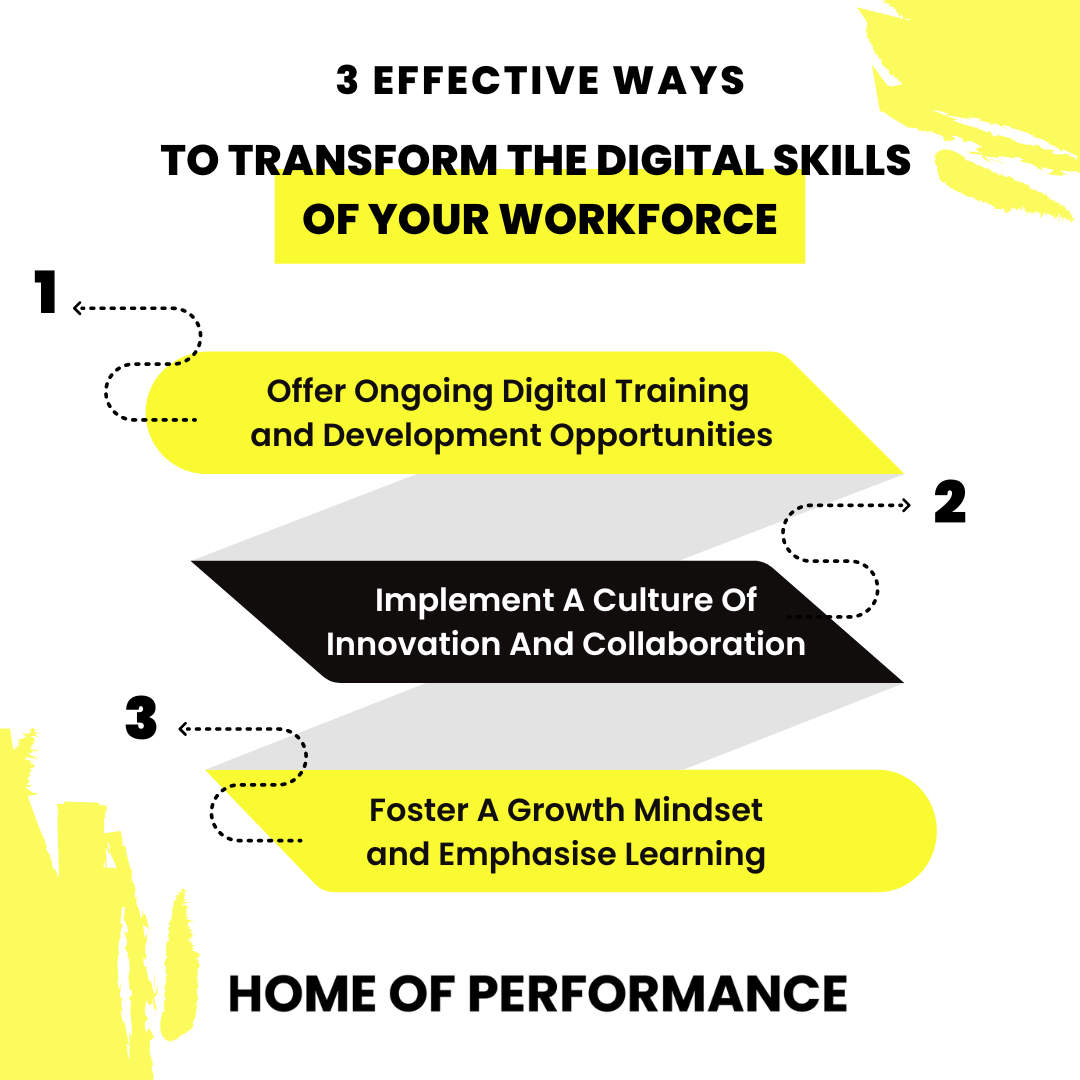
3 Effective Ways To Transform The Digital Skills Of Your Workforce

In today’s digital age, it’s not enough to simply have a few tech-savvy employees – all staff members must be equipped with the necessary digital skills to thrive in a technology-driven workplace. However, with the constantly evolving digital landscape, it can be challenging for companies to keep up with the latest trends and technologies. This is why it’s crucial for businesses to have a strategy in place to transform the digital skills of their workforce. 

We will explore three effective ways to achieve this transformation and ensure that your company stays competitive in the digital marketplace.

  1. Offer Ongoing Digital Training And Development Opportunities

With the emergence of new technologies and tools, it can be challenging for employees to keep up with the latest trends and best practices. To stay competitive, companies must make it a priority to invest in the digital skills of their workforce. One effective way to achieve this is through ongoing training and development opportunities. 

Providing workshops, seminars, and online courses can help businesses equip their employees with the latest digital skills and knowledge. This not only benefits the employees but also the company, as it ensures that the workforce is up-to-date with the latest trends and technologies. Moreover, offering ongoing training and development opportunities demonstrates the company’s commitment to investing in the growth and development of its workforce. This can help to boost employee morale and create a culture of continuous learning and development, which can have a positive impact on productivity, innovation, and overall business success.

  1. Implement A Culture Of Innovation And Collaboration

By fostering a culture of innovation and collaboration, companies can encourage their employees to think creatively and work together to solve complex digital challenges. One effective way to achieve this is to encourage employees to experiment with new technologies and tools.

To do this, businesses can set up cross-functional teams to work on digital projects. This allows employees from different departments to work together and bring their unique perspectives to the project. By doing so, they can pool their collective knowledge and experience to create more innovative and effective solutions. Additionally, companies can create a platform for employees to share their ideas and innovations. This can be done through regular brainstorming sessions, innovation workshops, or even online platforms. By creating an environment where employees are encouraged to share their ideas and innovations, businesses can foster a culture of continuous improvement and innovation. Furthermore, companies can encourage staff to explore and experiment with new digital tools. This can also help them identify new opportunities for innovation and growth, and take ownership of digital initiatives.

  1. Foster A Growth Mindset And Emphasise Learning

As a business, fostering a growth mindset and emphasizing learning is crucial to stay competitive in the digital marketplace. One effective way to achieve this is by setting up a mentorship program. This allows employees to learn from more experienced colleagues, who can provide guidance and support as they navigate digital challenges. This encourages the development of new skills and knowledge, as well as provides a supportive environment for personal and professional growth.

Another way to foster a growth mindset is by providing regular feedback and recognition. Feedback can be used to identify areas where employees need to improve their digital skills, while recognition can be used to acknowledge and celebrate their achievements. Moreover, businesses can reward employees who take the initiative to develop their digital skills. This can be done through promotions, pay raises, or even simply recognizing them publicly for their efforts. 

To Conclude

Transforming the digital skills of a workforce is essential in the digital age, and there are effective ways to achieve this. Providing ongoing training and development opportunities, implementing a culture of innovation and collaboration, fostering a growth mindset and emphasizing learning are all effective strategies. 

By investing in the digital skills of their workforce, businesses can ensure that their employees have the latest knowledge and tools to tackle digital challenges. Furthermore, fostering a culture of continuous learning and development can have a positive impact on productivity, innovation, and overall business success.

Got questions? Reach out to us

Native Content for Social Media

Native content has become an increasingly important topic in digital marketing strategy, particularly on social media platforms. 

The concept of native content refers to content that is designed and created specifically for a particular platform, optimized to fit the format, style, and user behavior of that platform. As social media algorithms prioritize native content that provides value and relevance to users, understanding and utilizing this approach can be a game-changer for businesses seeking to drive engagement and results. 

In this article, we’ll explore the benefits of using native content in social media, share some best practices for creating effective native content, and discuss the advantages of creating content through the platforms themselves.

What Exactly Is Native Content?

Native content is designed to complement the form and function of the social media platform where it appears. In other words, it appears and sounds exactly like any other content on the platform.

Marketers who understand each platform get the most out of social media. You can create fantastic content, but if you consistently disregard the context of each platform on which it appears, it will die.

The type of native content can vary depending on the social media platform used. For instance, on Instagram, native content may consist of high-quality images or visually appealing short-form videos. Twitter’s strict character limit makes short and impactful messages ideal for native content on the platform. On LinkedIn, long-form articles or thought leadership pieces focused on providing industry insights and education to users are suitable. Meanwhile, on TikTok, native content primarily revolves around short-form video content, emphasizing entertainment and humor.

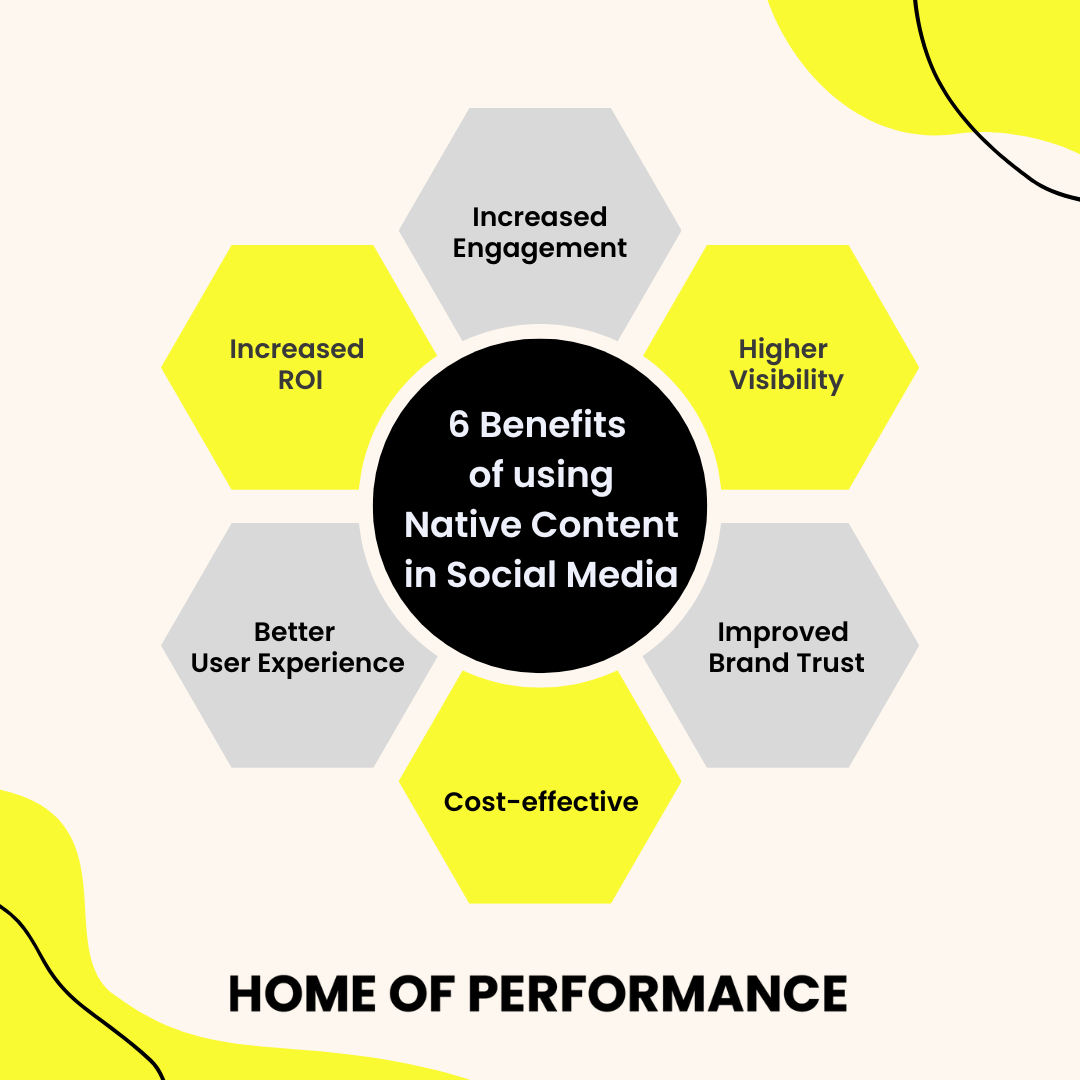
6 Benefits Of Using Native Content In Social Media:

There are several benefits of using native content in social media –

  1. Increased engagement: Native content is designed to fit seamlessly within the platform’s environment and user behavior, which makes it more engaging and relevant to the audience. According to a study by Sharethrough and IPG Media Lab, native ads receive 53% more views than traditional display ads.
  1. Higher visibility: Social media algorithms prioritize native content, making it more likely to be seen by the target audience. According to a study by IHS Technology, native content is 20-60% more likely to be shared than non-native content.
  1. Improved brand trust: Native content is seen as more authentic and trustworthy by social media users, as it is tailored to the specific platform and audience. A study by Forbes found that 43% of millennials trust native ads more than traditional banner ads.
  1. Cost-effective: Creating native content is often more cost-effective than creating multiple versions of the same content for different platforms. This is because native content is created once, but can be repurposed across multiple platforms, saving time and money.
  1. Better user experience: Native content is designed to blend seamlessly with the user experience on a particular platform, which leads to a better overall experience for the audience. A study by Facebook found that users are 40% more likely to watch native video content on the platform than non-native video content.
  1. Increased ROI: By increasing engagement, visibility, and brand trust, native content can lead to a higher return on investment for businesses. According to a study by Business Insider, native advertising is projected to reach $52.75 billion in 2025, indicating its increasing popularity among businesses and advertisers.

How To Create Effective Native Content For Social Media

Creating effective native content for social media is crucial for businesses to achieve their marketing goals. Here are some additional points to keep in mind:

  1. Use visually appealing content: Visual content is more engaging than text-based content, so it’s important to use visually appealing images and videos in your native content. Use relevant and eye-catching visuals to capture users’ attention and deliver your message effectively.
  1. Keep it short and sweet: Attention spans are getting shorter, so it’s essential to keep your content short and to the point. Use catchy headlines and captions to grab users’ attention and deliver your message in a concise and effective way.
  1. Use a consistent brand voice: Consistency is key when it comes to building a brand. Use a consistent brand voice across all your native content to help users identify and remember your brand.
  1. Test and optimize: The beauty of native content is that it can be easily optimized and tweaked to improve performance. Use analytics tools to track your content’s performance and adjust your strategy accordingly.
  1. Engage with your audience: Social media is all about engagement and building relationships with your audience. Respond to comments, ask questions, and encourage users to share their thoughts and opinions.
  1. Leverage user-generated content: User-generated content is a powerful tool for building trust and engagement with your audience. Encourage your followers to create and share content related to your brand and products.

Benefits Of Creating Content Through The Platforms Themselves

Creating content through the platforms themselves can offer several benefits that can help businesses optimize their social media presence. Here are some points to consider:

  • Maximise creativity: According to Hootsuite, Instagram filters can increase engagement by 21%, while videos with music on TikTok receive 28.6% more engagement than those without. By using these features, businesses can create native content that stands out and catches users’ attention.
  • Consistency in style and format: Creating content through the platforms themselves ensures that your content meets the technical specifications and requirements of the platform. For example, Instagram recommends using 1080 x 1080 pixels for square posts, 1080 x 1920 pixels for Instagram Stories, and 1080 x 1350 pixels for portrait posts. Creating content through the platform’s built-in tools ensures that your content fits these requirements, making it more likely to be shown to users by the algorithm.
  • Prioritized by the algorithm: Using the platform’s built-in tools signals to the algorithm that your content is specifically designed for the platform, increasing the likelihood of prioritization. According to Social Media Today, Meta’s algorithm prioritizes native videos, resulting in 186% more engagement than other types of posts.
  • Saves time and resources: Creating content through the platform’s built-in tools can be more time and cost-effective than using external software. By leveraging the platform’s tools, businesses can create native content quickly and easily, saving time and resources in the process.
  • Keep up with platform updates: Social media platforms frequently update their algorithms and features, which can affect how content is shown to users. By using the platform’s built-in tools, businesses can keep up with these changes and adapt their content strategy accordingly.

Conclusion

Native content has become an essential element of any successful social media marketing strategy. By creating content that is designed to fit seamlessly within the platform’s environment and user behavior, businesses can increase engagement, visibility, brand trust, and conversions, ultimately leading to a higher return on investment.

The benefits of using native content are supported by various statistics that demonstrate its effectiveness in driving engagement and results on social media platforms. From higher views and shares to better brand trust and more conversions, the advantages of using native content are significant and can help businesses achieve their marketing objectives.

As social media continues to evolve, businesses must stay up-to-date with the latest trends and best practices, including the use of native content, to remain competitive and relevant in the digital landscape. With the right strategy and approach, native content can be a game-changer for businesses seeking to increase their social media presence and drive results.

By Warren LaRey

Got questions? Reach out to us

How To Develop Your Brand’s Visual Language

A brand’s visual language is an important aspect of a content strategy that helps to establish a consistent and recognizable visual identity for a brand across all digital and offline channels. 

In the realm of branding, employing visual language can have an invisible and subliminal impact on your audience, tapping into their subconscious as you convey your brand’s message. Once harnessed, it can play a pivotal role in creating a lasting impression.

Simply, visual language is a philosophy that explains why things are put together in a certain way. It includes the use of design elements such as colours, typography, imagery, and other visual elements to create a cohesive and memorable brand image that resonates with your audience.

What is a Brand’s Visual Language? 

A brand visual language typically includes a set of guidelines or standards that dictate how these design elements should be used in all brand communications, including website design, social media posts, email marketing campaigns, and other marketing materials. These guidelines ensure that all brand communications are consistent in terms of look and feel, regardless of the platform or medium.

A well-defined brand visual language can help a business:

  • Stand out in a crowded marketplace: By creating a distinct visual identity, a brand can differentiate itself from competitors and make a strong impression on potential customers.
  • Increase brand recognition: Consistent visual language helps to reinforce a brand’s identity and make it more memorable to audiences.
  • Establish trust and credibility: A professional and consistent visual identity can help establish a sense of trust and credibility with customers and prospects.
  • Facilitate content creation: A well-defined brand visual language can serve as a guide for creating new content, making it easier for marketers and designers to create cohesive and effective content across different channels.

How To Create Your Brand’s Visual Language

The creation of a visual language does not happen by accident, as with all great things in life. In most cases, it is the result of a long and intensive process. 

It’s important to create a visual language guideline, which details the key design elements and standards needed to create a brand’s consistent visual identity, through a series of steps.

Here are 6 Steps to create a visual language for your brand:

  1. Define your brand identity: Before you can create a visual language guideline, you need to have a clear understanding of your brand identity, including your brand values, target audience, and unique selling proposition. This will help you to create a visual identity that aligns with your brand and resonates with your target audience.
  1. Identify key design elements: Once you have a clear understanding of your brand identity, you can start to identify the key design elements that will make up your visual language, including colours, typography, imagery, and other visual elements. Consider the emotions and associations that each element evokes and how they can be used to create a cohesive brand identity.
  1. Develop design standards: Once you have identified your key design elements, you can start to develop design standards that dictate how these elements should be used in your brand communications. This includes rules for typography, colour usage, imagery, and other visual elements, as well as guidelines for layout, composition, and other design considerations.
  1. Create examples and templates: To help ensure that your visual language is consistently applied across all brand communications, it can be helpful to create examples and templates that demonstrate how to use your design elements in different contexts. This can include social media posts, website layouts, email templates, and other marketing materials.
  1. Share and educate: Once you have created your visual language guideline, it’s important to share it with all relevant stakeholders, including designers, marketers, and other members of your team and agencies. You may also need to provide training or education to help ensure that everyone understands and can apply the design standards correctly.
  1. Update and evolve: A visual language guideline should be a living document that evolves over time as your brand and marketing needs change. It’s important to review and update your guidelines regularly to ensure that they remain relevant and effective in achieving your marketing goals.

At the onset of your journey, determining the most effective approach to building a robust brand can be intricate and demanding. Creating a brand visual language guideline involves careful consideration of your brand identity and key design elements, as well as the development of clear and actionable design standards that can be applied consistently across all brand communications. 

Get in touch with our team today, if you want your company to stand out from the crowd.

– Warren LaRey

Got questions? Reach out to us

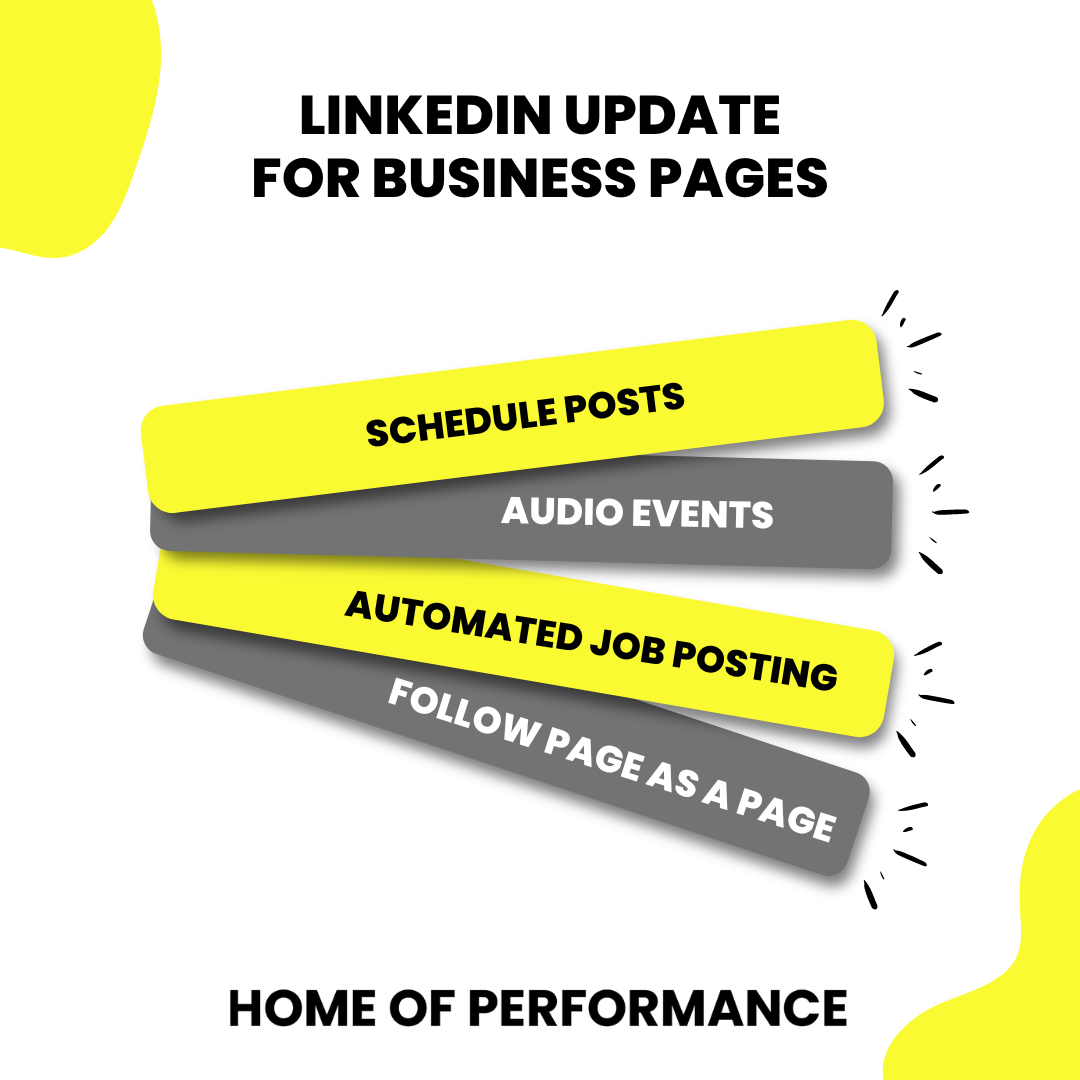
News – LinkedIn’s Latest Update for Business Pages

With its most recent update, the B2B networking giant LinkedIn aims to enhance brand visibility, audience engagement, and hiring efficiency. Let’s take a look.

LinkedIn Pages enable organizations to showcase their purpose, values, culture, and what they have to offer as a product or service to their audiences while also providing an array of very helpful publishing and community-building tools. Here are some changes taking effect from March 2023 –

Reach your audience at the right time with scheduled posts

To help manage and share content at the right time, you can schedule your LinkedIn posts, all within the platform. There is no limit to the number of posts you can pre-publish,  and can do so up to three months in advance. This will help in scaling efficiency while building content consistency to keep the audience engaged.

Engage your community through live, audio-only conversations

This is the most exciting of them all. With LinkedIn Audio Events, businesses can now host and engage in live, audio-only conversations with their community from around the world. What makes it even better is that these audio events can be hosted directly from within the LinkedIn interface without any need for third-party broadcasting tools.

Attendees who wish to contribute to the conversation can do so by ‘raising their hand’ and then allowed by the host to participate. The ones not showing active interest, can be nudged by using emojis – a fun way to keep the audience engaged and get a pulse on what they are thinking.

If attendees are not actively a part of the conversation, they are free to navigate the platform without leaving the event. This will allow them to network with fellow participants, and speakers and even browse your page.

Reach more candidates by automatically sharing jobs as a Page post

For businesses with fewer than 1,000 employees, there is a new automatic job posting feature. Through this LinkedIn will automatically share one of your Page’s open roles per day as a pre-scheduled post to your Page. The post will have pre-populated text with an option to edit the description once it is shared. This new feature of automatic posting covers all open roles except basic jobs.

Discover and join more conversations relevant to your brand by following Pages as your organization

LinkedIn Pages can now follow other Pages in the same way as individual members can follow them. This feature makes it easier to join industry conversations with a feed dedicated to content from the businesses you’re following.

This not only will help businesses to distinguish their brand voice but also empower brands to collaborate, communicate, and build cohesive online communities.

Needless to say, these recent updates are most positively going to amplify marketing efforts by offering new options to efficiently share content, connect with the right audiences, attract new talent, and stay active with the industry.

Got questions? Reach out to us

How & Why Your Brand Should Use Social Listening

Social media has become a fundamental part of our daily lives in the digital age. Millions of people use social media platforms to communicate, share information, and express their opinions about brands and products. As a result, social media has become a valuable source of insights for businesses looking to understand their customers’ needs and preferences. Social listening, also known as social media monitoring, is a process that involves tracking and analyzing social media conversations and mentions of a brand, product, or service. It provides businesses with a wealth of information that can help them make informed decisions about their marketing strategies, customer service, and overall brand reputation. We will explore how and why your brand should use social listening to stay ahead of the competition and build a stronger relationship with your customers.

What Is Social Listening?

Social listening, also known as social media monitoring, is the process of monitoring and analyzing social media platforms to track and understand what people are saying about a brand, product, or service. Social listening involves using various tools to track and analyze social media conversations, mentions, and hashtags related to a specific topic or brand. This data can provide valuable insights into the customer’s needs, preferences, and opinions, which can be used to improve marketing strategies, product development, and customer service.

Social listening is an essential part of social media marketing and allows businesses to stay up-to-date with the latest trends and conversations happening in their industry. By monitoring social media conversations, businesses can identify potential issues before they escalate, respond to customer complaints or inquiries, and stay on top of their brand’s reputation. Overall, social listening is an effective way to stay connected with your audience and better understand their needs and preferences.

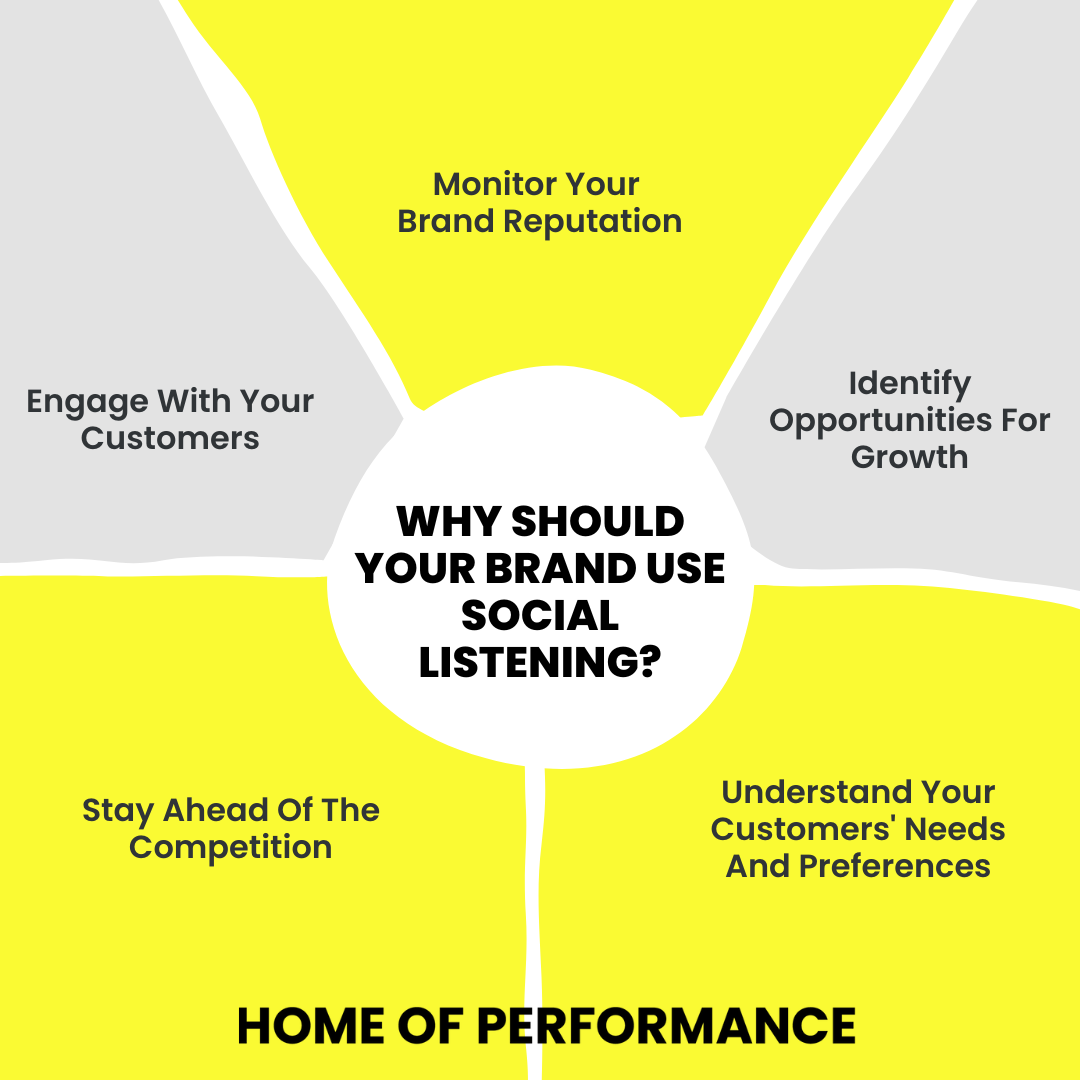
Why Should Your Brand Use Social Listening?

It is crucial for businesses to monitor social media conversations and mentions related to their brand to gain valuable insights and stay ahead of the competition. Here are some key reasons why your brand should use social listening and build a stronger relationship with your customers:

  • Understand Your Customers’ Needs And Preferences

Social listening can provide businesses with a wealth of information about their customers’ needs and preferences. By tracking social media conversations related to your brand, you can identify what your customers are saying about your products or services, what they like, and what they dislike. This data can be used to develop more targeted marketing strategies, improve product development, and enhance customer service.

  • Monitor Your Brand Reputation

Social media can be a double-edged sword for businesses. While it can be an effective tool for promoting your brand, it can also be a platform for customers to share their negative experiences or complaints. Social listening allows businesses to monitor their brand reputation and identify any potential issues before they escalate. By addressing negative comments or reviews in a timely and professional manner, businesses can demonstrate their commitment to customer service and improve their brand reputation.

  • Identify Opportunities For Growth

Social listening can help businesses identify new trends, opportunities, or areas for growth. By monitoring social media conversations related to their industry or product, businesses can gain insights into what their competitors are doing, identify new market niches, and adjust their strategies accordingly.

  • Engage With Your Customers

Social media is a two-way communication channel, and businesses should use it as an opportunity to engage with their customers. Social listening can provide businesses with real-time feedback and insights from their customers. By responding to their comments or inquiries, businesses can build stronger relationships with their customers and foster a sense of loyalty.

  • Stay Ahead Of The Competition

Social listening allows businesses to stay up-to-date with the latest trends and conversations happening in their industry. By monitoring their competitors’ social media activities, businesses can gain insights into their strengths and weaknesses, identify potential opportunities or threats, and adjust their strategies accordingly. Social listening can provide businesses with a competitive edge and help them stay ahead of the game.

How Can Your Brand Use Social Listening?

To effectively use social listening, businesses need to follow some best practices and strategies that can help them stay ahead of the competition and build stronger relationships with their customers:

  • Define Your Goals And Objectives

Before starting with social listening, businesses should define their goals and objectives. They should identify what they want to achieve through social listening and how it can help them improve their business. For example, a business might want to track customer sentiment about its products or services to improve its customer experience.

  • Choose The Right Tools

There are many social listening tools available in the market that businesses can use to track social media conversations and mentions related to their brand. Businesses should choose the tools that best suit their needs and provide the most relevant data.

  • Identify The Relevant Keywords And Topics

Businesses should identify the relevant keywords and topics related to their brand that they want to track. They should also track keywords related to their competitors and industry trends to gain insights into what their competitors are doing and what their customers are saying about their products or services.

  • Monitor Social Media Channels

Social listening involves monitoring multiple social media channels such as Facebook, Twitter, Instagram, LinkedIn, and others. Businesses should track conversations and mentions on all relevant channels to gain a comprehensive view of what people are saying about their brand.

  • Analyze The Data

Once businesses have collected the data, they should analyze it to gain insights into customer sentiment, preferences, and behaviour. They can use data analysis tools to identify patterns and trends and gain a deeper understanding of their customers.

  • Respond To Customer Feedback

Businesses should respond to customer feedback in a timely and professional manner. They should acknowledge customer complaints or issues and provide a solution or resolution to them. This can help build a positive image of the brand and improve customer loyalty.

  • Use The Insights To Improve Marketing Strategies And Customer Experience

Businesses should use the insights gained from social listening to improve their marketing strategies, product development, and customer experience. They can tailor their marketing messages to better resonate with their target audience, improve their products or services to meet customer needs, and enhance their customer service to provide a better overall experience.

To Conclude

In the current fast-paced digital world, social listening has emerged as a powerful tool for businesses to comprehend their customers’ requirements and choices. By scrutinizing social media conversations and references, companies can obtain significant insights into their brand reputation, customer behaviour, industry trends, and competitors. We have outlined the reasons why your brand should incorporate social listening, the recommended practices to follow, and the strategies to adopt. With the right tactics and tools, businesses can employ social listening to maintain a competitive edge and foster stronger relationships with their customers. In today’s digital era, social listening is an indispensable resource for businesses that want to remain pertinent, knowledgeable, and engaged with their audience.

Got questions? Reach out to us

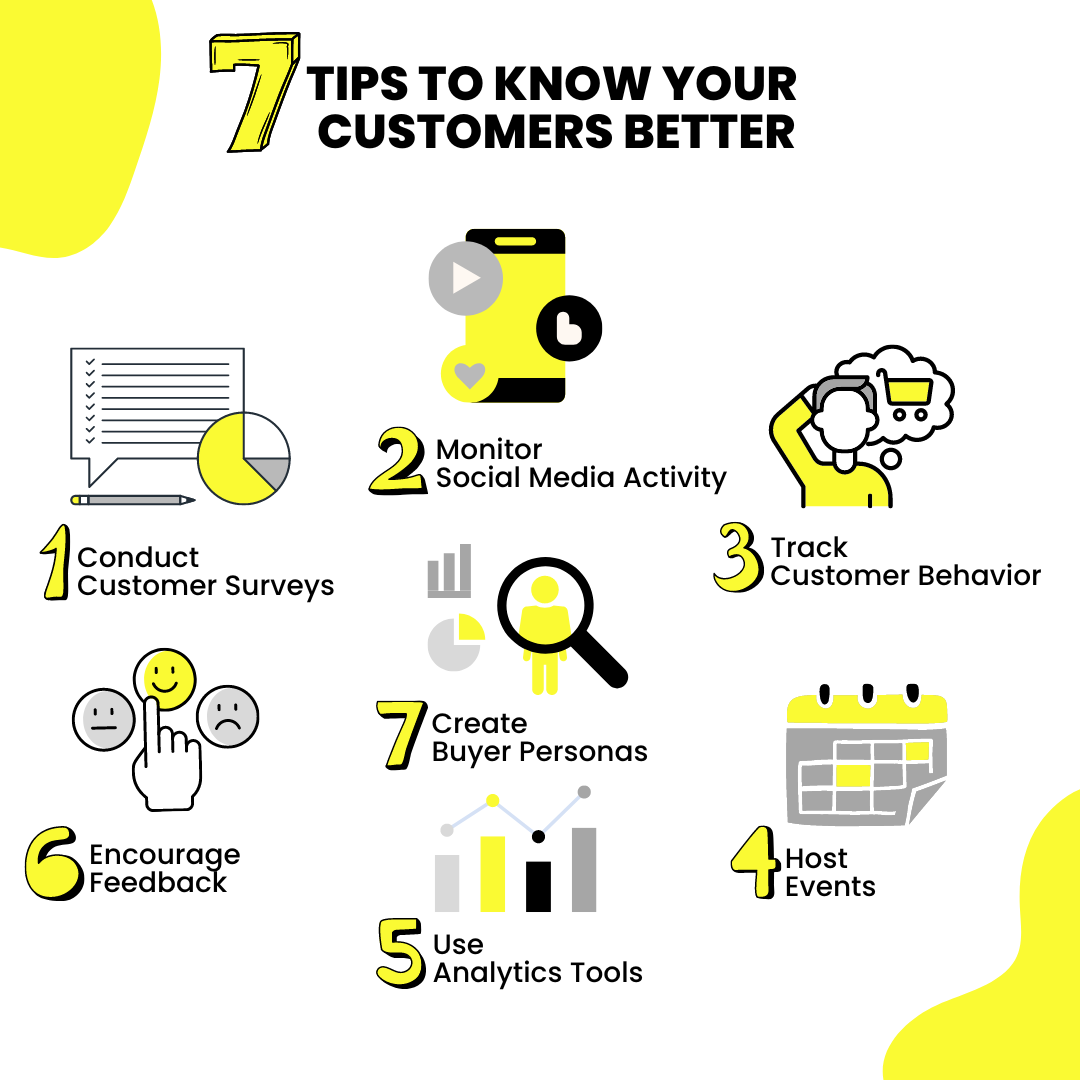
7 Tips To Know Your Customers Better

A successful business puts its customers at the heart of everything it does. Understanding your customers’ needs wants, and preferences is crucial for creating products and services that meet their expectations, building strong relationships, and growing your business. This is why getting to know your customers better should be a top priority for any business.

Here are some helpful tips that will help you to gather valuable insights into your customers’ behavior, preferences, and feedback, enabling you to tailor your products and services to their needs and build a strong, loyal customer base. So let’s dive in!

#1 Conduct Customer Surveys

One of the most effective ways to get to know your customers better is by conducting customer surveys. Surveys allow you to gather valuable information about your customers’ preferences, opinions, and behaviors. This information can be used to improve your products and services, identify areas for growth, and build stronger relationships with your customers.

Here is how you can conduct a good customer survey:

  • Define your goals: Determine the specific information you want to gather from your customers, and what you plan to do with the results.
  • Choose your survey method: Decide on the type of survey you want to conduct – online, email, phone, or in-person – and choose the platform you’ll use to create and distribute the survey.
  • Create your questions: Design clear, concise, and relevant questions that will help you achieve your goals.
  • Test your survey: Before distributing the survey to your customers, test it on a small sample group to ensure it’s easy to understand and provides the information you need.
  • Distribute your survey: Send the survey to your customers via email, social media, or your website, and encourage them to participate.
  • Analyze your results: Once you have collected enough responses, analyze the data and identify key insights that will help you improve your products and services.
  • Take action: Use the insights gathered from the survey to make changes to your products or services and improve your customer experience.

#2 Monitor Social Media Activity

Social media is a valuable tool for businesses to connect with their customers and understand their needs and preferences. By monitoring social media activity, you can track customer feedback, identify trends, and respond to customer concerns in real-time. This can help you to build strong relationships with your customers and improve your brand reputation.

You can effectivley monitor social media activity by focusing on the following:

  • Identify the social media platforms your customers use: Determine which social media platforms your customers are active on, and focus your monitoring efforts on those platforms.
  • Set up monitoring tools: Use social media monitoring tools like Hootsuite, Buffer, or Sprout Social to track mentions of your brand, products, and services.
  • Monitor relevant hashtags: Monitor hashtags that are relevant to your brand or industry to stay up-to-date on customer trends and feedback.
  • Respond to customer feedback: When you receive feedback from customers on social media, respond in a timely and professional manner. Address any concerns they may have, and thank them for their feedback.
  • Use the insights gathered: Analyze the feedback and insights gathered from social media monitoring to identify areas for improvement and make changes to your products or services.

#3 Track Customer Behavior

Tracking customer behavior is an effective way to gain insights into how your customers interact with your products or services. By analyzing customer behavior, you can identify patterns and trends, understand what motivates your customers to make a purchase, and improve your customer experience.

Here is how you can track customer behavior:

  • Define your tracking goals: Determine the specific customer behaviors you want to track, such as website visits, product purchases, or email clicks.
  • Use analytics tools: Use analytics tools like Google Analytics or Adobe Analytics to track customer behavior on your website or app.
  • Set up tracking tags: Set up tracking tags on your website or app to monitor customer behavior across different channels and devices.
  • Analyze customer behavior data: Analyze the data collected from tracking customer behavior to identify patterns and trends in customer behavior.
  • Make changes to improve customer experience: Use the insights gathered from tracking customer behavior to make changes to your products or services that will improve the customer experience.

#4 Host Events

Hosting events is a great way to engage with your customers in person and create a memorable experience that will strengthen your brand. Events can also help you to gain insights into your customers’ preferences and behaviors, and provide opportunities to build strong relationships with your customers.

Here is a quick brief on hosting events that can help you in knowing your customers better:

  • Define your event goals: Determine the specific goals of your event, such as promoting a new product or service, building brand awareness, or networking with customers.
  • Choose your event type: Decide on the type of event you want to host, such as a product launch, open house, or customer appreciation event.
  • Set a budget: Determine how much you are willing to spend on the event, and allocate funds for venue rental, catering, and marketing materials.
  • Plan and promote your event: Select venue, catering, and entertainment, and develop a marketing plan to promote the event through email, social media, and other channels.
  • Collect customer feedback: During and after the event, collect feedback from customers through surveys, social media, or in-person conversations.
  • Follow up with customers: After the event, follow up with customers to thank them for attending and gather any additional feedback.

#5 Use Analytics Tools

Analytics tools can help you to track and analyze customer data, such as website traffic, customer behavior, and sales trends. By using analytics tools, you can gain valuable insights into your customers’ preferences and behaviors, and make data-driven decisions to improve your business performance.

Here is how you can use analytics tools optimally:

  • Identify your analytics needs: Determine the specific customer data you want to track, such as website traffic, customer behavior, or sales trends.
  • Choose the right analytics tool: Select the analytics tool that best suits your business needs and budget. Popular options include Google Analytics, Adobe Analytics, and Mixpanel.
  • Set up your analytics tool: Set up your analytics tool by installing tracking code on your website or app, and configuring the tool to track the data you want to analyze.
  • Analyze customer data: Use your analytics tool to track and analyze customer data, such as website traffic, customer behavior, and sales trends.
  • Use insights to improve your business: Use the insights gathered from your analytics tool to make data-driven decisions to improve your customer experience, marketing campaigns, and business operations.

#6 Encourage Feedback

Encouraging feedback is an effective way to gain insights into your customers’ experiences with your products or services. By gathering feedback, you can identify areas for improvement, address customer concerns, and build stronger relationships with your customers.

Here is you can encourage you customers to share regular feedback:

  • Create feedback channels: Create multiple channels for customers to provide feedback, such as email, social media, in-app feedback forms, or customer surveys.
  • Make feedback easy: Make it easy for customers to provide feedback by using short and simple forms, providing multiple feedback options, and ensuring that feedback channels are easily accessible.
  • Incentivize feedback: Provide incentives for customers to provide feedback, such as discounts, freebies, or entry into a prize draw.
  • Respond to feedback: Respond to customer feedback promptly and with empathy, and take action to address customer concerns or suggestions.
  • Use feedback to improve your business: Use the insights gathered from customer feedback to make improvements to your products or services, marketing campaigns, and customer experience.

#7 Create Buyer Personas

Buyer personas are fictional representations of your ideal customers based on research and data analysis. By creating buyer personas, you can better understand your customers’ needs, preferences, and behaviors, and tailor your marketing and sales strategies to meet their needs.

Here is how you can create insightful buyer personas:

  • Conduct research: gather data on existing customers using surveys, feedback, and social media analytics.
  • Identify patterns: group customers into segments based on shared characteristics found in the data.
  • Develop personas: create fictional representations of each segment with names, job titles, and relevant details.
  • Use personas to guide strategy: tailor marketing and sales strategies, personalize messaging, develop products, and address pain points based on buyer personas.

Getting to know your customers is essential for building successful partnerships,, improving customer experience, and driving business growth. Remember to continually monitor and analyze customer data to stay up-to-date with changing trends and preferences, and to make adjustments to your strategies as needed.

Got questions? Reach out to us

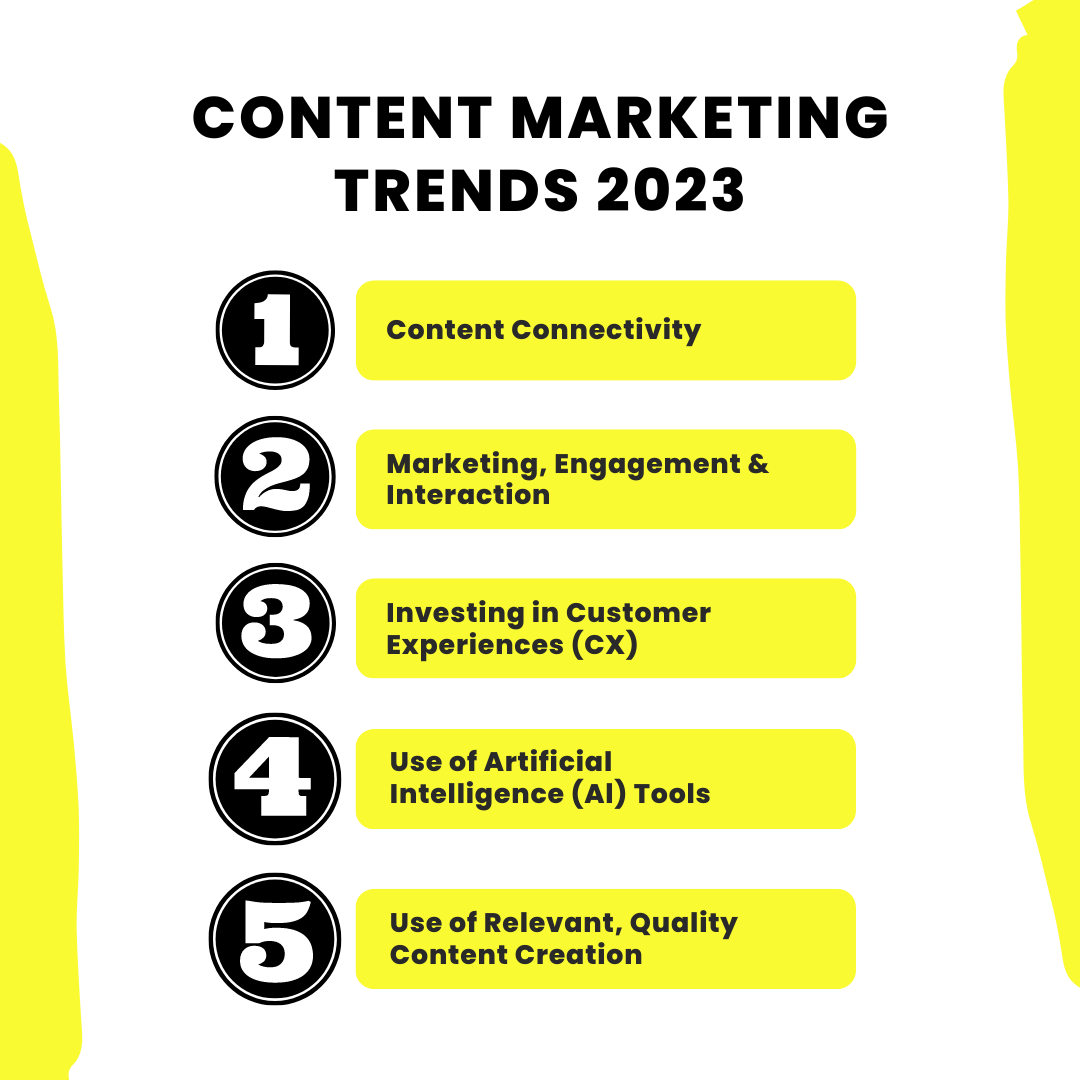
5 Key Content Marketing Trends for 2023

Content marketing trends have been on the simulation in every possible scenario, believe it or not. The philosophy is basically organizing gaps in the market you can fill with operations until you get a semblance of firm grounding. This concept applies in logistics throughout the e-commerce stream, active market, fintech, etc. 

However, the real key lies in visualizing an Al-powered robot that doesn’t have any human control. It may be able to run for a while, but there would be no actual sensory feedback that can be acted upon. Hence, you need people, and only people can define marketing trends that can determine the failure or success of your marketing campaign. 

This is where the definition of crucial content marketing trends for 2023 have been interpreted which you can head on in your business as the specific landing touch points for a successful run!

#Trend 1 – Content Connectivity

People want to see the brand in all its truffles and glory. They want the inside story and how best you can present your content on different socials with equal engagement. So, if everything is opportune, there will be a drive in conversions and leads for your marketing audit. More to the point, potential brand loyalists would want to immerse themselves in an e-communal environment where they are able to communicate freely with you.

The following are some of the few expert ideas that you can commit to content-wise on socials:

Be empathic – You don’t want to approach a direct stance where you are only interested in selling your brand as a priority, but rather integrating your performance levels by tapping into the audience’s mindset. You should gauge current circumstances and be considerate of your consumers’ interests. There is nothing worse than a content-savvy deviating away from the acceptable content design, just because of ulterior motives.

  • Use context – Simply put – Combine your content creatives knowledge with context building! You should reveal a vast array of content that depicts a sound brand seller who actually knows what the customer wants in a specific segment. This will help to leverage the brand in the marketplace and build trust.
  • Collaborate with the audience – Consider your audience to be a potential co-creator and be surprised! There is nobody who knows brand mentality best than the people you sell to. It is recommended to do one of these social visits where you can pick up on new requests spiking up within a segment. 
  • Establish two-way communication engagingly – You won’t be remembered if you only engage on socials once! According to HubSpot, social media is ranked as the most popular marketing platform for 44% of marketers, which says a lot about how much we should use social to create impressions. 

#Trend 2 – Marketing, Engagement & Interaction

When we confront the facts, traditional marketing techniques feel one-sided and impersonal at best. But when we enter the world of interactive marketing, engagement, and creativity are at the forefront of every campaign

Interactive marketing is all about connecting with your audience in a meaningful way, using tools such as social media, gamification, and personalized content to create an immersive and memorable experience. By involving the customer in the marketing process, you can build stronger relationships, generate buzz, and drive more sales.

Imagine a social media campaign that invites users to share their own photos and stories related to your brand, or a mobile game that rewards players with discounts or exclusive products. The possibilities are endless, and the results can be truly game-changing.

Benefits of Interactive Marketing:

  • Improved Conversion Rates: Interactive marketing allows potential customers to make purchases quickly, thanks to effective calls-to-action, such as “purchase now” or “add to cart” buttons on digital ads or websites.
  • Enhanced Audience Engagement: Engage your audience by providing a unique experience through tactics like personalized content, online quizzes, and interactive videos. If your audience is delighted, they’re more likely to become loyal and share your business with others.
  • Immediate Feedback: With interactive marketing, you can quickly gather feedback from your audience through quizzes and polls. This feedback allows you to improve your products, website navigation, and overall customer experience, which is crucial to success and winning smartly.

#Trend 3 – Investing in Customer Experiences (CX)

Investing in customer experience is not just a smart move, it’s essential in today’s highly competitive business world. Customers have more options than ever before, and their loyalty can be hard to earn and easy to lose. By investing in customer experience, businesses can create meaningful connections with their customers, build brand loyalty, and ultimately drive growth. So, whether you’re just starting out or looking to take your business to the next level, investing in customer experience is a strategic decision that can pay off in spades.

Why Should I Invest In Customer Experience (CX)?

  • Investing in customer experience (CX) can improve customer satisfaction, loyalty, and retention, leading to increased profitability which is partially attributed to positive word-of-mouth and top-of-the-line reviews.
  • Margin investments can reap benefits double-fold in the future as a further pro tip. 
  • A strong CX strategy can differentiate a business from its competitors, creating a competitive advantage in the market.
  • CX can provide valuable insights into customer behaviour and preferences, which can inform business decisions and improve product offerings.
  • In today’s digital age, a strong online CX is essential for success, and investing in technology and digital channels can enhance CX, improving the customer journey and driving business growth.

#Trend 4 – Use of Artificial Intelligence (Al) Tools

In the world of content marketing, the race to engage customers and stand out from the competition is relentless. Fortunately, Artificial Intelligence (AI) is providing marketers with powerful tools to gain an edge. With AI-powered chatbots, personalization algorithms, and predictive analytics, marketers can create and deliver highly targeted content that resonates with their audience. The result? More efficient campaigns, increased engagement, and better ROI.

  • AI can help you understand customers and create highly personalized recommendations and messages.
  • AI can automate small content requirements such as generating data-specific content for social media posts, brief reports, news updates, and notifications.
  • AI can generate fresh keywords and topics for content creation and improve SEO results.
  • AI can improve the performance of social media content by analyzing customer behaviours, sentiments, and preferences.
  • AI-powered chatbots can enhance customer experience and improve the customer buying journey by providing relevant information and eliminating delays in response.

#Trend 5 – Use of Relevant, Quality Content Creation

Relevance marks high in the Google agenda as if Google were a person. The Google Engine will sift through tons of criteria before categorizing your published content in terms of quality, SEO, and premier data which match up to relevance in a Search Engine Results Page. You might have potent statistics and a strong KPI but you may be lacking in a ‘brand edge’ which ultimately affects your conversions. 

Content calendars mark as progressive so each phase will have upgraded, unique content that wasn’t experienced prior. Hence, it is always recommended to screen content on a regular basis or modify your marketing strategy to meet new conversion rates.

As we look towards 2023, the world of content marketing is evolving rapidly, with new technologies and consumer preferences shaping the landscape. From interactive marketing to investing in customer experience, businesses must stay ahead of the curve to capture the attention of their target audiences. It’s no longer just about creating content, but also about building meaningful connections with customers through empathy, collaboration, and personalization. By leveraging the power of AI, businesses can enhance their marketing strategies, while also embracing social media as a key engagement platform. As we move forward, staying up-to-date with these key content marketing trends will be essential for success in 2023 and beyond.

So, to upgrade your B2C content marketing strategies, contact us for information about our services!

Got questions? Reach out to us

Marketing Trends You Should Watch in 2023

Marketing is a constantly evolving field, with new technologies, techniques, and trends emerging each year. With customers today expecting brands to provide them with a personalized, exceptional experience across all channels, it’s imperative that brands keep a close tab on current and upcoming trends in order to efficiently adapt them into their marketing strategies.

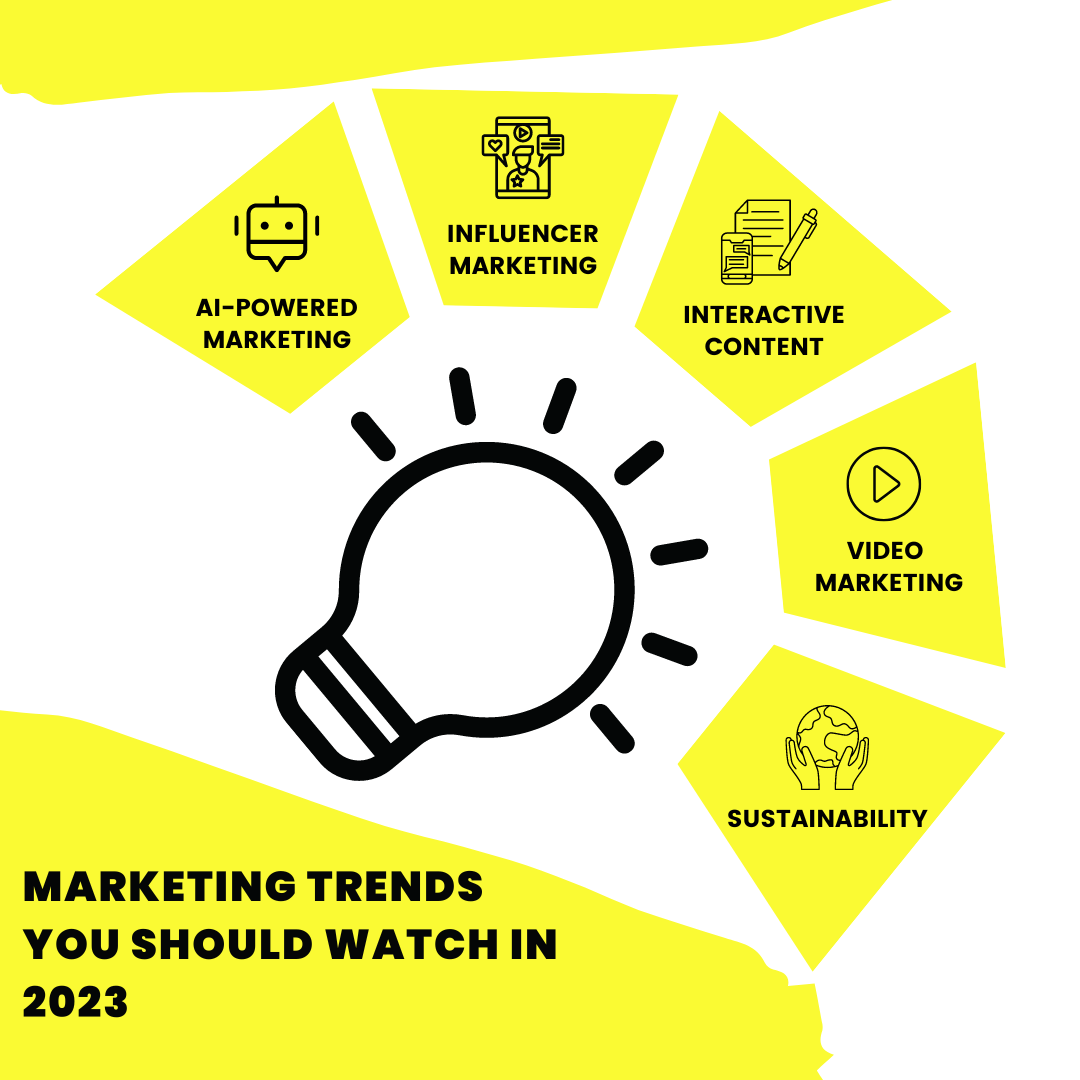
Here are the top marketing trends brands should watch in 2023 –

AI-powered Marketing

Artificial intelligence (AI) has been transforming the marketing industry over the past few years. By analyzing vast amounts of customer data, AI algorithms can identify patterns and trends in customer behavior and preferences, allowing marketers to develop customized content that resonates with their target audience.

Chatbots are another AI-powered marketing tool that is set to become increasingly popular in 2023. Chatbots can be used to provide customers with instant support and assistance, helping to improve customer satisfaction and drive sales. They can also be used to gather valuable customer data, providing marketers with insights into customer preferences and pain points.

Ground-breaking advances in Conversational AI Chatbots have recently resulted in a whole paradigm shift. Disruptive techs like Open AI’s ChatGPT and the heavily scrutinized Microsoft’s Bard are on their road to amaze and rattle every sector with both their brilliance and seeming potential to wipe out a variety of jobs.

Influencer Marketing

Influencer marketing has been a popular trend in recent years, and it shows no signs of slowing down in 2023. Influencers are individuals who have built up a following on social media, and they can be used by marketers to promote products and services to their followers.

Influencer marketing is particularly effective among younger consumers, who tend to be skeptical of traditional advertising. By partnering with influencers who are popular among their target audience, marketers can reach potential customers in a more authentic and relatable way.

In 2023, we can expect to see more brands incorporating influencer marketing into their overall marketing strategy. However, it’s important to note that as influencer marketing becomes more common, consumers are becoming more discerning about who they choose to follow and trust. Marketers will need to be careful to choose influencers who align with their brand values and messaging, and who have a genuine connection with their audience.

Helpful Read – Why Your Brand Needs Influencer Marketing?

Interactive Content

Interactive content is content that engages the viewer and encourages them to take an active role in the experience. Examples of interactive content include quizzes, polls, and games.

Interactive content is particularly effective at capturing and retaining the attention of viewers, making it a valuable marketing tool. In 2023, we can expect to see more brands incorporating interactive content into their marketing campaigns, particularly on social media.

Interactive content can also be used to gather valuable customer data. By incorporating polls and quizzes into their campaigns, marketers can gain insights into customer preferences and pain points, allowing them to develop more targeted and effective marketing campaigns.

Helpful Read – Guide To Ace Your Content Marketing Efforts With Amazing Content

Video Marketing

Video marketing has been growing in popularity for several years, and it’s set to continue to be a key marketing trend in 2023. Video is a highly engaging and versatile medium that can be used to promote products, provide how-to content, and share brand stories.

In 2023, we can expect to see more brands using video in their marketing campaigns, particularly on social media. Short-form video content, such as Instagram Reels and TikTok videos, will be particularly popular among younger audiences.

Live video is another trend that is set to become more popular in 2023. Live video allows brands to connect with their audience in real time, providing a more authentic and personal experience. It can be used for a wide range of applications, including product launches, Q&A sessions, and behind-the-scenes glimpses.

Sustainability

Sustainability has been a growing concern for consumers in recent years, and it’s set to become an even more important marketing trend in 2023. Consumers are increasingly looking for brands that prioritize sustainability and ethical practices, and they are willing to pay more for products that are environmentally friendly.

In 2023, we can expect to see more brands incorporating sustainability into their marketing messaging and overall brand strategy. This could include using recycled materials, reducing waste, and using renewable energy sources. Brands that prioritize sustainability and ethical practices will be more likely to build long-term relationships with customers and drive brand loyalty.

In conclusion, by staying ahead of these trends, marketers can develop effective and innovative campaigns that capture the attention of their target audience and drive business growth.

Got questions? Reach out to us

How Is AI Being Used To Help In Personal Data Protection and Privacy

Technology in general is currently experiencing rapid expansion—from automated smart home systems, to the explorative metaverse which can be accessed through AI technology, and even the assistant chatbots that pop up when you visit a website seeking the perfect university to apply to or purchase that smart cooker that’s been on your mind for the longest time. 

The widespread adoption of technology creates an encouraging environment for transforming mundane tasks into simpler functions driven by efficiency and convenience. Along with the repercussions posed by the global pandemic, individuals and organisations are open to the idea of carrying on their lives in a digitally connected interface where interactions can be made intellectually, and indulging in a diverse environment of people and devices is as easy as it gets.  Although, with a mass amount of data and quintillions of bytes that have to be processed every day, plenty of databases experiencing security breaches are a high possibility.  Yet, the interesting thing about constantly evolving technology is that it revels in risk mitigation for security and privacy risks whilst yielding the potential to revolutionise digitalised societies in drastic ways. 

What Is AI? 

Artificial Intelligence (AI) significantly contains a lot of technical jargon that is difficult to untangle. In simple terms, AI is a field of computer science that aims to create programs that perform tasks which can be conducted by humans. With a significant amount of its specialities being attributed to machine learning, the technology can perform tasks that require learning, adapting, reasoning, recognizing patterns, along with decision-making. The term is quite broad and evolves often, and its mechanisms act as a basic root for Robotics, Predictive Analytics and Natural Language Processing (NLP).

Simply, AI works by processing a large quantity of data and pattern recognition and predictive analysis take place through the accumulation of data throughout. To narrow down the technicalities, think of a chatbot that gathers information by encountering examples of a variety of chats with people—the responses you receive are a result of AI combining its learning, reasoning and self-correction. 

AI will only continue to accelerate in its development, with its potential being able to grow beyond our imaginations, benefitting us in a plethora of ways. Despite our daily lives, AI is the technology that can be found in every nook and corner in ways that we do not realise; the movie suggestions brought to you by Netflix, autonomous cars and the yellow LED lights that dim down when you opt for reading a book before getting a good night’s sleep—these are all activities that represent mainstream AI technology. 

 The Role of AI In The Digital Industry

The digital industry is a storm of a wide range of technologies that shape the ongoing digital transformation of the 21st century. From the Internet of Things, and Virtual Reality, to SaaS and Robotics, the fourth generation of digital technologies would be the driving force of powerful systems and processes we see in organisations today. Interestingly, AI has been recognized as a cynical force that instigates digital transformation. 

With the never-ending evolution of the digital world, the looming question of whether our data is protected or not becomes bolder by the day. The popularity of AI and the marvellous amount of data that it handles, contribute to the growing concerns about privacy—however, its continuous advances introduce a ton of potential for compliance in securing personal information. It’s only viable that AI solutions are introduced to tackle privacy issues rather than manual approaches considering how the digital industry becomes more and more sophisticated and secure every day. 

How can AI be an Asset To Data Protection and Privacy?

The challenges brought about by digitalization would certainly concern data privacy at first, however, the ideology that AI could be used to enhance privacy compliance is been gaining traction. Here are a few ways in which AI could enhance data privacy and security; 

  1. The Use of Behavioural Modelling – 

Behaviour modelling in AI can be used for the identification of malware. It’s common to come across malicious software when storing large chunks of data, and AI tools that make use of behavioural modelling can analyse this data and generate predictive models that detect threats to cybersecurity. As soon as a threat is discovered, AI tools can generate countermeasures to instantly respond to the cyberattack. When protecting personal data, most enterprises adopt AI to monitor user data workflows to strengthen their shield against unwanted intrusions. 

In case of a security breach, the privacy of customers and personal data can be guarded because of careful and articulate monitoring of network behaviour—any anomaly or unusual behaviour like an extravagant debit transaction could indicate internal fraud within an organisation, and there would be a need to compromise privacy for personal data. 

  1. Data Classification and Federated Learning 

A great number of businesses store personal data that comprises an abundance of sensitive information and data classification allows organising data in relevant categories so that convenience is a factor that companies don’t have to worry about. Usually, segmenting data according to its sensitivity allows for restricted access; thus, data vulnerability is lessened and the risk of information like credit card numbers, health records, and authentication data being unanimously leaked becomes mitigated. 

Federated learning, on the other hand, is a fairly new AI mechanism that declutters the idea of explicitly sharing personal data. A key aspect of this branch in AI is that data scientists can share statistical models whilst using a decentralised machine learning technique. Put simply, this means that the need to upload private data to the system or exchange data is disregarded—the model is naturally privacy-aware. This method learns through data compiling, where initial data isn’t disclosed and new models are built based on various sources. 

  1. Quick Adaptation and Processing

AI cannot relate to protruding behaviour and strives to emphasise how regulations and compliance standards are duly met, whilst allowing individuals to check if their preferences are complied with at one’s convenience. A combination of effective machine learning, digital intelligence, and data algorithms make up the entirety of AI. The technology is also adamant about adapting to the user’s patterns, or even previously determined criteria allowing optimum control to be exercised by the user in safeguarding personal data. 

On top of that, the exponential amount of data being transferred every millisecond, and tasks being performed simultaneously would not pose a challenge for an AI-powered platform that secures privacy. Because of the strict regulations and innovative machine learning algorithms, crafting a seamless digital experience for all those who indulge themselves in a myriad of tasks powered by technology is possible through AI. 

The Future of Data Privacy 

It’s quite evident that AI-powered technology and the digital industry evolving at a rapid pace require us individuals and corporations to join in on the bandwagon of supporting the change. Every day, the lines between reality and the awe-inspiring virtual reality in fiction become blurred—soon enough, AI technology will be a household name amongst the digital technologies that we have access to. With its rapid widespread use, being concerned about privacy is a universal thought. However, incorporating AI into business practices in the same rigorous manner would open up possibilities for personal data to be protected from security breaches and reduce the potential for malware. For example, considering how the private data stored on any platform even has an ‘expiration date’, AI raises the bar for data protection rather than exploiting security measures. The compliant mechanisms and robust services do not fail to reduce any nefarious complications arising in the future. 

Got questions? Reach out to us