Navigating Digital Advertising for Stem Cell Therapies in the UAE: Google and Meta Policies

The field of regenerative medicine—particularly stem cell therapies—has emerged as a promising avenue for treating chronic and degenerative conditions. However, as with many breakthrough medical treatments, the digital promotion of these therapies requires stringent oversight to prevent misinformation, safeguard public health, and ensure ethical practices. In the United Arab Emirates (UAE), the regulatory framework governing the advertising of medical therapies is both sophisticated and multifaceted, with significant implications for digital advertising platforms like Google and Meta (Facebook/Instagram).

This article explores the specific ad policies that regulate stem cell therapies on these major digital channels, examines the role of UAE governmental bodies, and discusses the challenges and future directions in this rapidly evolving field.

The Promise and Complexity of Stem Cell Therapies

Stem cell therapies hold potential in treating a wide range of conditions—from degenerative diseases to chronic injuries—by harnessing the body’s natural ability to repair and regenerate tissues. However, the promise of these therapies has also attracted a fair share of unsubstantiated claims and speculative promotions. Given the high stakes, both patients and regulatory bodies demand clarity and evidence-based communication.

Educational content, such as peer-reviewed research and scientific conference announcements, is generally acceptable. However, direct promotional language that implies a “miracle cure” or guarantees outcomes is strictly prohibited. The need for such regulatory precision has been underscored by organizations like the International Society for Stem Cell Research (ISSCR), which warns against exploiting educational exemptions to market unproven therapies . 1

Regulatory Framework in the UAE

The UAE government has established a robust regulatory system to oversee medical advertising. At the federal level, the Ministry of Health and Prevention (MOHAP) mandates that all medical advertisements—including those for stem cell therapies—undergo a rigorous pre-approval process. 2 This process ensures that any content disseminated to the public complies with established safety, ethical, and clinical standards .

In addition to MOHAP’s oversight, local regulatory bodies such as the Dubai Health Authority (DHA) and the Abu Dhabi Department of Health (DOH) impose further restrictions. For example, in Dubai, stem cell therapies may only be advertised if they fall within the Dubai Healthcare City (DHCC) free zone. 3 Here, only clinics demonstrating adherence to Good Laboratory Practice (GLP) and Good Clinical Practice (GCP) standards can legally promote their services .

These layers of regulation ensure that advertisements are not only truthful but also prevent claims that could lead to public harm. Prohibited content includes claims that promise cures for serious illnesses (e.g., cancer, autism, or genetic disorders), the use of exaggerated terms like “miracle cure,” and promotions lacking clear disclosure of potential side effects or contraindications . 4

Google Ads: Policies for Stem Cell Therapies

Google’s advertising platform is one of the most widely used channels for digital marketing. Globally, Google enforces a strict policy regarding speculative medical treatments, particularly those involving cell and gene therapies. According to its guidelines, advertisements must not promote unapproved therapies. Instead, Google permits content that is purely educational—such as research findings, peer-reviewed studies, and scientific conference announcements—provided that the language remains neutral and does not imply direct therapeutic efficacy . 5

In the context of the UAE, the restrictions are even more rigorous. Advertisers are required to 6:

  • Obtain Pre-Approval: All promotional content must be pre-approved by MOHAP through its electronic portal. This step is crucial to confirm that the ad meets safety and ethical standards.
  • License Submission: Advertisers must supply licenses from the UAE Media Council, along with FDA-equivalent approvals (if applicable), to satisfy the compliance review process.
  • No Direct Calls-to-Action: Ads are barred from including direct calls-to-action such as “Book now” or “Get treated.” This prevents the content from being perceived as a direct solicitation for unapproved therapies.
  • Geotargeting Restrictions: Campaigns targeting the UAE are limited in scope. They must avoid areas where the promotion of stem cell therapies is either broadly restricted or subject to additional local prohibitions .

These measures reflect Google’s commitment to balancing free information exchange with public health concerns. They also underscore the importance of ensuring that promotional content is backed by rigorous clinical evidence and regulatory oversight.

Meta’s Approach to Stem Cell Therapy Advertising

Meta, which operates popular platforms like Facebook and Instagram, follows a policy framework that is largely aligned with UAE federal laws. 7 Advertisers promoting stem cell therapies on Meta must secure proper licensing from both MOHAP and the UAE Media Council before their campaigns go live. This licensing is not merely a bureaucratic formality; it acts as an assurance that the therapy has undergone appropriate clinical evaluations and adheres to safety standards.

Key aspects of Meta’s policies include:

  • Content Restrictions: Advertisements cannot use language that implies guaranteed therapeutic efficacy unless robust clinical evidence is provided. For instance, terms such as “stem cell cure” or “miracle treatment” are flagged automatically by Meta’s review systems.
  • Disclosure Requirements: Any financial relationships with influencers or third-party promoters must be clearly disclosed. This transparency helps avoid conflicts of interest and ensures that the content is not misleading.
  • Manual Oversight: Despite the use of automated review systems, certain campaigns that include restricted keywords require manual approval from UAE regulators. This dual-layer review process is designed to catch any nuanced or borderline cases that might slip through automated filters .
  • Influencer Marketing Controls: The Dubai Health Authority’s Social Media Advertising Guidelines prohibit influencers from endorsing therapies that lack solid clinical validation. Violations can result in significant fines, with reported cases reaching up to AED 200,000 in 2024.

The emphasis on manual review and licensing helps Meta ensure that any information related to stem cell therapies remains within the bounds of responsible advertising and does not contribute to misinformation.

Beyond Google and Meta: The Wider Digital Landscape

While Google and Meta are the primary platforms for digital advertising, other channels also play a role in disseminating information about stem cell therapies. E-commerce sites and telemedicine platforms in the UAE are subject to similar regulatory oversight. For example, platforms like Amazon.ae must adhere to MOHAP’s approval processes, ensuring that even product descriptions and listings do not contain unauthorized claims. 8

Search Engine Optimization (SEO) and content marketing are less directly regulated; however, the Telecommunications and Digital Government Regulatory Authority (TDRA) monitors these platforms for prohibited health claims. Clinics that use blog posts or video content to discuss stem cell therapies must avoid:

  • Implied success rates or cure percentages (e.g., “80% patient improvement”).
  • Testimonials that uncritically praise unproven therapies.
  • Unsubstantiated comparisons with conventional treatments.

In addition, the rise of influencer marketing in the healthcare sector has led to specific regulations. Influencers promoting stem cell therapies are required to secure a Media Council license and clearly disclose any financial or promotional relationships. The emphasis on transparency and regulatory compliance aims to protect consumers from being misled by unverified or overly optimistic claims.

Compliance, Enforcement, and Penalties

The UAE’s robust regulatory framework is enforced through a series of penalties for non-compliance. For instance, violations can result in hefty fines—up to AED 500,000 from MOHAP—as well as clinic suspensions. In 2024 alone, several Dubai-based clinics faced suspensions for promoting unapproved stem cell treatments on Instagram. The UAE Media Council has also levied fines ranging between AED 100,000 and AED 200,000 for unlicensed social media advertising campaigns . 9

Furthermore, advanced AI tools deployed by the TDRA are now used to scan digital content in real time. While this technology enhances enforcement capabilities, there is an ongoing debate about its potential to over-block content that might be educational rather than promotional. 10

Notably, recent policy revisions have added another layer of complexity. In October 2024, Google amended its ads policy in the United States to permit FDA-approved therapies. However, this exception does not apply in the UAE, where local regulations remain stringent. The ISSCR has recently advocated for geofencing technologies to prevent cross-border ads from targeting UAE residents with unapproved therapies, highlighting the dynamic nature of these regulatory challenges .

Challenges and Future Directions

Another challenge lies in maintaining a balance between innovation and regulation. On one hand, emerging regulatory frameworks—such as Dubai’s draft regulations permitting accredited clinics outside DHCC to advertise their services after completing Phase III trials—aim to foster growth in regenerative medicine. On the other hand, regulators must ensure that any relaxation of advertising restrictions does not compromise patient safety.

The evolving digital advertising landscape for stem cell therapies poses several challenges. One key concern is the potential exploitation of educational exemptions. Critics argue that clinics might use these exemptions as a loophole to indirectly market unproven therapies. Such practices have prompted calls for enhanced content moderation and clearer guidelines to differentiate between genuine educational content and subtle promotional messages .

Technological advancements, particularly the use of AI in monitoring digital content, are likely to play an increasingly significant role. AI can help streamline the review process and flag potentially misleading content before it reaches consumers. However, the risk of over-blocking legitimate educational content remains a critical point of contention among stakeholders.

Future directions may also include a more harmonized approach between global platforms and local regulations. As the ISSCR and other international bodies push for clearer guidelines and geofencing measures, platforms like Google and Meta might need to adjust their global policies to account for the unique regulatory environments in different regions. Such measures could help ensure that users in markets like the UAE receive accurate and compliant information, thereby reducing the risk of harm from unapproved treatments.

Conclusion

Digital advertising for stem cell therapies in the UAE represents a complex interplay between innovative medical science and rigorous regulatory oversight. Platforms such as Google and Meta are required to navigate a maze of pre-approval processes, licensing requirements, and content restrictions to ensure that only safe, evidence-based information reaches potential patients.

The UAE’s comprehensive framework—mandated by bodies like MOHAP, DHA, DOH, and the UAE Media Council—ensures that promotional content is subject to multiple layers of scrutiny. Advertisers must adhere to strict guidelines that prevent unsubstantiated claims, enforce clear disclaimers, and require robust clinical evidence before any promotion can proceed.

As the landscape of regenerative medicine continues to evolve, both regulators and digital platforms face the challenge of balancing innovation with patient safety. With ongoing developments such as enhanced AI monitoring, proposed geofencing measures, and potential regulatory adjustments, the future of digital advertising for stem cell therapies is set to become even more sophisticated.

In essence, while digital platforms provide an unprecedented opportunity for disseminating vital health information, the stakes are particularly high when it comes to emerging therapies like stem cell treatments. Rigorous compliance and transparent practices are not only a legal necessity but also an ethical imperative—one that ensures public trust and the long-term success of regenerative medicine.


References

  1. https://www.isscr.org/isscr-news/the-isscr-letter-on-google-ads-policy
  2. https://mohap.gov.ae/en/w/mohap-continues-to-provide-inspection-of-private-medical-and-pharmaceutical-facilities-services
  3. https://clinmedjournals.org/articles/ijscrt/international-journal-of-stem-cell-research-and-therapy-ijscrt-8-073.php?jid=ijscrt
  4. https://cms.law/en/int/expert-guides/cms-expert-guide-to-advertising-of-medicines-and-medical-devi
  5. https://support.google.com/adspolicy/answer/15596627?hl=en
  6. https://mohap.gov.ae/documents/20117/1212145/code+of+ethical+practices+for+the+promotion+and+distribution+of+medical+products+english-410.pdf/421e3579-bae1-7214-2878-d604d92e7af5?t=1739157553757
  7. https://transparency.meta.com/en-gb/policies/ad-standards/restricted-goods-services/drugs-pharmaceuticals/
  8. https://sellercentral.amazon.ae/help/hub/reference/external/200333160?ref_=sdae_soa_sell_xscus_200333160&initialSessionID=262-6572243-0671737&ld=SDKRSOADirect
  9. https://www.sca.gov.ae/en/media-center/news/25/2/2025/the-sca-imposes-aed-115-million-fines-on-non-compliant-companies-to-enhance-financial-market.aspx
  10. https://tdra.gov.ae/en/media/press-release/2023/tdra-launches-ai-initiatives-to-support-digital-government-enablers

 Enhancing Video Advertising with AI: Google Ads’ Creative Guidance Revolution

Video ads are a powerful way to connect and communicate with your online audience. However, you need to consider many factors to make your video ads effective, such as the devices, formats, and platforms that your audience uses. To create video ads that are relevant, impactful, and cost-efficient, you need to follow some best practices and strategies.

That’s where Google AI comes in. Google Ads has recently announced a new feature called “Creative Guidance”, which uses artificial intelligence to help advertisers improve their YouTube ads and other video campaigns. Creative Guidance leverages AI to evaluate your video content and offer best-practice feedback, such as how to use different formats, optimize video quality, and increase conversions. It is available through Recommendations and Video Analytics within Google Ads.

In this blog, we will explore these and also look at the different video elements that AI evaluates, such as brand logo, voiceover quality, and aspect ratio. We will show you the benefits of AI-driven video campaigns and share some real-world success stories. Finally, we will discuss Google’s commitment to AI in advertising and the future of AI-driven creative solutions.

Creative Guidance in Google Ads

Google Ads’ recently introduced new feature evaluates video ads against Google’s best practices and assigns a score from 0 to 10. It also provides a breakdown of this score based on elements like brand logo, video duration, voiceover quality, and aspect ratio, with ratings of “Good,” “Needs improvement,” or “Missing,” along with explanations for each element.

Additionally, the feature offers specific suggestions to enhance video ads based on these ratings. For instance, it may recommend adding or enlarging a brand logo, adjusting video duration for campaign goals, or improving voiceover quality for clearer messaging.

To access this feature, advertisers should navigate to the “Video” section of their Google Ads account, select the video ad they wish to analyze, and click on the “Creative guidance” tab. Here, they can view their overall score, element ratings, and detailed suggestions.

This AI-powered creative guidance feature empowers advertisers to create more effective and engaging video ads, ultimately improving campaign outcomes.

Video Elements Analyzed by AI

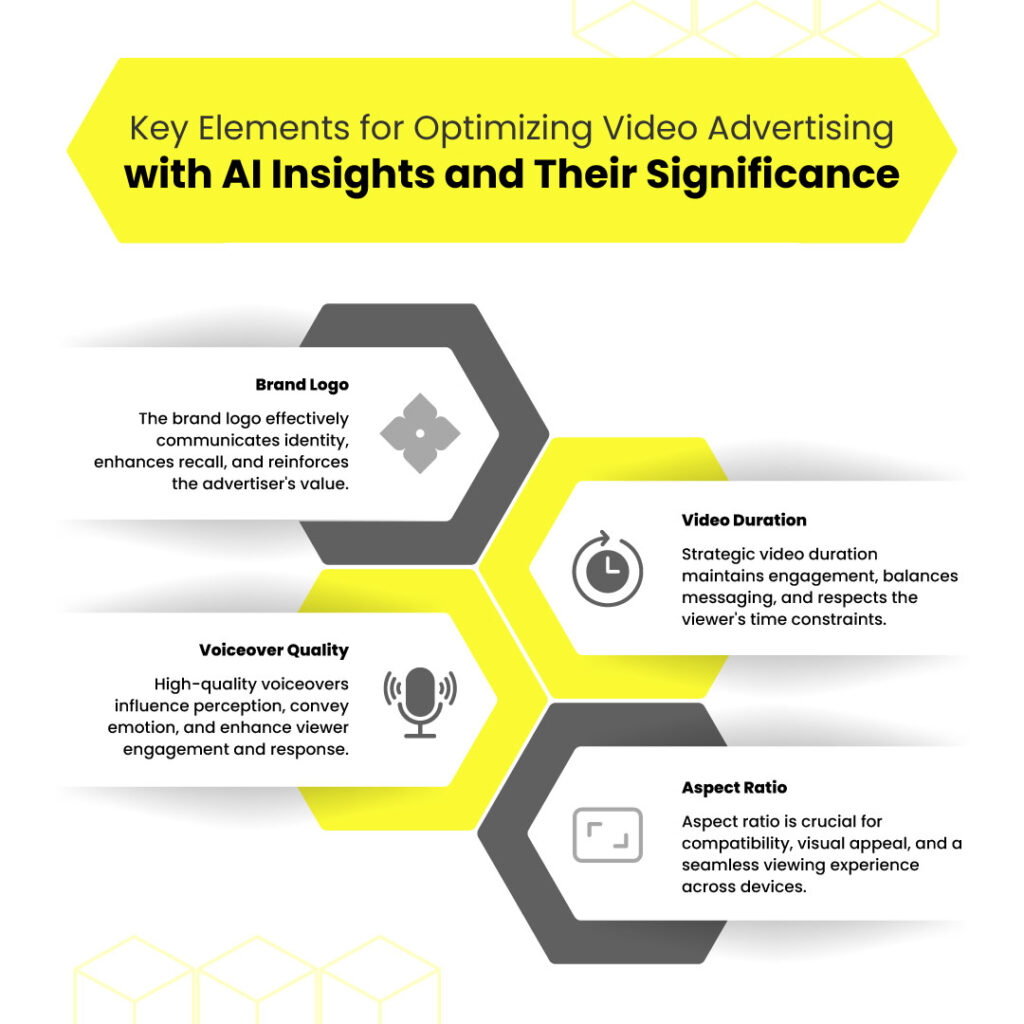
Google’s AI-powered creative guidance evaluates key elements of video ads for improvement. They are as follows;

  • Brand logo

A brand logo is a powerful way to communicate the advertiser’s identity and value proposition to the viewers. It can create a lasting impression and increase brand recall. To optimize the logo display in the video ad, it is important to check its presence, visibility, and clarity. The optimal size, position, and duration for the logo can vary depending on the video content and format.

  • Video duration

A video duration is a strategic decision that affects how well the viewer pays attention, remembers, and engages with the video ad. It can balance the message delivery and the viewer’s time. To choose the right video length, it is important to consider the campaign goal, such as awareness, consideration, or action. The video content and structure should also be aligned with the goal and distribute the key messages and calls to action effectively.

  • Voiceover quality

A voiceover quality is a vital element that influences how the viewer perceives, understands, and responds to the video ad. It can convey the tone and emotion of the message and persuade the viewer to take action. To evaluate the voiceover quality, it is important to consider factors such as volume, pitch, speed, accent, and background noise. The voiceover quality can be improved by using professional voice actors or editing tools.

  • Aspect ratio

An aspect ratio is a key factor that affects the visual appeal, readability, and compatibility of the video ad across different devices and platforms. It can enhance the video quality and ensure that the video fits well on any screen. To assess if the aspect ratio is suitable for the audience and format, it is important to consider factors such as vertical, horizontal, or square. The aspect ratio can be adjusted by cropping, resizing, or reformatting the video.

AI-Powered Video Campaigns

Video advertising is a highly effective and engaging marketing method, but it can be challenging and resource-intensive to create and optimize video ads. AI-powered video campaigns leverage artificial intelligence and machine learning to automate and enhance various aspects of video production and optimization, including content generation, editing, analysis, targeting, and personalization. Here’s why advertisers should consider using AI-powered video campaigns:

  • Increased Efficiency and Productivity

AI streamlines video production by automating tasks such as video editing, adding special effects, generating subtitles, and even creating original content. This reduces the need for human intervention, saving both time and resources in the process.

  • Enhanced Creativity and Innovation

AI can generate diverse video content based on data, keywords, or images. It can suggest creative ideas and variations for video ads based on best practices and user preferences. This empowers advertisers to explore new possibilities and experiment with different styles and formats.

  • Improved Performance and Results

AI can analyze the effectiveness of video ads using various metrics like views, clicks, conversions, retention, and engagement. It optimizes video ads by adjusting content, duration, aspect ratio, voiceover quality, and other elements to align with campaign goals and target audiences. This leads to better outcomes and higher returns on investment.

AI-powered video campaigns leverage artificial intelligence to automate and enhance video production and optimization, increasing efficiency, creativity, and performance. For example, eBay’s “Fill Your Cart With Color” campaign utilized AI to create personalized video ads, resulting in a 12% increase in ad recall, a 40% increase in view-through rate, and a 9% increase in brand awareness. AI in video advertising promises greater relevance, engagement, and effectiveness, making it a valuable tool for marketers and a source of inspiration for the creative industry.

Google’s Commitment to AI in Advertising

Google has been pursuing AI integration in the advertising industry for several years, with the aim of enhancing the creativity, efficiency, and performance of its ad products and services. Some of the examples of Google’s pursuit of AI integration in the advertising industry are:

  • Google Ads

Google’s online advertising platform employs AI for creative guidance, smart bidding, responsive search ads, and dynamic display ads. These features empower advertisers to optimize campaigns using data-driven insights and industry best practices.

  • Google Marketing Platform

This unified platform combines AI-driven advanced analytics, attribution, optimization, and personalization tools. Marketers use these tools to measure and enhance marketing performance across channels and devices.

  • Google Cloud

Google’s cloud computing platform offers AI solutions tailored to various industries, including retail, gaming, media, healthcare, and education. These solutions enable businesses to leverage AI for operational transformation, product development, and improved customer experiences.

AI’s role will be instrumental in crafting more relevant and engaging ads that connect with audiences and drive action. Some of the trends and opportunities for the future of AI in advertising campaigns are:

  • Generative AI

Generative AI is a type of AI that can create original content from scratch or based on existing data, such as images, text, audio, or video. Generative AI can help advertisers produce diverse and novel ad creatives that capture attention and emotion.

  • Emotion Recognition

Emotion recognition is a type of AI that can detect and analyze human emotions from facial expressions, voice tones, body language, or text. Emotion recognition can help advertisers understand how their ads affect the viewers’ feelings and reactions.

  • Personalization

Personalization is a type of AI that can tailor ads to individual preferences, behaviors, contexts, and goals. Personalization can help advertisers deliver more relevant and customized ads that increase engagement and conversion.

Google is committed to advancing AI in advertising and media. Google believes that AI can help advertisers achieve their marketing objectives and provide better experiences for consumers. Google is also committed to developing AI responsibly and ethically, ensuring that its AI products and services are fair, safe, transparent, and accountable.

Conclusion

In the vast world of video advertising, we see a remarkable change. It’s the emergence of AI as the creative force that reshapes the advertising landscape. The main message is clear: AI, exemplified by Google Ads’ “Creative Guidance,” is the link between innovation and storytelling in the world of advertising.

The big picture shows that AI is not just about optimization; it’s a builder of narratives. It enables advertisers to create campaigns that are not only engaging but also effective and personalized. Google’s strong commitment to ethical AI highlights a future where advertising becomes a real and captivating experience, moving beyond mere interruption to genuine inspiration. Instead of repeating the same old messages, AI helps you craft unique and compelling stories that resonate with your audience. It’s a new way of expressing your vision and values, using the power of data and creativity.

Evolution of AI in Google Ads: Automation to Smart Campaigns

Imagine you are browsing the internet on your laptop or smartphone. You are sure to see various ads pop up on different websites and apps, and most times, those ads seem to be quite accurate to what you have been contemplating on buying. You might not realise it, but behind every ad you see, there is a complex process of targeting, creating, and optimising using artificial intelligence (AI).

Google has been at the forefront of artificial intelligence (AI) research and development for many years. One of the areas where Google has been using AI extensively is advertising. Google Ads is Google’s online advertising platform that allows advertisers to create and display ads on Google’s network of websites and apps. It operates on a pay-per-click (PPC) model, which means that advertisers only pay when someone clicks on their ads. To determine which ads to show to which users, Google uses a complex algorithm that takes into account various factors, such as keywords, bids, quality score, relevance, and more.

In this blog post, we will explore how AI has evolved in Google Ads and how it can help advertisers to create and manage their online advertising campaigns more easily and effectively. We will also look at some of the benefits and challenges of using AI in Google Ads, as well as some tips for a smooth transition to AI-driven advertising.

The Rise of Automated Bidding Strategies

Bidding is one of the most important aspects of online advertising, as it determines how much an advertiser pays for each click on their ads. Bidding also affects the visibility, relevance, and performance of the ads. To simplify and optimise the bidding process, Google Ads offers automated bidding strategies, which are a feature that allows advertisers to automatically adjust their bids based on their campaign goals and performance. Google Ads uses AI to create and optimise these bids based on various factors, such as user behaviour, context, intent, and more.

Automated bidding strategies have become more popular and prevalent in recent years, as they offer many benefits for advertisers, such as saving time and effort, improving their return on ad spend (ROAS), and reaching more potential customers. Google Ads offers different types of automated bid strategies for different goals and scenarios, such as maximise conversions, target CPA, target ROAS, enhanced CPC, and target impression share.

Understanding Smart Campaigns and Their Benefits

With the aim of rendering online advertising effortless and attainable for small businesses, Google Ads offers smart campaigns, which are a type of Google Ads campaign that are designed to simplify and optimise the advertising process. Smart campaigns use conversational AI to help advertisers create and manage their campaigns using natural language and voice commands.

Google Smart campaigns work by asking advertisers a few simple questions about their business, such as their name, location, products, services, and goals. Based on these inputs, Google uses conversational AI to generate a customised campaign plan that includes ad copy, keywords, budget, and targeting options. Advertisers can review and edit their campaign plan using voice or text commands, or by tapping on the screen.

AI-Driven Ad Extensions and Ad Formats

Ad extensions and ad formats are features of Google Ads that allow advertisers to enhance their ads with additional information, such as phone numbers, locations, ratings, reviews, images, videos, and more. They help advertisers to increase their click-through rates, conversions, and brand awareness. However, creating and optimising these features can be a difficult and tedious task, as it requires a lot of creativity, testing, and analysis.

To make ad extensions and ad formats easier and more effective, Google Ads uses AI to generate and optimise these features based on the advertiser’s goals and the user’s context. Google smart Ads uses chatbots powered by GPT-3, a state-of-the-art natural language generation model, to create catchy and creative ad copy and headlines for different ad formats and extensions. The chatbots can understand the advertiser’s input, such as their product name, description, target audience, and keywords, and generate relevant and personalised ad content based on them. The chatbots can also adapt their tone and style to match the advertiser’s brand voice and the user’s preferences.

Implementing AI for Efficient Budget Management

Incorporating AI into budget management, particularly within the context of platforms like Google Ads, holds significant promise for optimising advertising campaigns and maximising return on investment. By analysing historical data and user behaviour, AI optimises budget allocation across campaigns and keywords in real-time. This adaptability prevents overspending, maximises engagement, and refines strategies for more effective campaigns.

AI revolutionises Google Ads budget management through predictive insights. By analysing past performance and future trends, AI assists in proactive budget allocation. AI automation of tasks like bid adjustments and A/B testing further empowers marketers to focus on strategy, promising cost-effective campaigns, broader reach, and higher conversions.

AI-Powered Ad Scheduling and Targeting

AI-driven ad scheduling and targeting revolutionise digital advertising. Using AI, campaigns are optimised by analysing user behaviour, historical data, and context to display ads when they resonate most. This boosts engagement and potentially increases conversions, while AI-refined targeting ensures tailored messages for specific audiences, enhancing campaign efficiency and personalisation.

The synergy of AI-powered ad scheduling and targeting not only maximises the efficiency of ad expenditure but also fosters a more personalised and engaging advertising experience, ultimately leading to better results and a stronger return on investment.

Analysing Performance Metrics with AI Insights

As AI continues to shape the landscape of digital advertising, its role in deciphering performance metrics takes centre stage. Gone are the days of manual analysis – AI now dives into the vast pool of data, extracting meaningful patterns and correlations that may have eluded human observation.

Through sophisticated algorithms, AI scrutinises campaign performance metrics with unparalleled precision. It identifies trends, spotlights key indicators of success, and pinpoints areas of improvement. By discerning which keywords, ad copies, and targeting strategies yield the best outcomes, AI empowers advertisers to make data-driven decisions that elevate campaign efficacy. This progression from mere automation to strategic insights marks a transformative shift, as AI not only streamlines operational tasks but also equips advertisers with the intelligence to optimise strategies and achieve a higher return on ad spend.

Real-Life Success Stories with Smart Campaigns

Google Ads smart campaigns use AI to create and optimise ads for small businesses. They are designed to be simple, fast, and effective, as they automatically adjust the ads based on the performance and the goals of the advertisers. Smart campaigns can help businesses reach more customers, drive more actions, and save more time and money. Here are some real-life success stories that speak for themselves. 

  • Airbnb: Airbnb uses Smart Campaigns to create and target ads that show its diverse and safe rentals in India. This doubled its brand awareness and increased its bookings by 25%.
  • Spotify: Spotify uses Smart Campaigns to create and target ads that offer free trials and personalised playlists in Latin America. This boosted its user acquisition by 50% and its subscriptions by 30%.
  • L’Oréal: L’Oréal uses Smart Campaigns to create and target ads that promote its online store, delivery options, and customer reviews during the pandemic. This increased its sales by 40% and its repeat purchases by 20%.

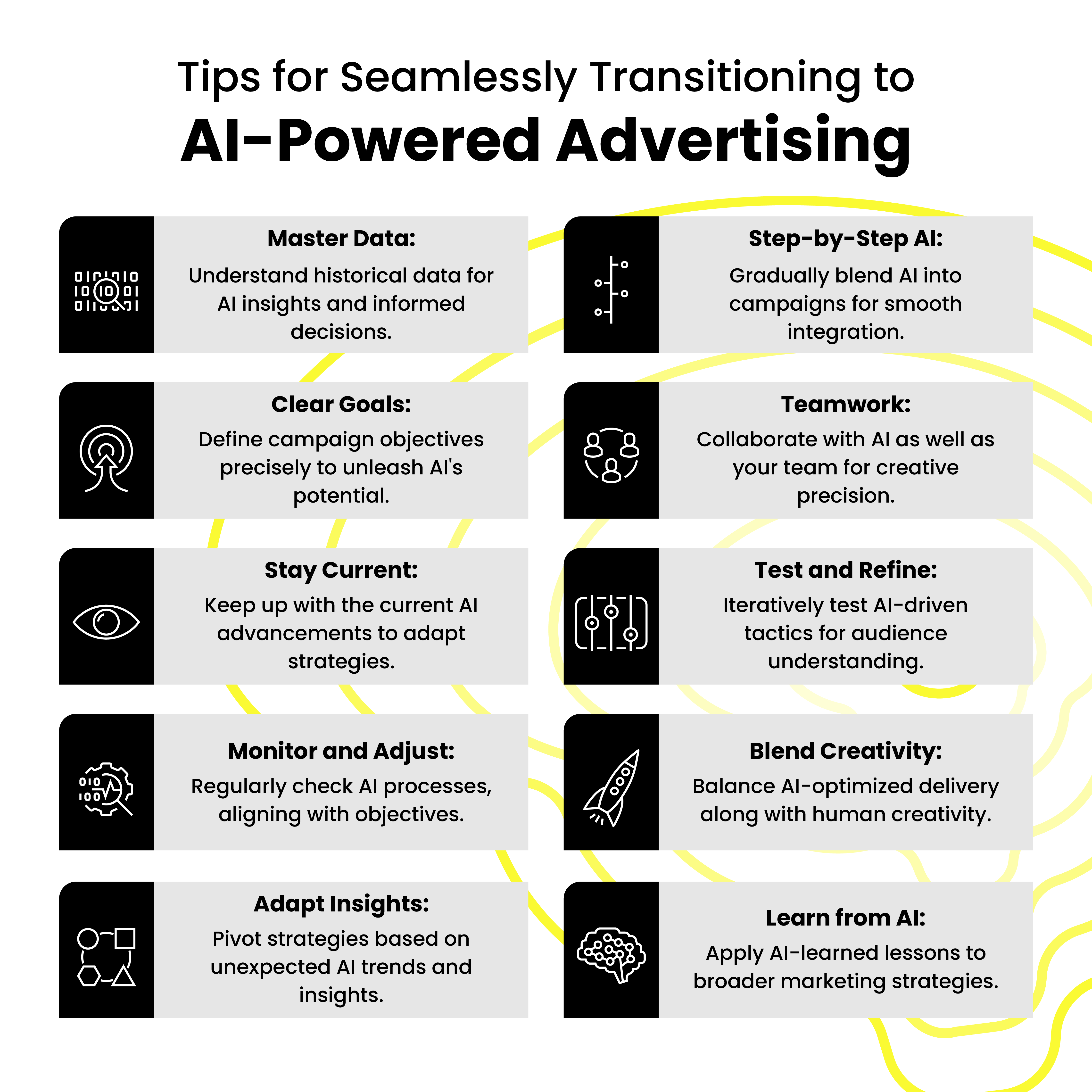
Tips for a Smooth Transition to AI-Driven Advertising

Transitioning to AI-driven advertising involves trusting and relying on AI to make decisions and suggestions for your ad campaigns, which can be difficult for some advertisers who are used to manual control and intervention. Here are some tips for a smooth transition to AI-driven advertising.

  • Data Mastery: Cultivate a deep understanding of your historical campaign data. AI thrives on insights, and by comprehending your past performance, you empower AI to make informed decisions.
  • Incremental Adoption: Embrace AI gradually. Start by integrating AI features into existing campaigns, allowing for a smoother learning curve and minimising disruption.
  • Refined Objectives: Clearly define your campaign goals. AI’s potential is maximised when it knows precisely what outcomes you’re aiming for.
  • Collaboration: Establish a collaborative environment between your marketing team and AI. This synergy leverages human creativity and AI precision for optimal results.
  • Continuous Learning: AI evolves, and so should your understanding. Stay updated with AI advancements in Google Ads to adapt and capitalise on new features.
  • Testing and Optimization: Consistently test different AI-driven strategies and analyse their performance. This iterative approach refines AI’s understanding of your target audience.
  • Monitoring and Adjustments: While AI automates many processes, regular monitoring is vital. Be ready to make adjustments to maintain alignment with your campaign objectives.
  • Creativity in Ad Design: AI can optimise delivery, but compelling ad content requires human creativity. Balance data-driven insights with captivating visuals and copy.
  • Adapting to Insights: AI insights might uncover unexpected trends. Be open to pivoting strategies based on these discoveries for maximum effectiveness.
  • Learning from AI: As AI refines its understanding of your audience, reciprocate by learning from AI’s decisions and applying those lessons to broader marketing strategies.

In conclusion, AI is a game-changer and a disruptor that can transform the online advertising industry and the digital economy. It can help advertisers create, optimise, and manage their online ads more effectively and efficiently. Advertisers who embrace AI-driven advertising can gain a competitive edge and a strategic advantage. On the other hand, those who ignore or resist AI-driven advertising can lose their relevance and market share. Therefore, advertisers need to follow best practices for using AI in Google Ads, such as setting clear goals, testing different options, monitoring results, etc.

By using AI in Google Ads, advertisers can create more engaging and effective ads that can help them to reach and attract more customers, increase their conversions and sales, and achieve their goals.

New Google Lead Form Extension Convert Users Without Ad Clicks

Launching fresh out of its Beta Testing Phase is Google Ads newest feature and that too a really cool one indeed. Google Ads will now let its users fill up a lead form without leaving the SERP environment.

The Lead Form Extension feature, which was in the beta cycle since last year, debuts full-scale this month amid high expectations. Now users can fill up a form which pops up directly with a click on the heading of an ad in Google Search, Video, and Discovery Campaigns. This would mean better lead quality and higher conversion rates for advertisers promoting their products and services.

How does it work?

Conventionally, for lead capture, the user journey culminates on a landing page but now, when an advertiser opts in for a Lead Form Extension, the user can submit contact details by clicking on the Ad’s headline through a lead form that appears in the SERP itself. The lead form data can then be downloaded through a CSV file or synced to a CRM using a web-hook. After the form is completed, it is up to the user to visit the connected landing page or continue browsing Google Search.

What are its Benefits?

By providing an engagement interface within SERP, this new feature will help in generating more leads, increase lead quality and conversion rate along with improving ad engagement.

How to pull out the Data?

Advertisers can manually download the data collected over the past 30 days in a CSV file format directly from Google Ads. Alternatively, a web-hook can be used to push the collected data into the CRM.

Who is eligible to use it?

Google has specified the pre-requisites for advertisers who can use lead form extensions in their ads. They need to have –

  • a good history of policy compliance
  • a privacy policy to include in the lead form
  • a Google Ads account in an eligible vertical or sub-vertical. Sensitive verticals or sub-verticals are not eligible 

In addition, if lead form extensions are to be added to a Video or Discovery campaign, the Google Ads account should have a total spend of more than USD50,000 (or equivalent in non-USD currency). Read more on Google Ad Policies

What to be careful about?

When using this extension, it is highly important to analyse the user’s customer journey. This feature would work better for audiences that are far along in the funnel, in comparison to the ones at the awareness stage. The simple reason being higher clarity of thought and intent to purchase.


Got questions? Reach out to us.