Navigating Digital Advertising for Stem Cell Therapies in the UAE: Google and Meta Policies

The field of regenerative medicine—particularly stem cell therapies—has emerged as a promising avenue for treating chronic and degenerative conditions. However, as with many breakthrough medical treatments, the digital promotion of these therapies requires stringent oversight to prevent misinformation, safeguard public health, and ensure ethical practices. In the United Arab Emirates (UAE), the regulatory framework governing the advertising of medical therapies is both sophisticated and multifaceted, with significant implications for digital advertising platforms like Google and Meta (Facebook/Instagram).

This article explores the specific ad policies that regulate stem cell therapies on these major digital channels, examines the role of UAE governmental bodies, and discusses the challenges and future directions in this rapidly evolving field.

The Promise and Complexity of Stem Cell Therapies

Stem cell therapies hold potential in treating a wide range of conditions—from degenerative diseases to chronic injuries—by harnessing the body’s natural ability to repair and regenerate tissues. However, the promise of these therapies has also attracted a fair share of unsubstantiated claims and speculative promotions. Given the high stakes, both patients and regulatory bodies demand clarity and evidence-based communication.

Educational content, such as peer-reviewed research and scientific conference announcements, is generally acceptable. However, direct promotional language that implies a “miracle cure” or guarantees outcomes is strictly prohibited. The need for such regulatory precision has been underscored by organizations like the International Society for Stem Cell Research (ISSCR), which warns against exploiting educational exemptions to market unproven therapies . 1

Regulatory Framework in the UAE

The UAE government has established a robust regulatory system to oversee medical advertising. At the federal level, the Ministry of Health and Prevention (MOHAP) mandates that all medical advertisements—including those for stem cell therapies—undergo a rigorous pre-approval process. 2 This process ensures that any content disseminated to the public complies with established safety, ethical, and clinical standards .

In addition to MOHAP’s oversight, local regulatory bodies such as the Dubai Health Authority (DHA) and the Abu Dhabi Department of Health (DOH) impose further restrictions. For example, in Dubai, stem cell therapies may only be advertised if they fall within the Dubai Healthcare City (DHCC) free zone. 3 Here, only clinics demonstrating adherence to Good Laboratory Practice (GLP) and Good Clinical Practice (GCP) standards can legally promote their services .

These layers of regulation ensure that advertisements are not only truthful but also prevent claims that could lead to public harm. Prohibited content includes claims that promise cures for serious illnesses (e.g., cancer, autism, or genetic disorders), the use of exaggerated terms like “miracle cure,” and promotions lacking clear disclosure of potential side effects or contraindications . 4

Google Ads: Policies for Stem Cell Therapies

Google’s advertising platform is one of the most widely used channels for digital marketing. Globally, Google enforces a strict policy regarding speculative medical treatments, particularly those involving cell and gene therapies. According to its guidelines, advertisements must not promote unapproved therapies. Instead, Google permits content that is purely educational—such as research findings, peer-reviewed studies, and scientific conference announcements—provided that the language remains neutral and does not imply direct therapeutic efficacy . 5

In the context of the UAE, the restrictions are even more rigorous. Advertisers are required to 6:

  • Obtain Pre-Approval: All promotional content must be pre-approved by MOHAP through its electronic portal. This step is crucial to confirm that the ad meets safety and ethical standards.
  • License Submission: Advertisers must supply licenses from the UAE Media Council, along with FDA-equivalent approvals (if applicable), to satisfy the compliance review process.
  • No Direct Calls-to-Action: Ads are barred from including direct calls-to-action such as “Book now” or “Get treated.” This prevents the content from being perceived as a direct solicitation for unapproved therapies.
  • Geotargeting Restrictions: Campaigns targeting the UAE are limited in scope. They must avoid areas where the promotion of stem cell therapies is either broadly restricted or subject to additional local prohibitions .

These measures reflect Google’s commitment to balancing free information exchange with public health concerns. They also underscore the importance of ensuring that promotional content is backed by rigorous clinical evidence and regulatory oversight.

Meta’s Approach to Stem Cell Therapy Advertising

Meta, which operates popular platforms like Facebook and Instagram, follows a policy framework that is largely aligned with UAE federal laws. 7 Advertisers promoting stem cell therapies on Meta must secure proper licensing from both MOHAP and the UAE Media Council before their campaigns go live. This licensing is not merely a bureaucratic formality; it acts as an assurance that the therapy has undergone appropriate clinical evaluations and adheres to safety standards.

Key aspects of Meta’s policies include:

  • Content Restrictions: Advertisements cannot use language that implies guaranteed therapeutic efficacy unless robust clinical evidence is provided. For instance, terms such as “stem cell cure” or “miracle treatment” are flagged automatically by Meta’s review systems.
  • Disclosure Requirements: Any financial relationships with influencers or third-party promoters must be clearly disclosed. This transparency helps avoid conflicts of interest and ensures that the content is not misleading.
  • Manual Oversight: Despite the use of automated review systems, certain campaigns that include restricted keywords require manual approval from UAE regulators. This dual-layer review process is designed to catch any nuanced or borderline cases that might slip through automated filters .
  • Influencer Marketing Controls: The Dubai Health Authority’s Social Media Advertising Guidelines prohibit influencers from endorsing therapies that lack solid clinical validation. Violations can result in significant fines, with reported cases reaching up to AED 200,000 in 2024.

The emphasis on manual review and licensing helps Meta ensure that any information related to stem cell therapies remains within the bounds of responsible advertising and does not contribute to misinformation.

Beyond Google and Meta: The Wider Digital Landscape

While Google and Meta are the primary platforms for digital advertising, other channels also play a role in disseminating information about stem cell therapies. E-commerce sites and telemedicine platforms in the UAE are subject to similar regulatory oversight. For example, platforms like Amazon.ae must adhere to MOHAP’s approval processes, ensuring that even product descriptions and listings do not contain unauthorized claims. 8

Search Engine Optimization (SEO) and content marketing are less directly regulated; however, the Telecommunications and Digital Government Regulatory Authority (TDRA) monitors these platforms for prohibited health claims. Clinics that use blog posts or video content to discuss stem cell therapies must avoid:

  • Implied success rates or cure percentages (e.g., “80% patient improvement”).
  • Testimonials that uncritically praise unproven therapies.
  • Unsubstantiated comparisons with conventional treatments.

In addition, the rise of influencer marketing in the healthcare sector has led to specific regulations. Influencers promoting stem cell therapies are required to secure a Media Council license and clearly disclose any financial or promotional relationships. The emphasis on transparency and regulatory compliance aims to protect consumers from being misled by unverified or overly optimistic claims.

Compliance, Enforcement, and Penalties

The UAE’s robust regulatory framework is enforced through a series of penalties for non-compliance. For instance, violations can result in hefty fines—up to AED 500,000 from MOHAP—as well as clinic suspensions. In 2024 alone, several Dubai-based clinics faced suspensions for promoting unapproved stem cell treatments on Instagram. The UAE Media Council has also levied fines ranging between AED 100,000 and AED 200,000 for unlicensed social media advertising campaigns . 9

Furthermore, advanced AI tools deployed by the TDRA are now used to scan digital content in real time. While this technology enhances enforcement capabilities, there is an ongoing debate about its potential to over-block content that might be educational rather than promotional. 10

Notably, recent policy revisions have added another layer of complexity. In October 2024, Google amended its ads policy in the United States to permit FDA-approved therapies. However, this exception does not apply in the UAE, where local regulations remain stringent. The ISSCR has recently advocated for geofencing technologies to prevent cross-border ads from targeting UAE residents with unapproved therapies, highlighting the dynamic nature of these regulatory challenges .

Challenges and Future Directions

Another challenge lies in maintaining a balance between innovation and regulation. On one hand, emerging regulatory frameworks—such as Dubai’s draft regulations permitting accredited clinics outside DHCC to advertise their services after completing Phase III trials—aim to foster growth in regenerative medicine. On the other hand, regulators must ensure that any relaxation of advertising restrictions does not compromise patient safety.

The evolving digital advertising landscape for stem cell therapies poses several challenges. One key concern is the potential exploitation of educational exemptions. Critics argue that clinics might use these exemptions as a loophole to indirectly market unproven therapies. Such practices have prompted calls for enhanced content moderation and clearer guidelines to differentiate between genuine educational content and subtle promotional messages .

Technological advancements, particularly the use of AI in monitoring digital content, are likely to play an increasingly significant role. AI can help streamline the review process and flag potentially misleading content before it reaches consumers. However, the risk of over-blocking legitimate educational content remains a critical point of contention among stakeholders.

Future directions may also include a more harmonized approach between global platforms and local regulations. As the ISSCR and other international bodies push for clearer guidelines and geofencing measures, platforms like Google and Meta might need to adjust their global policies to account for the unique regulatory environments in different regions. Such measures could help ensure that users in markets like the UAE receive accurate and compliant information, thereby reducing the risk of harm from unapproved treatments.

Conclusion

Digital advertising for stem cell therapies in the UAE represents a complex interplay between innovative medical science and rigorous regulatory oversight. Platforms such as Google and Meta are required to navigate a maze of pre-approval processes, licensing requirements, and content restrictions to ensure that only safe, evidence-based information reaches potential patients.

The UAE’s comprehensive framework—mandated by bodies like MOHAP, DHA, DOH, and the UAE Media Council—ensures that promotional content is subject to multiple layers of scrutiny. Advertisers must adhere to strict guidelines that prevent unsubstantiated claims, enforce clear disclaimers, and require robust clinical evidence before any promotion can proceed.

As the landscape of regenerative medicine continues to evolve, both regulators and digital platforms face the challenge of balancing innovation with patient safety. With ongoing developments such as enhanced AI monitoring, proposed geofencing measures, and potential regulatory adjustments, the future of digital advertising for stem cell therapies is set to become even more sophisticated.

In essence, while digital platforms provide an unprecedented opportunity for disseminating vital health information, the stakes are particularly high when it comes to emerging therapies like stem cell treatments. Rigorous compliance and transparent practices are not only a legal necessity but also an ethical imperative—one that ensures public trust and the long-term success of regenerative medicine.


References

  1. https://www.isscr.org/isscr-news/the-isscr-letter-on-google-ads-policy
  2. https://mohap.gov.ae/en/w/mohap-continues-to-provide-inspection-of-private-medical-and-pharmaceutical-facilities-services
  3. https://clinmedjournals.org/articles/ijscrt/international-journal-of-stem-cell-research-and-therapy-ijscrt-8-073.php?jid=ijscrt
  4. https://cms.law/en/int/expert-guides/cms-expert-guide-to-advertising-of-medicines-and-medical-devi
  5. https://support.google.com/adspolicy/answer/15596627?hl=en
  6. https://mohap.gov.ae/documents/20117/1212145/code+of+ethical+practices+for+the+promotion+and+distribution+of+medical+products+english-410.pdf/421e3579-bae1-7214-2878-d604d92e7af5?t=1739157553757
  7. https://transparency.meta.com/en-gb/policies/ad-standards/restricted-goods-services/drugs-pharmaceuticals/
  8. https://sellercentral.amazon.ae/help/hub/reference/external/200333160?ref_=sdae_soa_sell_xscus_200333160&initialSessionID=262-6572243-0671737&ld=SDKRSOADirect
  9. https://www.sca.gov.ae/en/media-center/news/25/2/2025/the-sca-imposes-aed-115-million-fines-on-non-compliant-companies-to-enhance-financial-market.aspx
  10. https://tdra.gov.ae/en/media/press-release/2023/tdra-launches-ai-initiatives-to-support-digital-government-enablers

Home of Performance Partners with Paymentology to Reinvent Its Global SEO and Paid Media Services

  • Strategic collaboration between Home of Performance and Paymentology to enhance global visibility
  • Targeting digital banks, fintechs, and traditional banks worldwide
  • Comprehensive SEO and Paid Media solutions to drive scalable growth

Dubai, UAE – Home of Performance (HOP), a leading digital marketing agency, is proud to announce a groundbreaking partnership with Paymentology, the global leader in card issuing and processing solutions. This collaboration aims to amplify Paymentology’s reach and market visibility across continents through targeted SEO and Paid Media services. Together, the two companies will redefine how digital banks, fintechs, and traditional banking institutions scale their card issuing capabilities globally.

As Paymentology continues to drive innovation in the financial technology sector, this strategic alliance will unlock new opportunities for expansion. Leveraging HOP’s expertise in digital marketing and data-driven strategies, the partnership will create greater visibility for Paymentology’s cloud-native card issuing and global processing solutions.

The fintech industry is booming, with card issuing solutions becoming a cornerstone for banks and fintechs looking to scale at speed. Yet, market saturation and rising competition create challenges for brands to stand out. Paymentology, with its superior infrastructure and powerful APIs, offers the perfect solution for seamless global card issuance. To ensure this unparalleled offering reaches the right audience, Home of Performance (HOP) will deploy its specialized SEO and Paid Media strategies to accelerate growth.

“At Home of Performance, we believe in empowering brands with the tools to not only survive but dominate their industry,” says John von Hofsten, Managing Director of Home of Performance. “Partnering with Paymentology, a leader in cloud-native card solutions, presents an exciting opportunity to redefine visibility in the fintech space. With our proven SEO expertise and tailored Paid Media campaigns, we’re set to elevate Paymentology’s market presence on a global scale.”

Paymentology’s cloud-native infrastructure and worldwide presence allow banks and fintechs to issue and manage cards in over 60 countries, spanning 14 time zones. As the company processes over 1 billion transactions annually, its reputation as a trusted partner to leading digital banks like Wio and Mox continues to grow. Now, with HOP’s innovative approach, Paymentology will strengthen its global authority and reach even broader markets.

With over 24 years of experience and expertise in cloud-native processing, Paymentology delivers unmatched flexibility, scalability, and speed to banks and fintechs across the globe. This collaboration between HOP and Paymentology highlights their shared commitment to innovation, growth, and client success, ensuring fintechs and banks can deliver cutting-edge card solutions seamlessly.

Home of Performance’s proven track record in SEO optimization and Paid Media management makes it the perfect partner for Paymentology’s ambitious goals. From improving search visibility and driving quality leads to increasing conversion rates, HOP will utilize its expertise to generate measurable results for Paymentology’s card issuing offerings.

About Home of Performance (HOP)

Home of Performance (HOP) is a leading digital marketing agency, specializing in SEO, Paid Media, content marketing, and performance-driven strategies. Based in Dubai, HOP partners with global brands to deliver tailored solutions that drive growth, increase visibility, and maximize ROI. With a proven track record of success, HOP is trusted by businesses across industries to create impactful digital strategies that transform their presence in competitive markets.

About Paymentology

Paymentology is the world’s leading cloud-native card issuing and processing platform, providing solutions for banks, digital banks, and fintechs. With operations in over 60 countries and expertise spanning 14 time zones, Paymentology processes over 1 billion transactions annually, helping financial institutions issue cards quickly, securely, and at scale. Trusted by leading banks like Wio and Mox, Paymentology is redefining card issuance globally.

Home of Performance Welcomes Tahir Kheshgi and Mohamed Ballout to the Management Team

Dubai, UAE – December 19, 2023: Home of Performance (HOP), the award-winning digital agency known for its game-changing strategies and exceptional performance, is thrilled to announce the appointment of two new powerhouses to its management team: Tahir Kheshgi as Digital Director and Mohamed Ballout as Head of Social Media.

Tahir Kheshgi brings a wealth of expertise and proven success to HOP, having spearheaded digital transformation initiatives as Head of Digital at Americana for the past four years. Tahir’s extensive experience in driving digital innovation and growth will be invaluable in HOP’s ambitious plans to expand its digital offerings and services. Joining forces with HOP’s Managing Director John von Hofsten and Strategy Director Warren LaRey, Tahir will play a key role in strengthening the agency’s senior management team.

Mohamed Ballout, affectionately known as “Mo” within the social media sphere, joins HOP from AKQA, where he established himself as a social media leader. Mo’s deep understanding of the ever-evolving social landscape and proven success in crafting engaging campaigns will be instrumental in leading and accelerating HOP’s social media growth. As Head of Social Media, Mo will leverage his creative vision and strategic thinking to amplify HOP’s impact and reach, further solidifying its position as a leading digital force.

John von Hofsten, Managing Director at Home of Performance, expressed his enthusiasm about the new appointments: “We are delighted to welcome Tahir and Mo to the HOP family. Their exceptional talent, proven track records, and passion for excellence perfectly align with our ambitious vision for the future. Tahir’s strategic management and digital expertise will be instrumental in driving our growth and innovation, while Mo’s creative spark and social media know-how will ensure we stay ahead of the curve. Together, they represent a formidable addition to our team, and we are confident that they will play a pivotal role in propelling HOP to even greater heights.”

With these strategic hires, Home of Performance reaffirms its commitment to pioneering impactful digital solutions, exceeding client expectations, and solidifying its position as a leading force in the region’s digital landscape.

About Home of Performance:

Home of Performance (HOP) is an award-winning digital agency with a singular focus – driving performance for its clients. Combining world-class expertise in strategy, creativity, and technology, HOP crafts data-driven solutions that deliver tangible results. From Paid Media and SEO to Social Media and Content Marketing, HOP’s full-service offering empowers brands to thrive in the ever-evolving digital landscape. Recognized for its exceptional achievements, HOP has been named MENA Search Agency of the Year and Best Performance Campaign at the MENA Search Awards, amongst other accolades.

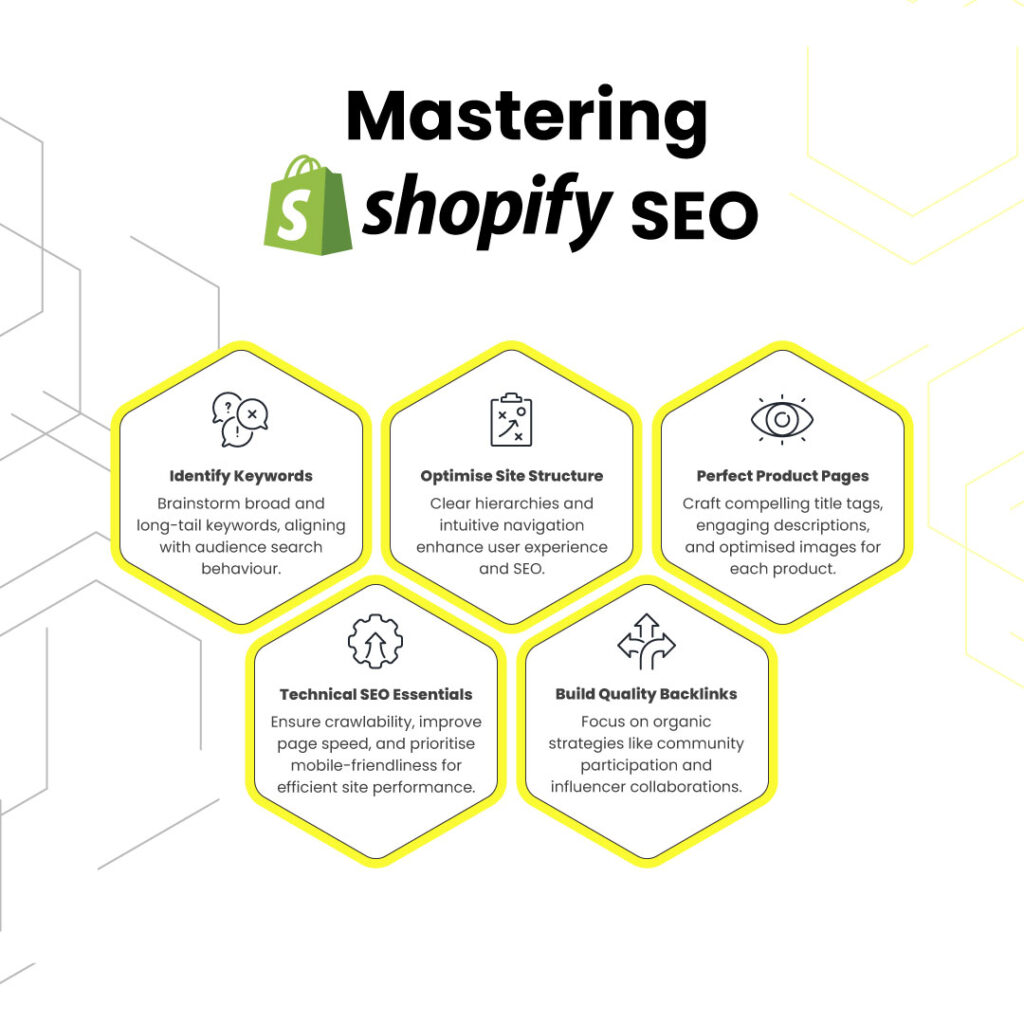
Mastering Shopify SEO: A Comprehensive Guide to Boosting Your Online Store’s Visibility and Sales

Shopify stands as a powerful platform in the e-commerce domain, enabling entrepreneurs to set up and run online stores with remarkable ease. However, amidst the virtual shelves and digital transactions, there exists a vital element that can make or break the success of any Shopify store: Search Engine Optimisation (SEO). 

In an era where online visibility is synonymous with credibility and trust, SEO plays an essential role in ensuring that Shopify stores not only get noticed but also thrive. Effective SEO techniques can significantly enhance your store’s online visibility, making it more likely to appear in search engine results. This visibility isn’t just about being seen; it directly impacts the influx of organic traffic, drawing potential customers to your virtual storefront. By optimising your Shopify store, you attract relevant visitors and enhance user experience, making it more likely for visitors to stay, explore, and ultimately make a purchase. 

How Do You Improve SEO on Shopify?

Step 1: Identify the Right Keywords for Your Shopify Store

In the competitive realm of online retail, the key to unlocking your Shopify store’s full potential lies in understanding the intricacies of keyword research. This essential process not only bridges the gap between your offerings and customer intent but also significantly enhances your store’s visibility in the vast digital marketplace.

  1. Keyword Research for Shopify

Effective research begins with understanding your audience. Brainstorm broad keywords related to your products, considering customer feedback and social media trends. Analyse competitors and trending topics to refine your list, aligning it with your audience’s search behaviour.

  1. Long-tail keywords

Long-tail phrases cater to niche audiences, offering focused relevance. Despite lower search volume, they attract highly interested customers, crucial for niche markets. Optimising for these specific keywords ensures your Shopify store appears in precise searches, boosting visibility, increasing conversions, and engaging customers effectively.

Step 2: Set up the Right Shopify Site Structure

Your Shopify site’s structure serves as the architectural blueprint that underpins your SEO success. A well-organised and intuitive site structure not only enhances user experience but also signals search engines, guiding them to index and rank your pages effectively.

  1.  Importance of Site Structure in SEO

A well-organised site structure is vital for SEO, enabling efficient crawlability and indexing. Clear hierarchies enhance search engine understanding, ensuring accurate categorisation of products and content. Proper structure is the foundation for search engines to navigate and rank your Shopify store effectively.

  1. Creating a User-Friendly Navigation

User-friendly menus and logical product categorisation enhance visitor experience. Clear labels and intuitive design help users understand content. Implementing internal links guides users to explore more products. A seamless navigation system ensures visitors can easily discover and engage with your Shopify store.

Step 3: Optimise Shopify Product and Collections Pages On-Page SEO

Mastering the optimisation of product and collections pages is akin to crafting a compelling narrative for your online store. Each element, from title tags and meta descriptions to product descriptions and image optimisation, weaves together to form a seamless user experience and bolster your search engine visibility.

  1.  Title Tags and Meta Descriptions

Craft descriptive, keyword-rich title tags and enticing meta descriptions. Incorporate relevant keywords naturally for your target audience’s search intent. Well-optimised tags and descriptions enhance click-through rates and visibility in search results.

  1.  Product Descriptions

Create detailed product descriptions outlining features, benefits, and unique selling points. Engage visitors with persuasive language, addressing common queries organically. Ensure descriptions feel natural, informative, and incorporate relevant keywords seamlessly.

  1.  Image Optimisation

Optimise images by compressing without loss of quality for faster loading. Use descriptive file names and relevant alt text with keywords. Properly optimised images enhance site speed and contribute to accessibility, ensuring search engines understand your visual content.

Step 4: Find and Fix Shopify Technical SEO Issues

Addressing technical issues is akin to fine-tuning the engine of a high-performance vehicle. Technical SEO ensures that your Shopify store operates at peak efficiency, not only pleasing your visitors but also impressing search engines.

  1. Crawlability and Indexability

Ensure search engines can crawl effectively using robots.txt and submit a comprehensive XML sitemap. Regularly check for crawl errors with tools like Google Search Console, addressing issues promptly to maintain site visibility.

  1. Page Speed Optimisation

Improve loading speed by compressing images, utilising browser caching, and reducing code complexity. Implement lazy loading for images and videos to enhance user experience. Fast-loading pages reduce bounce rates, boosting engagement and positively impacting SEO rankings.

  1. Mobile-Friendliness

Adopt a responsive design for seamless mobile experience. Test on various devices and browsers to ensure uniform functionality. Google prioritises mobile-friendly sites, making mobile optimisation crucial for technical SEO. Responsive design guarantees consistent user experience across devices, enhancing your site’s search engine rankings.

Step 5: Build Better Links in Shopify

Backlinks are the digital endorsements that elevate your Shopify store’s credibility and visibility. Building high-quality backlinks isn’t just a strategy; it’s an essential art that propels your online presence.

  1.  Importance of Backlinks in SEO

Backlinks signal your store’s credibility to search engines, influencing rankings. Links validate content authenticity, establishing trust and relevance. The more high-quality backlinks your Shopify site earns, the more credible it becomes, boosting visibility and attracting organic traffic effectively.

  1.  Strategies for Building Quality Backlinks

Build backlinks organically through guest posts on industry blogs, collaborations with influencers, and engaging content creation. Craft shareable infographics and in-depth articles to naturally attract links. Active participation in online communities and social media platforms can also lead to valuable backlink opportunities, enhancing your store’s authority.

Other Shopify SEO Tips

In the landscape of Shopify SEO, staying ahead requires a multifaceted approach. In this final step, we’ll explore these advanced techniques, unveiling how they synergise with your Shopify store to create a compelling online presence.

  1.  Content Marketing

Craft engaging content addressing common queries and showcasing products. Utilise blogs, videos, and podcasts to resonate with your audience. High-quality, regularly updated content positions your Shopify store as an authoritative source, attracting organic traffic and fostering credibility.

  1. Social Media Integration

Integrate your store seamlessly with platforms like Facebook and Instagram. Leverage social media for product showcases and promotions. Encourage sharing through social buttons, fostering engagement. Timely responses to comments and messages enhance your social media presence, creating an interactive online community.

  1.  User-Generated Content

Encourage customers to provide authentic reviews and product showcases. Highlight user-generated content on product pages, fostering trust. Engage with contributors, expressing gratitude and featuring their contributions. User-generated content not only provides social proof but also enhances your Shopify store’s credibility and customer engagement.

Shopify SEO Is the Secret Ingredient to a Successful Shopify Store

Shopify SEO isn’t just a feature; it’s the backbone of a thriving online store. Effective SEO strategies enhance visibility, attract organic traffic, and drive conversions. By optimising product pages, leveraging keywords, and building quality backlinks, Shopify stores can significantly improve their search engine rankings, leading to increased brand exposure and higher sales potential. Understanding the nuances of SEO is essential for any e-commerce venture aiming to succeed in the fiercely competitive digital landscape.

Numerous successful Shopify stores stand as testimonials to the power of SEO. Brands like Gymshark, Allbirds, and MVMT Watches have mastered the art of Shopify SEO, utilising techniques like content marketing, social media integration, and user-generated content to enhance their online presence. These examples showcase how strategic SEO implementation can transform a Shopify store from a digital storefront into a thriving online business, attracting customers from all corners of the internet.

Real-life case studies offer compelling evidence of the impact of SEO on Shopify stores. From modest beginnings to substantial revenue growth, these case studies demonstrate the transformative effect of SEO optimisation. By implementing tailored SEO strategies, businesses have witnessed significant improvements in their search rankings, organic traffic, and, ultimately, their bottom line. These success stories serve as inspiration, highlighting the tangible benefits of investing in Shopify SEO.

Common Shopify SEO FAQs

Q1: Is it necessary to hire an SEO expert for my Shopify store, or can I handle SEO on my own?

Whether you need an SEO expert depends on your familiarity with SEO practices and the complexity of your store. Shopify provides user-friendly tools and guides, allowing beginners to handle basic SEO tasks independently. However, for in-depth optimisation, technical issues, or competitive markets, consulting an SEO expert can provide valuable insights and ensure your strategies align with the latest search engine algorithms.

Q2: How long does it take to see results from Shopify SEO efforts?

The timeline for seeing SEO results varies based on multiple factors, including the competitiveness of your niche, the quality of your SEO efforts, and your website’s history. Generally, significant improvements might take a few months to become noticeable. Consistent efforts, such as creating high-quality content, building backlinks, and improving user experience, contribute to sustained, long-term SEO success. Patience and consistent optimisation are key when it comes to SEO.

Q3: Can Shopify apps improve my SEO?

Yes, Shopify apps can enhance your SEO efforts. There are various apps available that offer features like automated SEO optimisation, sitemap generation, and image compression, helping you streamline your SEO tasks. However, it’s essential to choose reputable apps that align with your specific SEO goals; a well-rounded SEO strategy involves diverse tactics.

In conclusion,

Mastering Shopify SEO is not just a valuable skill; it’s a necessity in the fiercely competitive realm of online retail. As the digital marketplace continues to expand, ensuring your online store’s visibility and sales requires a strategic approach to search engine optimisation specific to the Shopify platform and e-commerce SEO.

By delving into the intricacies of Shopify SEO, you unlock the potential to reach a broader audience. Higher visibility on search engine results pages translates to increased organic traffic, offering a consistent customer base. But it’s not merely about attracting visitors; it’s about attracting the right kind of visitors – individuals actively searching for products or services you offer. Shopify SEO allows you to align your store with these user intentions, ensuring that those who land on your site are more likely to convert into paying customers.