Beyond Vanity Metrics: Rethinking the Value of Likes, Shares, and Follower Counts

In social media marketing, it’s easy to succumb to the allure of numbers. Likes, shares, clicks, and follower counts often dominate, dictating strategies and defining success. Yet, behind the facade of these metrics lies a crucial distinction: the disparity between vanity metrics and those that truly propel growth.

Vanity metrics, captivating in their superficial appeal, often lead marketers astray, fostering a fixation on numbers that fail to translate into meaningful outcomes. Despite their allure, these metrics lack the substance needed to drive genuine progress and align with business objectives.

In this blog, we’ll explore the concept of vanity metrics, unravelling why they captivate many yet frustrate data analysts. We’ll delve into distinguishing between vanity metrics and those of genuine value, equipping you with the insight needed to navigate the complexities of modern marketing.

The Illusion of Success: Understanding Vanity Metrics

Vanity metrics often cast a deceptive shadow over true success. Likes, shares, and follower counts, possess a surface appeal, seemingly indicating progress and popularity. However, beneath this veneer lies a significant discrepancy between appearance and substance.

Consider the case of a burgeoning e-commerce startup celebrating a surge in Instagram followers. While the spike may elicit feelings of triumph, closer scrutiny reveals a majority of these followers to be bots or inactive accounts, offering little in terms of genuine engagement or conversion potential. Similarly, a viral social media post garnering thousands of shares may generate fleeting excitement for a brand, yet fail to translate into tangible business outcomes or sustained customer loyalty.

The psychological impact of vanity metrics on businesses is profound. They often foster a false sense of accomplishment, leading organisations to prioritise metrics that offer little insight into actual performance. This fixation on superficial indicators can divert resources and attention away from strategies that truly drive growth and value.

Limitations of Vanity Metrics

Before exploring the nuanced limitations of vanity metrics, it’s crucial to recognise their inherent challenges that extend beyond mere numerical representation. From the lack of contextual depth to the susceptibility of manipulation, understanding these limitations sheds light on measuring success and KPIs. 

  • Lack of Context: Understanding the Quality vs. Quantity Debate

Vanity metrics often prioritise quantity over quality, painting an incomplete picture of engagement and impact. While high numbers may seem impressive, they fail to account for factors such as audience demographics, content relevance, and genuine interest. This leaves businesses with a skewed perception of success.

  • Inflation and Manipulation: Buying Followers and Engagement

The ease with which followers and engagement metrics can be inflated through purchasing services undermines their credibility as indicators of genuine interest or brand loyalty. Such manipulation distorts perceptions of reach and influence, eroding trust and distorting strategic decision-making within organisations.

  • Discrepancies Across Platforms: Different Metrics, Different Meanings

Each social media platform employs its own set of metrics, leading to inconsistencies in measurement and interpretation across channels. What may constitute success on one platform may not necessarily translate to another, complicating efforts to benchmark performance.

Rethinking Success Metrics

As businesses strive to navigate the evolving landscape of digital marketing, rethinking success metrics becomes imperative for sustainable growth and impact. Rather than fixating solely on superficial indicators, a shift towards more meaningful metrics is necessary to accurately gauge engagement and foster brand loyalty.

  • Shifting Focus: From Quantity to Quality of Engagement

In an era dominated by vanity metrics, there’s a growing recognition of the need to prioritise the quality of engagement over sheer quantity. This entails fostering meaningful interactions with target audiences, focusing on content relevance, and nurturing genuine connections that drive long-term value.

  • Identifying Meaningful Metrics: Conversion Rates, Customer Retention, and Brand Loyalty

Meaningful metrics such as conversion rates, customer retention, and brand loyalty offer deeper insights into the effectiveness of marketing strategies and the overall health of a business. By shifting attention towards these indicators, organisations can better understand consumer behaviour, optimise campaigns, and foster sustainable growth over time.

  • Balancing Quantitative and Qualitative Data: The Importance of Context

Achieving a comprehensive understanding of success metrics requires striking a balance between quantitative data and qualitative insights. While quantitative metrics offer numerical benchmarks, qualitative data provides context, shedding light on the why behind the numbers and enabling more informed decision-making.

Strategies for Moving Beyond Vanity Metrics

Moving beyond the allure of superficial indicators requires a strategic approach centred on setting clear objectives, leveraging advanced analytics tools, and prioritising authentic engagement.

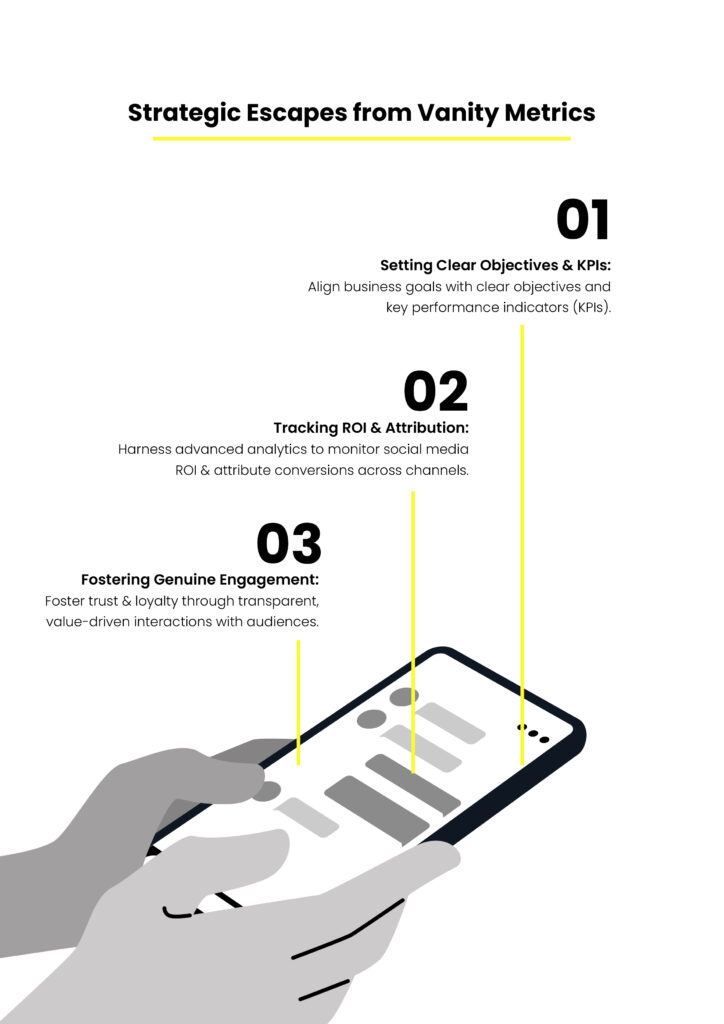
  • Setting Clear Objectives and Key Performance Indicators (KPIs)

Establishing clear objectives and key performance indicators (KPIs) provides a guideline for measuring success in alignment with overarching business goals. By defining specific metrics that reflect desired outcomes, organisations can focus their efforts on activities that drive tangible results and meaningful impact.

  • Utilising Advanced Analytics Tools: Tracking ROI and Attribution

Advanced analytics tools offer invaluable insights into the effectiveness of marketing efforts, enabling businesses to track social media ROI and attribute conversions across channels. By harnessing the power of data-driven analytics, organisations can optimise resource allocation, refine targeting strategies, and maximise the efficiency of their marketing campaigns.

  • Fostering Genuine Engagement: Building Authentic Relationships with Audiences

Meaningful measurement touches base with the cultivation of genuine engagement and authentic relationships with audiences. By prioritising transparency, responsiveness, and value-driven interactions, businesses can foster trust, loyalty, and advocacy among their customer base.

By recognising the limitations of vanity metrics, we can begin to shift our focus towards more meaningful measurement strategies where excessively anal socials are no longer the score. Setting clear objectives, leveraging advanced analytics tools, and fostering genuine engagement with our audiences are essential steps in this journey. It’s time to move beyond the numbers game and embrace a holistic approach to social media marketing evaluation—one that prioritises quality over quantity and aligns with overarching business goals.

Retargeting Strategies to Re-Engage Your Audience Effectively

If you were at stage A of the marketing funnel, returns in resolving a product swap or exchange for service would leave you with a desired outcome and product purchase. But once you are at points B and C, the momentum typically dissipates to leave you with randomised outcomes that have no clear consumer value linked to the profits you have. 

This is where retargeting strategies come into play, leaving marketers poised at the edge of the cusp with innovative consumer pull-in tactics that range from inbound social media campaigns to hierarchical verticals like promotional campaigns. Whether it’s the spike in sales or nurturing leads, retargeting strategies revolutionise traditional marketing methods significantly. In essence, retargeting ensures personalised content and tracking deployment that hyper-segment audiences based on their custom indicators in the purchase funnel, giving marketers a competitive advantage.

This blog will explore how you can optimise your retargeting strategies to maximise engagement, profitability, and a business niche to suit your brand function.

The Concept of Retargeting

Retargeting, also known as remarketing, is a strategic digital marketing technique that involves targeting users who have previously interacted with a brand but haven’t completed a desired action. Its core principle revolves around re-engaging potential customers who have shown interest but haven’t converted.

The primary objectives of retargeting campaigns are to increase brand visibility, encourage user engagement, and ultimately drive conversions. Retargeting not only reminds potential customers of your brand but also provides multiple touchpoints to nurture leads through the sales funnel.

Retargeting Strategies

In the realm of digital marketing, retargeting strategies serve as the bridge between initial user engagement and eventual conversion. By strategically re-engaging with users who have interacted with your brand, retargeting strategies aim to nurture leads and guide them towards completing desired actions.

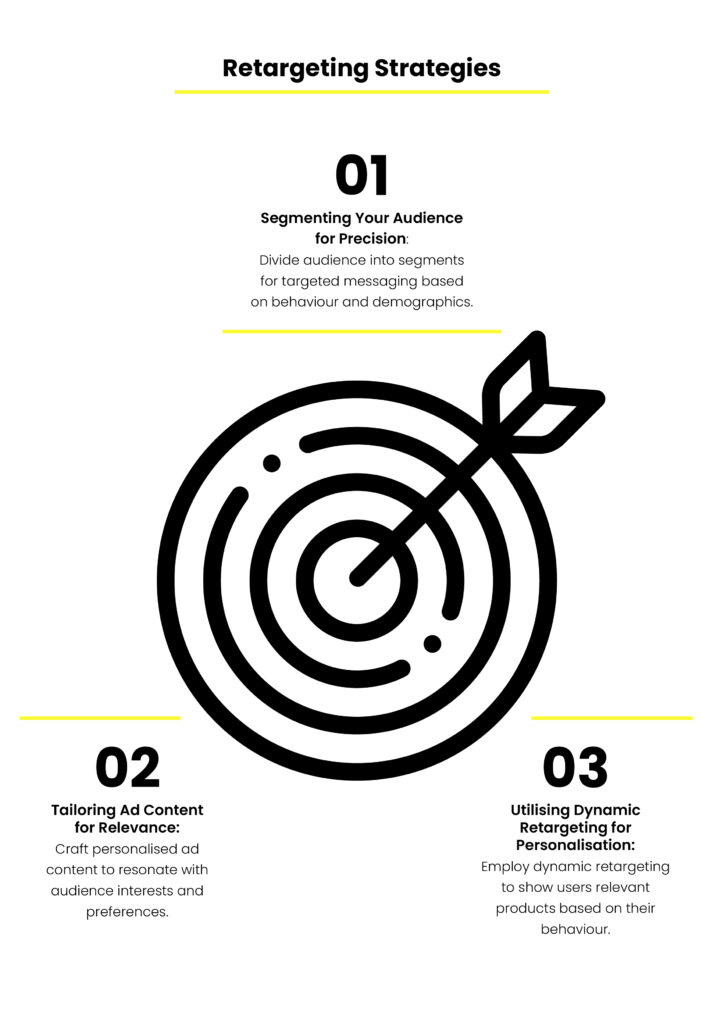
  • Segmenting Your Audience for Precision: Divide your audience into segments based on their behaviour, demographics, or stage in the buyer’s journey for more targeted messaging. By segmenting your audience, you can tailor your retargeting efforts to meet the specific needs and interests of each group.
  • Tailoring Ad Content for Relevance: Craft personalised ad content that resonates with each audience segment’s interests, preferences, and pain points. By delivering relevant content, you can capture the attention of potential customers and increase the likelihood of conversion.
  • Utilising Dynamic Retargeting for Personalisation: Employ dynamic retargeting to deliver ads dynamically generated based on user behaviour and preferences, enhancing personalisation and relevance. Dynamic retargeting allows you to show users the products or services they’ve previously viewed or expressed interest in, increasing the chances of conversion.

Creative Approaches to Retargeting

Creative approaches to retargeting offer innovative ways to re-engage and captivate potential customers. By thinking outside the box and implementing unique tactics, businesses can stand out amidst competition and effectively drive conversions.

  • Offering Exclusive Discounts or Promotions: Incentivise users to complete their purchase by offering exclusive discounts or promotions tailored to their interests. Exclusive offers can create a sense of urgency and encourage users to take action.
  • Showcasing Related Products or Content: Showcase related products or content that complement users’ previous interactions or purchases, encouraging them to explore further. By showcasing related items, you can upsell or cross-sell to users and increase their overall purchase value.
  • Leveraging User-generated Content for Social Proof: Feature user-generated content such as reviews, testimonials, or social media posts to build trust and credibility with potential customers. User-generated content provides social proof of your brand’s value and can help reassure hesitant buyers.

Optimising Retargeting Campaigns

Optimising retargeting campaigns is essential for maximising their effectiveness and achieving desired results. By fine-tuning various elements and strategies, marketers can enhance engagement, increase conversions, and boost ROI.

  • A/B Testing Ad Creatives and Messaging: Conduct A/B testing to compare different ad creatives, messaging, and calls-to-action to determine what resonates best with your audience. A/B testing allows you to optimise your retargeting campaigns for maximum effectiveness and engagement.
  • Monitoring and Adjusting Frequency Caps: Keep a close eye on ad frequency to prevent ad fatigue while ensuring that your brand stays top of mind. Monitoring and adjusting frequency caps help you strike the right balance between visibility and user experience.

Future Trends in Retargeting

Future trends in retargeting are poised to revolutionise the way marketers reconnect with their audiences. As technology continues to advance, innovations in retargeting are emerging, promising enhanced personalisation, improved privacy compliance, and greater cross-device targeting capabilities.

  • Advancements in AI and Machine Learning for Personalisation: Leverage AI and machine learning to deliver highly personalised retargeting experiences based on user behaviour and preferences, enhancing campaign effectiveness.
  • Privacy and Compliance Considerations in Retargeting Practices: Stay compliant with evolving privacy regulations to maintain trust with the audience and ensure ethical retargeting practices.
  • Innovations in Cross-Device Retargeting Technologies: Implement cross-device retargeting solutions for seamless tracking and targeting across multiple devices, maximising campaign reach and effectiveness.

In the dynamic realm of digital marketing, the art of retargeting stands as a beacon of opportunity for brands to re-engage their audience and drive meaningful conversions. By implementing effective retargeting strategies, optimising campaigns, and staying attuned to emerging trends, brands can carve a path towards sustained growth and success in the ever-evolving digital landscape. Want to cover up some loose threads in your marketing efforts, implement effective retargeting strategies to re-engage your audience now!

Effective Reputation Management: Safeguarding Your Brand Online

Slip-ups in brand messaging and value conveyance making you cringe with the onset of plummeting sales? Online Reputation Management (ORM) holds a hefty punch where this methodology expects due bottom lines into a business’s preventive strategy. While online issues may arise at some point down the advertising funnel, it’s important to divert with fruitful measures that can elevate the integrity of your business’s outcomes.

From discerning protocol, enterprise review hacks and monetary alignment for consumerism value, you could potentially gain momentum in the marketing field with your business’s sales numbers skyrocketing. Organisational silos no longer exist where ultimate convention to preserve brand integrity is paramount. Hence, ORM seeks to cultivate the essence of gaining traction in the market.

This blog will highlight the various strategies that you can use to harness Online Reputation Management (ORM) measures to secure your brand campaigns towards advertising success.

The Impact of Online Reputation

Online reputation profoundly affects consumer trust and loyalty, as potential customers often rely on reviews and ratings to make purchasing decisions. A negative online sentiment can have significant business implications, leading to loss of customers, decreased revenue, and damaged brand reputation.

Elements of Reputation Management

Effectively managing your brand’s reputation entails various essential elements that contribute to maintaining a positive online image and fostering consumer trust. Understanding and implementing these key elements are fundamental steps in building and safeguarding your brand’s reputation in the digital landscape.

  • Monitoring Online Mentions and Reviews: Regularly monitoring online mentions and reviews across various platforms allows businesses to stay informed about what customers are saying and address any issues promptly.
  • Responding Promptly and Professionally: Timely and professional responses to both positive and negative feedback demonstrate that the brand values customer input and is committed to addressing concerns.

Key Tactics for Reputation Safeguarding

In safeguarding your brand’s reputation, employing strategic tactics is paramount to mitigate potential risks and foster a positive online presence. These tactics are instrumental in establishing trust, enhancing credibility, and ensuring customer satisfaction, contributing to long-term brand success.

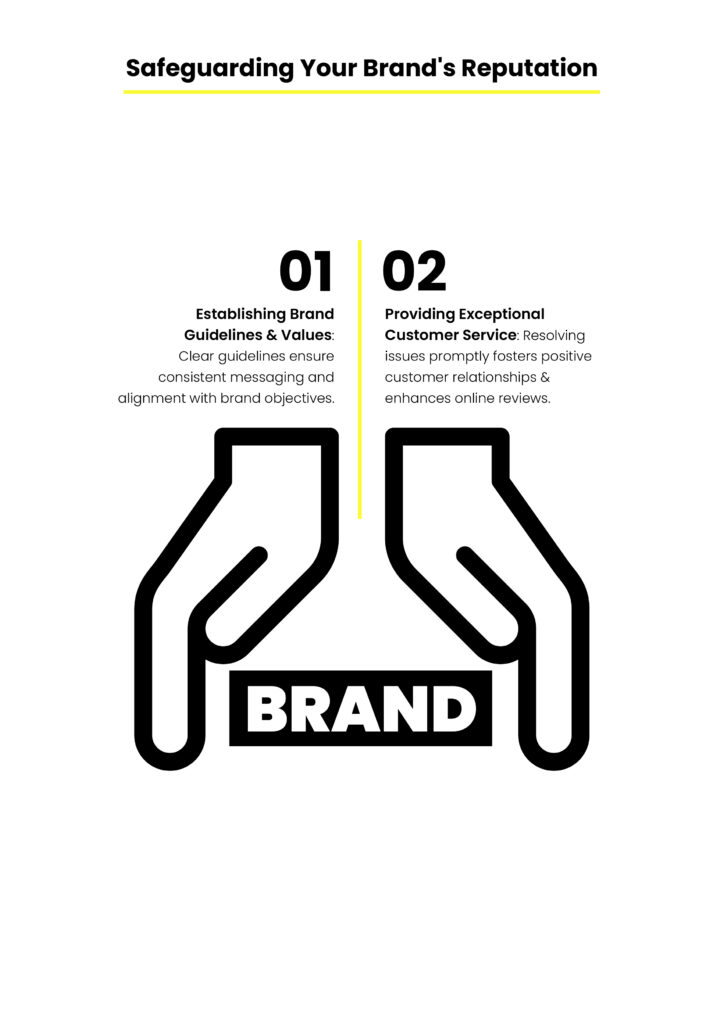
  • Establishing Brand Guidelines and Values: Clear brand guidelines and values help employees understand the company’s identity and ensure that all communications align with the brand’s reputation objectives.
  • Providing Exceptional Customer Service: Exceptional customer service not only resolves issues but also fosters positive relationships with customers, leading to improved online reviews and recommendations.

Utilising Online Tools and Platforms

In the digital age, leveraging online tools and platforms is essential for effective reputation management. These tools enable businesses to monitor, analyse, and engage with online conversations about their brand, helping them maintain a positive online presence and address issues promptly.

  • Reputation Monitoring Tools: Utilising reputation monitoring tools allows businesses to track mentions, sentiment, and trends related to their brand across various online channels.
  • Social Listening and Engagement Platforms: Social listening tools enable businesses to monitor conversations about their brand, industry, and competitors, allowing for proactive engagement and relationship-building.

Crisis Management and Damage Control

In the realm of reputation management, crisis management and damage control play a pivotal role in preserving brand integrity. When faced with PR emergencies or negative publicity, businesses must have a robust crisis communication plan and respond with grace and transparency to rebuild trust and credibility.

  • Developing a Crisis Communication Plan: Establishing a crisis communication plan outlines clear protocols for addressing PR emergencies, minimising reputational damage, and regaining public trust.
  • Responding to PR Emergencies with Grace: During a crisis, responding promptly, transparently, and empathetically can help mitigate the negative impact on the brand’s reputation and demonstrate accountability.

Measuring and Analysing Reputation

Measuring and analysing reputation is essential for understanding brand perception and identifying areas for improvement. Tracking key performance indicators (KPIs) and conducting sentiment analysis are critical steps in assessing brand sentiment and monitoring trends over time.

  • Tracking Key Performance Indicators (KPIs): Identifying and tracking KPIs such as online sentiment, brand mentions, and customer satisfaction metrics provide insights into the effectiveness of reputation management efforts.
  • Sentiment Analysis and Trend Monitoring: Sentiment analysis tools help gauge public sentiment towards the brand, while trend monitoring identifies emerging issues or opportunities that require attention.

Challenges and Solutions

Navigating the landscape of reputation management comes with its fair share of challenges, from fake reviews to legal compliance issues. Balancing transparency while protecting the brand’s integrity poses a significant dilemma for businesses seeking to maintain a positive online reputation.

  • Dealing with Fake Reviews and Trolls: Implementing robust review verification processes and actively moderating online communities can help mitigate the impact of fake reviews and malicious comments.
  • Balancing Transparency with Brand Protection: Finding the right balance between transparency and protecting sensitive brand information ensures that businesses maintain trust while safeguarding their reputation.

In conclusion, shaping ORM is a strategy that requires constant iteration but is a fundamentally simple marketing science. Where generative queries like brand immersion, attribution, sales and qualitative metrics preserve ORM as a hidden facet, there is a lot of reasoning behind continuous improvement and technological enhancements within the logistics of your brand campaigns.

In essence, effective reputation management is essential for maintaining a positive brand image, fostering consumer trust, and driving business success. By prioritising diligence and proactivity in managing their online reputation, businesses can safeguard their brand’s integrity and thrive in the digital marketplace.

Integrated Marketing Communications: Creating Cohesive Campaigns Across Channels

Having an Integrated Marketing Communications (IMC) portfolio means that a one-off analyst can automatically pick a channel to gain clear foresight about your overall campaign strategy activities. This is truly the art of IMC since insights are gleaned readily, facilitating an understanding of your business’s standing.

IMC has evolved into a stepping stone where social media and creative mock-up criteria all converge to standard display, KPIs that truly measure and effective cross-channel communication to identify gaps in strategy deployment. IMC can catalyse better engagement, conversions and a solidified approach to delivering campaigns promptly and adeptly.

This blog will highlight how to leverage Integrated Marketing Communications effectively for maximum exposure, efficiency and to induce expansion of your audience base in the long term.

The Concept of IMC

Integrated Marketing Communications (IMC) involves strategically coordinating various communication channels and tools to deliver a consistent brand message. This includes advertising, public relations, direct marketing, sales promotion, and digital marketing. IMC campaigns aim to enhance brand awareness, foster customer engagement, and drive desired actions.

Channels in Integrated Campaigns

In integrated campaigns, leveraging a combination of traditional and digital channels is key to reaching and engaging target audiences effectively. By strategically utilising various channels, marketers can maximise brand visibility and ensure message consistency across different touchpoints.

  • Traditional Media (TV, Radio, Print)

Traditional media channels like television, radio, and print publications continue to offer broad reach and brand visibility, making them integral components of integrated campaigns.

  • Digital Media (Website, Social Media, Email)

Digital channels such as websites, social media platforms, and email marketing enable brands to engage with consumers on a more personal level and gather valuable insights into their preferences and behaviour.

Creating Cohesive Campaigns

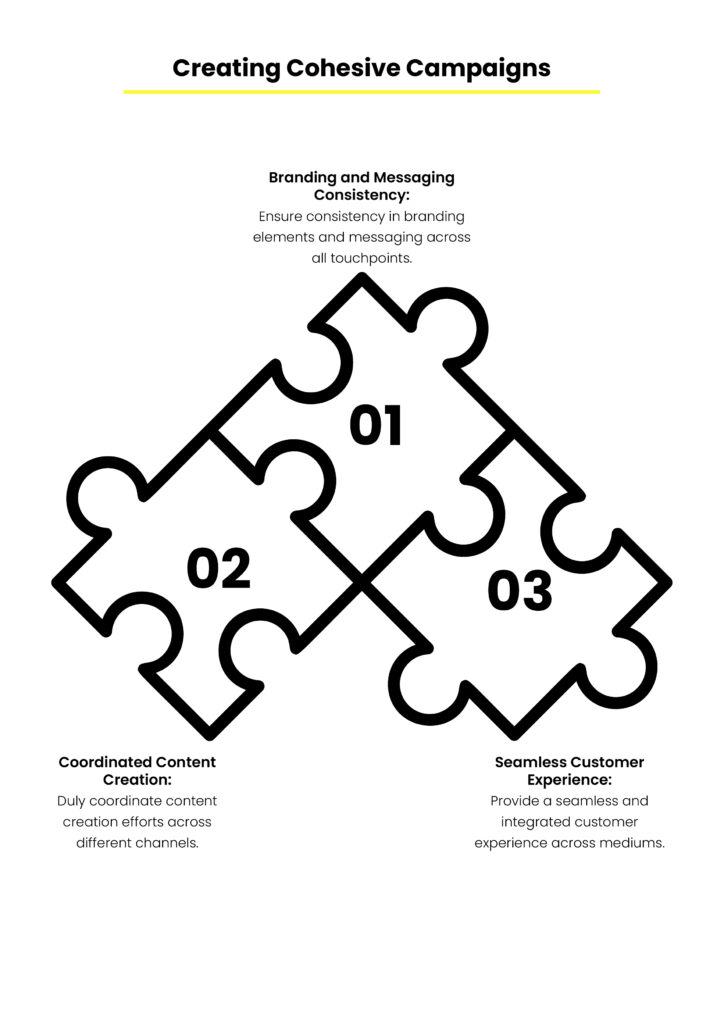
Creating cohesive campaigns involves aligning branding and messaging across all marketing channels to ensure a consistent brand experience. By maintaining uniformity in content creation and delivery, businesses can reinforce their brand identity and enhance customer recognition and loyalty.

  • Branding and Messaging Consistency

Ensuring consistency in branding elements and messaging across all touchpoints is crucial to reinforcing brand identity and fostering consumer trust and loyalty.

  • Coordinated Content Creation

Coordinating content creation efforts across different channels helps maintain messaging coherence and alignment with overall campaign objectives, ensuring a seamless brand experience.

  • Seamless Customer Experience

Providing a seamless and integrated customer experience across channels not only enhances brand perception but also strengthens customer relationships, leading to increased loyalty and advocacy.

Strategies for Integration

Effective integration strategies involve orchestrating cross-channel promotion and synergy to maximise campaign impact. By sharing and analysing data across different platforms, businesses can gain comprehensive insights into consumer behaviour and preferences, enabling more targeted and personalised marketing efforts.

  • Cross-Channel Promotion and Synergy

Leveraging cross-channel promotion allows brands to amplify their message and reach a broader audience while reinforcing brand consistency and coherence.

  • Data Sharing and Analysis

Sharing data between different channels enables marketers to gain insights into consumer behaviour and preferences, facilitating more targeted and effective campaigns.

  • Campaign Planning and Coordination

Effective planning and coordination are essential for ensuring that all elements of an integrated campaign work together harmoniously to achieve the desired outcomes and maximise ROI.

Challenges and Solutions

Navigating challenges in Integrated Marketing Communications (IMC) involves overcoming obstacles like silos, budget constraints, and the need for agility. Solutions to these challenges often require collaboration, resource management, and adaptability to ensure the success of integrated campaigns.

  • Overcoming Silos and Fragmentation

Breaking down organisational silos and fostering collaboration between different departments is crucial for successful integration and alignment of marketing efforts.

  • Managing Budgets and Resources

Effective budget allocation and resource management are essential for optimising campaign performance and ensuring that resources are allocated to activities that drive the highest ROI.

  • Maintaining Agility and Adaptability

Staying agile and adaptable enables brands to respond quickly to changing market conditions and consumer preferences, ensuring that integrated campaigns remain relevant and effective over time.

Future Trends in IMC

Future trends in Integrated Marketing Communications (IMC) are shaped by technological innovations, advancements in personalisation, and evolving consumer behaviours. These trends are driving the integration of new platforms, strategies, and approaches to meet the changing landscape of marketing communication.

  • Technology Innovations Impacting Integration

Advancements in technology, including artificial intelligence and marketing automation, are poised to revolutionise how brands integrate their marketing efforts and engage with consumers across channels.

  • Personalisation and Targeting Advancements

Advances in personalisation and targeting capabilities will enable brands to deliver highly relevant and tailored messages to individual consumers, enhancing the effectiveness of integrated marketing campaigns.

  • Evolving Consumer Behavior and Preferences

Understanding evolving consumer behaviour and preferences will be essential for brands to adapt their integrated marketing strategies and stay ahead of the curve in a rapidly changing marketplace.

In conclusion, Integrated Marketing Communications (IMC) represents a holistic marketing approach that ensures consistency, coherence, and effectiveness across diverse channels and touchpoints. By embracing integration, collaboration, and data-driven decision-making, brands can create cohesive campaigns that resonate with their target audience and drive business success in an increasingly competitive landscape. So, always consider cross-channel and strategic integration for campaign success where you can get a headstart in modern marketing methods. 

Harnessing the Potential of Marketing Automation for Enhanced Efficiency

In the recent digital age, marketing automation has possessed humanised criteria which, however unsettling, has become the beacon of productivity and business civilisation as we know it. Whether it’s the imbued machine controller, Al assistant or the average loyalty segment controlling the reigns, the input of machine learning into marketing automation is vast. 

Marketing automation, aside from generative forums, has dynamically split productivity runs by double the amount, efficiency quarters, and a hyper-personalised segment that attributes every stage of the advertising funnel set up in marketing campaigns. 

This blog will highlight how to harness marketing automation for enhanced efficiency by spotlighting the backdrop, benefits and functions of this front-line core system. 

Benefits of Marketing Automation

Marketing automation excels in spotlighting consumer stakes that derive the Customer Lifetime Value (CLV) segment in efficient durations. While this is not only accurate, relative benefits in productivity, personalisation and data-driven decision-making formulate the robustness of advertising endeavours. 

  • Time-Saving and Scalability

Marketing automation streamlines tasks, allowing marketers to divert their attention to strategic planning and creative endeavours. It scales marketing efforts efficiently, accommodating growth without requiring more resources.

  • Improved Lead Nurturing

Automation fosters personalised communication with leads, guiding them through the buyer’s journey with relevant content. This targeted approach improves conversion rates by delivering timely messages tailored to each prospect’s needs.

  • Enhanced Personalisation

Automation allows for tailored messaging and campaigns based on individual preferences, enhancing customer experiences. Segmenting audiences by demographics, interests, or past interactions enables targeted campaigns that resonate with specific audience segments.

  • Data-Driven Decision Making

Automation tools offer insights into campaign performance, audience engagement, and customer behaviour through data analytics. Marketers analyse key metrics and trends to make informed decisions and optimise strategies for maximum ROI.

Key Features and Capabilities

Marketing automation has a definite outpost within its overdrive, facilitating operations in end-to-end processes. Whether it’s audit reroutes, publication latency or scheduled prototypes, marketing automation showcases the dynamic threshold of technology. 

  • Email Marketing Automation

Automated email campaigns allow businesses to send targeted messages to subscribers based on triggers such as sign-ups, purchases, or website visits. Features like drip campaigns, personalised content, and A/B testing help optimise email marketing efforts for better engagement and conversion.

  • Social Media Automation

Automation tools enable scheduling, publishing, and monitoring of social media posts across multiple platforms. By automating routine tasks like content sharing, monitoring mentions, and responding to comments, businesses can maintain a consistent online presence and engage with their audience more effectively.

Implementing Marketing Automation

Marketing automation is often compatible with enterprise needs, resources and humanised input that avert the system from becoming obsolete. With the right tools and integration, you can harness the full power of automation in the following ways.

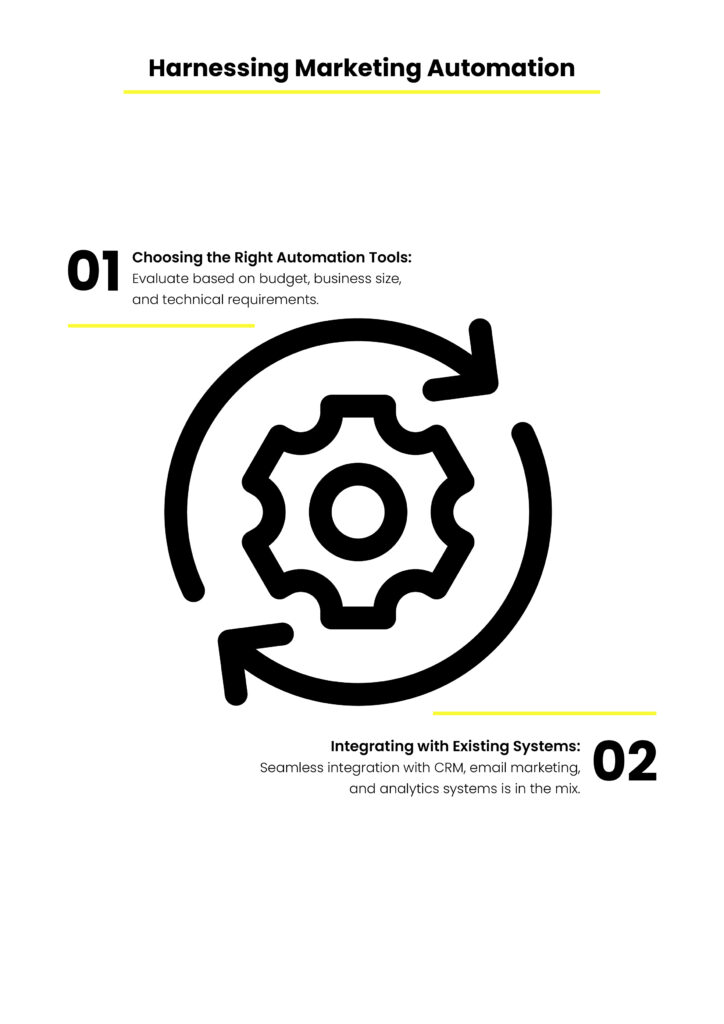
  • Choosing the Right Automation Tools

Selecting the right automation platform depends on factors such as budget, business size, technical requirements, and specific marketing needs. Businesses should research and evaluate different tools based on features, integrations, user interface, customer support, and scalability to find the best fit for their requirements.

  • Integrating with Existing Systems

Integration with existing CRM, email marketing, and analytics systems is crucial for seamless data flow and efficient operation. Businesses should ensure compatibility and smooth integration between automation tools and other platforms to maximise functionality and avoid data silos.

Best Practices for Success

By effectively handling marketing automation, it would be unwise to allow autonomous segmentation and data analysis independently. With a diverse, thorough mix of testing and protocol assimilation, businesses are better poised for the essence of marketing dynamics wielded under automation. 

  • A/B Testing for Optimisation

A/B testing, also known as split testing, compares two versions of a campaign or webpage to determine which performs better. By testing different elements such as subject lines, call-to-action buttons, or ad creatives, businesses can identify the most effective strategies and optimise their marketing efforts for better results.

  • Continuous Monitoring and Analysis

Continuous monitoring of key metrics and performance indicators helps businesses track the effectiveness of their automation efforts in real time. Regular analysis of data and metrics enables marketers to identify trends, spot opportunities, and make data-driven decisions to optimise campaigns and strategies.

Future Trends in Marketing Automation

As technology continues to advance, the future of marketing automation holds exciting possibilities. Emerging trends are poised to revolutionise how businesses engage with their audience and streamline their marketing processes.

  • AI and Machine Learning Integration

The integration of artificial intelligence (AI) and machine learning (ML) technologies into automation platforms enables more advanced predictive analytics, personalised recommendations, and automated decision-making. AI-powered chatbots, predictive lead scoring, and dynamic content optimisation are among the emerging applications driving the future of marketing automation.

  • Chatbot and Voice Assistant Adoption

Chatbots and voice assistants are increasingly being used to automate customer interactions, answer queries, and provide personalised assistance across digital channels. As natural language processing (NLP) and voice recognition technologies advance, chatbots and voice assistants will play a more significant role in automating customer service, sales, and support functions.

Conclusion

Marketing automation presents a multitude of advantages for companies aiming to streamline their marketing operations, enhance efficiency, and achieve superior outcomes. By leveraging automation tools and strategies, businesses can save time, enhance personalisation, and make data-driven decisions to achieve their marketing objectives. As technology continues to evolve, embracing automation and staying abreast of emerging trends will be critical for businesses to maintain a competitive edge and succeed in the dynamic digital landscape.

The Power of Emotion: Creating Compelling Stories in Digital Marketing Campaigns for 2024

Captivating your audience through authentic storytelling is no longer a side hustle but a mandatory convention for foretelling marketers. So, what makes your brand unique amongst the sea of value-added propositions? This is where behavioural and psychographic sentiment interludes its segment where emotion in brand storytelling is poised for perfection. 

Creating compelling product stories hinges on how impactful your brand ambassadors have succeeded in incorporating an audience base which drives true value into the ethos of your brand. Consumers now seek loyalty factors far beyond the end of their purchase journey which compel them to increase positive word of mouth, referrals, subsidiary campaigns and incentivised programmes and product lines that create the essence of brand storytelling itself.

In this blog, we will explore the facets of brand storytelling in digital marketing as of 2024, embodying the power of emotion in attracting audience fandom and driving profitability for your business.

Understanding Emotional Storytelling

Emotional storytelling is the art of crafting narratives that evoke specific emotional responses from the audience. It goes beyond product features or benefits, tapping into the underlying emotions driving consumer behaviour. By connecting with consumers emotionally, brands can create memorable experiences that resonate long after the initial interaction.

Types of Emotional Appeals

Emotional appeals go by many moods and it’s the job of a marketer to decipher behavioural intent for digital marketing campaign initiatives. Emotional appeals are often volatile and ever-changing, positioning businesses on a receptive pedestal. 

  • Happiness and Joy: Brands often use themes of happiness and joy to evoke positive emotions in their audience, associating their products or services with feelings of contentment and satisfaction.
  • Fear and Urgency: Fear-based appeals leverage emotions like anxiety and urgency to prompt immediate action, often highlighting potential risks or consequences of inaction.
  • Sadness and Empathy: Stories that evoke sadness or empathy can create a deep emotional connection with the audience, eliciting feelings of compassion and understanding.
  • Surprise and Curiosity: Unexpected or intriguing narratives that spark curiosity can captivate audiences, encouraging them to engage further with the brand.
  • Anger and Indignation: While less common, appeals to anger or indignation can incite action by tapping into feelings of injustice or frustration.

The Science Behind Emotional Engagement

Emotions have a profound impact on consumer decision-making, influencing everything from brand perception to purchase behaviour. Neurological studies have shown that emotions drive attention, memory, and decision-making processes in the brain. When brands evoke strong emotions through storytelling, they create lasting impressions that shape consumer attitudes and behaviours.

Implementing Emotional Storytelling

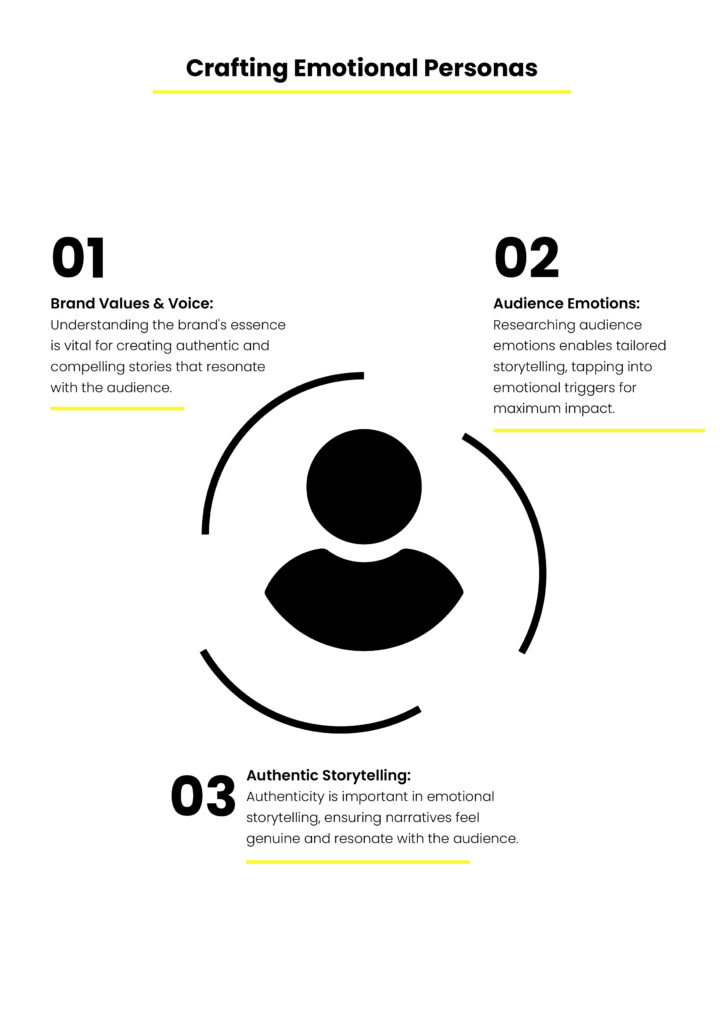
Crafting out emotional personas involves a holistic approach to understanding, iterating and operating your digital campaigns with audience analysis at bay.

  • Identifying Brand Values and Voice: Understanding the core values and personality of the brand is essential for crafting authentic and compelling stories that resonate with the target audience.
  • Understanding Target Audience Emotions: Conducting audience research to identify the emotional triggers and motivations of your target demographic helps tailor storytelling efforts for maximum impact.
  • Crafting Authentic and Relatable Stories: Authenticity is key to emotional storytelling. Brands must strive to create narratives that feel genuine and resonate with the lived experiences of their audience.

Examples of Emotional Storytelling 

One compelling case study in emotional storytelling comes from Nike’s “You Can’t Stop Us” campaign. Through a powerful video montage, Nike seamlessly intertwined footage of various athletes overcoming obstacles, injuries, and setbacks with a split-screen technique, showcasing the parallels between their movements. This emotionally charged narrative resonated deeply with viewers, inspiring feelings of determination, resilience, and unity, while effectively reinforcing Nike’s brand message of empowerment and perseverance.

Coca-Cola’s “Open To Better” campaign uplifted consumers during challenging times with heartwarming commercials and social media content, promoting optimism, kindness, and connection. By tapping into universal emotions of hope and positivity, Coca-Cola reinforced its brand values and fostered emotional connections with its audience.

Measuring Emotional Impact

Emotional metrics are undeniably quantifiable, with emergent KPIs and analytics transforming the storyline library for the upcoming innovations in optimising digital marketing campaigns. 

  • Metrics for Emotional Engagement: While emotional impact can be challenging to quantify, metrics such as sentiment analysis, engagement rates, and brand sentiment can provide insights into the effectiveness of emotional storytelling efforts.
  • Tools and Techniques for Analysis: Advanced analytics tools and sentiment analysis software can help marketers track and measure the emotional resonance of their campaigns, allowing for data-driven optimisation and refinement.

The Future of Emotional Storytelling

As technology continues to evolve, the future of emotional storytelling holds endless possibilities. From immersive experiences powered by virtual reality to personalised narratives driven by artificial intelligence, the landscape of emotional marketing is poised for continued innovation and growth.

  • Advent of Al Algorithms for Brand Mention

AI algorithms analyze extensive datasets to understand individual preferences, behaviours, and emotions, providing insights into consumer psychology for personalised marketing.

  • Personalised Advertisements

Personalised ads have been introduced based on interests, demographics, and browsing history, leading to higher engagement and conversion rates. Ads are distributed across diverse channels via AI platforms.

  • Interactive Chatbots

AI chatbots use NLP and machine learning for real-time conversations, answering queries and providing personalised assistance. Mimicking human interactions, they boost customer engagement and satisfaction.

  • Dynamic Content Generation

AI algorithms create real-time dynamic content based on user preferences. This content includes personalised recommendations, email newsletters, and website experiences.

Conclusion

Emotional storytelling remains a potent tool for brands seeking to forge meaningful connections with their audience in the digital age. By understanding the psychology of emotion, implementing authentic storytelling strategies, and leveraging data-driven insights, brands can create compelling narratives that resonate deeply and drive lasting impact. As we look to the future, embracing emotion in digital marketing will be essential for brands aiming to stand out in a crowded marketplace and foster genuine relationships with their customers.

Revolutionising ROI: The Latest Metrics Every Digital Marketing Agency Should Track in 2024

Where KPIs for ROI have many identities, tracking a few emergent indicators is useful for a marketer’s evaluation arsenal. By 2024, it is safe to say that there is a metric to measure every stage of the advertising funnel, giving ROI a capacity of full throttle. In simple terms, ROI metrics are here to stay with the latest KPI differentiators in the mix. 

The metrics evolution has undergone significant changes, with a shift towards prime analysis focusing on awareness and engagement. Traditional metrics have evolved into hyper-personalised segments, emphasising a user-centric approach with a focus on accessibility and timeliness.  Enter ROI tracking’s vital role where we submerge in an interconnected metric population that aims to cohesively map and conclude on the best possible return on investment, catalysing effective marketing strategies and campaign outcomes. 

In this blog, we will provide an overview of the latest ROI metrics which are dominating the field as of 2024, leaving like-minded business individuals on the threshold of the marketing KPI revolution. 

Understanding ROI Metrics

ROI, often considered the holy grail of digital marketing metrics, measures the profitability of a marketing campaign relative to its cost. It’s calculated by dividing the net profit generated from the campaign by the total cost of the campaign and expressing it as a percentage. Key components of ROI include revenue generated, expenses incurred, and the duration of the campaign.

Shift to Advanced Metrics

When it comes to measuring marketing success, traditional ROI metrics have long been the go-to, focusing predominantly on financial returns. However, in today’s dynamic landscape, advanced metrics are increasingly gaining prominence, offering a more comprehensive view of marketing performance.

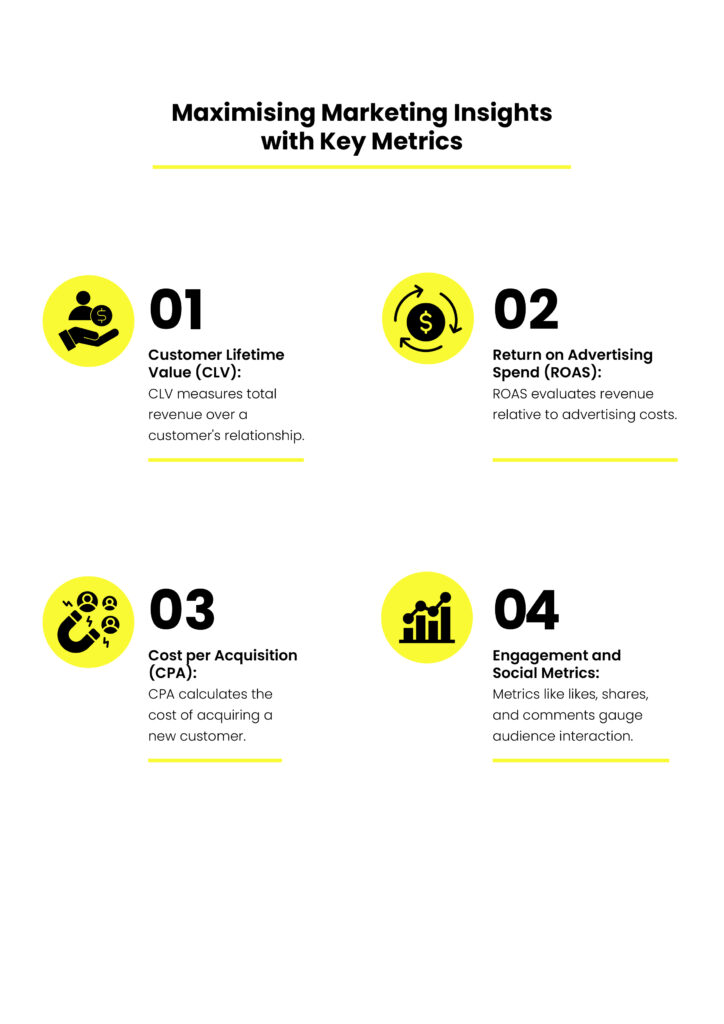
  • Traditional vs. Advanced: While traditional ROI metrics focus primarily on financial returns, advanced metrics delve deeper into various aspects of marketing performance, such as customer lifetime value (CLV), return on advertising spend (ROAS), and cost per acquisition (CPA).
  • Modern Necessities: In today’s digital landscape, where customer journeys are complex and multifaceted, modern marketers rely on advanced metrics to gain deeper insights into campaign performance, audience behaviour, and overall marketing effectiveness.

Emerging 2024 Metrics

As businesses strive to understand the long-term value of their customers, metrics like customer lifetime value (CLV) have become invaluable, offering insights into revenue potential over time, and the implications of relevant KPIs. 

  • CLV, ROAS, CPA: Customer lifetime value (CLV) measures the total revenue a business can expect from a single customer throughout their relationship. Return on advertising spend (ROAS) evaluates the revenue generated from advertising relative to the cost of the ad campaign. Cost per acquisition (CPA) measures the expenses associated with acquiring a new customer.
  • Engagement and Social Metrics: In addition to financial metrics, metrics related to engagement and social media performance, such as likes, shares, comments, and click-through rates, are gaining prominence in 2024. These metrics provide insights into brand visibility, audience engagement, and content effectiveness across various digital platforms.

Industry Benchmarks

Understanding industry benchmarks allows businesses to gauge their performance relative to competitors and identify areas for improvement. Sector averages provide benchmarks for key metrics such as ROI, CLV, and engagement rates, helping businesses set realistic goals and track progress. In 2024, trends indicate a shift towards personalised and data-driven marketing strategies, with a focus on enhancing customer experiences and maximising ROI.

Influential Factors

To succinctly portray that your advertising efforts are effective, common threads in UX design, content quality and touchpoint attribution emerge for the cause, accurately elaborating their fruitful functions.

  • UX, Content Quality: User experience (UX) and content quality are significant factors influencing digital marketing success. A seamless and intuitive user experience across digital touchpoints enhances engagement and conversion rates. High-quality content that resonates with the target audience drives brand affinity and loyalty.
  • Attribution Challenges: Attribution, or accurately attributing conversions to specific marketing channels or touchpoints, remains a challenge for marketers in 2024. With the proliferation of digital channels and complex customer journeys, determining the true impact of each marketing effort requires sophisticated attribution models and data analysis techniques.

Maximising ROI Strategies

The important tenet to emphasise is data abound where software algorithms take the numeric journey to new heights. Brand equity cannot be overstated across platforms where automation ensures a deliberate inclination to hyper-personalising the buyer’s journey through a holistic perspective. 

  • Data-Driven Decisions: Data-driven decision-making involves leveraging insights from analytics tools and customer data to inform marketing strategies and optimise campaign performance. By analysing key metrics and consumer behaviour patterns, businesses can make informed decisions and allocate resources effectively.
  • Personalisation, Automation: Personalisation and automation are integral to maximising ROI under effective ROI tracking strategies. Tailoring marketing messages and offers to individual preferences and behaviours increases relevance and engagement. Automation streamlines repetitive tasks, improves efficiency, and allows marketers to focus on high-impact activities.
  • Cross-Platform Integration: Ensuring a unified brand experience for consumers necessitates the integration of marketing efforts across various platforms. By synchronising messaging and content delivery across channels, businesses can maximise reach, engagement, and conversion opportunities.

In conclusion, as digital marketing metrics continue to evolve, businesses must adapt and innovate to stay ahead of the curve. Key takeaways include the importance of understanding ROI metrics, leveraging advanced metrics for deeper insights, and implementing data-driven strategies to maximise ROI. Continuous adaptation to industry trends and emerging technologies is essential for driving marketing success and achieving long-term business growth.

The Power of User-Generated Content: Turning Customers into Advocates

As opposed to the Black Box theory, User-Generated Content is part of the strategic mindset of an everyday marketer. The power of UGC is on the threshold where impressions, consumer retention and Customer Lifetime Value are essential factors for global brands making it to the big time. 

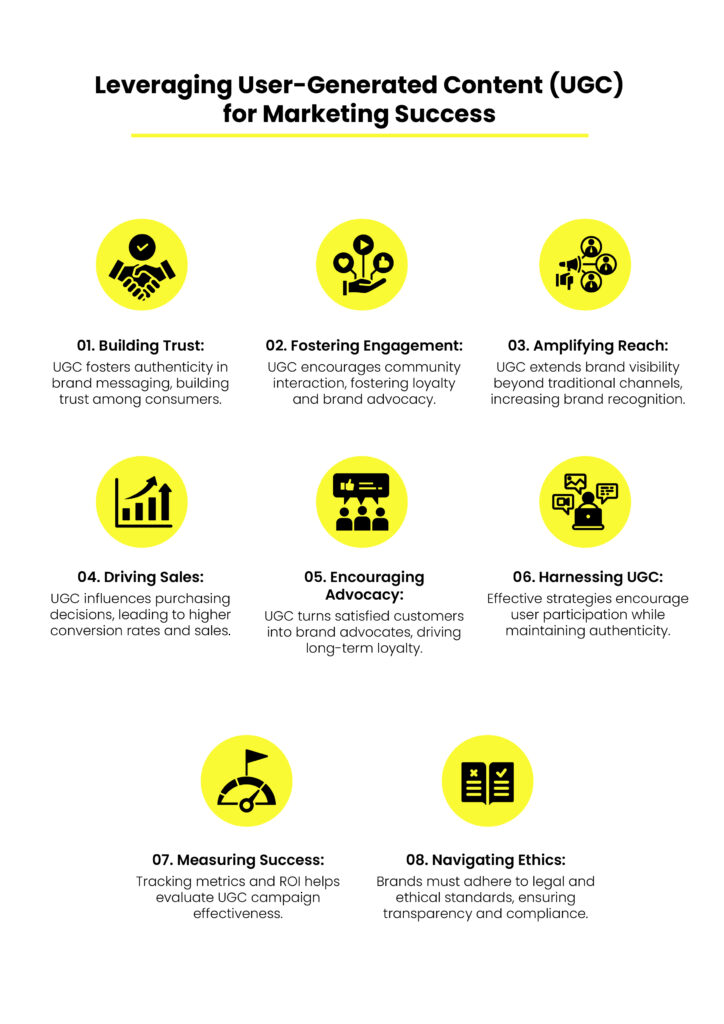
Essentially, UGC is defined by consumer advocates who craft lasting testimonials about your brand where active reach & engagement are core factors towards progressive marketing. From customer reviews to social media posts, UGC has evolved into a powerful tool for building trust, fostering community engagement, and driving brand advocacy. In today’s digital landscape, where consumers crave authenticity and genuine connections, UGC has emerged as a key driver of marketing success, influencing purchase decisions and shaping brand perception.

In this blog, we will explore how UGC has an unprecedented role in gaining loyal customer advocates, and its scope towards contemporary marketing strategies. 

Building Trust through Authenticity

User-Generated Content serves as a testament to the authenticity of a brand’s messaging. Authenticity is essential in today’s marketing landscape, with consumers seeking genuine experiences and connections with the brands they support. UGC, such as user stories and reviews, adds credibility and trustworthiness to brand messaging by showcasing real-life experiences and perspectives. When consumers see authentic content generated by their peers, they are more likely to trust the brand’s claims and form positive associations with the products or services offered.

Fostering Community Engagement

UGC plays a crucial role in fostering community engagement and strengthening relationships between brands and their customers. By encouraging users to share their experiences, opinions, and creative expressions, brands can create a sense of belonging and camaraderie within their community. Whether through social media platforms, online forums, or brand-sponsored events, UGC encourages participation and interaction, turning customers into active members of a brand’s community. This engagement deepens customer loyalty and provides valuable insights and feedback for brand improvement.

Amplifying Brand Reach and Awareness

One of the most significant benefits of UGC is its ability to extend brand reach beyond traditional marketing channels. When consumers share content related to a brand, they essentially become brand ambassadors, amplifying its message to their networks. UGC has a viral potential, capable of reaching audiences far beyond the brand’s immediate reach. Whether it’s a user-generated video going viral on social media or a blog post shared by influential users, UGC has the power to significantly increase brand awareness and recognition in the digital sphere.

Driving Conversion and Sales 

User-generated content plays a role in guiding purchase decisions and driving conversion rates. Customer testimonials, reviews, and visual UGC provide social proof and reassurance to potential buyers, influencing their purchasing behaviour. Studies have shown that consumers are more likely to trust recommendations from their peers than traditional advertising. By leveraging UGC in marketing campaigns, brands can create a sense of trust and credibility, leading to higher conversion rates and increased sales.

Encouraging Advocacy and Loyalty

UGC has the unique ability to turn satisfied customers into brand advocates, promoting loyalty and advocacy in the long run. When customers share their positive experiences with a brand, they not only endorse its products or services but also contribute to its reputation and credibility. Brand advocates are more likely to recommend the brand to others, defend it against criticism, and remain loyal customers over time. By fostering a community of brand advocates through UGC, brands can create a sustainable source of word-of-mouth marketing and drive long-term growth.

Harnessing UGC for Marketing Campaigns

To effectively leverage UGC in marketing campaigns, brands must implement strategies that encourage user participation and creativity. This may involve creating branded hashtags, running contests or challenges, or showcasing user-generated content on official brand channels. By actively involving customers in the creation and sharing of content, brands can harness the power of UGC to amplify their message and increase engagement. Additionally, brands should ensure that UGC aligns with their brand values and messaging to maintain authenticity and relevance.

Measuring Success and ROI

Measuring the success of UGC campaigns requires tracking key metrics that indicate engagement, reach, and conversion. Metrics such as engagement rates, shares, conversions, and customer acquisition costs can provide valuable insights into the effectiveness of UGC initiatives. Additionally, calculating UGC campaigns’ return on investment (ROI) involves comparing the costs associated with generating and promoting UGC against the resulting benefits, such as increased sales or brand loyalty. By monitoring these metrics and analysing the performance of UGC, brands can refine their strategies and optimise their marketing efforts for maximum impact.

Navigating Legal and Ethical Considerations

While UGC offers numerous benefits, brands must navigate legal and ethical considerations to ensure compliance and protect consumers and themselves. Issues such as copyright infringement, privacy violations, and misleading advertising can arise when using UGC in marketing campaigns. To mitigate these risks, brands should establish clear guidelines for user-generated content creation and distribution, obtain permission from content creators, and adhere to relevant laws and regulations. Transparency and honesty are crucial in maintaining ethical standards and building trust with consumers.

Future Trends and Innovations

The evolution of UGC in marketing strategies is expected to continue, driven by emerging technologies and changing consumer behaviours. Innovations such as augmented reality (AR), virtual reality (VR), and interactive content will offer new avenues for user engagement and creativity. Additionally, the rise of social commerce and influencer marketing will reshape how brands leverage UGC to drive sales and brand advocacy. By keeping track of trends and embracing technological innovations, brands can remain competitive and relevant in an ever-evolving digital landscape.

Through authenticity, community engagement, amplified brand reach, and measurable impact on conversions and loyalty, UGC has proven its effectiveness time and again. As brands navigate the evolving landscape of digital marketing, embracing UGC not only enhances brand credibility but also fosters genuine relationships with consumers. 

By leveraging UGC strategically, brands can harness the power of authentic storytelling and advocacy to drive marketing success in the digital age. As technology advances and consumer behaviours evolve, the role of UGC will continue to grow, shaping the future of marketing strategies and redefining the way brands engage with their audience.

The Evolving Role of Chatbots: Enhancing Customer Experience in 2024

Where would we be if chatbots didn’t deliver the follow-up protocol in website campaigns and promotional offers? Surely, marketers would probably be floundering in excessive and obsolete roles. In 2024, chatbots have delivered the stellar customer experience by supplementing the role of adjunct where user queries become their bottom-line powerhouse. Essentially, chatbots receive, iterate and communicate the logistics role like a machine-learning superior. 

In today’s digital landscape, chatbots have emerged as powerful tools for businesses to enhance customer satisfaction and streamline operations. Acknowledging the ongoing evolution of chatbots, it’s crucial to understand their impact on customer interactions and the role they play in shaping the overall customer experience. 

In this blog, we will highlight the relationship and role of chatbots in enhancing customer experience as of 2024, spotlighting the benefits they provide. 

Advanced Conversational Capabilities

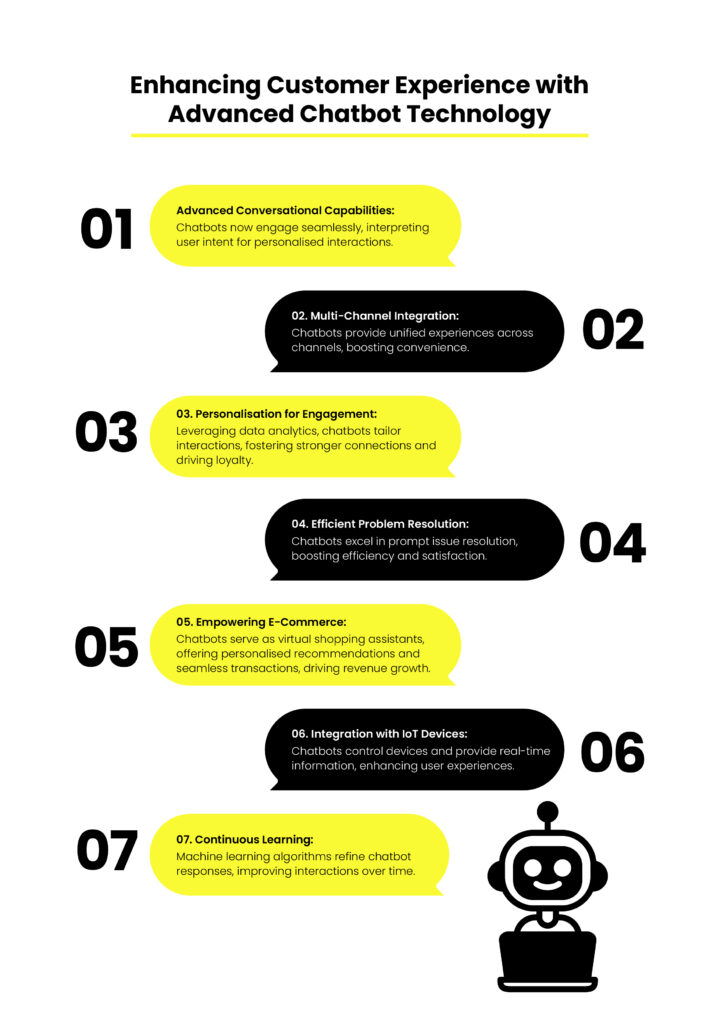
With advancements in artificial intelligence and natural language processing (NLP), chatbots have significantly enhanced their conversational skills. These technological advancements enable chatbots to understand and respond to user queries with human-like fluency, facilitating seamless interactions. Through NLP, chatbots can interpret user intent, context, and sentiment, allowing for more personalised and contextually relevant conversations.

Multi-Channel Integration

Chatbots extend their reach across various communication channels, ensuring consistent and engaging conversations regardless of the platform. Whether through websites, mobile apps, social media platforms, or messaging applications, chatbots provide users with a unified experience across channels. By integrating seamlessly into multiple channels, chatbots enable businesses to meet customers wherever they are, enhancing accessibility and convenience.

Personalisation for Improved Engagement

One of the key strengths of chatbots lies in their ability to personalise conversations based on user preferences and history. By leveraging data analytics and machine learning algorithms, chatbots can tailor interactions to each user’s unique needs, preferences, and past behaviour. This personalised approach not only increases engagement but also fosters stronger connections between businesses and their customers, ultimately driving loyalty and retention.

Efficient Problem Resolution

Chatbots excel in addressing customer queries and issues promptly, contributing to streamlined customer support processes. Through instant responses and round-the-clock availability, chatbots ensure that customers receive timely assistance, leading to faster problem resolution and improved satisfaction levels. By automating routine tasks and handling common inquiries, chatbots free up human agents to focus on more complex and high-value interactions, maximising efficiency and productivity.

Empowering E-Commerce Experiences

In the realm of e-commerce, chatbots serve as virtual shopping assistants, guiding customers through their purchase journey and providing personalised recommendations. By leveraging customer data and product information, chatbots offer tailored product suggestions, answer product-related queries, and facilitate transactions seamlessly. This interactive and personalised shopping experience enhances user satisfaction and increases conversion rates, driving revenue growth for businesses.

Ensuring Data Security and Privacy

Businesses must implement robust measures to safeguard customer information, including encryption protocols, data anonymisation techniques, and secure authentication processes. By prioritising data security and privacy, businesses can build trust with customers, mitigating the risk of data breaches and ensuring compliance with regulatory requirements such as GDPR.

Integration with IoT Devices

Chatbots play a pivotal role in enhancing user experiences in IoT ecosystems, particularly in smart homes and offices. By integrating with IoT devices, chatbots can control connected devices, such as smart thermostats, lights, and appliances, through voice commands or text-based interactions. Additionally, chatbots provide users with real-time information about device status, energy consumption, and usage patterns, empowering them to make informed decisions and optimise their smart home or office environment.

Continuous Learning and Adaptation

One of the key strengths of chatbots is their ability to learn from interactions and adapt to changing customer needs. Through machine learning algorithms, chatbots analyse past interactions, identify patterns, and continuously improve their responses over time. By leveraging user feedback and data analytics, chatbots can refine their conversational skills, understand user preferences better, and anticipate future inquiries, leading to more effective and personalised interactions.

Measuring Success Through Analytics

Analytics play a crucial role in measuring the effectiveness of chatbot interactions and optimising performance. Businesses can track key metrics such as conversation completion rates, response times, customer satisfaction scores, and conversion rates to evaluate the impact of chatbots on business outcomes. By analysing these metrics, businesses can identify areas for improvement, refine conversational flows, and optimise chatbot functionality to better meet customer needs and drive desired outcomes.

Ethical Considerations and Transparency

As chatbots become more pervasive in customer interactions, addressing ethical concerns and promoting transparency is essential. Businesses must be mindful of potential biases in chatbot algorithms and ensure fairness and equity in their interactions with users. Moreover, transparency in chatbot interactions, including disclosing the use of AI and providing clear information about data handling practices, helps build trust and credibility with users, fostering positive relationships and enhancing the overall customer experience.

Future Trends and Innovations

Looking ahead, the future of chatbot technology holds exciting possibilities for enhancing customer experiences. Emerging trends such as voice-enabled chatbots, powered by natural language understanding and speech recognition technologies, offer a more intuitive and hands-free interaction experience for users. Additionally, AI-driven personalisation enables chatbots to deliver highly tailored recommendations, content, and experiences, further enriching the customer journey and driving business success. As chatbots continue to evolve, businesses must stay abreast of these innovations to remain competitive and deliver exceptional customer experiences in the years to come.

In conclusion, chatbots have emerged as indispensable tools for businesses seeking to enhance customer experience and drive business success in 2024. From advanced conversational capabilities to personalised interactions and continuous learning, chatbots offer a myriad of benefits for both businesses and consumers alike. 

Chatbots are essentially a marketer’s ally in overlooking the social sustenance of a brand’s presence, where they can be programmed to meet the KPI standards and the dynamic scale for which they are built. By embracing ethical practices, prioritising data security and privacy, and leveraging emerging technologies, businesses can harness the full potential of chatbots to create meaningful connections with customers and stay ahead in today’s competitive market landscape. For more on marketing advancements tailored to your business, contact us today!

Voice Search Optimization: A Must-Have for Digital Marketers in 2024

In the ever-evolving landscape of digital marketing, staying ahead of the curve is essential. As we venture into 2024, one trend continues to gain momentum and shape the way consumers interact with technology: voice search. With the proliferation of smart devices and virtual assistants, optimizing for voice search has become a paramount strategy for digital marketers looking to stay relevant and visible to their target audience.

Voice search has rapidly transformed from a novelty to a mainstream method of accessing information. Whether it’s through smart speakers, smartphones, or even smart home appliances, people are increasingly turning to voice commands to perform searches, make inquiries, and execute tasks. This shift in consumer behavior presents both challenges and opportunities for marketers.

So, what exactly is voice search optimization (VSO), and why is it crucial for digital marketers in 2024?

Understanding Voice Search Optimization

Voice search optimization involves tailoring your digital content and SEO strategies to better align with the way people speak and ask questions when using voice-enabled devices. Unlike traditional text-based searches, voice queries tend to be more conversational and natural-sounding. Therefore, optimizing for voice search requires a different approach than traditional SEO tactics.

Why Voice Search Matters in 2024

The continued rise of voice search can be attributed to several factors:

Growing Adoption of Voice-Activated Devices: Smart speakers like Amazon Echo and Google Home are becoming ubiquitous in households worldwide. Additionally, voice assistants like Siri, Google Assistant, and Alexa are integrated into smartphones and other devices, further driving the adoption of voice search.

Convenience and Efficiency: Voice search offers a hands-free and efficient way to access information, especially in situations where typing is impractical or unsafe, such as while driving or cooking.

Improvements in Natural Language Processing (NLP): Advances in NLP technology have made voice assistants more adept at understanding and interpreting conversational queries, enhancing the user experience and encouraging more people to embrace voice search.

Mobile Search Dominance: With the increasing prevalence of smartphones, voice search has become an integral part of mobile search behavior. As mobile usage continues to soar, optimizing for voice search is essential for maintaining visibility in search engine results.

Key Strategies for Voice Search Optimization

To effectively optimize for voice search in 2024, digital marketers should consider the following strategies:

Focus on Long-Tail Keywords: Voice searches tend to be longer and more conversational than text-based queries. Incorporate long-tail keywords and phrases that mimic natural language patterns and address specific user intents.

Provide Concise and Direct Answers: Voice assistants often prioritize featured snippets or direct answers from search results. Structuring your content to provide clear and concise answers to common questions can increase the likelihood of being featured in voice search results.

Optimize for Local Search: Many voice searches are location-based, with users seeking information about nearby businesses, services, or attractions. Ensure your business listings are accurate and optimized for local SEO to improve visibility in voice search results.

Create FAQ Pages and Conversational Content: Develop content that addresses common questions and concerns related to your industry or niche. Structuring this content in a FAQ format or using conversational language can enhance its compatibility with voice search queries.

Improve Website Loading Speed: Fast-loading websites are essential for a positive user experience, particularly on mobile devices. Optimize your website’s performance to ensure quick loading times, which can positively impact your search rankings and visibility in voice search results.

Emerging Technologies in Voice Search

Voice search has emerged as a transformative technology, revolutionizing how users interact with the digital world. This paradigm shift in search behavior has profound implications for businesses and marketers, as they strive to adapt their strategies to meet the evolving needs of consumers.

Integration of Artificial Intelligence (AI)

The advent of Artificial Intelligence (AI) has revolutionized voice search technology. AI algorithms power voice recognition systems, enabling devices to understand and respond to natural language queries effectively. As AI continues to evolve, voice search capabilities are becoming increasingly sophisticated, providing more accurate and personalized results to users.

Voice-Activated Devices and Smart Assistants

Voice-activated devices and smart assistants have become ubiquitous in modern households. From smartphones to smart speakers, these devices allow users to perform a wide range of tasks simply by speaking commands. As the technology behind these devices advances, they are becoming integral parts of daily life, influencing how people search for information and interact with technology.

Impact on SEO and Content Creation

Adapting Keyword Strategies for Conversational Queries

Traditional keyword strategies are evolving to accommodate conversational queries in voice search. Unlike typed searches, voice queries tend to be more conversational and natural-sounding. SEO practitioners must adapt by optimizing content for long-tail keywords and phrases that reflect how people speak rather than type.

Crafting Concise and Informative Responses

In the realm of voice search, brevity is key. Content creators must focus on delivering concise yet informative responses to voice queries. By providing direct answers to questions, websites can enhance their chances of being featured as a top result in voice search results, thereby improving their visibility and traffic.

Challenges and Opportunities in Voice Search Optimization

Next, we will delve into some challenges and opportunities we currently face when using Voice Search Optimization.

Addressing Privacy Concerns

As voice search technology becomes more prevalent, concerns about privacy and data security have arisen. Users may be apprehensive about sharing personal information with voice-enabled devices. Optimizing voice search strategies involves addressing these concerns by implementing robust privacy measures and transparent data policies.

Harnessing the Potential for Local Businesses

Voice search presents significant opportunities for local businesses to reach their target audience. Optimizing for local SEO and ensuring accurate business information across online directories and platforms can help businesses capitalize on voice search queries related to local products and services.

User Experience and Accessibility

Ensuring that websites are designed to be accessible to all users, including those with disabilities, and providing an intuitive and seamless experience for voice-enabled devices are crucial aspects of optimizing for voice search. In this section, we will explore how prioritizing user experience and accessibility can enhance the effectiveness of voice search strategies and improve overall engagement with your digital content.

Prioritizing Website Accessibility

Accessibility is a crucial aspect of voice search optimization. Websites must be designed and developed to ensure compatibility with screen readers and other assistive technologies. By prioritizing accessibility, businesses can cater to a wider audience and improve the overall user experience.

Enhancing User Experience for Voice-Enabled Devices

Optimizing the user experience for voice-enabled devices involves designing intuitive interfaces and streamlined interactions. Websites should be optimized for voice navigation, ensuring that users can easily access and interact with content using voice commands.

Cross-Platform Integration

Cross-platform integration is becoming increasingly vital in the era of voice search optimization. As users interact with various devices and platforms, consistency in information and user experience across different channels is essential. In this section, we will discuss the importance of coordinating voice search efforts across platforms and ensuring uniformity in information to maximize visibility and effectiveness in reaching your target audience.

Coordinating Voice Search Efforts Across Platforms

Consistency is key when optimizing for voice search across multiple platforms. Businesses must coordinate their voice search efforts to ensure uniformity in information and user experience across different devices and platforms.

Ensuring Consistency in Information

Inconsistencies in business information can negatively impact voice search performance. It’s essential to maintain accurate and up-to-date information across all online channels, including websites, directories, and social media platforms, to improve visibility and credibility in voice search results.

Metrics and Analytics for Voice Search

By developing key performance indicators (KPIs) tailored to voice search metrics and leveraging analytics tools, businesses can gain valuable insights into user behavior and optimize their content accordingly. In this section, we will explore the metrics used to measure voice search performance and discuss how analytics can be utilized to refine optimization strategies and drive success.

Developing KPIs for Voice Search Performance

Measuring the effectiveness of voice search optimization requires the development of key performance indicators (KPIs) tailored to voice search metrics. Metrics such as voice search traffic, conversion rates, and position in voice search results can provide valuable insights into the success of optimization efforts.

Utilizing Analytics to Refine Optimization Strategies

Analyzing voice search data can help businesses refine their optimization strategies over time. By identifying patterns and trends in user behavior, businesses can make data-driven decisions to improve their voice search performance and enhance overall visibility and engagement.

Voice Search in E-Commerce

In this section, we will explore how voice search is transforming the way people discover and purchase products online. From optimizing product listings for voice queries to leveraging AI-driven recommendation engines, we will delve into the strategies that e-commerce businesses can employ to capitalize on the growing popularity of voice search and enhance their competitiveness in the digital marketplace.

Streamlining Voice-Enabled Shopping Experiences

Voice search is reshaping the e-commerce landscape by offering seamless shopping experiences through voice-enabled devices. E-commerce businesses can optimize product listings and checkout processes for voice search, allowing users to browse, search, and purchase products using voice commands.

Leveraging Voice Search for Product Discovery

Voice search presents opportunities for e-commerce businesses to enhance product discovery and recommendation processes. By implementing AI-driven recommendation engines and personalized shopping experiences, businesses can leverage voice search to showcase relevant products to users based on their preferences and browsing history.

Future Trends in Voice Search

As technology continues to advance and consumer behavior evolves, voice search optimization will remain a critical focus for digital marketers. The integration of AI, machine learning, and natural language processing will further refine voice assistants’ capabilities, making voice search an even more integral part of everyday life.

Predictive Insights and Anticipatory Search

The future of voice search lies in predictive insights and anticipatory search capabilities. AI-powered algorithms will analyze user data and behavior to anticipate their needs and provide proactive assistance before they even voice a query. This anticipatory approach will further streamline the user experience and drive greater efficiency in information retrieval.

Evolving Role of Voice Search in Emerging Technologies

Voice search is poised to play a central role in emerging technologies such as augmented reality (AR) and virtual reality (VR). As these technologies become more integrated into everyday life, voice commands will serve as a natural and intuitive means of interaction, allowing users to control and navigate virtual environments with ease.

As voice search continues to evolve and reshape the digital landscape, businesses must adapt their strategies to capitalize on its potential and provide seamless experiences to users across all touchpoints. By staying abreast of emerging trends and leveraging innovative technologies, businesses can position themselves for success in an increasingly voice-driven world.

In conclusion, embracing voice search optimization is no longer optional for digital marketers—it’s a necessity for staying competitive and reaching your target audience in 2024 and beyond. By understanding the nuances of voice search behavior and implementing targeted strategies, businesses can position themselves for success in an increasingly voice-centric digital landscape.