The Role of Influencer Marketing in 2024: Trends and Best Practices

In recent years, influencer marketing has transformed the landscape of digital advertising, offering brands a unique opportunity to connect with their target audience through trusted personalities on social media platforms. 

As we step into 2024, the evolution of influencer marketing continues to unfold, presenting new trends and strategies that redefine the way brands engage with consumers. Gone are the days of traditional advertising methods; today, consumers crave authenticity and genuine connections with the brands they support. Influencer marketing has emerged for its authenticity in the digital age, offering brands the opportunity to leverage the trust and credibility of influential personalities on social media platforms to drive engagement, boost brand awareness, and ultimately, increase sales. 

In this blog post, we will explore the latest trends shaping the influencer marketing landscape in 2024, from the rise of micro-influencers to the integration of advanced analytics and metrics, highlighting the strategies brands are employing to stay ahead in this ever-evolving field.

Rise of Micro-Influencers

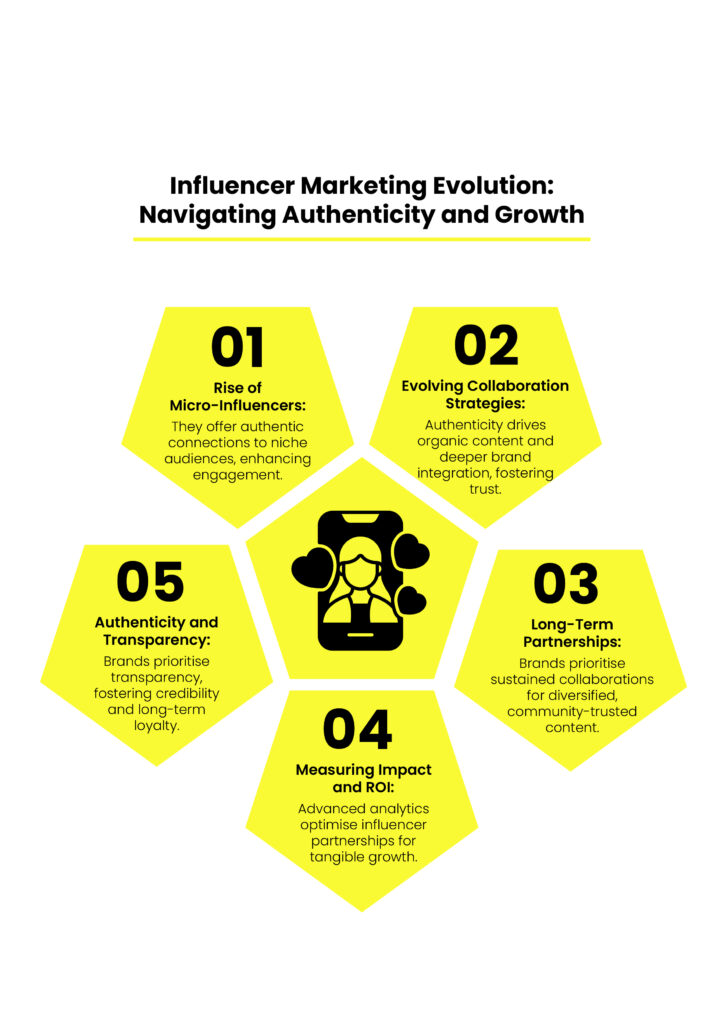
In recent years, the influencer marketing landscape has seen the rise of micro-influencers, offering brands a chance to connect with niche audiences authentically. Collaboration strategies are evolving to prioritise authenticity, leading to more organic content and deeper brand integration, fostering higher levels of consumer engagement and trust.

  • Emergence of New Platforms

In recent years, we’ve witnessed the rise of micro-influencers as a driving force in the influencer marketing landscape. These individuals, with smaller yet highly engaged followings, offer brands an opportunity to reach niche audiences more authentically and cost-effectively. With the emergence of new platforms catering to micro-influencers, such as TikTok, brands now have access to a diverse pool of content creators who can deliver targeted and relatable messaging to their audience.

  • Evolving Collaboration Strategies

As brands embrace micro-influencers, collaboration strategies are evolving to prioritise authenticity and genuine connections. Rather than focusing solely on reach and engagement metrics, brands are now seeking partnerships with influencers who align with their values and resonate with their target audience. This shift towards authenticity has led to more organic and relatable content, driving higher levels of engagement and trust among consumers. Additionally, brands are exploring long-term partnerships with micro-influencers, allowing for deeper integration of their products or services into the influencer’s content, thereby enhancing brand affinity and loyalty.

Long-Term Partnerships

In 2024, influencer marketing is witnessing a notable shift towards long-term partnerships, allowing brands to diversify content and foster deeper engagement with their audience. Brands are increasingly prioritising accurate measurement of impact and return on investment (ROI), leveraging advanced analytics to optimise influencer partnerships and drive sustainable growth.

  • Diversification of Content

In 2024, long-term partnerships between brands and influencers are becoming increasingly prevalent as businesses recognise the value of sustained and authentic collaborations. These partnerships go beyond simple one-off campaigns, allowing brands to diversify their content and engage with their audience on a deeper level. By working closely with influencers over an extended period, brands can co-create content that resonates with their target demographic, fostering a sense of community and trust around the brand.

  • Measuring Impact and ROI

As brands invest more heavily in long-term partnerships with influencers, the need for accurate measurement of impact and return on investment (ROI) becomes integral. In 2024, brands are leveraging advanced analytics and metrics to track the effectiveness of their influencer marketing campaigns, from brand awareness and engagement metrics to actual sales attribution. By analysing key performance indicators (KPIs) and refining their strategies based on data-driven insights, brands can optimise their influencer partnerships to achieve tangible business objectives and drive sustainable growth.

Advanced Analytics and Metrics

Influencer marketing sees a significant advancement with the integration of advanced analytics and metrics into e-commerce platforms, enabling brands to track the impact of influencer collaborations on sales conversions. Brands prioritise collaborations with influencers who prioritise authenticity and transparency, fostering trust and credibility with their audience and driving long-term loyalty.

  • Integration with E-commerce

One of the most significant advancements in influencer marketing in 2024 is the integration of advanced analytics and metrics with e-commerce platforms. Brands are leveraging data-driven insights to track the entire customer journey, from initial engagement with an influencer’s content to the final purchase decision. By integrating influencer marketing efforts with e-commerce platforms, brands can attribute sales directly to specific influencer collaborations, providing a clear ROI and enabling more targeted and efficient marketing strategies.

  • Authenticity and Transparency

In an age of heightened consumer awareness, authenticity and transparency have become intrinsic to influencer marketing. Brands are placing a greater emphasis on working with influencers who embody these values and are willing to disclose sponsored content transparently. Influencers, in turn, are prioritising authenticity in their collaborations, ensuring that sponsored content aligns with their personal brand and resonates with their audience. By fostering genuine connections and transparent communication, brands can build trust and credibility with their target audience, ultimately driving long-term loyalty and brand advocacy.

Focus on Authenticity

As influencer marketing regulations continue to evolve, brands and influencers must prioritise understanding their legal obligations and responsibilities. This includes accurately disclosing sponsored content, adhering to advertising standards, and complying with consumer protection laws. By staying informed about the latest regulations and seeking legal counsel when necessary, brands and influencers can mitigate the risk of facing penalties or damaging their reputation due to non-compliance.

To maintain authenticity and trust with their audience, brands and influencers are increasingly implementing transparency measures in their influencer marketing campaigns. This includes clearly labelling sponsored content, providing honest reviews and opinions, and disclosing any material connections between the influencer and the brand. By prioritising transparency, brands and influencers comply with regulatory requirements and foster genuine relationships with their audience based on honesty and authenticity.

In conclusion, influencer marketing in 2024 is characterised by a focus on authenticity, data-driven strategies, and long-term partnerships. As brands continue to adapt to the evolving landscape of digital advertising, influencer marketing remains a powerful tool for connecting with consumers in meaningful and impactful ways. By embracing emerging trends and prioritising genuine connections with influencers and their audience, brands can drive engagement, foster loyalty, and achieve sustainable growth in the ever-changing world of influencer marketing.

Hyper-Personalisation – Crafting Targeted Campaigns for Maximum Impact

Where consumers wield unprecedented control over their online experiences, traditional one-size-fits-all marketing approaches are quickly becoming obsolete. As the demand for tailored interactions continues to soar, brands are turning to hyper-personalisation as the essential driver of their marketing strategies. 

This evolution into hyper-personalisation has rendered marketers to question their mechanised approaches in spearheading campaigns, where stellar agent-customer relationships, divergent web mock-ups and the phygital scenario are now dominating the marketing field. We aim to divulge insights into individual preferences, behaviours, and interests to craft highly targeted campaigns that resonate with each customer on a profoundly personal level.

 In this blog on hyper-personalisation’s power, we delve into its transformative potential, from redefining consumer expectations to revolutionising the very fabric of customer engagement and brand loyalty.

The Power of Hyper-Personalisation

As digital consumers raise the bar for personalised interactions, hyper-personalisation becomes an important facet of effective marketing strategies, offering brands the key to unlocking lasting engagement and loyalty.

  • Defining Hyper-Personalisation

Hyper-personalisation goes beyond basic personalization by diving into the intricate details of individual preferences, behaviours, and interests. It involves crafting highly targeted marketing messages and experiences that resonate with each customer on a personal level, fostering stronger connections and driving meaningful interactions. Unlike traditional marketing approaches, which often rely on generalised messaging, hyper-personalisation recognises that one size does not fit all and tailors content to match the unique needs of each consumer.

  • Understanding Consumer Expectations

In the digital age, consumer expectations have undergone a significant transformation. Audiences now expect personalised experiences across all touchpoints, from the moment they interact with a brand to the post-purchase journey. This shift is driven by an increasing desire for relevance, authenticity, and convenience. Consumers want brands to understand their preferences, anticipate their needs, and provide solutions that cater to their individual lifestyles. Hyper-personalisation addresses these evolving expectations by delivering tailored content, recommendations, and offers that resonate with each customer on a personal level.

Leveraging Data for Precision

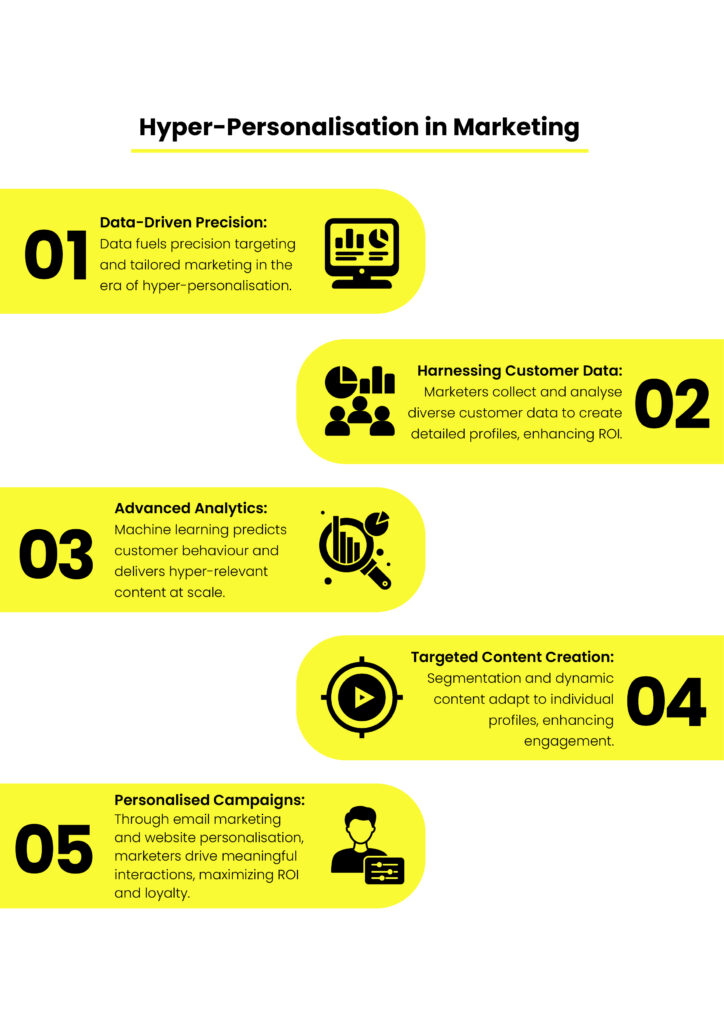
In the era of hyper-personalisation, data is the fuel that drives precision targeting and tailored marketing campaigns. By harnessing a diverse array of customer data sources, marketers gain invaluable insights into consumer preferences and behaviours, enabling them to create personalised experiences that resonate deeply with their audience.

  • Harnessing Customer Data

At the core of hyper-personalisation lies the effective collection and analysis of customer data. Marketers rely on a myriad of data sources, including behavioural, demographic, and psychographic data, to gain insights into customer preferences and behaviours. By harnessing these data points, marketers can create detailed customer profiles and segment their audience based on shared characteristics or behaviours. This segmentation enables marketers to deliver more targeted and relevant content that speaks directly to the unique needs and interests of each segment, thereby enhancing engagement and driving conversions.

  • Implementing Advanced Analytics

Advanced analytics and machine learning play a pivotal role in hyper-personalisation by processing vast amounts of data and deriving actionable insights. These technologies enable marketers to predict customer behaviour, identify patterns, and anticipate future needs with unprecedented accuracy. By leveraging advanced analytics, marketers can refine their targeting strategies and deliver hyper-relevant content that resonates with each individual customer. From predicting purchasing behaviour to personalising product recommendations, advanced analytics empower marketers to stay one step ahead of customer expectations and deliver truly personalised experiences at scale.

Crafting Targeted Content

Through segmentation strategies, marketers divide their audience into distinct groups, ensuring that each targeted message resonates with its intended recipients. Let’s delve into how targeted content can boost impact and ROI.

  • Segmentation Strategies

Segmentation is an ally of hyper-personalisation, allowing marketers to divide their audience into distinct groups based on shared characteristics or behaviours. By segmenting audiences, marketers can deliver more targeted and relevant content that addresses the specific needs and interests of each segment. This targeted approach enhances engagement and drives conversions by ensuring that each message resonates with its intended audience. From demographic segmentation to behavioural segmentation, there are various strategies that marketers can employ to effectively segment their audience and deliver personalised experiences.

  • Dynamic Content Creation

Dynamic content takes personalisation to the next level by dynamically adapting to individual user profiles in real time. Unlike static content, which remains the same for all users, dynamic content changes based on factors such as past behaviour, preferences, and demographics. This allows marketers to deliver highly relevant and engaging content that aligns with each user’s unique interests and needs. Whether it’s personalised product recommendations, dynamically generated email content, or tailored website experiences, dynamic content enhances user engagement by delivering content that speaks directly to each customer.

Implementing Personalised Campaigns

Implementing personalised campaigns is key to capturing the attention and loyalty of today’s discerning consumers. Through email marketing excellence, marketers can leverage hyper-personalisation to craft highly targeted and engaging campaigns that drive meaningful interactions and conversions.

  • Email Marketing Excellence

Hyper-personalisation has revolutionised email marketing, enabling marketers to create highly targeted and relevant email campaigns that resonate with recipients. By personalising subject lines, content, and offers based on individual preferences and behaviours, marketers can significantly increase open rates, click-through rates, and overall campaign effectiveness. Personalised email campaigns have been shown to drive higher engagement and conversion rates compared to generic campaigns, making them a valuable tool for marketers looking to maximise their ROI.

  • Website Personalisation

Personalised website experiences are crucial in today’s digital landscape, where consumers expect tailored interactions at every touchpoint. Successful website personalisation involves dynamically adjusting content, recommendations, and messaging based on individual user behaviour and preferences. By delivering personalised experiences, brands can enhance user engagement, drive conversions, and foster long-term customer loyalty. From personalised product recommendations to dynamically generated landing pages, website personalisation allows marketers to create seamless and intuitive user experiences that resonate with each visitor.

Hyper-personalisation represents a paradigm shift in digital marketing, offering unprecedented opportunities to create meaningful and impactful interactions with customers. By leveraging data-driven insights and advanced technologies, businesses can craft targeted campaigns that resonate with individual preferences and behaviours, driving higher engagement, conversion rates, and overall marketing effectiveness. 

Embracing hyper-personalisation isn’t just about meeting consumer expectations; it’s about exceeding them and forging deeper connections that foster lasting relationships with your audience. As consumer expectations continue to evolve, hyper-personalisation will remain a critical strategy for brands looking to stay ahead of the curve and deliver truly personalised experiences that drive results.

How to Handle Negative Reviews on Google My Business Like a Pro

Without concise, effective brand offerings on Google My Business, it’s easy to become subject to negative feedback, leaving you questioning your prospects and your business’s bottom line. From slip-ups in brand consistency, conveyance and quality control, brand sentiment analysis is teetering on a long-forgotten pedestal. 

These critiques can be viewed as daggers to a business’s credibility, but when handled adeptly, they can serve as catalysts for growth and improvement. Typically, Google My Business shows the value you put to the table in discoverability, rendering an eye-opener as to what went wrong in the keyword search process. In this guide, we’ll delve into strategies on how to navigate negative reviews on platforms like Google My Business with finesse, turning them from potential liabilities into opportunities for building stronger customer relationships and enhancing your brand’s reputation.

Understanding the Value of Negative Reviews

Negative reviews, when in reception early on, form the social brand health check that can cleanse service associate protocol and improve the robustness of future marketing strategies, avoiding the frequency of pitfalls. 

  • The Learning Opportunity

Negative reviews, though initially disheartening, offer a wealth of insight into areas where businesses can improve. Each critique is a learning opportunity, providing valuable feedback on aspects of your product or service that may need refinement. Embracing a positive mindset, where criticism is seen as a pathway to growth rather than a setback, is crucial in leveraging negative reviews to your advantage. By addressing these issues head-on, businesses can demonstrate their commitment to excellence and customer satisfaction.

  • Timely Response Strategies

One of the most critical aspects of managing negative reviews is the timeliness of your response. Customers appreciate prompt attention to their concerns, which can help defuse potential conflicts and showcase your dedication to resolving issues. Establishing a timeframe for responding to reviews is essential, ensuring that no feedback goes unacknowledged. Whether it’s within 24 hours or sooner, setting clear guidelines for response times helps maintain trust and credibility with your audience.

  • Crafting a Thoughtful Response

When formulating responses to negative reviews, it’s essential to conduct a mix of professionalism and empathy. Start by acknowledging the customer’s concerns and expressing genuine regret for any inconvenience they may have experienced. Avoid being defensive or dismissive, as this can escalate tensions further. Instead, offer a sincere apology and assure the customer that their feedback will be taken seriously. Provide a clear plan of action for addressing the issue and invite further communication to resolve any remaining concerns.

Operational Segment for Handling Negative Reviews

Where there is a distinct difference between reasonable to no customer service, it is important to be empathetic, constructive and express full disclosure for Google My Business publications, where you are in step with your customers’ ordeals. Google My Business offers insights into the keyword exploration reports that rendered past glitches, positioning you with extensive information and backup.

  • Moving the Conversation Offline

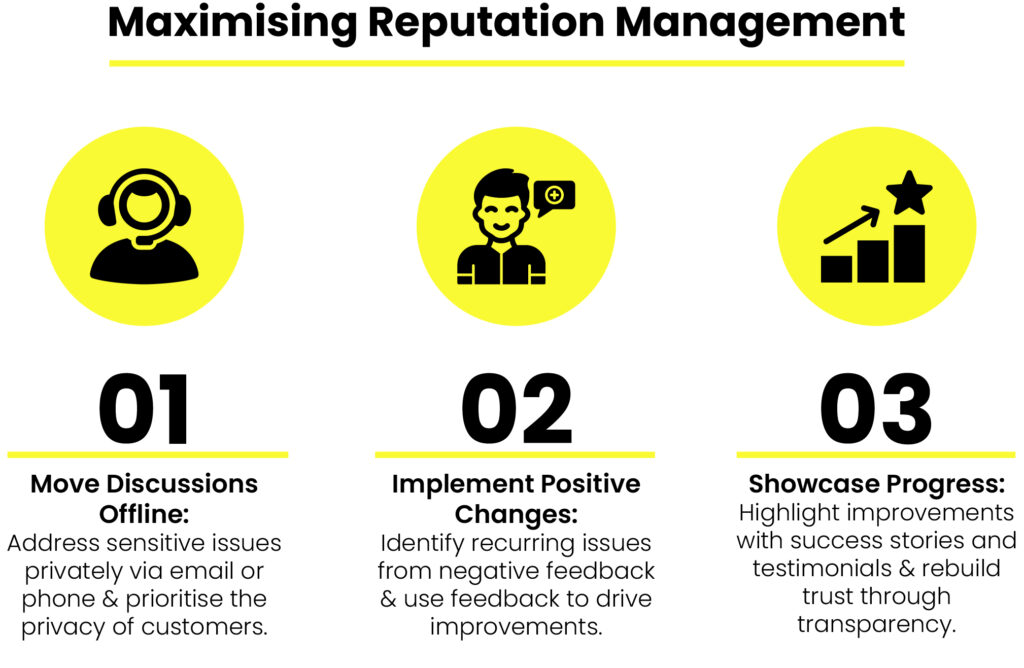
While it’s essential to address negative reviews publicly, some issues are best handled through private channels. Encourage disgruntled customers to reach out via email or phone to discuss their concerns in more detail. This demonstrates a commitment to resolving issues while also safeguarding the privacy of the customer. By taking the conversation offline, businesses can engage in more meaningful dialogue and work towards a satisfactory resolution without airing grievances in a public forum.

  • Implementing Constructive Changes

Negative reviews often highlight recurring issues that need to be addressed within the business. Establishing an internal feedback loop allows businesses to identify these pain points and implement constructive changes accordingly. By soliciting feedback from customers and frontline staff, businesses can gain valuable insights into areas needing improvement and take proactive measures to address them. This continuous improvement mindset not only enhances the customer experience but also fosters a culture of innovation and adaptation within the organisation.

  • Showcasing Positive Changes

Once constructive changes have been implemented, it’s essential to showcase these improvements publicly. Share success stories and testimonials from satisfied customers to illustrate the positive impact of your efforts. By transparently acknowledging past shortcomings and highlighting the steps taken to rectify them, businesses can turn negative experiences into positive narratives. This not only rebuilds trust with existing customers but also attracts new customers who value transparency and accountability.

Post Negative Review Rectification Process

Once you’ve rectified issues and misconceptions showcased on Google My Business, the inherent capabilities to spotlight products back on track require rehabilitating past successes that have rendered happier audiences. Coincidentally, adverse setbacks may encompass brand improvements that can prove beneficial in the long term where future onboarding is seamless. Bear in mind that negative reviews are not necessarily extensive and can require minimal effort to adapt. 

  • Encouraging Positive Reviews

While addressing negative reviews is crucial, businesses should also focus on generating positive feedback from satisfied customers. Proactively encourage happy customers to leave reviews on platforms like Google My Business by making the process as seamless as possible. Consider sending follow-up emails or including review prompts on receipts to remind customers to share their experiences. By actively seeking out positive reviews, businesses can dilute the impact of negative feedback and showcase the overall satisfaction of their customer base.

  • Highlighting Positive Experiences

In addition to generating positive reviews, businesses should leverage satisfied customer testimonials in their marketing efforts. Share glowing testimonials on your website, social media channels, and marketing materials to highlight the positive experiences of past customers. By amplifying these success stories, businesses can counterbalance the negative reviews and showcase the value they provide to their customers. Positive word-of-mouth remains one of the most powerful marketing tools, and by harnessing the goodwill of satisfied customers, businesses can bolster their online reputation and attract new clientele.

Navigating negative reviews on platforms like Google My Business requires a proactive and constructive approach. By viewing criticism as an opportunity for growth, responding promptly and professionally, and implementing constructive changes, businesses can turn negative experiences into positive outcomes. By prioritising customer satisfaction and transparency, businesses can build a stronger and more resilient online reputation that withstands the occasional critique and fosters long-term success.

Home of Performance Marketing Expands Partnership with RAK Ceramics to Enhance Social Media Presence in Saudi Arabia

DUBAI, UAE – [2024/03/22] – Home of Performance Marketing (HOP), a leading social media marketing agency, today announced the expansion of its partnership with RAK Ceramics, a globally recognized premium ceramics brand. Building on the success of HOP’s TikTok content production for RAK Ceramics in the UAE, the agency will now take charge of the brand’s entire social media presence within the Kingdom of Saudi Arabia (KSA).

RAK Ceramics aims to strengthen its position as a social media leader in the KSA market. HOP’s proven expertise in social media strategy, content creation, and community management will be crucial in reaching this objective.

“Our partnership with RAK Ceramics on TikTok content production in the UAE has yielded fantastic results, and we’re thrilled to expand our collaboration into full-scale social media management within the KSA,” said Mo Ballout, Head of Social Media at HOP. “RAK Ceramics’ commitment to innovation and creativity aligns with our approach, making this a partnership with incredible potential.”

The partnership will encompass all major social media platforms relevant to the Saudi market. HOP will develop a tailored social media strategy for RAK Ceramics focused on audience engagement, brand awareness, and driving tangible business outcomes within the KSA region.

About Home of Performance

Home of Performance Marketing (HOP) is a results-driven performance marketing agency specializing in helping dynamic brands across multiple industries achieve exceptional business outcomes. Its services encompass paid media, data analytics, conversion optimization, creative services, and strategic guidance.

About RAK Ceramics

RAK Ceramics is a global leader in premium ceramic lifestyle solutions. The company offers a wide range of products, including tiles, bathware, tableware, and other specialized ceramics products, known for their exceptional design and quality.

Home of Performance Marketing Partners with Zofeur to Power Data-Driven Growth

DUBAI, UAE – March 08,2024 – Home of Performance Marketing (HOP), a leading performance marketing agency, today announced a strategic partnership with Zofeur, the innovative pay-per-minute chauffeur app.  HOP will support Zofeur’s expansion and customer acquisition efforts with targeted paid media campaigns and in-depth app analytics.

HOP’s expertise in performance marketing will be instrumental in maximizing Zofeur’s visibility and driving conversions. By leveraging data-driven insights from app analytics, HOP will optimize campaigns for continuous improvement and efficiency.

“Zofeur’s unique concept offers significant market potential, and we’re excited to be their strategic partner,” said John von Hofsten, Managing Director at HOP. “Our data-centric approach will ensure that their marketing efforts translate directly into user acquisition and business growth.”

This collaboration will enable Zofeur to refine its marketing strategies, reach the right audiences through paid advertising channels, and ultimately increase market share within its target markets.

About Home of Performance

Home of Performance Marketing (HOP) is a results-driven performance marketing agency specializing in helping dynamic brands across multiple industries achieve exceptional business outcomes. Its services encompass paid media, data analytics, conversion optimization, creative services, and strategic guidance.

About Zofeur

Zofeur is the pioneer of pay-per-minute chauffeur services. With its commitment to convenience, flexibility, and customer satisfaction,  Zofeur is redefining how people experience transportation.

Home of Performance Marketing to Spearhead Biz Group’s Expansion into Saudi Arabia

DUBAI, UAE – March 06, 2024 – Home of Performance Marketing (HOP), a recognized leader in performance marketing, today announced a strategic partnership with Biz Group, the UAE’s premier provider of corporate training solutions. HOP will spearhead Biz Group’s ambitious expansion into the Kingdom of Saudi Arabia (KSA) with targeted paid media management and search engine optimization (SEO) campaigns specifically aimed at the KSA market.

Biz Group, a long-established and trusted corporate training provider in the UAE, seeks to extend its reach and impact within the dynamic Saudi Arabian market. HOP’s deep expertise in digital marketing, tailored for the KSA audience, will be instrumental in achieving this goal.

“Biz Group’s commitment to delivering exceptional corporate training aligns perfectly with our focus on results-driven marketing,” said John von Hofsten, Managing Director at HOP.  “We’re confident that our KSA-focused strategies will position Biz Group as a significant force in the Saudi training landscape.”

HOP will implement a multi-pronged strategy for Biz Group, leveraging paid media channels to drive brand awareness and targeted leads within the Saudi market. A robust SEO campaign designed for the KSA market will further enhance Biz Group’s online visibility, positioning them as an authority in the industry.

“Partnering with HOP was an easy decision, considering their exceptional track record in the region,” remarked Nicola Milton, Marketing Director at Biz Group. “We’re eager to leverage their digital marketing prowess and KSA-specific understanding to tap into the vast potential of the Saudi Arabian market.”

About Home of Performance

Home of Performance Marketing (HOP) is a results-driven performance marketing agency specializing in helping dynamic brands across multiple industries achieve exceptional business outcomes. Its services encompass paid media, data analytics, conversion optimization, creative services, and strategic guidance.

About Biz Group

Biz Group is the leading provider of corporate training solutions in the UAE, with a proven history of delivering transformative training experiences. The company offers a wide range of programs in various fields designed to enhance professional skills and organizational development.

Home of Performance Marketing partners with oneshot to conquer the Hydration market in UAE and KSA

DUBAI, UAE –March 04, 2024 : Home of Performance Marketing (HOP), a leading performance marketing agency in the Middle East, proudly announces a strategic partnership with oneshot, the new local and innovative brand in the functional nutrition space. HOP will offer comprehensive digital support and strategic consulting to launch oneshot in the United Arab Emirates (UAE) and the Kingdom of Saudi Arabia (KSA).

“At HOP, we are always looking to work with the best up-and-coming brands in the region,” commented HOP Strategy Director Warren LaRey. “oneshot’s commitment to science-based nutrition and peak performance aligns perfectly with our mission. We’re thrilled to support oneshot to their growth journey in the Middle East.”

Hydrate is oneshot’s first product, with its advanced formula that combines essential minerals (6 electrolytes) and vitamins with precise ratios to boost hydration and fuel everyday activity. Hydrate comes in 3 flavors and is 100% natural with no sugar or any artificial ingredients.

Abdulkader Lamaa, Founder of oneshot, shared his vision: “oneshot was born in our region with a desire to empower individuals that seek wellness and peak performance. Partnering with HOP will extend our reach, helping more people to be at their best and achieve their ambition.”

HOP plans to deploy its deep market insights into the UAE and KSA, crafting a targeted digital marketing strategy that includes data-driven campaigns, social media, display advertising, and influencer collaborations. Their strategic consulting will further enhance oneshot’s market presence.

About Home of Performance Marketing

Home of Performance Marketing (HOP) is a premier performance marketing agency dedicated to driving exceptional business results. Their expertise spans paid media, data analytics, conversion optimization, and creative services, bolstered by strategic guidance.

About oneshot

Oneshot is at the forefront of the functional nutrition industry, crafting innovative hydration solutions that empower individuals to seize their day and perform at their best. Our products are meticulously formulated to support those who are passionate about wellness, fitness, and achieving excellence in all aspects of life. Oneshot is a call to action to seize the moment and take the shot at greatness.

Home of Performances Wins Nando’s UAE Paid Media Management Account

DUBAI, UAE – March 01,2024 : Home of Performances (HOP), a leading performance marketing agency in the UAE, today announced a major client win:  Nando’s UAE has selected HOP to manage its paid media campaigns across the region.

HOP will assume responsibility for Nando’s paid media strategy and execution, leveraging their expertise to drive enhanced return on investment (ROI) of the brand’s advertising spend. This partnership will focus on optimizing Nando’s digital channels to reach new audiences, boost brand awareness, and drive conversions.

“Nando’s is an iconic brand that introduced the PERi-PERi chicken to a global passionate customer base,” said Tahir Khesghi, Digital Director at Home of Performances. “My previous role at Americana Restaurants has given me deep insight into the food and beverage sector, and I’m excited to apply those learnings alongside our talented team to maximize Nando’s marketing potential in the UAE.”

Hasna Namnoum, Marketing Manager at Nando’s UAE brings a wealth of marketing experience within F&B sector, managing global brands like Krispy Kreme. She added, “We were impressed with HOP’s track record of success and their innovative approach to digital marketing. We believe they are the ideal partners to elevate our paid media efforts as we continue to expand and spread PERi-PERi goodness across the UAE.”

About Home of Performances

Home of Performances (HOP) is a performance-driven marketing agency dedicated to helping businesses achieve measurable results. Specializing in paid media management, HOP utilizes data-driven strategies and cutting-edge tactics to optimize campaign performance, increase ROI, and drive conversions.

About Nando’s UAE

Nando’s UAE is the popular restaurant chain specializing in flame-grilled PERi-PERi chicken and other Afro-Portuguese delights. With 23 locations across the UAE, Nando’s is renowned for its vibrant atmosphere, flavorful food, and commitment to serving customers with passion.

Unraveling the Power of Conversion Rate Optimization for E-Commerce

Introduction

In the fast-paced world of e-commerce, mastering Conversion Rate Optimization (CRO) is no longer an option—it’s a necessity. Your conversion rate, representing the percentage of visitors who become customers, is the key to unlocking unprecedented business growth. In this article, we explore essential strategies and tactics to propel your e-commerce business to new heights through the power of CRO.

Unveiling the Significance of Conversion Rate in E-commerce

In the competitive landscape of e-commerce, a high conversion rate is synonymous with increased sales, revenue, and brand success. In this article, we delve into the essential strategies and tactics to elevate your conversion rate and propel your e-commerce business to new heights.

Understanding Conversion Rate

Conversion rate, often hailed as the heartbeat of e-commerce success, is the percentage of website visitors who take a desired action, such as making a purchase, signing up, or engaging in a specified way. This critical metric serves as a compass, guiding businesses to the treasure trove of increased sales, revenue, and sustained growth. Let’s delve into the intricacies of understanding conversion rate and the key metrics that shape its landscape.

Defining and Calculating the Conversion Rate

Let’s start by demystifying the term. The conversion rate is the percentage of website visitors who take the desired action, whether it’s making a purchase, signing up, or engaging in any specific way. To calculate it, divide the number of conversions by the total number of visitors and multiply by 100.

Essential Metrics for Effective Tracking

Tracking key metrics is pivotal. Dive into metrics like click-through rate, bounce rate, and average session duration to gain insights into user behavior. Understanding these metrics allows you to identify areas for improvement and tailor your strategy accordingly.

Benchmarking Success in the E-commerce Industry

Benchmarking against industry standards is crucial for setting realistic goals. Stay informed about average conversion rates in your sector to gauge your performance and identify areas for optimization.

Analyzing User Experience

The seamless interaction between a user and a website can be the make-or-break factor for successful conversions. To dissect the nuances of enhancing user experience, let’s navigate through the key elements that contribute to a user-friendly and conversion-focused digital journey.

Crafting Seamless Website Navigation and Design

User experience is at the core of CRO. Ensure your website navigation is intuitive, and the design is visually appealing. A seamless journey encourages visitors to explore further and increases the likelihood of conversions.

Mobile Optimization for On-the-Go Shoppers

With the surge in mobile users, optimizing your website for mobile is non-negotiable. Responsive design and mobile-friendly features ensure a positive experience for on-the-go shoppers, translating into higher conversion rates.

Lightning-Fast Page Load Speed

Patience is a rare virtue in the digital age. Speed up your website’s page load time to keep visitors engaged. A fast-loading site not only improves user experience but also positively impacts your search engine rankings.

Crafting Clear Call-to-Action (CTA) for Immediate Engagement

Guide your visitors with clear and compelling CTAs. Whether it’s “Shop Now,” “Subscribe,” or “Get Started,” a well-placed CTA prompts immediate action, enhancing the chances of conversion.

Optimizing Product Pages

In the bustling world of e-commerce, the true battleground for conversions unfolds on the product pages. The optimization of these pages is a strategic imperative, holding the key to captivating potential customers and steering them towards making a purchase. Let’s explore the essential elements in optimizing product pages for maximum impact.

Showcasing High-Quality Product Images

Visual appeal matters. Invest in high-quality product images that showcase your offerings in the best light. Clear visuals provide potential customers with a tangible sense of what they are about to purchase.

Crafting Compelling Product Descriptions

Words have power. Craft product descriptions that not only highlight features but also address customer needs and desires. Compelling narratives create an emotional connection, driving conversions.

Transparency in Pricing and Discounts

Honesty is the best policy. Clearly display product prices and any available discounts. Transparency builds trust, a critical factor in convincing potential customers to make a purchase.

Harnessing the Power of Customer Reviews and Ratings

Leverage the voice of your satisfied customers. Positive reviews and ratings instill confidence in potential buyers, acting as social proof of your product’s quality and your brand’s reliability.

Streamlining Checkout Process

In this pivotal phase, the efficiency and user-friendliness of the checkout process play a decisive role in determining whether a potential sale transforms into a successful conversion. Join us on a journey to understand the art of streamlining the checkout process, uncovering strategies to reduce friction, enhance user satisfaction, and ultimately boost your conversion rates. Let’s embark on a quest to pave the way for seamless transactions that leave a lasting positive impression on your customers.

Simplifying Checkout Forms for a Hassle-Free Experience

A complicated checkout process can lead to cart abandonment. Simplify forms, minimize steps, and offer guest checkout options for a hassle-free and efficient purchasing journey.

Offering Multiple Payment Options for Convenience

Diverse preferences call for diverse payment options. Cater to a wider audience by providing multiple payment methods, from credit cards to digital wallets, ensuring a seamless transaction process.

Instilling Security and Trust Signals

Security is paramount in e-commerce. Display trust signals such as secure payment icons and SSL certificates to reassure customers that their sensitive information is in safe hands.

Tackling Cart Abandonment Head-On

Address the issue of cart abandonment proactively. Implement retargeting strategies, send reminder emails, and offer incentives to entice customers to complete their purchase journey.

Implementing A/B Testing

A/B testing emerges as the strategic compass guiding businesses through the labyrinth of digital decisions. This powerful method allows for systematic experimentation with different elements of a webpage, unraveling insights into user behavior and preferences. Join us as we delve into the world of A/B testing, where data-driven decisions take center stage, unlocking a realm of continuous improvement and heightened conversion rates. Embark on a journey of discovery, as we explore the art and science of implementing A/B testing to propel your online presence to new heights.

Experimenting with Different Page Elements

A/B testing is the cornerstone of optimization. Experiment with variations in headlines, images, and CTAs to identify the elements that resonate most with your audience.

Analyzing and Leveraging A/B Test Results

A thorough analysis of A/B test results is essential. Identify winning variations and implement them across your website for continuous improvement.

Iterative Improvements for Sustained Success

CRO is an ongoing process. Continuously iterate and refine your strategies based on user behavior and evolving market trends for sustained success.

Leveraging Customer Feedback

Understanding and acting upon the insights provided by customers is one important pillar of success. In this exploration of leveraging customer feedback, we navigate the transformative power of consumer perspectives. From soliciting reviews and testimonials to addressing pain points and personalizing the shopping experience, this journey unveils the pivotal role customer feedback plays in shaping a customer-centric business model. 

Actively Soliciting Reviews and Testimonials

Customer feedback is a goldmine of insights. Encourage customers to share their experiences through reviews and testimonials, showcasing the real value of your products and services.

Addressing Customer Pain Points for Enhanced Satisfaction

Listen to your customers. Identify pain points through feedback and address them promptly. A customer-centric approach not only resolves issues but also fosters loyalty.

Personalizing the Shopping Experience for Every Customer

Tailor the shopping experience. Use customer data to personalize recommendations, promotions, and communications, making each interaction more relevant and engaging.

Utilizing Social Proof

In the vast digital landscape, where choices abound, establishing trust and credibility is paramount for any business. Enter social proof—the beacon that illuminates the path towards building a reliable and esteemed brand. This journey explores the art of utilizing social proof as a strategic tool to showcase the authenticity and success of your offerings. From trust signals and customer success stories to seamless integration with social media, let’s explore how leveraging social proof can transform mere visitors into confident customers. 

Displaying Trust Signals to Boost Credibility

Build trust through social proof. Showcase trust signals such as certifications, awards, and affiliations to enhance your brand’s credibility.

Illuminating Success Stories from Satisfied Customers

Humanize your brand by sharing success stories. Highlight satisfied customers and their positive experiences to create a relatable narrative that resonates with potential buyers.

Seamless Integration of Social Media for Greater Visibility

Extend your reach through social media integration. Share user-generated content, engage with your audience, and create a community around your brand for increased visibility and trust.

Monitoring Analytics

In the ever-evolving digital realm, success hinges on the ability to adapt and make informed decisions. From deciphering key metrics to pinpointing conversion bottlenecks and harnessing advanced analytics tools, we can explore how informed insights not only refine current strategies but also lay the groundwork for future accomplishments. By mastering the language of analytics, businesses can confidently set sail towards sustained growth, ensuring they remain leaders in their digital pursuits.

Constantly Tracking Key Metrics for Insights

Regularly monitor key metrics using analytics tools. Gain insights into user behavior, traffic sources, and conversion funnels to make informed decisions.

Identifying and Eliminating Conversion Funnel Bottlenecks

Pinpoint bottlenecks in your conversion funnel and address them strategically. Streamlining the customer journey leads to improved conversion rates.

Leveraging Advanced Analytics Tools for Deeper Understanding

Go beyond basic metrics. Utilize advanced analytics tools to gain a deeper understanding of user interactions, preferences, and trends, enabling you to stay ahead in the competitive e-commerce landscape.

Conclusion

Mastering Conversion Rate Optimization is the catalyst for unparalleled success in the dynamic world of e-commerce. By prioritizing user experience, optimizing product pages, streamlining the checkout process, implementing A/B testing, leveraging customer feedback, utilizing social proof, and monitoring analytics, you can unleash the full potential of CRO and take your e-commerce business to new heights. Embrace these strategies, adapt to evolving trends, and watch as your conversion rates soar, bringing unprecedented growth and success to your online venture

The Definitive Guide to Effective Website Migration

Introduction

In the dynamic landscape of the digital realm, the importance of website migration looms over us.  At its core, it is a proactive response to technological advancements, necessitating a recalibration of a digital presence to embrace cutting-edge innovations. Beyond technological considerations, the process becomes a crucial tool for organizations undergoing rebranding initiatives, facilitating a seamless alignment of the digital identity with the updated brand narrative.

From laying the groundwork by defining migration to addressing the nitty-gritty of challenges, consider this your go-to resource for a stress-free website transition.

What is Website Migration?

Website migration is a strategic maneuver involving the relocation of a website from one environment to another. This can encompass changes in domain names, hosting providers, content management systems (CMS), or URL structures. 

Whether driven by technological advancements, the need for a fresh brand identity, or the pursuit of optimal performance, website migration is a calculated move, and the stakes are the brand’s online success.

Why do we need website migration?

The concept of website migration has become more than just a buzzword – it’s a strategic necessity. As businesses evolve, adapt, and aim for enhanced performance, the decision to undergo website migration emerges as a pivotal step. But why exactly do we need website migration? Let’s delve into the key reasons behind this crucial process.

Technological Advancements: By staying at the forefront of technology, businesses not only future-proof their websites but also ensure they remain competitive in delivering top-tier user experiences.

Rebranding: This involves revamping the website’s look, feel, and messaging to align seamlessly with the updated brand identity. From the homepage to the contact page, every facet of the website becomes a reflection of the brand’s renewed character, ensuring consistency across all touchpoints.

Performance Optimization: This could involve migrating to a server with better processing power, increased bandwidth, and advanced security features. A swift and reliable website not only improves user experience but also contributes to higher search engine rankings, as speed is a crucial factor in search algorithms.

Planning for Website Migration

Effective planning is vital in a successful migration strategy, substantiated by the intricate nature of the process. Let’s explore what organizations need to consider prior to implementing your migration strategy.

Setting Clear Objectives

Before embarking on the migration journey, defining clear objectives is paramount. Are you aiming for improved performance, a revamped design, or elevated SEO rankings? Precise goals guide the entire migration process.

Identifying Key Stakeholders

Collaboration is the cornerstone of successful migration. Involving all pertinent stakeholders, including developers, marketing teams, and content creators, ensures a holistic approach and a smoother migration.

Creating a Detailed Migration Plan

A well-crafted plan is the scaffolding of a successful migration. Outline tasks, allocate responsibilities, and establish timelines. This meticulous planning ensures everyone is on the same page, contributing to a seamless transition.

Types of Website Migration

Our examination of migration types involves a methodical analysis of various factors. Each type brings specific considerations and consequences, highlighting the complexity of this strategic maneuver in the ever-changing online landscape.

Domain Name Change

Changing your domain name demands careful consideration of SEO implications. Implementing 301 redirects and updating backlinks are crucial for maintaining search engine visibility.

Hosting Change

Shifting hosting providers can impact website speed and reliability. Choosing a provider that aligns with your website’s requirements is crucial for optimal performance.

Platform or CMS Change

Switching your content management system involves the transfer of content, metadata, and ensuring a smooth transition for both users and search engines.

URL Structure Change

Altering URL structures can have SEO consequences. Implement redirects and update internal links to avoid broken links and maintain search rankings.

Pre-Migration Checklist

Whether you’re upgrading your site for improved performance or switching to a new domain, a pre-migration checklist is your guiding compass through this intricate process. Navigating the maze of potential pitfalls requires careful planning and attention to detail.

Backup of Current Website

This process involves capturing the current state of all digital assets, including databases, files, and configurations. The backup serves as a fail-safe mechanism, ensuring that in the event of any unexpected issues, the original website can be promptly restored to minimize downtime and potential loss of data.

SEO Audit and Analysis

A thorough SEO Analysis involves a meticulous examination of on-page and off-page elements, identifying strengths and weaknesses in the existing SEO strategy. By fine-tuning metadata, optimizing content, and rectifying any SEO discrepancies, businesses can ensure a smooth transition without sacrificing hard-earned search engine visibility.

Content Inventory

Creating a detailed inventory of all website content entails cataloging every piece of content, from pages and blog posts to images and multimedia files. It facilitates the identification of any missing or duplicated content, ensuring that the integrity of the website’s informational architecture is maintained. Content cataloging not only streamlines the migration process but also sets the stage for a more organized and user-friendly website post-migration.

Setting up Redirects

The proper setup of 301 redirects is a critical aspect of website migration, particularly concerning SEO. These redirects act as digital signposts, guiding both users and search engines to the new URLs seamlessly. By implementing 301 redirects, businesses retain the SEO equity built over time, preventing the negative impact of broken links and ensuring a smooth transition. 

Executing the Migration

Once you have checked off the pre-migration checklist, let’s get into implementing the migration process. 

Technical Excellence in Implementation

Executing a website migration demands a commitment to technical excellence. Your development team must adhere to best practices, ensuring meticulous coding, rigorous testing, and minimizing downtime throughout the migration process. By emphasizing these key elements, you pave the way for a seamless transition that aligns with both user expectations and search engine criteria.

Monitoring Throughout Migration

Constant vigilance is the backbone of a successful migration. Your team should monitor server responses, scrutinize website performance, and assess user experiences in real-time. This proactive approach enables the immediate identification and resolution of any unexpected issues that may arise, minimizing potential disruptions.

Testing for Functionality and Performance

The post-migration phase demands thorough testing to validate the website’s functionality and performance. This comprehensive examination encompasses checking links, forms, and the overall user experience. Identifying and addressing issues promptly during this testing phase ensures a smooth and flawless user journey on the newly migrated website.

Post-Migration Steps

The post-migration landscape demands strategic attention to ensure a seamless user experience and maintain or improve SEO rankings. In this section, we’ll explore the essential steps to elevate your website’s performance after migration.

Redirect Verification

Following the migration, the journey doesn’t end – it evolves. Take a careful approach to double-check all redirects, ensuring their flawless functionality. Any oversight in this crucial step can lead to lost traffic and a potential downturn in SEO rankings. By confirming the accuracy of redirects, you fortify your website’s foundation for sustained success in the post-migration landscape.

Internal Link Updating

The evolution of your website’s URL structure demands a comprehensive update of internal links. This step goes beyond mere navigation – it ensures a seamless user experience and facilitates accurate indexing by search engines. By aligning internal links with the new URL structure, you create a cohesive digital ecosystem that resonates positively with both users and search algorithms.

Sitemap Resubmission to Search Engines

Empower your website’s visibility by resubmitting the updated sitemap to search engines. This strategic move expedites the discovery and indexing of your new pages by search engine bots. By staying proactive in this aspect, you enhance the likelihood of a swift and effective integration of your revamped content into search engine results.

Post-Migration SEO Audit

Embark on a comprehensive post-migration SEO audit to uncover any latent issues that might have emerged during the migration process. This audit goes beyond routine checks, delving deep into the intricacies of SEO performance. Promptly address any identified issues to not only maintain but elevate your SEO rankings. Consider this audit an opportunity to refine and optimize your website for sustained digital success.

Common Challenges and Solutions

Understanding and addressing challenges that may arise during migration is crucial for ensuring a smooth and effective transition, safeguarding both your website’s functionality and SEO rankings. Let’s delve into the complexities of migration and unveil practical solutions to conquer them. 

Traffic Fluctuations

It’s common to experience fluctuations in website traffic during and after migration. Monitor analytics closely and be prepared to make adjustments as needed.

SEO Ranking Drops

Changes in URL structure or other migration activities may cause temporary drops in SEO rankings. With proper planning and execution, these drops can be minimized, and rankings can recover over time.

Technical Glitches

Technical issues may arise during migration. Having a dedicated team monitoring and addressing these glitches promptly is crucial for a smooth transition.

Communication Strategy

Having a clear-cut communication strategy in migration fosters transparency and trust among stakeholders, keeping them informed about the migration plan, expected downtime, and potential service impacts. Utilizing social media and newsletters not only expands the reach to a broader audience but also generates anticipation and interest in the revamped website.

Informing Stakeholders

Transparent communication with stakeholders is essential. Keep them informed about the migration plan, expected downtime, and any potential impact on services.

Updating Customers and Users

Regular updates for customers and users help manage expectations and reduce confusion. Communication can include emails, website banners, or social media announcements.

Utilizing Social Media and Newsletters

Leverage social media and newsletters to keep a broader audience informed about the migration. Regular updates can generate anticipation and interest in the revamped website.

Best Practices for Smooth Website Migration

Adhering to these best practices provides a strategic framework, empowering your team to navigate the complexities of migration with confidence and ensuring a successful and seamless transition.

Collaboration Between Teams

Encourage collaboration between development, marketing, and content teams. A coordinated effort ensures a holistic approach and a successful migration.

Regular Communication Updates

Frequent communication updates keep everyone involved in the migration process informed and aligned. This reduces the likelihood of misunderstandings or delays.

Continuous Testing

Testing is a continuous process throughout migration. Regularly test functionality, user experience, and SEO aspects at each stage to catch and address issues early.

Conclusion

A well-executed migration is a strategic move that can enhance user experiences, improve performance, and align with evolving business objectives. Whether it’s rebranding, introducing new features, or adapting to industry trends, migration provides an opportune moment to synchronize the digital presence with broader business strategies. By following the comprehensive guide outlined here, businesses can navigate the complexities of website migration successfully.