Home of Performance Partners with Paymentology to Reinvent Its Global SEO and Paid Media Services

  • Strategic collaboration between Home of Performance and Paymentology to enhance global visibility
  • Targeting digital banks, fintechs, and traditional banks worldwide
  • Comprehensive SEO and Paid Media solutions to drive scalable growth

Dubai, UAE – Home of Performance (HOP), a leading digital marketing agency, is proud to announce a groundbreaking partnership with Paymentology, the global leader in card issuing and processing solutions. This collaboration aims to amplify Paymentology’s reach and market visibility across continents through targeted SEO and Paid Media services. Together, the two companies will redefine how digital banks, fintechs, and traditional banking institutions scale their card issuing capabilities globally.

As Paymentology continues to drive innovation in the financial technology sector, this strategic alliance will unlock new opportunities for expansion. Leveraging HOP’s expertise in digital marketing and data-driven strategies, the partnership will create greater visibility for Paymentology’s cloud-native card issuing and global processing solutions.

The fintech industry is booming, with card issuing solutions becoming a cornerstone for banks and fintechs looking to scale at speed. Yet, market saturation and rising competition create challenges for brands to stand out. Paymentology, with its superior infrastructure and powerful APIs, offers the perfect solution for seamless global card issuance. To ensure this unparalleled offering reaches the right audience, Home of Performance (HOP) will deploy its specialized SEO and Paid Media strategies to accelerate growth.

“At Home of Performance, we believe in empowering brands with the tools to not only survive but dominate their industry,” says John von Hofsten, Managing Director of Home of Performance. “Partnering with Paymentology, a leader in cloud-native card solutions, presents an exciting opportunity to redefine visibility in the fintech space. With our proven SEO expertise and tailored Paid Media campaigns, we’re set to elevate Paymentology’s market presence on a global scale.”

Paymentology’s cloud-native infrastructure and worldwide presence allow banks and fintechs to issue and manage cards in over 60 countries, spanning 14 time zones. As the company processes over 1 billion transactions annually, its reputation as a trusted partner to leading digital banks like Wio and Mox continues to grow. Now, with HOP’s innovative approach, Paymentology will strengthen its global authority and reach even broader markets.

With over 24 years of experience and expertise in cloud-native processing, Paymentology delivers unmatched flexibility, scalability, and speed to banks and fintechs across the globe. This collaboration between HOP and Paymentology highlights their shared commitment to innovation, growth, and client success, ensuring fintechs and banks can deliver cutting-edge card solutions seamlessly.

Home of Performance’s proven track record in SEO optimization and Paid Media management makes it the perfect partner for Paymentology’s ambitious goals. From improving search visibility and driving quality leads to increasing conversion rates, HOP will utilize its expertise to generate measurable results for Paymentology’s card issuing offerings.

About Home of Performance (HOP)

Home of Performance (HOP) is a leading digital marketing agency, specializing in SEO, Paid Media, content marketing, and performance-driven strategies. Based in Dubai, HOP partners with global brands to deliver tailored solutions that drive growth, increase visibility, and maximize ROI. With a proven track record of success, HOP is trusted by businesses across industries to create impactful digital strategies that transform their presence in competitive markets.

About Paymentology

Paymentology is the world’s leading cloud-native card issuing and processing platform, providing solutions for banks, digital banks, and fintechs. With operations in over 60 countries and expertise spanning 14 time zones, Paymentology processes over 1 billion transactions annually, helping financial institutions issue cards quickly, securely, and at scale. Trusted by leading banks like Wio and Mox, Paymentology is redefining card issuance globally.

AI’s Role in SEO and Its Future Trends

AI for SEO has reached a crucial juncture, where the advanced technology employed by major corporations is becoming increasingly accessible to smaller businesses. This growing utilization of this innovative technology is permanently transforming the field of SEO as we know it today.

SEO stands for Search Engine Optimization and involves optimizing a website to improve its visibility and rankings on search engine results pages (SERPs). The goal is to increase organic traffic by making the site more relevant and valuable to search engine algorithms and users.

Furthermore, AI’s capacity to process, interpret, and retain vast amounts of data empowers you to develop a successful SEO strategy. AI for SEO aids marketers in discovering popular keywords and topics, gaining deeper insights into customer purchasing patterns and behaviors, effectively targeting markets in significantly less time and ultimately driving conversions and business growth.


Benefits of AI in SEO

By incorporating AI into your SEO strategy, you can unlock a multitude of benefits that will propel your brand to higher rankings and maintain a competitive edge. Let’s delve deeper into the top three remarkable advantages you can attain through this integration.

01. Enhanced Effectiveness, Efficiency, and Speed.

Integrating AI into your SEO strategy yields notable advantages, making your digital marketing endeavors faster, more efficient, and highly productive.

Consider the automation capabilities of AI, which eliminate time-consuming tasks and streamline your operations. By reducing the need for developer hires, you gain the flexibility to focus on strategic planning and the effective delivery of digital content. This shift translates to substantial time and cost savings for your brand.

Furthermore, AI-driven SEO provides you with accurate and up-to-date information, empowering you to enhance productivity and make well-informed business decisions. The insights unearthed through SEO in AI enable you to optimize your strategies and stay ahead of the competition.

02. Enhanced User Experience and Customer Satisfaction.

The ultimate goal of AI SEO is to deliver a user experience that is highly tailored, valuable, and personalized. AI algorithms can analyze user preferences, behavior, and intent, allowing you to personalize content, recommend relevant products or services, and improve overall user satisfaction. By tailoring your website’s experience to individual users, you can increase engagement, drive conversions, and build long-lasting customer relationships. In essence, AI aims to improve the lives of both you and your clients.

When you successfully enhance your clients’ lives by offering hyper-personalized services and products, the result is increased customer loyalty and positive word-of-mouth. By utilizing AI to create exceptional user experiences, you can cultivate a strong customer base that not only returns for more but also becomes advocates for your brand.

03. Improved Ranking and Competitive Edge

By incorporating an AI-powered SEO strategy, you can set your sights on achieving outstanding results. AI’s ability to delve into vast amounts of data enables precise keyword targeting, helping you optimize your content to rank higher in search engine results. Additionally, AI assists in identifying trending topics, enabling you to create relevant and engaging content that resonates with your target audience. Furthermore, AI can uncover insights about your competitors, allowing you to stay one step ahead. By analyzing competitor strategies, AI helps you identify gaps and opportunities in the market, enabling you to refine your SEO approach and outperform your rivals.

This targeted approach of AI in SEO further boosts your rankings by aligning your online presence with the specific search queries and preferences of your audience.


Successful Applications of AI in SEO

By harnessing the capabilities of AI, you can gain valuable insights, optimize your content, and enhance your overall SEO strategy. Read on to explore three exceptional use cases where AI-powered solutions have driven remarkable results and elevated the brand’s online presence.

01. Rocky Brand

Rocky Brand, a retailer specializing in footwear, placed a significant emphasis on developing SEO-friendly content to boost their organic search revenue. To accomplish this goal, they employed BrightEdge’s suite of tools to strategize and prioritize their SEO initiatives. These SEO AI tools encompassed:

  • Data Cube: This tool enabled Rocky Brand to identify and target specific keywords that would drive organic traffic to their website.
  • BrightEdge Recommendations: By leveraging this tool, they optimized essential content elements such as page titles and meta tags, enhancing their search engine visibility and performance.
  • Storybuilder: Rocky Brand utilized Storybuilder to track the effects of their website optimization endeavors on their brand equity and revenue, gaining valuable insights into their SEO progress.
  • Keyword and Page Reporting: This feature allowed them to monitor the performance of keywords and content on individual pages, enabling them to refine their SEO strategies based on data-driven analysis.

Implementing these SEO software solutions resulted in remarkable outcomes for Rocky Brand, including a substantial 30% increase in search revenue, a notable 74% year-over-year revenue growth, and an impressive 13% rise in new users.

02. STACK Media

STACK Media, a content delivery website catering to professional and amateur athletes, recognized the significance of web traffic for their business success. Upon integrating BrightEdge’s platform into their operations, the STACK team achieved notable outcomes:

  • Keyword Identification: Through the platform, they successfully pinpointed high search volume keywords that were relevant to the fitness category, enabling them to align their content with popular search queries.
  • SERP Visibility Analysis: Utilizing BrightEdge, STACK Media conducted an in-depth analysis of their keyword rankings on search engine results pages (SERPs), gaining valuable insights into their visibility and performance.
  • Competitive Research: The platform facilitated competitive research, allowing STACK Media to identify content themes and page URL structures that ranked prominently on SERPs. This knowledge helped them refine their own content strategies and optimize their website for improved visibility.


As a result of their partnership with BrightEdge, STACK Media witnessed a significant 61% increase in website visits, indicating a substantial growth in web traffic. Moreover, their average bounce rate per page decreased by an impressive 73%, indicating enhanced user engagement and satisfaction.

03. Fugue

Fugue, a vendor specializing in cloud infrastructure security and compliance, operates in a highly competitive landscape with numerous high-quality competitors. To enhance their visibility and rankings in cloud security searches, Fugue leveraged the SEO capabilities of the Frase.io tool.

By utilizing Frase.io, Fugue successfully identified the crucial topics that needed to be incorporated into their Cloud Security Posture Management (CSPM) page. Additionally, the tool allowed them to compare their content to the best-performing content within the same segment, ensuring they were meeting industry standards.

As a result of their efforts, Fugue experienced a significant improvement in their CSPM page ranking, rising from the 10th position to claim the coveted 1st place. This achievement reflects the effectiveness of their SEO optimization strategy implemented with the assistance of Frase.io.


Future Trends in AI and SEO

With AI’s rapid progress, the future of SEO is undergoing a revolutionary shift, reshaping the operations of search engines and the optimization practices of businesses worldwide. Read on to take a look at the potential trends in AI and SEO.

  • AI-Enhanced Search Algorithms

AI-powered algorithms in search engines like Google, such as RankBrain, improve understanding of user intent for more relevant search results. As AI advances, we can expect similar technologies to enhance search engines, leading to improved user queries and overall search experience.

  • Revolutionized Keyword Research and Content Optimization

AI automates and enhances keyword research and content optimization by understanding semantic relationships, identifying search trends, and predicting user behavior. AI-powered tools optimize content for relevance and engagement, analyze user behavior to identify top-performing content, and generate crucial on-page elements for SEO success.

  • Elevated User Experience

AI enhances user experience in SEO by analyzing user behavior, suggesting personalized content, and using chatbots for instant assistance. It improves search result accuracy, keyword research, and content optimization. Embracing AI’s capabilities helps businesses optimize their SEO strategies for enhanced online visibility and success.

  • Predictive SEO

Predictive SEO utilizes AI and machine learning to forecast trends, user behavior, and search engine algorithm updates. This allows businesses to adapt their SEO strategies proactively and stay competitive. It helps identify trending topics, create targeted content, and minimize the impact of algorithm changes on search rankings.

  • Voice Search Optimization

Voice assistants like Alexa, Siri, and Google Assistant have popularized voice search, making it crucial for SEO. To optimize for voice search, businesses must prioritize natural language processing and incorporate long-tail keywords. AI helps analyze voice queries, understand user intent, and provide insights for optimizing content and websites.

  • Visual Search Optimization

Visual search is growing rapidly with the help of AI. Platforms like Google Lens and Pinterest Lens enable users to search using images instead of text. AI-powered image recognition improves search engine understanding and indexing of visual content. To optimize visual search, businesses should optimize images with metadata and ensure easy accessibility on their website. AI aids in analyzing and optimizing images for better visibility and higher rankings in visual search results.

The future of SEO is set to be revolutionized by AI, offering businesses a more accurate, personalized, and efficient landscape. AI-powered search algorithms, improved keyword research, and content optimization are just a few of the benefits that await businesses in this evolving field. Moreover, AI advancements promise enhancements in user experience, predictive SEO, voice search optimization, and visual search optimization, transforming the way businesses optimize their online presence.

To remain competitive, businesses must embrace these changes and adapt their SEO strategies to harness the power of AI. By doing so, they can navigate the ever-evolving digital landscape and provide seamless, engaging experiences for their users. The integration of AI into SEO is becoming increasingly vital, shaping the future of search and online visibility as we forge ahead.


Got questions? Reach out to us

The Importance of Landing Pages in Marketing

Businesses thrive when sales are high, which can only happen when quality leads are generated. Once you understand the client’s target audience, their needs, their online presence, and how to effectively reach them to increase conversions, it’s time to run lead-generation campaigns. These are ads with a strong call-to-action which direct prospects to specific landing pages which provide the relevant information and contain a lead form to collect data.

Highly-responsive, good quality landing pages form an integral part of any good lead generation campaign and if used optimally, can serve as a powerful tool to bolster revenues.

What Is A Landing Page?

The landing page is the digital equivalent of the direct marketing message, highly targeted and focused on one specific outcome. The goal of the landing page is to stimulate a predetermined action by using targeted copy to connect with a user and convince them to act. It is a web page that allows you to collect information from visitors through a lead-capture form that asks for their contact information such as name, email or a contact number. It’s important that your landing page targets a specific audience, such as visitors who clicked on your client’s pay-per-click ad or traffic from an email campaign that promoted something specific.

Landing pages can be created for SEO purposes in order to capture organic search traffic. They can also be combined with paid advertising on search engines or social media. Creating landing pages enables you to target your audience, provide them with something of value, and convert a higher percentage of your visitors into leads, all while collecting information about who they are and what they converted on.

How Do Landing Pages Work?

Landing pages are a simple exchange of information on a technical level. The visitors to your website want something, and you want something they have, such as their personal information. By removing the navigation and restricting your visitors’ options on the page, you increase the likelihood that they will read about what you have to offer—and eventually convert. Below is an example of how a conversion happens:

  1. When a person sees a call to action, they are directed to a landing page with a form.
  2. The individual fills out a form, converting them from a visitor to a lead.
  3. The form fields’ information is then saved in your leads database.
  4. Based on what you understand about the contact or lead, you market to them.

Visitors can access your site and its landing pages through a variety of marketing channels, including email, social media, PPC, direct traffic, and referral traffic, in addition to search. Furthermore, they can find your landing pages via calls-to-action on your website or directly as a result of you sharing the link to those landing pages in these other marketing channels. Marketers should create these landing pages so that potential customers can easily find them through their various marketing initiatives.

Key Components Of An Effective Landing Page

The primary reason you would create a landing page as a marketer or brand is to generate leads and achieve the highest conversion rate possible. Here are the key elements of a good landing page to help you design and develop a high-performing marketing asset for your business.

  • Headline: The headline is the first thing visitors will see when they ‘land’ on a landing page. It’s critical to keep the headline brief and to the point. Make sure it mentions your primary proposition so visitors know exactly what to expect. For example, if you provide marketing services, specify the type of your USPs and let people know what they will get with your service or product.
  • Sub-headline: Create a sub-headline that expands on the headline by providing detailed information to your customer. Show them how and why your offer is valuable to them.
  • Copy: The content on a landing page should clearly, simply, and compellingly explain the offer’s value. Bullet points can be used to demonstrate clear takeaways, separate long blocks of text, and keep things brief and to the point.
  • Keywords: To optimize a landing page for search engines, keywords should be used in the page title, headers, and text, just like any other inbound marketing content.
  • Social Sharing Buttons/Links: These links allow visitors to easily share a landing page with their connections on social networks such as Facebook, LinkedIn, and Twitter, extending the reach of your landing page beyond your own network of contacts and followers.
  • Lead-Capture/Conversion Form: The most important component of any landing page, the lead-capture or conversion form is where page visitors submit their information in return for the offer, converting them into valuable sales leads.
  • Image: Landing pages with relevant photos give visitors a tangible idea of what they will receive and make landing pages far more visually pleasing.

Why Do You Need Landing Pages?

A landing page is an excellent way to increase traffic, improve SEO, and build your brand. It can also be used as part of a successful PPC strategy. Customers are directed to a specific product, service, or offer via landing pages, which encourages them to take action. Here are more reasons why you need landing pages for your business:

  1. Easily Generate Leads

Many businesses direct email, social media, and search traffic to their websites. This is the same as throwing away leads. Sending them to targeted landing pages will allow you to capture these leads at a much higher rate. Landing pages are a quick and easy way to generate leads for your sales team, which you can then easily segment, nurture, or distribute.

  1. Collect Demographic Data on Your Prospects

Every time a lead fills out a conversion form on a landing page, your marketing and sales team gathers valuable information about them. Your marketing team can then use this data to determine which types of visitors or marketing personas are converting, and your sales team will already have a baseline of information about a lead before reaching out.

  1. Determine Which Prospects Are More Interested

Landing pages allow you to not only generate new leads but also track the reconversions of existing leads, which you can then use to determine which prospects are more engaging with your company. This also allows you to gather better intelligence on your leads’ website behaviors and activities, which your sales team can use in the future.

  1. Insights into the Efficacy of Your Marketing Offers

Every time you create a landing page, you are adding to your marketing program’s data assets. You can gain a lot of insight into your marketing performance by tracking and analyzing the metrics associated with your landing pages, such as how your various marketing offers compare, how visitors and leads convert on your landing pages over time, and so on. This provides you with valuable information that can help you optimize and improve your marketing.

  1. Fuel other marketing channels

A successful inbound marketing strategy relies on a large amount of content. Landing pages are an excellent addition to any marketer’s content arsenal because they can be shared on social media, used as the centerpiece of dedicated email sends and lead nurturing campaigns, linked to PPC ads, and found in organic search.

  1. Don’t let your offers go unnoticed.

Marketing offers and landing pages are inextricably linked. The idea is to require visitors to your website to ‘pay’ you in contact information in exchange for something valuable, such as an offer, and your landing page serves as the collection tool.

To Conclude

The more landing pages you build, the more chances you will have of converting visitors into leads. You should make certain that each landing page copy persuasively argues why the user should convert. For example, you could explain why your products are beneficial to the user or how your services can improve the user’s life. Most importantly, make sure you are constantly testing and reviewing the results to learn how to improve your landing pages.


Got questions? Reach out to us.


A Guide To Ace Your Content Marketing Efforts With Amazing Content

A growing number of brands are taking a stab at content marketing, confident that it’s a flourishing strategy modelled after successful ventures of major companies, but with nearly every brand gunning for more readers, standing out isn’t always easy.

Yet equally so, creating amazing content is often viewed as a mere trope, while companies struggle to find a viable content strategy in this absolute rat race of a business world. Look close enough and you’ll see the bigger picture: emphasis on virality over utility.  Companies need to understand that a smart content marketing strategy doesn’t just drive traffic, it also drives customer success.

Understanding The Basics Of Content Marketing

No matter where you are in your strategy creation or refinement process, it never hurts to rethink your approach and come up with new ways to create and share the content your audiences will value. Read on for a bird’s eye view of content marketing, types of content marketing and some of the best tips on how to create great content!

What Exactly Is Content Marketing?

Essentially, content marketing is a strategic marketing approach centred on creating and distributing relevant, valuable and consistent content to retain and attract a targeted audience — ultimately, to drive profitable customer action.

Why Invest In Content Marketing?

A well-created piece of content builds your brand’s equity, which means that your brand becomes increasingly valuable over time. The more you help your audience, the more your brand will gain a reputation for being a leader in your area of expertise. This creates a flywheel effect where you start gaining momentum until you become an industry leader.

What Is The Purpose Of A Content Strategy?

With a well-designed “content strategy”, you will be able to produce cohesive, engaging, meaningful and sustainable content that builds authority and attracts your target audience. It has the power to not only make your brand be seen but to create a unique personality through the right text, image, and video.

Most Effective Types Of Content Marketing 

  • Infographic Content Marketing 

Infographics are visual representations of text or information. No matter what the topic, whether it’s a step-by-step guide on how to make an online course or about the history of television, an infographic can help you convey that information in the form of an interesting visual. 

Infographics often combine text and graphic elements creatively to achieve various goals, like breaking down a complex concept, summarising information and making boring data and numbers look good. For marketers who want to incorporate meaningful design into their visual content marketing strategy, infographics are largely a godsend.

  • Blog Content Marketing 

The goal of business blogging is to get your business more online visibility. Just like social media, direct mail, email marketing and other marketing channels – these blogs support business growth. The approach addresses potential customers directly and individually, thus achieving customer loyalty to promote their own brand. 

  • Video Content Marketing 

A video is no longer just one piece of your marketing strategy. It’s vital to your outreach and campaign efforts – especially your social strategy. Video marketing involves using videos to market your products or service, increase engagement on your digital and social channels, educate your consumers and customers, and utilise a new medium to reach them.

  • Social Media Content Marketing

The social media marketing industry is constantly evolving with new features and platforms emerging every day. The purpose of social media marketing is to market your products and/or services by creating content for social media platforms. By doing so, you connect with your target audience and drive traffic to your website. 

7 Tips on Creating  Quality Content

This is the million-dollar question since quality content helps you get more visitors, lower bounce rates, and increase conversions. Yet who determines the quality of your content? The easy answer is your users, which also makes creating the right content more difficult since every user is different. 

However, there are steps you can take to ensure you create well-thought-out, readable, and attractive content, although the quality of your content ultimately comes down to your users. This makes your content more likely to be seen as high-quality by your users and search engines. Here are 07 proven ways to deliver high-quality content.

  1. Write For Your Readers

Your reader is the primary reason you’re creating content. Whether you’re aiming for conversions, brand awareness, or thought leadership, whatever the case may be, your content has to be engaging and persuasive enough to make your readers stop scrolling and start reading. Engagement comes from content that offers readers something of value – whether it’s actionable advice or information they think is worth sharing with others – because it keeps readers coming back for more.

  1. Invest Time In Content Structure

Writing for search engines and users has less to do with writing but more to do with users and search engines since it allows them to discover your quality content. A solid SEO strategy includes a comprehensive site structure that organises your site’s content. Google uses it to determine which pages are related and the importance of your individual pages. 

If you structure your site well, search engines will index your URLs better and users will find their way more easily — not only helping them find your content in search results but also when they are already on your site. It’s because of this that you can gain a great deal from reviewing your site structure. 

  1. Content That Delights

Online readers don’t lend themselves well to slogging through mountains of text. Therefore, visuals that break up heavy text help them skim and stay engaged. It’s not just about sprinkling in a few random stock photos. It takes the right visuals, such as photos, illustrations, or infographics, to help get your message across to the reader. You may create an image in your readers’ minds using an abstract idea or an example from your text that plays off your subheading. 

For displaying tons of statistics or facts, infographics are a more memorable and fun format. Research indicates that you are more likely to get 94% more views with content that includes relevant imagery than with content with no visuals. However, you need more than images to keep your readers engaged. It’s that strong brand voice and other tidbits that will capture the readers’ interest and encourage them to share the content with others. 

  1. Develop A Strong Brand Voice

Use your brand knowledge to give your content a distinct voice that won’t be confused with a competitor’s. To demonstrate your expertise, use a confident, authoritative tone and back your statements up with current studies and your own research. If your brand is more laidback and approachable but still informative, reflect that tone with casual vocabulary combined with insider tips that aren’t repetitive.

  1. Be Mindful Of “Search Intent” At All Times

Whenever you’re writing content for a particular page, you should bear search intent in mind. An individual’s search intent is the reason for conducting a specific search. Are they seeking information to answer a specific question? Do they wish to purchase something online? How someone views the quality of your content is determined by their search intent. Does your content meet their immediate needs? Does your content make them more likely to stay on your page? For instance, if they land on a page that only tries to sell them products, they’ll be gone before you know it.

  1. Be Trustworthy

Trust is essential when people land on your page. You need to prove your credibility, especially when they aren’t that familiar with your site. You can lay the foundation for effective writing with clear, user-friendly language, but there is more you can do. Avoid using stock photos – instead, use genuine photos to establish trust and give your site a more personal feel.

  1. Keep Your Content Up To Date

Another key aspect of quality content is making sure it’s always current and relevant. This means that posting a well-written page or blog post isn’t the final step. Make sure your content is updated from time to time so people can find the right information. This is very beneficial to your users since it shows them you keep up with current events and can always provide accurate information. In turn, this builds trust and encourages them to return to your site. Creating new content is also helpful for SEO since it shows Google that your site is active and relevant. 

To Conclude 

As with every content marketer, you may wish for your content to resonate with your target audience – and that isn’t impossible altogether. However, content doesn’t magically spring to life on its own. It requires an army of creatives to make sure that everything goes off without a hitch. Therefore, it is only necessary to make sure your readers find your content valuable. There is no secret formula to this, no complicated mystical process. Everything boils down to a single concept: value. 

Now, here’s the catch. There is no reason to argue against offering something of value. Creating value itself is difficult despite its great rewards. If you don’t have a plan and a means to gauge your potential customers’ feedback, you will lose a great deal of time. Putting this into perspective will help you better ride the wild tides of the internet for years to come. 

Related Reads:

Topical vs Evergreen Content: The Art Of Balancing In SEO.

 5 Effective Ways to Improve your Content Marketing Strategy


Got questions? Reach out to us.


Website Architecture And Its Impact On SEO

Whether you are working on a website that needs structural help as a result of legacy decisions made by a previous team, or you are making the smart decision of getting your site architecture right the first time around, there is no doubt that it is an important part of SEO. Still, people often highlight the importance of on-page, off-page and various other factors when talking about SEO, but hardly anyone talks about the site architecture and its importance.

As a basic foundation for SEO, the site navigation and URL hierarchy are extremely important factors that determine how well your site can rank for the important keywords. Regardless of whether you put the best content related to the subject, if your site lacks a perfect site architecture the users will find it difficult to navigate and so will the search engines when they need to crawl. This will affect the organic performance of your website. The best way is to get the foundation laid at the beginning and it’s incredibly easy to implement it from scratch. 

Site Architecture: How Does It Help SEO?

Having a well-organised site structure with smart internal linking will allow users to navigate and search engines to crawl your website easily. This is very important from an SEO point of view. But in a real case scenario, how does it help in increasing your search visibility and organic performance?

  • User Experience: Ranking for the important business-related KW partially depends on how easy your website is to use and navigate. Ideally, the depth should be 3 clicks from the homepage. Search engines evaluate the whole structure of the website. Even though they serve page-based rankings, they also look at where a given page stands in the website’s structure.
  • Sitelinks and other SERP features: A well-built site architecture increases the chances of your website featuring sitelinks and other related SERP features.  Sitelinks are blocks that feature several internal URLs along with your main domain. Sitelinks make your website stand out from other search results and tend to increase the CTR. Organic sitelinks are automatically pulled out by Google and the only way you can influence this process is to build a well-defined site architecture
  • Minimise Technical SEO errors: Most of the crawling and indexing errors arise due to poor site architecture. A proper site architecture would eliminate most of the crawling and indexing errors. 
  • Optimising the Crawling Budget: Site structure not only makes the crawling process easier but also influences the crawling budget. The crawling budget varies from website to website depending on the size. 

How To Create An Seo Friendly Site Architecture?

The time and complexity of the site architecture depend mainly on two things. 

  1. How big is your website?
  2. How extensive is the KW research that you have done?

Let’s deep dive into the steps of building a perfect site architecture.

  1. Competitor Analysis

Depending on the scale of your website, planning the structure of your website from scratch can be quite difficult. So, first, take some inspiration from your top-performing competitors’ websites, as their layouts are likely to be near optimal. Using a framework that is comparable to your competitors also gives your visitors a sense of familiarity.

  1. Keyword Research

Most website owners push this to a later stage, without realising the importance of Keyword research in site architecture. Extensive Keyword research will help you identify the top-level pages based on the keywords that have the potential to drive organic traffic. 

Categorising your Keywords will help you create a content hierarchy. This is highly important and useful in larger e-commerce sites. Keyword categorization will help you choose the primary keywords in the specific category and create hierarchies like subcategories, pages and filters that need to be implemented.

  1. Use An SEO Friendly URL Structure

The URL structure of your website should be relevant to your landing page. It is always advisable to follow a simple URL structure that follows your website hierarchy. The best way to structure your URL is

URL: mysite.com/main-category/sub-category/

Avoid using any unnecessary symbols. Use relevant KW inside the URL structure. 

  1. Structuring The Internal Links

It is important to provide a clear connection between the pages on your website. This enhances the site’s navigation and passes link equity, or link juice through the set of pages organised within the website. The basic rule is that each and every page on your website should have a link pointing to and from it. This will help the crawlers find all the content on your website. Make sure to do the internal linking based on the priorities. If there is a page that has the capability of attracting larger traffic, make sure that you have more links pointing to that page. 

Avoid orphaned and dead-end pages on your website which don’t have links pointing to and from it. 

  1. Establish A Simple Site Navigation 

When we talk about site navigation, we can’t ignore the header part. Headers are the blocks that are placed on the top of the website. Make sure to include all the important pages of the website in the header section. 

Establish simple site navigation that will connect your pages and make it easy for visitors to navigate through. In most scenarios, the visitor’s journey starts with the Menu. So make sure that you have most of the important sections covered in the navigation menu. This will help the users navigate to the internal pages easily.

As we discussed earlier, your important pages should be just 3 clicks or less from the home page. This 3 click rule helps in improving the usability of your website and also helps the spiders crawl the pages faster and index them. 

In Conclusion

Do not underestimate the impact your website architecture can have on your SEO performance. Consider planning a structure that is both user-friendly and search engine-friendly. Group your pages by topics, distribute link authority effectively, and help people get to the pages they are looking for fast.

Once you have implemented the best site architecture for your website, you will also need to maintain it. Websites have a tendency to change as they grow – pages get created in the wrong folders, duplicate versions may appear without anyone realising, and so on. Therefore it is important that you stay on top of things with regular audits and maintain your site architecture. With careful planning and organisation, you can create a website structure that enhances SEO and boosts your ranking effortlessly.


Got questions? Reach out to us.


A SIMPLE BUT EFFECTIVE E-COMMERCE SEO GUIDE

With COVID forcing many retailers online, businesses are realising the importance of perfecting their SEO strategies. If you are someone with an eCommerce website, it goes without saying that your eCommerce store is vital to the success of your business. This is why it is important to follow the best practices so that your products can be seen within the varying search experiences provided by Google.

With the festive season fast approaching, it is the ideal time to optimise your website to drive organic traffic, thereby improving your sales and revenue. 

Let us deep-dive:

What Is eCommerce SEO? 

eCommerce SEO is the process of optimizing your online store to make it more visible on the Search Engine Results Page (SERP). This is important because, with the best SEO strategies and ranking higher on Search Engine Result Pages (SERPs), your eCommerce website can be seen by potential customers. 

For example, if someone is searching for “Men’s shoes” you want to show up at the top of SERP to grab their attention.

Why Is eCommerce SEO Important?

Most eCommerce websites are heavily focused on paid search, where they can drive traffic and generate sales. But focusing entirely on paid search by ignoring the organic search can be a lost opportunity in the long run. 

Therefore, it is important to integrate a one-search approach to leverage the maximum out of your marketing efforts in order to boost sales. 

Here are some best practices that you can adopt to improve your eCommerce SEO. 

1. Identify The Right Keywords 

Identifying the right keywords is the first step in eCommerce SEO. You need to identify the primary KW and secondary keywords that are relevant to your specific landing page. 

Make sure to optimize your product descriptions, titles, subheaders with your main primary keywords. 

It is important to do proper keyword research before finalizing the primary keywords and the supporting keywords. Analyse the search volume, cost per click and intent of the selected keywords. The best rule is to go with keywords that have medium competition in order to increase the chance of ranking higher.

2. Home Page 

The home page is the cornerstone of any business and most of the SEO’s focus is on optimizing the homepage. Focus on the:

  1. Title
  2. Meta Description
  3. Content
  • HomePage Title

The title tag is one of the most important on-page factors that influence the ranking of your website. It is important to include the primary keyword at the beginning of your title along with any secondary keyword with your brand name. According to Moz, they have generated a formula to come up with a compelling title tag. 

Title Tag:  <Primary Keyword>/ <Secondary Keyword> / <Brand Name>

  • Meta Description

Meta descriptions are not a direct ranking factor, but they can definitely influence the ranking of your keyword. A compelling meta description can increase the click-through rate of the website. An increased CTR means the page is more likely to move up in SERP for the relevant keywords. 

Another important thing to keep in mind is the character limit. Google will show the meta descriptions to only up to 160 characters, so make sure to create a compelling meta description that encourages people to visit your website within that character limit.

  • Content

Web copy should be clear and concise. It should hook the audience at their first glance. Avoid bombarding with too much information. Be precise and use bullet points to highlight the important features and your unique selling propositions. This will make the users as well as the search engines easily understand your content. The more people engage with your content the more are the chances of ranking it high in the search engines. 

3. Site Architecture 

As an eCommerce website, it is imminent that you keep on adding new products and categories. At the same time, it is important to keep in mind that site architecture plays a key role in SEO. 

Crawlers discover your important categories, subcategories and product pages based on the internal linking structure. Therefore, the structure should be easy to navigate and not too deep. The general rule is that it should take only a maximum of three clicks to reach the product page from the home page and vice versa.

4. URL Optimization

Another important factor that I see most businesses ignore is the URL structure. The URL structure should be very clear and should not be cluttered. Although URLs can include ID numbers and codes, the best practice is to structure in a way that people can grasp.

According to a study conducted by serpstat, the ideal character length of an URL is 75 characters, but URLs that have characters up to 120 words also show high indexing rates.

Moz has made an amazing cheatsheet on the URL structure. Click here!

5. Product Optimization

Product pages are the crux of your eCommerce business. So avoid the mistake of copy-pasting descriptions. Make sure that you provide a clear, concise description of your products, highlight the benefits and include bullet points. 

Let’s break down product optimization further:

  • Product Name
  • Product Description
  • Alt Text
  • Reviews
  • FAQ’s
  1. Product Name

The product name is the first thing that a visitor sees when landing on your product page. The product name should be very clear and specific to the product, and most importantly, it should go along with the SEO title and URL.

For example: if you are selling sunglasses, you can mention the colour, brand, and model to be very specific and make the product sound unique. 

2. Product Description

Product descriptions are another important factor of the product pages. Avoid the mistake of copy-pasting descriptions. Make them unique and catchy by adding benefits and other USP’s. Use bullet points wherever possible to make it easier for the visitors to consume content. 

3. ALT Text

Image optimization is another key factor that needs to be considered in an eCommerce website. With Image Search getting more and more prominent “Alt Text” makes your site more accessible and boosts your overall SEO efforts. To make it relevant:

  • Limit the number of characters to 125.
  • Be precise and descriptive, avoid keyword stuffing
  • Make sure to place your keywords, but stay relevant to the context
  • Avoid using the word “Image” 

4. Reviews and FAQ

Reviews heavily influence the buyer journey by building the confidence of the prospective buyer. 

Like Reviews, FAQs are also important when it comes to eCommerce SEO. Buyers will have questions regarding the products, delivery and many other concerns during their journey. So if you are unable to address their concerns, they will feel compelled to find a different store where their concerns are addressed. It is important to address their queries to keep them on the journey and ultimately convert them into paying customers.

To Conclude 

SEO has evolved over the years. Constant updates and the introduction of new technologies is giving broader dimensions to SEO that is more than just adding keywords to your website. 

Ultimately it all narrows down to providing the best user experience to the users. When we say user experience, it is not just restricted to keywords but a seamless experience in terms of website speed and navigation. 

Understand your target audience, optimise your website for them and search engines will reward you for your efforts. 

Related Articles:

Google Featured Snippets:  All You Need To Know

Disavowing Links: The Do’s and Dont’s


Got questions? Reach out to us.


What Is A Google Featured Snippet?

Modern-day search has come a long way from the days of 10 blue links. Google has not shied away from blue links, but SERPs are now populated by a myriad of other SERP Features, which are key additions that make the results stand out based on the user’s search query. 

Presenting an opportunity for websites to obtain an additional, highly prominent ranking in the search results, there is one SERP feature that has a higher CTR than regular organic results, and uplifts your SEO efforts. These are Featured Snippets.

A sweet spot in SERP referred to as “position zero” or “Rank #0”, Featured Snippets can significantly impact your SEO efforts. Analysis of your SEO results will enable you to understand the relationship between the clicks and impressions with the keywords that appear in the Featured Snippets. 

In this blog post,  we will deep dive into the features, types and ways to optimize for Featured Snippets.

What Is A Google Featured Snippet?

Featured Snippet or #Rank 0 is a piece of content that is generated from the page of the website that is more relevant to the search query. Google always puts the user in front, so Featured Snippets or optimising for the Featured Snippet should be a part of your strategy as Google believes that Featured Snippets make it easier for the users to find exactly what they are searching for. 

How Do Featured Snippets Impact Your Results?

Especially when it comes to mobile, where you have a scaled viewing space, you will not miss out on the result that is at the top of SERP. Statistics show that more than 80% of the users click on the Featured Snippets before scrolling down. This means that Featured Snippets increase the click-through rate of the website which will have an impact on the rankings. 

Types Of Featured Snippets

Currently, there are a few types of Featured Snippets like paragraphs, tables, videos and listings. Considering the fact that architecture is subjected to constant change to give the users the best experience, there will be new additions moving forward. But let us look at some of the most important types of snippets that are well established on the search engine.

  1. Paragraph Snippets

Paragraph Snippets are one of the simplest types of Featured Snippets. These types of snippets usually generate a paragraph from the web page based on the relevant query. These snippets may show with an image or just as a simple text paragraph.    

2. List Snippets

The best way to structure the content and make it easy for the readers to consume the content is by listing it. This type of Featured Snippet contains information that is in a bulleted list or numbered format. 

Google’s algorithm clearly understands the type of query that we are looking for. For example, if you search for “best books to read for beginners” there is a high chance you will get a snippet result with the list of books to read as a beginner.

3. Table Snippet

This is a snippet that shares the information in a structured format which makes it easy for the users to consume data directly from the SERP. 

How To Get Featured Snippets In Google

There is no textbook rule to gain Featured Snippets from the SERP, and of course, that is what makes it more interesting. However, you can focus on optimising your content to increase your chances of getting there. Here are some tips you can consider: 

Identify The Search Query

The first thing here is to identify the search query that would generate the Featured Snippet. Once you have identified the search query, it is important that you provide a detailed answer.

You can use the manual search method or tools like SEMrush and Ahrefs to find the queries that target the Featured Snippet. You must also identify the type of snippet that the search query is ranking for. This will help you target the type of Featured Snippet and optimise the content based on the same.

Content Optimisation

Once you have found out the queries, you can create a new set of content or optimise the existing content based on the type of snippet to increase your chances of featuring in the Featured Snippet. Make sure to match with the existing competitor who is already featuring at #Rank0 and enhance your content in the best possible way in comparison.

  • Structure your content with more bullet points and numbers.
  • Structure the headers and subheaders in Q & A format to make sure you give users the relevant information they are searching for

Keyword Research

Researching keywords is one of the most important steps in featuring as a Featured Snippet. Focus on creating evergreen content that targets the long-tail keywords that starts with:

  • What Is
  • How To
  • Why Is

Don’t Ignore The SEO

The results that usually feature on the Featured Snippets are generated from pages that have the ability to rank high organically. So it is important to do proper on-page optimisation by adopting the best SEO practices to uplift your page’s ranking organically. 

Acquire Strong Backlinks

When we discuss on-page SEO, we definitely cannot ignore off-page SEO. Getting high-quality relevant backlinks plays an important role in improving your ranking in SERP. Getting backlinks from high authority websites send signals that the page is highly relevant to the search query. 

Featured Snippets vs Rich Results: The Difference

  1. Featured Snippets are results that are featured at the top of the SERP also called #Rank0. Displayed within the organic search results, they are more detailed than the regular snippet, added with more interactive features based on the result.
  2. In Featured Snippets, content is generated from a page that is relevant to the query. In Rich Results, the listings are enhanced by features like breadcrumbs, reviews and more to make it more appealing.
  3. Featured Snippets are seen above the first organic result and is usually known as #Rank0. Rich Results do not have such rules that it should show above the search results. The only prerequisite for the Rich Result is that it has to be located within SERP’s. 
  4. For Featured Snippets, it is not industry-specific.  With more relevant user intended queries, websites will be able to feature in snippets. For Rich Results, it is more industry-specific or content-specific websites in which we can add the structured data based on the same. 
  5. Featured Snippets may or may not have an impact on the CTR as the results are displayed to the user based on the relevant search query. Rich Results definitely have an impact on the CTR because of the improved visibility based on the purpose of the page or website. 
  6. Featured Snippets are generated by content analysis based on the search query. In the case of Rich Results, they are generated based on the page’s structured data implemented. 

Should Featured Snippets Be A Part Of Your Seo Strategy?

Driving more qualified traffic to your website is the ultimate goal of any SEO campaign. There is no better way to do that than featuring in the Featured Snippets. Featuring in Featured Snippets can tremendously improve your CTR and share the major chunk of traffic for the particular keyword compared to the competitors. So prior to building a strategy, segment your priority keywords, study the variations, find the opportunities and create the best content compared to the competitors. There is no need to worry even if you don’t land in one of the top spots. The time you invest in SEO will definitely benefit you in the long run. 


Got questions? Reach out to us.


What You Need to Know About Local SEO?

The cornerstone of local SEO is improved search visibility for businesses that serve their communities face-to-face. It’s similar to traditional SEO, but with an added geo element. If you don’t have a local SEO strategy in place and you’re a local business, you’re missing out on sales opportunities for customers searching online for your products and services.

If you are a small business owner or a franchise model, organic ranking and local SEO is proving more difficult every day due to businesses targeting specific areas. There are several local SEO ranking factors that you must consider when competing for top rankings for localized keywords, apart from traditional SEO.

What Is Local Seo? 

According to Search Engine Journal, Local search engine optimization is a branch of SEO that focuses on optimizing a website to be found in local search results

Why Is Local SEO Important? 

Local SEO is vital especially for brick and mortar businesses that are confined to a specific location. If done and optimised in the right way it helps your business be found by the right audience which takes you one step further to convert them. 

Why Should You Use Local Seo As A Small Business? 

  • Intent Specific

When it comes to Local SEO, it is evident that customers are looking for a  service or solution that is location-specific. For eg: A person looking for “disinfection services in Dubai” doesn’t want a disinfection service in any other region. He or she would be looking for a service in Dubai that can provide service in a fast and efficient manner. Optimising your business for Local SEO would help your business connect with these intent-based target audiences. 

  • More Visits

Customer visits can increase as a result of local search. Customers who are looking for a local business are often prepared to pay a visit. According to Google’s research, 76% of people who perform a local mobile search visit a business within 24 hours.

  • Has a Higher Conversion Rate

Local search has a higher conversion rate. People who are searching with intent often fall at the bottom of the buyer’s journey and are ready to convert. Search Engine Land report that 78% of local mobile searches result in a purchase either in-store or online.

Optimize Your Website for Local SEO in 8 Steps

  1. Google My Business

What is Google My Business? 

Google my Business is a business listing platform that you can use to list your business based on each location. It will show your business-related information such as an address, working hours, contact information) and also you can add the CTA buttons. 

How can GMB benefit your business? 

Creating a Google My Business profile is just the first step. Once you have created a GMB page for your business, you must make sure to update the page with photos, encourage your customers to write reviews, and update your FAQs, making sure that you have the maximum visibility for your business. 

  1. Add Business Address to the Website

To make it easier for the search engines to understand your location, it is highly recommended to add your business address to your website. Include your location and address in the footer of your website, and if you are a franchise model and have multiple locations, creating each location page separately is advised. 

Importance of Structured Data 

When it comes to Local SEO, you can’t ignore the importance of structured data. Structured data, also known as schema markup, is a form of microdata that you can add to your website to help search engines understand it. Structured data based on location makes it easier for search engines to identify the business’s location. 

  1. Add Business Citations

One of the most important business citations is Google My Business. However, it’s important not to limit it to just one citation. 

What is a business citation? 

A citation is any place where the name, address, telephone number, website URL, details of your company appears together online, usually in an online directory or database for company listings. These are especially important to have in a position for local SEO because if you don’t appear in the places people are searching for businesses like yours, the competitors that do will certainly overtake you. 

There are two types of citations – unstructured and structured. 

Structured citations always contain the company’s name, phone number and address (also referred to as NAP). These listings are referred to as structured citations because they are references to the company that are supported, approved of, and built into the structure of an already existing digital platform or database. Structured citations typically appear in business listings and come from fields of the form that are filled in when claiming the listing.

Unstructured citations are more informal. They are online references to the company found in posts, blogs, descriptions, captions, reviews, and so on.

  1. Mobile Site Speed

Be it Local SEO or traditional SEO, mobile-friendliness is important for any website to perform better than its competitors. A site that is optimized for mobile responsiveness performs better in ranking and above all, it provides a better user experience. A recent study by Bright local says that 70% of mobile users have a higher chance of converting while searching for the local business. To test for mobile-friendliness of the website, you can use third-party tools like SEMrush or google’s mobile-friendly test. This gives insights into the scope of improvements.   

  1. On-Page Optimization

Header 1 or H1

Header tags are like secondary titles that help organize the content of a web page and allow the search engines and users to communicate the key topics of the website. H1 tags should be as near as possible to the top of the page and should include geo-modifiers and targeted keyword phrases. For example, if you want to target a location the Location should be included in Header 1 or H1 of the page.

Optimize The Titles 

For your website, title tags serve as just that – a title. Using these tags to offer a succinct overview of your location pages to visitors and search engines including the company name, the store’s geolocation and the key service and/or product.

Meta Descriptions

Meta descriptions have for some time not had a significant effect on search rankings. Search engines, however, display explanations for organic search results in the preview snippets, so it’s crucial that this copy entices users to click through to your site.

Optimize the URL

This is one of the most important factors that need to be considered in local SEO optimization. The structure of the website’s URL can have a significant impact on the local search engine rankings. For example, consider you are using location pages. The best practice is to use the exact location along with the parent domain. 

  1. Optimize Your Website for Local Keywords

In line with the primary on-page optimization, you need to optimize your website content for the locally focused keywords. Locally focused keywords are the long-tail keywords and phrases that include geographical mentions. You can use popular keywords research tools like Google keyword planner, SEMrush to find the popular keywords that are prominent and relevant to your business locally. 

After you have completed the keyword research to increase the organic visibility;

  • You need to create and optimize the content based on the keyword research
  • Optimizing one particular keyword to each page is the best way to do this. By doing this you avoid keyword cannibalization.
  • Make sure the targeted keyword is included in the main on-page elements, the titles, URLs and descriptions. 
  1. Build Quality Backlinks 

It is important to build quality backlinks that will elevate your possibilities of organic traffic. Focus on quality links rather than quantity. Guest posting, Digital PR and mentions regionally would contribute to your organic visibility locally.

  1. Get Reviews Online

Customer reviews are another important factor that Google considers when determining how trustworthy the business is. When assessing search rankings and organic visibility Google considers the number and kind of reviews that your company has received. Obtaining customer feedback should be a part of your local SEO strategy. Your Google My Business page is the most valuable place to gather feedback.   

To Conclude

However, local SEO isn’t a stand-alone endeavour. Don’t restrict yourself to technical local SEO practices such as citations and site optimization. Develop partnerships with other relevant local businesses, join community events, and become a member of local organizations to maximize your site’s digital footprint in the local search ecosystem. You’ll be able to serve more people in your geographic region—and grow faster—once you start improving each important signal area.


Got questions? Reach out to us.


9 Reasons Why Your Organic Traffic has Dropped Suddenly?

No one prefers to see their organic traffic declining. Unfortunately, most website owners experience this issue every so often. 

SERP volatility is normal and you should expect this if you are owning a website.  It depends on the competition as more websites are created every day with tons of content are pushed daily for the target audience. 

But if you are hit by a sudden decline in traffic, it doesn’t look good from an SEO standpoint. There is no definitive and straightforward answer to why this has happened. 

In this blog, Let us, deep-dive, into some of the most common causes to check and validate to find what caused you the dip in traffic. 

Why Your Organic Traffic has Dropped?

There may be a number of factors why your organic traffic has abruptly and drastically declined. This could be as easy as your analytics code being unintentionally deleted after a website update, or it could be a more serious issue, such as your website being penalized by Google.

There are many things to look into to figure out why your Google traffic has decreased, so here’s a list to get you started.

1) Google Algorithm Updates

Throughout the year, Google releases multiple updates, some very major updates and others might be very minor. They might or might not announce the update before it is rolling out. 

However, an easy way to keep track of the algorithm updates is to follow the social media pages <Google Search Central>. Most of the time the algorithm changes will be officially confirmed and updated on this page. 

Also, you can use some third-party tools to track whether your site has impacted by the updates. One such tool is SEMrush Sensor from SEMrush. This feature from SEMRush gives a clear indication of the SERP Volatility overall specific to the industries and also you can get your score on your website. 

2) Website is Blocked from Indexing

Unfortunately, this is more common than we would like to see. There are a few ways you can unknowingly block your website.

This is one of the reasons that can cause a dip in your website traffic. 

There are few ways in which you can unknowingly block your website from crawling and indexing

  • Taking your website live from staging state.
  • When redesigning the website. 

During this process, the developer will put the “NO INDEX”  tag and block the website with the robots.txt command to stop the search engines from crawling and indexing the development site. 

Once the site is live, there is a chance that developers will forget to remove the “NO INDEX” tag or change the robots.txt command which will block the website from indexing. 

If that is the case, you should update the robots.txt command and resubmit your file through the Google Search Console. 

3) Toxic BackLinks

Google usually releases a big link-based algorithm update once a year to try to filter out useful links from spam links generated by a new link-building tactic that marketers started using.

When a website loses organic traffic, one of the most common problems is spammy links. The business owner either employed a bad SEO company or believed they could “outsmart” the Google algorithm by purchasing links or implementing techniques that generate a large number of low-quality links, such as directory submissions, article directories, press releases, and so on.

You can make use of the Google Search Console to identify the toxic and spammy links that are harming your website and start the disavowing process. Read more about disavowing links in our blog. 

4) Google Penalities

This is another reason why you might experience a decline in organic traffic. You will face manual action from Google if you fail to comply with the Google guidelines that include any black hat SEO strategies like buying low-quality spammy links, duplicated content. 

5) Page Speed 

Page speed and user experience are said to have an impact on your organic performance like never before. With Google rolling out the  “Core Web Vitals”  update early in May 2021 page speed will have a major impact on the ranking. So it is important that you provide the best browsing experience for the users who land on your website.  

Poor user experience not only affects your traffic, ranking but will also have a severe impact on the conversion rate. 

Read more to know about Core Web Vitals and how you can improve for the same in our Blog. 

6) Lost Backlinks

Losing Quality backlinks might be a warning issue that you see a serious decline in organic traffic. Especially if you have lost the link from a high authority site and content that has been performing very well in search engines. 

With the help of third-party tools like “MOZ link explorer” and “SEMrush Backlink Audit” you can keep track of your link building process. 

7) XML SiteMap Changes 

A change in your XML sitemap may be one explanation for the drop in traffic.

Crawl the sitemap URLs and make sure they all return a 200 OK response, as well as any new landing pages or posts. If your site has 200 URLs but the sitemap only has 50, you’ll need to regenerate and resubmit it via Search Console.

8) Poor Content

All marketing strategies revolve around content. Users won’t engage if you don’t have quality and relevant content, Google won’t rank you, and you’ll be more likely to be affected by a search engine update.

There are 2 important things that you need to take into account when it comes to content

A) The Authority of the Content

Before publishing the content make sure your content provides value to the target audience. It is important to have content that covers the topic comprehensively. Avoid duplication of the content. If your content is original, detailed and relevant, it is obvious that your content will perform well.

B) The Content Structure

Here are a few things to take note of while structuring your content

  • Avoid Lengthy sentences
  • Split the content into short paragraphs
  • Properly structure the content with H1, H2, H3, H4, H5 and H6 Tags
  • Avoid promotional writing
  • Be precise and informative

9) Keyword Cannibalisation

Keyword cannibalization occurs when you target the same seed keyword for multiple pages. When this happens it will confuse the crawlers to decide which page is more relevant and close to the search query. This causes the traffic to split across multiple pages, you could affect by losing valuable organic traffic. 

SEMrush has a great feature to find the pages affected by Keyword cannibalization. You can get a detailed report of the same which helps to fix the issues in an effective way. 

To Conclude

Losing traffic is always worrisome.  The good thing is that there will be some reason why this is happening. Most of the issues can be fixed.

Once you identified the reason, you can start the recovery process. SEO is always process-oriented, if you do it right putting the users in front,  Google will always reward you with the best results. 


Got questions? Reach out to us.


A Guide To Google’s New Ranking Factor: Core Web Vitals

Big Changes are coming to Search Engine Optimisation. Normally Google rolls out plenty of updates throughout the year, and there might be winners or losers depending on the nature of the update. Most of these updates they might or may not announce. 

Starting in May 2021, Google will start rolling out Core Web Vitals as search engine ranking signals. Improving the page experience factors will increase your chance of your users engaging more with your website.  In this blog, we will deep dive into the details of this vital update.

What are Core Web Vitals?

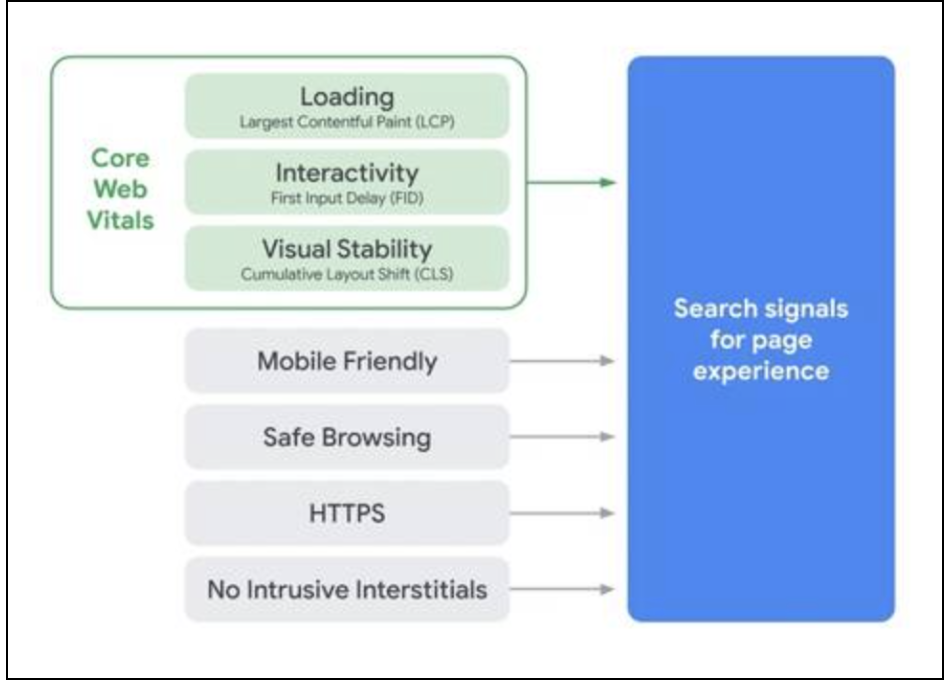
Core Web Vitals, or user experience vitals, are the set of metrics that measure and analyse the speed signals of a website that is very important in delivering a superior user experience. To sum up, these core vitals are factors that will influence google’s most important “user-experience” factor measuring a website’s speed, responsiveness and visual stability. These include mainly 3 user interaction and page speed metrics

  • Largest Contentful Paint (LCP)
  • First Input Delay (FID)
  • Cumulative Layout Shift (CLS)
Image Source: Google Search Central

Let’s deep dive into each of them in detail:

3. Core Web Vital Metrics

A) Largest Contentful Paint

The Largest Contentful paint (LCP) is the time from clicking on the particular link to viewing the content on-screen. In simple terms, it is the time taken for the primary content to load on a particular website.  For all the core web vital metrics Google has breakdown into 3 pillars :

  • Good
  • Needs Improvement
  • Bad

So how can you improve the website’s LCP? Here are a few tips that you can do to improve the LCP 

  • By removing unnecessary third-party scripts. 
  • Upgrade to a way better hosting service; It is proved that a better hosting service increase your loading time improving the website performance
  • Remove large page elements
  • Enable Lazy loading

An ideal LCP measurement should be 2.5 seconds or below

What is Lazy Loading? 

According to the web.dev, “Lazy-loading is a technique that defers loading of non-critical resources at page load time. Instead, these non-critical resources are loaded at the moment of need” 

B) First Input Delay

Now, let’s move into the second factor of the Core Web Vitals. First Input Delay (FID) is about the time it takes for your page to be interactive. This is a measurement of how responsive and interactive your page or website is. It is a very important factor as you don’t want your users to wait and bounce back simply because it takes a long time for the web page to become interactive. 

Here are the things that you can do to improve the First Input Delay (FID)

  • By Minimizing  the Javascript 
  • By removing unnecessary third-party scripts.
  • Using a Browser Cache

An Ideal FID measurement should be less than 100 ms

C) Cumulative Layout Shift (CLS)

Now we are moving on to the final metric of the core web vital i.e Cumulative Layout Shift (CLS). CLS indicates the stability of your page visually. If the elements on your page move around while the page is loading, then your website has a high CLS. Most times it will have an impact on the mobile user experience. Make sure that the page is stable so that the user doesn’t end up clicking on something that he doesn’t intend to.  The main reason for high CLS is not defining specific image sizes in the HTML code. 

Here are the things that you could do improve the Cumulative Layout Shift (CLS )

  • Use specific dimensions for Images, Videos, GIFS, Infographics etc.
  • Leave a space reserved for ads on the website
  • Make sure to add the new UI elements below the fold

An Ideal CLS measurement should be less than 0.1

4) To measure and fix Core Web Vitals

Now that you are aware of the three Core Web Vital signals, the most important thing is to analyse how you are performing on these signals. If you find an issue regarding the numbers, it is important to fix it. To fix it, you need to measure the same. How?

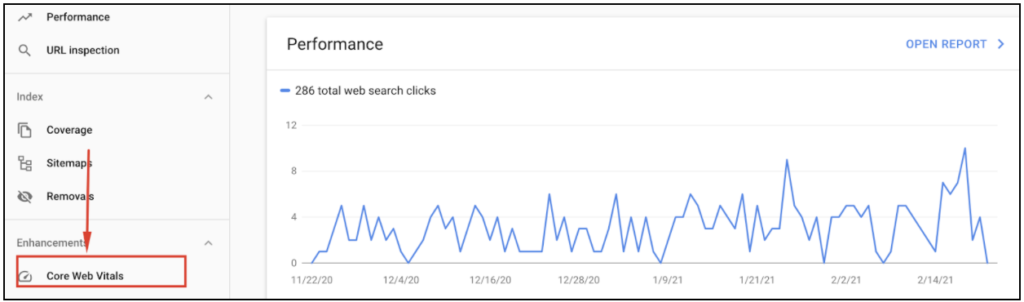
Since Google made the “Core Web Vitals” are critical factors for search engine ranking, they have also made measuring and analysing the core web vitals very easy. You can use the chrome user experience tool, page speed insights that give a detailed analysis and measure of the Core Web Vitals. One Important tool that you can make use of is the “Google Search console”

Navigate to

Google Search Console>>Click On the Property>>Core Web Vitals

If you find any “URL’s poor or needs improvement” in the web vital report, this is where you need to draw your attention. Dig deep in the report that gives you all the insights and act on the things that need to be done for the improvement of the same with the help of your developer.  

5) Achieving The Perfect Web Vital Score? 

There is a tendency that most SEO’s ignore the page speed factor. With the Core Web Vital update,  page speed demands much more attention. 

According to Google, as the page load time goes beyond 10 seconds the bounce rate increases by 123%. It is proven that the top-ranking websites load below 3 seconds. If your website is taking too long to load, you are probably losing a prospect who might tend to convert. 

From May, Core Web Vitals will influence Google algorithm in determining your ranking along with the current important SEO ranking factors.


Got questions? Reach out to us.