Managing Content Creators on TikTok: A Guide

TikTok has become a powerhouse for brands looking to reach new audiences in creative and engaging ways. Managing content creators on this platform effectively can be the key to unlocking its full potential for your brand. From outreach to content delivery, understanding how to handle these partnerships can significantly impact your success. In this article, we will explore how to manage TikTok content creators, focusing on the pay-per-performance process, outreach, briefing, and ensuring content aligns with brand guidelines.

Understanding TikTok Content Creators

TikTok content creators are individuals who use the platform to produce entertaining and engaging videos. These creators can range from influencers with large followings to niche content specialists. Their ability to connect with audiences makes them valuable partners for brands aiming to enhance their visibility and engagement on TikTok.

Partnering with TikTok creators allows brands to tap into their established audiences. Creators often have a loyal fan base that trusts their opinions and enjoys their content. By leveraging this relationship, brands can introduce their products or services in an authentic and engaging way.

The Importance of Effective Management

Managing TikTok content creators involves more than just overseeing the content they produce. It requires careful planning and clear communication to ensure that the final output aligns with your brand’s goals and standards.

Successful management starts with building a strong relationship with your content creators. This involves regular communication, understanding their creative process, and providing constructive feedback.

Connecting with the Right Creators

Finding the right TikTok content creators for your brand is the first step in the management process. Here’s how you can effectively reach out to potential partners:

Look for creators whose content aligns with your brand’s values and target audience. Use TikTok’s search and discovery tools to find creators who match your criteria.

When reaching out to creators, be clear and concise about why you want to collaborate. Highlight what makes your brand unique and how the partnership can benefit both parties.

Crafting the Perfect Brief

A well-crafted brief is essential for guiding content creators and ensuring that the content produced meets your expectations. Your brief should outline your brand’s goals, key messages, and target audience. This helps creators understand what you aim to achieve and how they can contribute to your objectives.

While it’s important to provide guidelines, allowing creators some creative freedom can lead to more authentic and engaging content. Encourage them to incorporate their unique style while aligning with your brand’s message.

From Creation to Posting

Once the content is created, the next step is managing its delivery and ensuring it goes live as planned. Before content goes live, review it so it meets your brand guidelines. Provide feedback if necessary and make sure any changes are communicated clearly.

Coordinate with the creator to schedule the content for optimal times. Consider using TikTok’s analytics to determine when your target audience is most active.

Pay-Per-Performance: How It Works

The pay-per-performance model is a popular approach for compensating TikTok content creators based on the results they deliver.

Define what success looks like for your campaign. Metrics could include views, likes, shares, or conversions. Make sure these metrics are clearly communicated to the creators. Determine a fair payment structure based on the agreed performance metrics. It is crucial to check that the payment terms are outlined in your contract to avoid misunderstandings.

Maintaining brand consistency is crucial when working with content creators. Here’s how to guarantee that the content aligns with your brand guidelines. Share your brand guidelines with the creators, including any do’s and don’ts. This helps them understand how to represent your brand accurately.

Keep regular check-ins with the creators to discuss any updates or changes in your brand guidelines. This ensures that the content remains relevant and on-brand.

Measuring Your Success 

Tracking the success of your campaigns is essential for understanding their impact and making data-driven decisions. Use TikTok’s analytics tools to track the performance of your content. Monitor metrics such as engagement rates, follower growth, and overall reach. Based on the performance data, adjust your strategies as needed. This could involve changing your content approach, refining your audience targeting, or exploring new collaboration opportunities.

Managing Expectations

Clear communication is key to managing expectations. Make sure both parties understand the goals, deliverables, and timelines to avoid any misunderstandings. Provide constructive feedback in a respectful manner. Focus on how changes can enhance the content and benefit the brand.

Building long-term relationships with content creators can lead to more successful collaborations. Here’s how to foster these relationships:

  • Building Trust: Trust is the foundation of any successful partnership. Be transparent, reliable, and supportive to build and maintain a positive working relationship.
  • Providing Opportunities for Growth: Offer creators opportunities for growth and advancement within your campaigns. This could involve increasing their responsibilities or providing additional resources.

How Home of Performance (HOP) Excels at Managing TikTok Content Creators

At Home of Performance (HOP), we understand the dynamic and evolving nature of social media, especially TikTok. Our approach to managing TikTok content creators stands out due to our straightforward strategy and commitment to excellence. Here’s how HOP excels in this service:

  • Tailored Creator Outreach: At HOP, we take a strategic approach to outreach by carefully selecting TikTok creators who align with your brand’s values and goals. Our team leverages advanced tools and insights to identify the most suitable creators based on their content, audience demographics, and engagement rates. This ensures that every partnership is a perfect fit for your brand, maximizing the impact of your campaigns.
  • Comprehensive Briefing Process: We believe that clear and detailed briefings are crucial for successful collaborations. Our briefing process involves providing creators with a thorough understanding of your brand’s objectives, key messages, and content guidelines. We work closely with creators so that they have all the information they need, while also allowing them the creative freedom to produce authentic and engaging content.
  • Seamless Content Delivery: Managing the content delivery process is where HOP truly shines. We coordinate closely with creators for timely and efficient content creation and posting. Our team reviews all content to  meet your brand’s standards and guidelines before it goes live. We also handle scheduling and publishing to optimize reach and engagement.
  • Performance-Based Compensation: Our pay-per-performance model is designed to align incentives with results. At HOP, we set clear performance metrics and guarantee compensation is directly tied to the success of the content. This model not only motivates creators to deliver their best work but also provides you with measurable ROI.
  • Consistent Brand Alignment: Maintaining brand consistency across all content is a top priority for us. We provide ongoing support and regular check-ins with creators so the content remains aligned with your brand’s guidelines. Our team is always ready to make adjustments and provide feedback, making sure that every piece of content reflects your brand’s identity.
  • Data-Driven Insights: At HOP, we use data-driven insights to track and analyze the performance of your TikTok campaigns. Our analytics tools provide detailed reports on engagement, reach, and other key metrics. This data helps us make informed decisions, optimize strategies, and continuously improve the effectiveness of our content creator partnerships.
  • Building Long-Term Relationships: We focus on fostering long-term relationships with content creators to maintain ongoing success. By building trust and offering opportunities for growth, we create a collaborative environment where both your brand and the creators can thrive. Our goal is to create lasting partnerships that drive continuous value and engagement.

Managing TikTok content creators effectively involves a combination of clear communication, strategic planning, and ongoing support. By understanding the process from outreach to performance-based compensation, you can build successful partnerships that drive meaningful results for your brand. Embrace the dynamic nature of TikTok and leverage the creativity of content creators to connect with your audience in new and exciting ways.

From Likes to Loyalty: Nurturing Customer Relationships in the Social Media Age

Customer relationships have become more than just an occasional priority on social media platforms. Where regular brick-and-mortar social fronts have had intermittent interaction, this journey has morphed into meaningful processes that have overtaken social media initiatives significantly. Now, social media users require logistics drawn to the door and ledger, priority social alerts, customer service and the opportunity to provide feedback about the services of e-commerce titans. 

While there was a consistent effort to deliver customer loyalty in the initial years, nurturing customer relationships has metamorphosed into the adjunct of desiring a higher level of service & engagement. 

In this blog, we will propel insights into fuelling your customer loyalty initiatives which bypass the regular sessions and average purchase, positioning your socials for growth & better ROI. 

Leveraging Social Media for Relationship Building

In the social media landscape, businesses are increasingly turning to innovative strategies to leverage the platform for meaningful relationship-building with their audience.

  • Engaging Content Strategies: Creating Meaningful Connections with Your Audience

To forge genuine connections with your audience, it’s crucial to develop engaging content that resonates with their interests and aspirations. Whether it’s thought-provoking articles, captivating visuals, or entertaining videos, the key lies in delivering value and relevance consistently. By understanding your audience’s preferences and pain points, you can craft content that not only grabs their attention but also fosters meaningful interactions and builds lasting relationships.

  • Listening and Responding: Building Trust Through Active Social Media Presence

Effective relationship-building on social media goes beyond broadcasting your message—it’s about actively listening to your audience and engaging in authentic conversations. By monitoring social media channels for mentions, comments, and direct messages, you can demonstrate your commitment to customer satisfaction and responsiveness. Promptly addressing inquiries, addressing concerns, and acknowledging feedback builds trust and also reinforces your brand’s credibility and reliability in the eyes of your audience.

  • Personalisation and Customisation: Tailoring Interactions to Individual Customer Needs

By leveraging data analytics and customer insights, you can tailor your interactions to suit the individual needs and preferences of each customer. Whether it’s addressing them by name, recommending relevant products or services based on their past behaviour, or delivering targeted promotions, personalisation demonstrates your commitment to understanding and catering to their unique needs.

Moving Beyond Likes: Building Lasting Loyalty

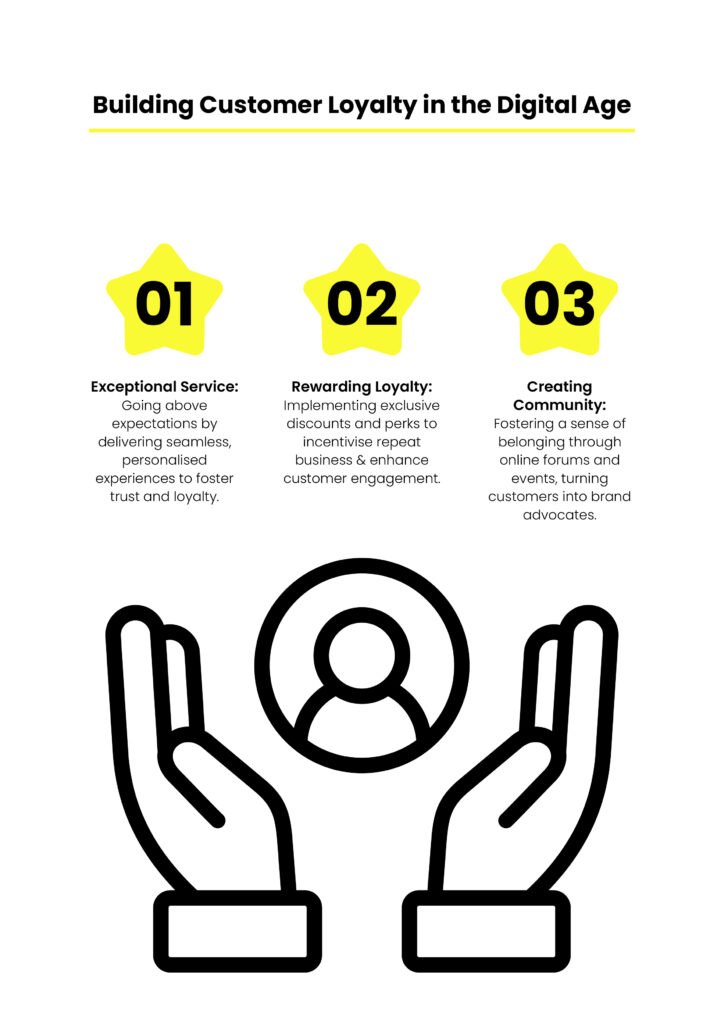
In the digital age, businesses are recognising that building lasting loyalty among customers requires more than just amassing likes and followers on social media. It entails a strategic focus on providing exceptional experiences, rewarding loyalty, and building a community.

  • Providing Exceptional Customer Service: Going Above and Beyond Expectations

By exceeding expectations and delivering seamless, personalised experiences, businesses can differentiate themselves from the competition and leave a lasting impression on their customers. Whether it’s resolving issues promptly, offering proactive support, or anticipating customer needs before they arise, prioritising exceptional service is key to building trust and loyalty in the digital age.

  • Rewarding Loyalty: Implementing Loyalty Programs and Special Offers

Loyalty programs and special offers serve as powerful incentives to reward and incentivise repeat business. By implementing loyalty programs that offer exclusive discounts, rewards, or perks for loyal customers, businesses can increase customer retention and foster a sense of appreciation and value. Additionally, leveraging data analytics to personalise rewards and offers based on individual customer preferences can further enhance the effectiveness of loyalty initiatives, driving engagement.

  • Creating Community: Fostering a Sense of Belonging Among Your Audience

In an era where connection and community are highly valued, businesses can cultivate a loyal following by fostering a sense of belonging among their audience. By creating online communities, forums, or social media groups centred around shared interests or values, businesses can facilitate meaningful interactions. Encouraging user-generated content, hosting virtual events, or showcasing customer testimonials can further strengthen the sense of community, turning customers into advocating champions.

Measuring and Tracking Customer Loyalty

Measuring and tracking customer loyalty is essential for businesses seeking to understand and improve their relationships with their audience. Identifying key metrics that gauge customer loyalty and engagement, such as repeat purchases, Net Promoter Score (NPS), and customer lifetime value are equally important. Iterating and adapting based on qualitative & quantitative insights is crucial for continuously improving the effectiveness of customer loyalty initiatives. By embracing a cycle of analysis, implementation, and refinement, businesses can foster stronger, more enduring connections with their audience over time.

Overcoming Challenges in Customer Relationship-Building

From striking the balance between automation and personalisation to adeptly managing socials’ negative feedback, businesses must navigate these hurdles to maintain authenticity and transparency in their interactions.

  • Balancing Automation with Personalisation

Achieving the optimal exertion of automation and personalisation is key. While automation enhances efficiency, personalised interactions maintain genuine connections. Striking this balance optimally boosts customer satisfaction and loyalty.

  • Dealing with Negative Feedback and Crisis Management

Negative feedback and crises are inevitable in the digital realm. Effectively managing them demands a proactive, empathetic approach. Prompt, transparent responses can turn crises into opportunities for positive engagement and resolution, strengthening trust with customers.

  • Staying Authentic and Transparent

Authenticity and transparency are non-negotiable in maintaining credibility. Avoiding inauthentic engagement tactics, such as generic responses or undisclosed sponsored content, is crucial. By adhering to brand values and transparent communication, businesses foster genuine connections and build lasting relationships with customers.

Nurturing customer relationships in the social media age requires a delicate blend of strategy, empathy, and authenticity. From leveraging engaging content and personalised interactions to effectively managing crises and maintaining transparency, businesses must prioritise genuine connections over superficial metrics. By embracing the evolving landscape of social media and continuously refining approaches, businesses can cultivate lasting loyalty and thrive in an era defined by connectivity and community.

The Myth of Virality: Debunking Misconceptions About Instant Online Success

In the vast expanse of the internet, few things hold as much debate as the concept of virality. Virality, the rapid spread of online content, is often seen as the go-to strategy for novice marketers aiming for success in the digital age. Its attraction lies in the promise of instantaneous fame, reaching millions in the blink of an eye. Businesses are drawn to this phenomenon like moths to a flame, enticed by the potential for unprecedented exposure and growth. 

Yet, beneath the surface lies a complex reality that often eludes the spotlight. In this blog, we delve deep into the essence of virality, uncovering its allure, its hidden costs, and ultimately, its true impact on online success.

Understanding Virality

Viral content is distinguished by its ability to resonate deeply with audiences, often evoking strong emotions or widespread interest. Key components include shareability, relatability, and timeliness, which contribute to its rapid spread across social networks and beyond. However, amidst the hub of viral success, numerous misconceptions abound, from the belief that virality can be engineered for long-term success. For instance, while many believe that virality can be engineered with precision, the truth often reveals the unpredictable nature of online success. Take the example of the “Ice Bucket Challenge,” which saw widespread participation and media coverage but failed to translate into long-term impact. Such examples highlight the unforeseen consequences that accompany viral fame, underscoring the complexity of the phenomenon for content creators.

The Hidden Costs of Virality

While viral success may seem irresistible, it conceals a variety of hidden costs that often evade initial consideration. Moving beyond the surface glamour, the challenges associated with achieving and sustaining virality are less than influential. 

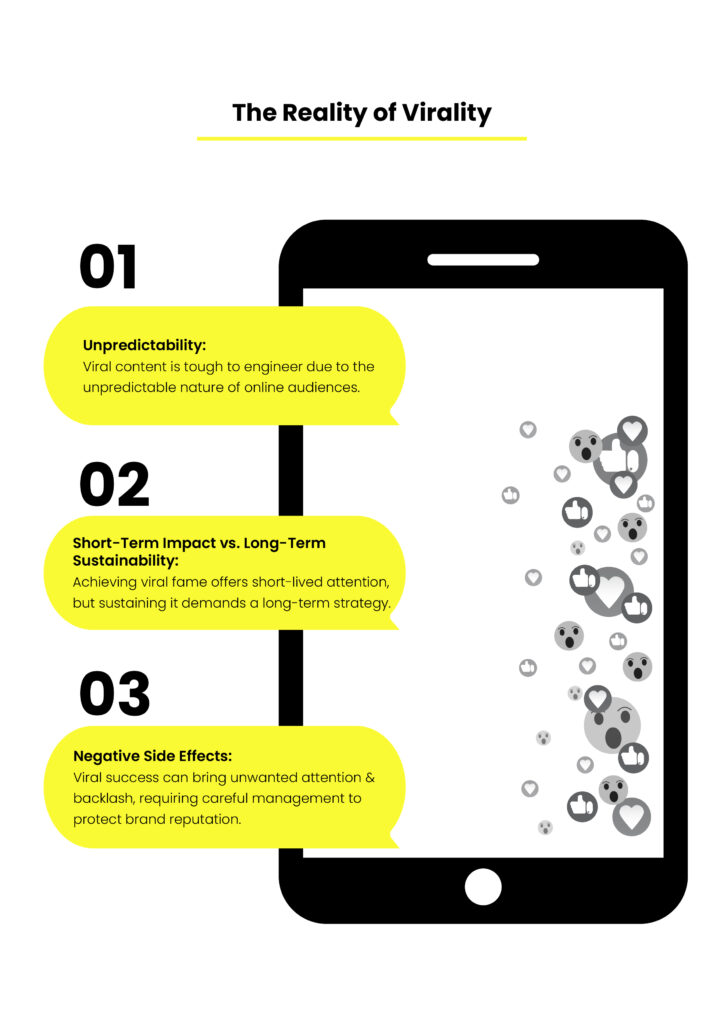
  • Unpredictability: The Difficulty of Engineering Viral Content

One of the greatest misconceptions about virality is the notion that it can be generated overnight. In reality, the unpredictable nature of online audiences makes it exceedingly difficult to manufacture viral content intentionally. Despite countless attempts to crack the code of virality, success remains elusive, with even the most intensive campaigns often falling short of expectations.

  • Short-Term Impact vs. Long-Term Sustainability: Maintaining Momentum Beyond the Viral Moment

While achieving viral fame can result in an immediate influx of attention and engagement, the sustainability of such success is questionable. Many businesses find themselves grappling with the challenge of maintaining momentum beyond the initial surge of popularity. Without a comprehensive strategy for long-term growth, the fleeting nature of virality can quickly give way to obscurity, leaving brands struggling with relevance. 

  • Negative Side Effects: Dealing with Unwanted Attention and Backlash

In addition to the ephemeral nature of viral success, businesses must also contend with the negative side effects that accompany widespread attention. From dealing with unwanted scrutiny to navigating backlash and criticism, the spotlight of virality can cast a harsh glare on even the most well-intentioned campaigns. Managing these challenges requires careful planning and proactive communication strategies to mitigate potential harm to brand reputation and credibility.

Building Sustainable Online Success

In the digital multiplex, businesses are perpetually in pursuit of sustainable success amidst the ever-changing currents of online engagement. However, amid the cost of publicity, a fundamental reorientation of strategies is imperative for long-term viability.

  • Shifting Focus: From Chasing Virality to Building a Strong Online Presence

In online commerce and communication, achieving sustainable success is a top priority for businesses navigating the digital landscape. Amidst the heat of viral moments, a strategic shift in focus is integral to laying the groundwork for enduring prosperity. This necessitates a corporate movement towards building a robust online presence, thereby establishing a solid foundation for sustained growth.

  • Importance of Consistency: Establishing Trust and Credibility with Audiences

Within this strategic framework, the significance of consistency emerges as a guiding principle, serving as the crucible upon which trust and credibility with audiences are forged. By prioritising consistent engagement and messaging, businesses can cultivate lasting relationships and loyalty within their online communities. This consistency not only enhances brand reliability but also fosters a sense of authenticity and reliability, crucial elements in the digital landscape.

  • Strategies for Long-Term Growth: Content Quality, Community Engagement, and Brand Authenticity

By consistently delivering high-quality content that resonates with their target audience, businesses can establish themselves as authorities within their niche. Engaging with their community on various platforms and channels fosters a sense of belonging and loyalty. Prioritising brand authenticity ensures that businesses remain true to their values and resonate with their audience on a deeper level. These strategies collectively contribute to sustainable growth and longevity in the online sphere.

Debunking Viral Success Myths

Debunking viral success myths involves dispelling common misconceptions about the predictability and longevity of viral content. Many believe virality can turn into one’s favour, but studies show it’s often unpredictable. For instance, the “Chewbacca Mom” video’s success was spontaneous, not planned.

Another myth is that viral fame guarantees lasting success. Yet, even viral hits like “Gangnam Style” struggle to maintain momentum. Research highlights factors like timing and audience demographics influencing virality. Examples like the ALS Ice Bucket Challenge and the “What colour is this dress?” debate underscore the challenges of sustaining viral success. Understanding these complexities helps businesses set more realistic expectations and strategies for online endeavours.

Our journey through virality has provided valuable insights into its true nature and impact on online success.  As viral content is often unpredictable and untimely for e-commerce and fad innovations, the challenges it poses for long-term growth are on the precipice of uncertainty. Hence, it’s crucial for businesses to heed the call to action and pivot towards sustainable growth strategies. This entails prioritising consistency, quality, and authenticity in their online presence, rather than fixating on chasing viral moments. By doing so, businesses can forge deeper connections with their audience and lay the groundwork for enduring success in the digital age. 

Top Social Media Marketing Strategies to Dominate 2023

In a world dominated by digital landscapes, where every swipe and click holds the potential to reshape a brand’s destiny, the art of social media strategy has emerged as a dynamic force.

Your favourite influential beauty bloggers and A-list celebrities are not just endorsing products, but seamlessly weaving them into their everyday lives. A lipstick worn during a casual coffee run, a skincare routine unveiled in an Instagram story – these seemingly effortless moments become pivotal in the grand narrative of marketing. By tapping into the power of relatability, brands are now capable of sparking curiosity and desire that ripple through the vast sea of consumers.

No longer are social media platforms mere billboards; they’re thriving communities where voices merge, opinions collide, and creativity blossoms. From leveraging influencer partnerships to cultivating a sense of community, embracing social media marketing is crucial for brands to effectively reach and engage with their target audience. This is why, in 2023, businesses that embrace social media marketing will have a competitive advantage and be better positioned for success.

Trending Platforms: Where to Focus Your Efforts

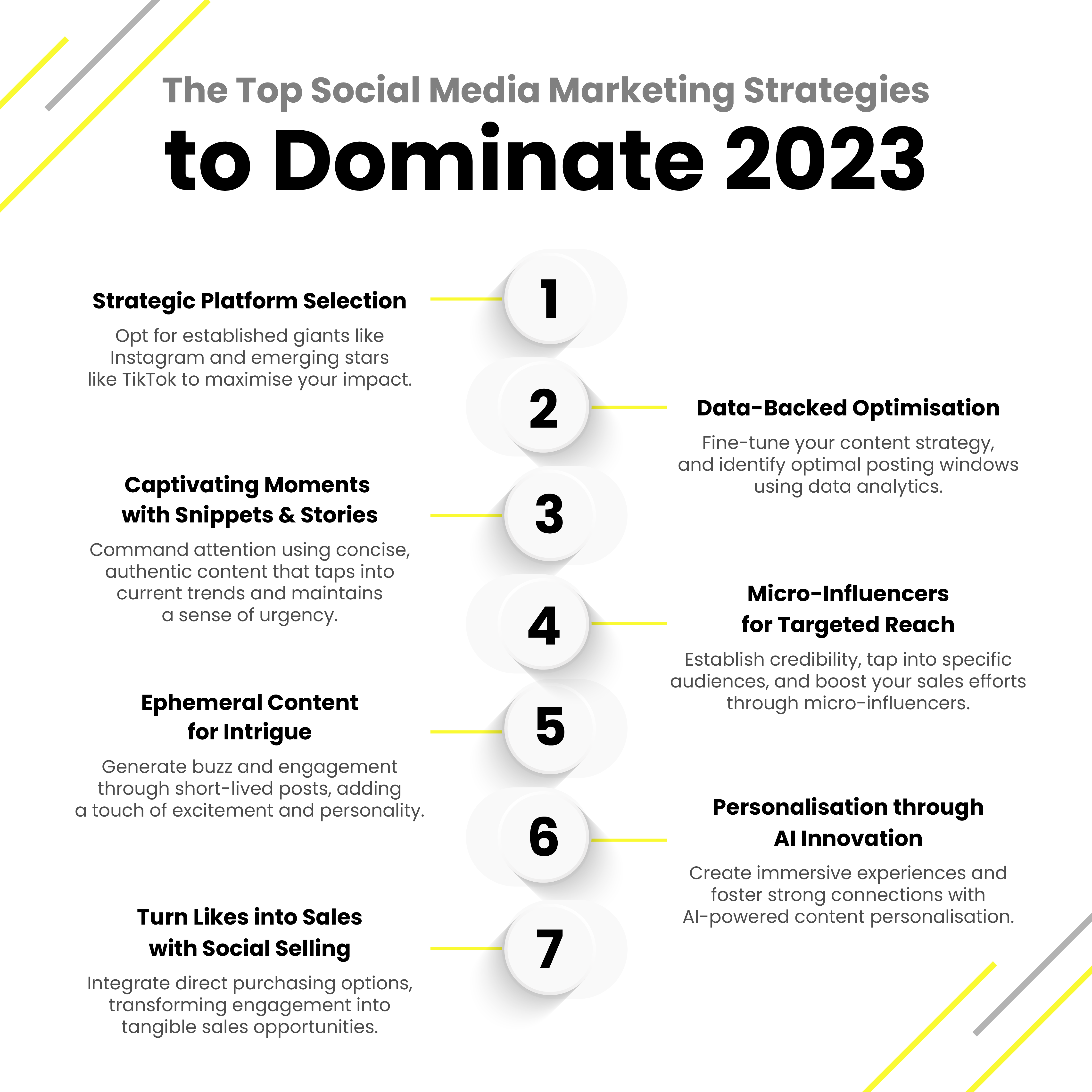
In 2023, it is important to know which platforms are the most popular and effective for social media marketing, and how to use them to achieve your goals. The Middle East has a distinctive social media landscape, and businesses need to adapt to it accordingly. Some of the most popular social media platforms in the region are Instagram and YouTube, which have a high level of user engagement. These platforms allow businesses to create visually appealing and interactive content that can attract and retain their audience. 

However, these are not the only platforms that marketers should consider in 2023. There are also some emerging platforms that are gaining traction in the Middle East. Some of these platforms are TikTok, Clubhouse, and Twitch which are garnering a lot of interest. Depending on your target audience and goals, you may want to explore these platforms and see how they can fit into your social media marketing strategy.

Data-Driven Strategies: Unlocking Social Media Success

To succeed in the competitive and dynamic social media space, marketers need to use data-driven strategies that can help them reach their goals and stand out from the crowd. Data-driven strategies are based on collecting, analysing, and applying data from various sources, such as social media platforms, web analytics, surveys, and customer feedback. 

How to use data to unlock social media success:

Engaging Content with Data: Data guides content creation that impacts your audience.

  • Data guides content focus, formats, and tones for high engagement.
  • A/B testing to compare different headlines, images, or CTAs for better performance.

Optimal Posting Times: Data reveals when the audience is most active and receptive.

  • Data-driven analysis of audience online behaviour patterns.
  • Strategic posting times amplify reach, visibility, and engagement.

Audience Segmentation: Data-driven audience breakdowns by traits and interactions. 

  • Data creates personas that represent your ideal customers.
  • Segmentation based on brand interactions for tailored content.

Stories and Short-Form Content: Captivating Audiences in 2023

One of the most prominent trends in social media marketing 2023 is the rise of stories and short-form content. These are types of content that are less than a minute long, usually featuring music, filters, stickers, and effects. They are designed to capture the attention and interest of the audience in a fast and fun way. Stories and short-form content are popular among younger generations, especially Gen Z, who value creativity, authenticity, and interactivity. Some of the platforms that offer these formats are Instagram, Snapchat, TikTok, YouTube, and Facebook.

There are also best practices to follow when creating effective stories and short-form videos on different platforms. For example, experts suggest using vertical videos, adding captions or subtitles, using hashtags and stickers, and encouraging user-generated content.

Niche Influencer Marketing: Reaching the Right Audiences

Niche influencer marketing is an effective strategy for reaching the right audiences. By partnering with influencers who have a dedicated following within a specific niche, businesses can ensure that their message reaches the right people who are more likely to be interested in their products or services.

Niche influencers, or micro influencers, help brands in three ways: cost-efficiency, brand loyalty, and reduced risk. They charge less than mainstream influencers, but can deliver higher ROI by generating more engagement, conversions, and sales. Niche influencers have a strong relationship with their audience, who trust their recommendations and become loyal customers of the brand. They also have a lower risk of damaging the brand’s reputation or causing controversy, as they are more careful and selective about the brands they work with.

Ephemeral Content: Driving FOMO and Engagement

Ephemeral content is a type of content that is only available for a short period of time, usually 24 hours, before it disappears. Examples of ephemeral content are stories and short-form videos on platforms like Instagram, Snapchat, TikTok, and Facebook. Ephemeral content is a powerful tool for social media marketing, as it can drive FOMO (fear of missing out) and engagement among the audience. This is because the temporary nature of the content creates a sense of urgency and exclusivity, compelling users to stay active and engaged in order to catch these fleeting moments. It also encourages spontaneous sharing and real-time interaction, as users don’t want to miss out on the latest updates.

AI-Driven Personalization: The Future of Social Media

AI can help us create and consume personalised content that matches our preferences, interests, and needs. It is the future of social media, as it can offer us a more engaging, relevant, and satisfying experience. AI-driven personalization can be achieved through various methods including Machine learning (ML), Natural language processing (NLP) and Computer vision. 

AI-driven personalization can benefit both users and businesses through;

  • Better User Experience: AI personalization elevates user satisfaction through tailored, engaging content. Boosts engagement, loyalty, and retention by fostering trust and connection.
  • Enhanced Business: AI personalization amplifies brand awareness and reach. Elevates sales, conversions, and revenue with customised incentives matching customer preferences.

Social Commerce: Turning Social into a Sales Channel

Social commerce is a trend that allows users to buy products or services directly from social media platforms, without leaving the app or website. Social commerce can offer users a more convenient, seamless, and social shopping experience, as they can discover, browse, and purchase products or services that match their interests, preferences, and needs. Social commerce can also offer businesses a new and effective way to reach and convert their potential and existing customers, as they can showcase their products or services in a more engaging and interactive way.

Social commerce will grow significantly through 2023, as more social media platforms introduce or improve their social commerce features, such as shoppable posts, live shopping, and product tags. These features can help businesses reduce the friction and steps between discovery and purchase, and increase their sales and conversions on social media platforms. 

Ethics in Social Media Marketing: Building Trust in 2023

Ethics in social media marketing refers to the moral principles and values that guide the actions and communications of marketers on social media platforms. In 2023, ethics in social media marketing are more important than ever, as consumers demand more transparency, authenticity, and accountability from brands and influencers. Ethics can help marketers build trust and loyalty with their audience, as well as avoid legal, reputational, and financial risks. 

Some of the best practices in social media marketing are:

Disclosure

  • Clearly reveal affiliations with brands or influencers in social media promotions. 
  • This empowers consumers, preventing deception.

Data Privacy

  • Safeguard audience data, honour preferences. 
  • Obtain consent for usage, align with data protection laws.

Cultural Sensitivity

  • Respect diverse audiences’ differences. 
  • Refrain from offensive or discriminatory content. 
  • Address and rectify any missteps.

Conclusion

As we traverse the dynamic landscape of social media marketing in 2023, the potential for connection, influence, and growth is unparalleled. The power to share our stories, insights, and opinions with a global audience has transformed into an opportunity to learn, inspire, and create value. With each passing day, social media’s user base expands and its features evolve, necessitating a strategic approach that harnesses its full potential.

Embracing social media marketing is not just an option—it is a necessity. The modern business landscape demands effective engagement with the ever-connected audience. This not only provides a cost-effective means to promote products, establish brand awareness, and cultivate customer loyalty but also unlocks a treasure trove of data-driven insights that shape and refine marketing strategies.

Affordable AI Video Generator Tools for Content Creators

Artificial Intelligence (AI) has made significant progress in generating content based on internet research. As content shifts towards infographics and video posts, there is a growing demand for AI-powered video mockups that engage audiences and convey a transformative appeal.

Content creators often struggle to cater to their audience’s visual preferences while working within tight budgets. However, the introduction of AI video editing programs has provided an affordable solution for content creators to keep up with the demands of producing engaging content. This blog will highlight 5 affordable Al video generator tools that can help content creators efficiently handle their daily video editing tasks.

What are Al video generator tools?

AI video generator tools are software applications that use artificial intelligence algorithms to transform textual content, such as blogs, into visually engaging videos by considering a wide range of variables. These tools take into account various factors to create videos that align with a specific persona or editorial calendar. With minimal human interaction, AI generator tools can construct videos, and they can also incorporate AI voices for text-to-speech functionality.

Albeit being in the introductory phase, Al video generator tools show great potential to create audience-specific content by leveraging recorded audience data. This means that the experimental phase is supported to create highly personalised video pieces because Al is, after all, the new technology which surpasses menial content-creating manpower. However, an important aspect to keep in mind is that AI has never been solely independent. It requires a thorough understanding of logistics and analytical research, which allows for the verification of video content that aligns with the pillar page or the main theme of your video campaign objectives.

AI Video Generator tools combine advanced AI algorithms with user-friendly interfaces, offering a diverse range of features to create compelling videos. Read on to dive into the five affordable AI video generator tools.

01. InVideo

As tech-savvy individuals, we often consider InVideo to be the perfect video editing tool to create videos which are economical, personalised and creative. With several aspects of professionalism in creating unique content from thousands of users’ input, InVideo provides about 50+ Al-based templates which support voice overs, text-to-speech data or plain text programmed into its web-based software. 

InVideo is not only mobile and tablet responsive but also offers data packages with reasonable pricing and even a trial run for beginners on a budget. InVideo is also highly accessible over the net.

02. Synthesia

Synthesia is one of the leading video creation tools available, as it enables collaboration by transforming 2-dimensional images into a diverse range of faces. This video generation tool not only supports voice overs but also offers a film-like experience for training and production purposes. This is often useful for on boarding new foreign employees who make use of the language voice over feature, or if you lack the lustre to allow the real cast being filmed in your video editing piece. 

Synthesia comes with fewer fallback except that you might need to learn the logistics of using the tool and could require a more flexible payment plan

03. Pictory

Pictory allows you to envision transforming long-form video content into bite-sized portions that can be easily stored, re-captioned, and repurposed for future use with minimal modifications and expenses. Pictory offers the opportunity to upsell raw advertising materials or components, such as a pillar page with sub-domains, or a video that effectively summarises the primary purpose for audience engagement. Instead of repurposing the end result from current video material, you can add a unique selling point (USP) flair that Pictory achieves in many sales briefings.

And much like Al functions, Pictory has a very intuitive algorithm and improves its functioning over time such as retrieving key snippets which speak directly to an advertising conflict. Pictory is known to be user-friendly as well and is inclusive of the whole asset package in terms of cost.

04.Veed.io

For small enterprises and businesses looking to create a cohesive brand theme within a limited digital scope, Veed.io offers the best editing experience with a cost-effective monthly plan. While dissecting videos is a common phase for many video editors, the in-house Veed.io experts provide a step-by-step personalised experience which delivers high-quality video rendering in a matter of minutes. 

The one-off clicking mechanisms within the video editing dashboard also upgrade the video editing experience and are easily readable for novice users who have not dabbled with videography and prefer a simplified editing process without extensive collaboration

05.Lumen5

From text to video, Lumen5 covers it all. The drag-and-drop interface is easy to use and is just a snippet adjoined to a template scheme which has one of the closest resemblances to virtual reality and 3-dimensional characteristics. What makes Lumen5 stand out is its ability to concoct a miniature video frame that truly has facets to the overall social architecture of the brand you are trying to sell, and can relate to your market audience with the videography.

In conclusion, AI video generator tools offer substantial returns on investment, considering that AI has become indispensable in the digital landscape. While Al progresses it’s identifiers and performance in presenting video data, with time Al video editing tools will be a major agenda in content calendars concurrently. 

With the global milestones quickly shifting with new cosmopolitan avenues, people will vouch for freedom of expression in the way they reside, shop and work. AI video generators are capturing the holistic wavelength of brand voice which is modified by human interaction, unmistakably meaning that Al will be present for content creators in days to come. 

Furthermore, AI video editing has gained relevance by addressing data touch points that may have been misinterpreted or overlooked during the conversion to visual searches. This unlocks a new paradigm for the brand voice that AI video editing taps into.


Got questions? Reach out to us

Meta’s New Twitter Rival Threads: Everything You Need To Know


Mark Zuckerberg’s company Meta, formerly known as Facebook, recently unveiled the first iteration of Threads, a text-sharing application developed by Instagram’s team. Threads provides a distinct platform for instantaneous updates and public discussions, catering to both content creators and occasional users. Efforts are underway to ensure that Threads is compatible with the open and interoperable social networks that have the potential to define the internet’s future. 

Threads bears some resemblance to Twitter, but with a few twists. The launch of Threads comes at a time when Twitter is undergoing major changes, as it was recently acquired by Elon Musk, the billionaire entrepreneur and founder of Tesla and SpaceX. It aims to differentiate itself from Twitter by focusing on close friends and integrating with Instagram, Meta’s popular photo-sharing app. In this blog post, we will explore the features, audience, and impact of Threads, and what it means for the future of social media.

What Is Threads Exactly?

Instagram serves as a platform for billions of individuals worldwide to share and connect through visual media. With Threads, Meta aims to extend Instagram’s strengths to encompass text-based communication, fostering an encouraging and imaginative environment for the expression of thoughts.

As a microblogging app, Threads allows users to share short posts, photos, videos, and stories with their close friends. Users can create a list of close friends from their Instagram contacts, and only those people will see their Threads content. Users can also reply to their friends’ posts with emojis, stickers, or text messages. Threads also has a camera feature that lets users capture and share moments from their day with their close friends. Users can customize their camera with different lenses, filters, and effects.

Threads also have some unique features that distinguish it from other social media apps, such as the ability for users to set a status or mood that will change automatically depending on their location, movement, or battery level. Some early reviews of the app have praised its user interface, design, and functionality, as well as its potential to foster more meaningful interactions among users.

Who Is The Target Audience?

Threads is designed for people who want to have more intimate and authentic conversations with their close friends, without the pressure of public scrutiny or the noise of irrelevant content. It is also meant to appeal to younger users who are more comfortable with visual communication and ephemeral content.

Threads could attract users who are looking for a more private and personal alternative to Twitter, or who want to complement their Instagram experience with a more focused and curated feed. However, some users may find it hard to switch from Twitter to Threads, especially if they have a large following or enjoy engaging with a wider audience such as on Twitter. Some users may also prefer Twitter’s features such as hashtags, search, and trending topics, which Threads does not offer yet. Threads faces stiff competition from Twitter, which has a loyal fan base and a strong brand identity.

A Gateway to The Metaverse

Threads is a strategic move by Meta to counter the influence of Elon Musk, who has become a powerful figure in the tech industry and a vocal critic of Meta. By launching Threads, Meta is signaling its ambition to remain relevant and dominant in the social media space, while also exploring new possibilities for the future of online communication. Threads could be seen as a gateway to the metaverse, as it allows users to create and share their own digital worlds and experiences with their close friends, using Meta’s technologies such as virtual reality, augmented reality, and artificial intelligence.

Threads could also enable users to access and interact with other metaverse platforms and services, such as gaming, education, entertainment, and commerce, through Meta’s integration and interoperability efforts. The launch of Threads could spark a new wave of innovation and experimentation in the social media space, as other players try to keep up with Meta’s vision and ambition. The launch of Threads could also raise new questions and challenges about the role and responsibility of social media platforms in shaping public discourse and opinion.

Threads And the Social Media Landscape

Threads could have a significant impact on the social media landscape, as it challenges Twitter’s dominance in the microblogging space and expands Meta’s reach in the social networking market. Threads could be seen as a direct competitor or a potential partner for Twitter, depending on how the two platforms evolve and interact. Threads could offer Twitter users a more intimate and integrated experience, or it could lure them away from Twitter altogether. Alternatively, Threads and Twitter could collaborate or coexist peacefully, as they cater to different needs and preferences of users. The launch of Threads could also prompt Twitter to innovate and improve its own features and services, in order to retain its user base and market share.

However, Threads could also face some challenges, such as competing with other Meta-owned apps like WhatsApp and Messenger or dealing with privacy and security issues that have plagued Meta in the past. Threads will have to prove its value and uniqueness to users who are already using multiple social media apps and convince them to switch or add Threads to their daily routine. Threads will also have to address any concerns or criticisms that users may have about Meta’s policies or practices, especially regarding data collection and user safety.

One notable concern for users is that Threads, being powered by Instagram, currently requires users to delete their entire Instagram account in order to remove their Threads profile and data. However, Meta is actively exploring options to allow users to delete their Threads profile separately, addressing the need for more granular control over account deletion.

In conclusion

Threads is a new social media app that aims to provide a more intimate and personal microblogging experience for users who want to share their thoughts with their close friends. Threads has some similarities with Twitter, but also some differences that make it unique and appealing. Threads could have a big impact on the social media scene, as it challenges Twitter’s position and offers a new way of online communication. However, Threads also faces some challenges and risks, as it deals with Meta’s reputation and privacy issues. Threads is an interesting and ambitious app that shows Meta’s vision for the future of social media and the metaverse. Threads has a lot of potential to grow and succeed, but it will also have to overcome some obstacles and prove its worth to users. Like most, we are curious to see how Threads will evolve and interact with other platforms, and how users will respond to it.

Got questions? Reach out to us

Why Your Brand Needs Influencer Marketing?

It is safe to say that social media influencers have become an important part of the digital marketing process and brands of all sizes needing a strong social media presence can make this possible with the help of influencers.

In today’s digital marketing world, the only thing that remains constant is change. To help brands and businesses navigate through these changes and get through to their customers is an influencer’s role.

Influencers are being used by many more businesses in their marketing efforts and you can also learn to scale your brand if you understand the reasons why you need influencer marketing.

Here are some reasons why:

1. They Know Their Audience

Influencers on social media are being heard on their platforms because they understand their audience and know what they want. 

As a brand, you can take advantage of this to connect with their consumer base and also reach new audiences you never thought possible.

2. They Add A Personal Touch

When creating content in today’s digital world, it is important that your brand stands out from the crowd.

Authenticity is what stirs a consumer’s interest. When an influencer shares information or a product, they do it in their own unique way which strikes a chord in their followers.

3. They Help Increase Your Brand Credibility

Most brands target millennials and the Gen Z demographic through social media because they are majorly present on these platforms but also because they have the highest purchasing power digitally.

It is necessary for a brand to collaborate with an influencer who can connect with this demographic giving them a sense of credibility because their audience trusts what they recommend on their social platforms.

4. You Can Be Flexible With Your Marketing Budget

With influencers, you have lots of options to promote your brand depending on the niche, social media platform and size of followers.

This makes influencer marketing flexible in case your campaign budget is limited and cannot accommodate celebrity influencers.

5. You Can Learn More About Your Target Audience

Once your influencer marketing strategy is implemented, you can analyze the audiences’ reaction through likes, comments, reactions and messages received on branded content shared by an influencer.

Your analysis can tell you what type of strategy works for your brand and target audience.

6. You Get A High ROI With Influencer Marketing

In every marketing campaign, the end goal is an improvement in sales and influencer marketing promises to deliver those figures.

According to a report by Influencer Marketing Hub, for every $1 a brand spends on influencers, they get a return of $5.78.

As influencer marketing has grown dramatically over the years to become an industry expected to be worth $13.8 billion in 2021, businesses now allocate a part of their marketing budget to influencer marketing and the most common measure of success is now in conversions or sales.

The internet is filled with affordable, effective and worthy influencers who can fit perfectly into your influencer marketing strategy.

By carrying out purposeful research for influencers online, you are bound to find the right influencer who can become ambassadors and spokespeople for your brand 

Now that you know how important influencer marketing is to your brand, let’s talk about influencer marketing!


Got questions? Reach out to us.


WHY LUXURY BRANDS NEED SOCIAL MEDIA

Social media platforms are increasingly becoming a popular way to establish brand presence and two-way communication with clients. This asks for an effective social media management strategy. Social media management refers to the management of content which any business posts on their social media channels – whether images, short videos, blogs; along with communication management with the audience. For example, responding to customers’ comments.

Almost all brands have some kind of social media presence as it is a cost-effective marketing tactic and yields lots of benefits. While social media apps are considered “for everyone,” luxury brands give the exact opposite impression; they are exclusive. However, if you are a luxury brand, you should consider a social media management plan. Read on to learn more about how luxury brands can benefit from effective social media management.  

  1. Visual impact 

If you are a luxury brand, you already understand the impact of unique designs. Imagine high-quality images of your products on your social media channels that potential customers can see. 

According to research, our brains process visual content faster than text. As a luxury brand, you can benefit from posting stunning visuals of your product range on Instagram. Today, users have so much content to scroll through, and they usually do not spend more than a few seconds per post. In simpler words, if you want people to shop from you, you have to show them what they should be purchasing. Below are some tips on how you can create a visual impact:

  • Create a theme

Many social media accounts, especially Instagram, maintain a particular theme that makes their content coherent and aesthetically pleasing. You can do a theme per collection for a luxury brand- design your feed with prominent colors in the collection. 

  •  Switch up the visuals

If someone keeps posting the same kind of content, would you not get bored after a while? The same goes for your audience.  Do not just stick to pictures; shoot video content (short, engaging videos immediately catch the users’ attention), use infographics to lend an air of credibility to your brand, conduct story polls, and more. 

  • Pinterest boards 

Pinterest has always been famous for creating mood boards and collecting artistic photos. As a luxury brand, if you want to use visuals to attract new clientele, Pinterest will go a long way. A good example would be Chanel. If you search Chanel on Pinterest, lots of aesthetic content shows the brand’s core. As of 2013, Chanel was the most pinned brand on the app. 

2. Increase in potential and future customers

While mass-produced brands target a younger age demographic, luxury brands are particular about their target audience. According to a study conducted in 2019, the millennial generation (between the ages of 23-36) form the largest audience for luxury goods. This is one reason why, as a luxury brand, you may be hesitant to join the wave of social media. However, different platforms on social media can help you target millennials specifically. 

In addition, although a specific social media platform’s user base may be younger than your target audience, you could consider it as a platform. Think about it: what if gen Z users see your products and add them to their brands-I-want-to-shop-from when I get to an older list? Through social media, you would be creating future customers for your brand. While it may not be fruitful immediately, it can go a long way in increasing your customer base and, in turn, your profitability. 

3. Community management

An essential part of social media management is community management. It refers to the creation and maintenance of two-way communication with your customers as well as your employees. Or simply, community management is what makes your brand seem human. For your luxury brand, having a social media presence where you can engage in a conversation with your customers yield lots of benefits:

  • You can receive valuable feedback from users in real-time.
  • You can learn what kind of content users engage with more and use that type of content for your luxury brand.
  • Establish your brand presence online- be known for your products as well as your outstanding customer service.

4. Platform-specific content

There are many social media platforms; Instagram, Facebook, YouTube, Snapchat, Twitter & TikTok being the most popular ones. Each forum has a different user demographic, and one-size-fits-all content does not work across all platforms. For your brand, the first step you need to take is to decide which platform(s) is most relevant for you to showcase your luxury goods and reach out to your audience.

Having a social media management strategy helps a great deal in finding out what type of content will be most successful on each platform. A diversified content range will strengthen your brand awareness amongst a more extensive audience, e.g., video content does well on Facebook, and image content is most popular on Instagram. 

To Conclude

Social media management has become an essential part of marketing that holds lots of advantages for a business, in this context, a luxury brand. These advantages include increased user engagement, efficient customer service, new customers, and eventually, increased profitability. 

It is crucial to analyze your brand and the social media platforms you want to use to connect with users. Having multiple social media pages but average content does not do anything for your brand. Instead, carefully select the platforms which align with your brand personality. When done correctly, social media management will prove to be a useful tool for your luxury brand. We at Home of Performance offer Social Media Management services to brands where we manage your social media presence as well as provide guidance. We ensure an increase in your business efficiency. 


Got questions? Reach out to us.


SOCIAL MEDIA MANAGEMENT: IT’S SIGNIFICANCE IN TODAY’S WORLD

The power of social media; what is it? 

Remember when it was all about uploading quirky pictures and tagging memes? No more, friends. There is a whole sphere people know nothing about- the sphere where marketers design and promote businesses on social media platforms. 

Over the years, brands have taken notice of the growing popularity of social media and increasingly want to be part of the conversation across multiple social media platforms. So how can your brand go about establishing their social media presence where it matters the most?

Understanding popular social media platforms

Although there are plenty of platforms to choose from, some rule the world of social media because of the diverse options they offer to the users. Let’s take a look at these popular platforms.

Facebook: whoever says that Facebook is over, this is for you. With nearly 2.45b monthly active users, Facebook continues to dominate over other apps. However, the demographics of this platform have shifted recently. If you are a business looking to sell to boomers, Facebook is the right platform. In fact, nowadays users over the age of 65 years are increasingly growing!

Instagram: from pictures of your food to pictures of yourself, Instagram is as relevant today as any app could possibly be. Second position holder for the most downloaded app in the world, it comes toe to toe with Facebook for the popularity crown. 1 billion monthly users, Instagram’s largest user group consists of 18-24-year-olds. It is the best platform to reach out to millennials and offers brands multiple formats for content creation and promotion. 

YouTube: what do you do when you want to watch your favorite music video? Or, better yet, want to learn how to knit or fix a tyre or even make a salad? You guessed it: YouTube. The video-sharing platform has 1.9b users globally, more than 81% of the users are between 18 to 25 of age. 

Twitter: remember the times we tweeted to celebrities hoping for a response? Well, Twitter is much more than that. The platform hosts 330m monthly users with millennials forming the largest user group. Seen as more of a conversational app, it may not be in league with Instagram but Twitter has its own charms. It’s especially popular for brands with a strong personality or for customer relationship management.

Other apps: last but certainly not the least (just ask the teens of today), TikTok, Snapchat, and Pinterest make an entrance. 

How to choose the right platform?

Unless you have an unlimited marketing budget, every brand marketer must answer the biggest question: which one? 

You can’t be on every platform at once, you have to select the ones most relevant to your business. No need to feel overwhelmed, we are here for you! The formula is really simple. Do you know your business? Do you know your customers? That’s all you really need to know, to be honest. 

  • What is your brand’s personality? Yes, you read it correctly. Just like people, companies have personalities of their own. The personality of a brand is not only defined by the products or services it offers but also, by the brand image, values, and ethos. 
  • Simply: who buys from you? Who uses your products/services? Does your audience consist of Gen Zs? Millennials or boomers? Is your brand selling to consumers or to other businesses? Each social media channel has a specific demographic of users. Once you identify your customers, you can choose your platforms accordingly. 

How to develop an effective Social Media Strategy

If you’ve defined your objectives to be on social media, mapped out your target audience, and selected the social media platforms you want your brand to be on – you’re already half-way at creating your social media strategy. The next important thing is to create a content strategy and execution strategy. 

Unlike personal Instagram accounts, you can’t post memes on your business’ Instagram story at 2 in the morning unless you’re a nightclub! For your brand to have a successful social media presence, there needs to be a content strategy in place. To put it simply, it is a detailed plan of what to and what not to post. You don’t want your customers to go to your page to find some information and be greeted with selfies. Want to stay at the top of your social media game? Follow these three steps.

  • Create a social media content strategy with key content pillars and categories within each that are relevant to your brand, the region you sell in, and to your audience 
  • Next, design a social media calendar: just like we make a mental note of what to post today and tomorrow, you can take it one step further and make a content calendar. It’s how you’ll know what to upload and when. A visual reminder helps a lot! Why may you ask?

Having an up-to-date content calendar will help you stay on a schedule of your posts. It will quite literally save you from missing your posting date or having to post alternative (and possibly inappropriate) content at the last minute. 

Remember, always keep your calendar flexible to include last-minute updates like that award your team won!

  • Finally, Community (Not the TV show!) management: we’ve heard of social media management but what does this term really mean? It’s maintaining two-way communication with your audience. This way, your brand can get valuable feedback from your users which is, really, invaluable. There are many ways you can do this
  1. Post quizzes and hold polls on your Instagram stories! People scroll through stories and love to react to stories. For example, you could ask “do you love our color combination or want to see something new?” and let your audience guide you. 
  2. Ask a lot of fun and interesting questions in your posts – even if people don’t comment at first, eventually you’ll build traction. 

The power of social media has pulled the business world in and there is no going back. Just joining the social media apps isn’t enough- you need to plan and market your brand effectively. After all, your posts are what’s going to attract users to follow you.

We, at Home of Performance, are here to do all of this and more for you. HOP is a digital marketing agency offering a range of services, including social media management. We ensure that your business’ social media pages are informative, engaging, and designed to fit your objectives and goals. We do this through creative, out-of-the-box ideas that will elevate your brand to a whole new level. So what are you waiting for? Visit https://hop.rocks/ for more information.


Got questions? Reach out to us.


How TIK TOK ADS Is Bound To Make An Impact In Your Business!

In the past month of November 2019, Tik Tok has surpassed all the major social media apps to become the most downloadable app of 2019. According to latest reports Tik Tok officially now has almost 1 billion users worldwide. With the increasing popularity of Tik Tok, it is obvious that the marketers and social media experts have their eyes set on this platform. Prominent brands like Nike, Apple and major others have already started using this viral social media platform to boost their business and products. 

Advertising On Tik Tok 

But like every other social media platform, in the beginning, Tik Tok Ads is yet getting started with marketing so as marketers and brands it is important to know what Tik Tok has an offer for the brands and support their marketing strategies. So like the other platforms, in order to start marketing in Tik Tok, like every other platform it is important to identify to whom and what are you advertising. Then starts the next stage of advertising.

The Tik Tok Audience  

With crossing 1 billion users as of November 2019, it is evident that Tik Tok has been increasing in its popularity. But it is important to identify the user demographics of the people who are using Tik Tok. Social Media statistics show that the majority of the tik tok users are younger than 34 years of age.

That is, it may not be a bad idea to invest in TikTok if you want to sell to a younger audience. TikTok still is, however, a quite new app–it may not hurt to keep an eye on the site if your product is for older audiences. Just as Twitter and Facebook social media platforms have evolved over time, so TikTok could always be.

Different Types Of Tik Tok Ads

Like all other social media platforms, Tik Tok basically has six different types of ad formats that make marketers help to market their products or services to the audience, prioritizing or selecting which ad format best suits them for their target audience.

  1. In Feed Video Ads

In Feed Video Ads in Tik Tok are basically a similar kind of ad formats that you will find in various other social media platforms like Twitter and Instagram. These are videos that have a duration of 15 seconds that shows in the user’s newsfeed while they are scrolling through the content.  Infeed, Video Ads can also be used for generating brand awareness and can also call users to take action on the ads like clicking on the website, downloading an app or some other.

  1. Brand TakeOver

The brand takeover is one of the most expensive ad purchasing options that are available in tik tok. It is the type of ad that appears in full screen before any user-generated content shows to the user. These type of ads that have three to five seconds ad format that can be in a format of either gif, video or an image.

These ads can be used to connect back to the brand’s profile or hashtag challenge of a brand. TikTok allows only one brand to take over one category every day. The brand takeover is exclusive to various classes.

  1. Hashtag Challenges

This type of ad formats is the most prominent among the tik tok ads that are as of now. They allow users to actively engage with your brand. When making a video, the video is accompanied by music and allows users to add their senses. Hashtag challenges from TikTok build interaction with user imagination by fusing a brand post.

  1. Branded Lens

As similar to the Augmented Reality effects offered by platforms like Instagram and Snapchat, Branded Lens is an ad format in Tik Tok that creates 3D objects, add face filters and more to users.

These types of ad can bring a great level of user engagement. Given the number and variety of users on TikTok, this  TikTok ad format could eventually be established to improve brand awareness and communication.

When using Tik Tok, users can choose to add content from a variety of branded lenses.

In addition, in the TikTok Trend area, a branded lens is always shown and you can communicate with it during the filming process.

  1. Influencer Marketing

TikTok has influencers with a large number of followers, just as on Instagram. These people are very strong, and in many ways, they can inspire their followers.

When you collaborate with influencers of TikTok, you will be revealed and hit your target audience quicker. You must then partner with an influencer whose purpose is consistent with the dream of your brand.

To Conclude

One of the primary aims of getting success with any social media platform is to get the audience to engage with the users. It is same as in the case of Tik Tok. To make most out of advertising in Tik Tok it is always as important to engage with your audience. Tik Tok is a growing viral social media platform. Even though as for marketers and brands it is still in the early stages of its growth, identify the gaps and bounce on the opportunity before anyone does. 


Got questions? Reach out to us.