Home Of Performance Becomes A Facebook Preferred Partner

Home of Performance has been approved as a Preferred agency partner in Facebook Marketing Partners for Agencies. Awarded to agencies that demonstrate advanced knowledge of the platform, the coveted badge gives access to a wealth of resources, enabling the select few to grow their expertise and help their clients succeed.

John von Hofsten, Founder and Managing Director of Home of Performance said “We have focused on growing with strong partnerships since the inception of HOP. To add Facebook Marketing Partner to our brand further demonstrates the growth of our capabilities and the amazing work done by our team.” 

Facebook Marketing Partners are listed in the Partner Directory, benefiting from increased exposure to potential clients, access to more advanced agency-specific resources, advanced support, and a host of training options.

How Did Home Of Performance Achieve This Status?

In order to earn the Facebook Marketing Partner badge, agencies are put to the test and must pass with flying colours. Thoroughly evaluated across a combination of criteria, including allocation of spend to direct response campaigns, level of spend, and usage of advanced marketing tactics like automatic placements, leverage of various channels and adoption of best practices, the agencies must prove their superior advertising skills.

The Facebook Marketing Partners for Agencies program is designed specifically for agencies that manage advertising campaigns on behalf of brands or other businesses. A global community of third-party Facebook solutions selected for their solid track record of success in advertising, selling or engaging, the program includes three tiers: account, preferred partner, and premium partner. Preferred and premium tiers are offered additional one-to-one technical support, creative consultation, and training resources like events in an effort to support the agency. 

What Does It Mean To Work With A Preferred Marketing Partner?

Vetted and certified based on consistent excellence in delivering marketing success for their clients, a Preferred Marketing Partner meets Facebook’s standards. For clients of HOP, this means that they will be working with an agency:

  • that gets access to a myriad of analytics tools, advanced reporting, and recommendations
  • that can  recommend the right ad formats for the client’s goals, and what kind of return can be expected on an investment.
  • that has a team of experts who receive cutting-edge training on the very latest features and tools, keeping clients a step ahead of their competition. 
  • that can ensure that any questions or issues are resolved quickly and satisfactorily.

According to Managing Director, John von Hofsten, “With the new updates in regards to privacy coming live, a close collaboration with the publishers is needed to ensure high performance for the brands we work with. Our new Partner tier with Facebook will give us more support, better insights and stronger capabilities to keep giving value for our clients.”

About Home Of Performance

Home of Performance is a full-scale boutique digital marketing agency that is guided by the true ‘Digital Partner’ approach for its clients. Gaining traction as one of Dubai’s most advanced digital performance agencies, HOP is a data-driven, customer-focused and creatively-fuelled team of passionate and highly qualified digital consultants to deliver high impact business growth in a short period.

Offering their services for some of Dubai’s fastest-growing, most innovative and creative businesses, HOP challenges conventional strategies, placing outcomes, information and creativity at the core of their model while delivering knock-out performance through in-house experts.


Got questions? Reach out to us.


9 Reasons Why Your Organic Traffic has Dropped Suddenly?

No one prefers to see their organic traffic declining. Unfortunately, most website owners experience this issue every so often. 

SERP volatility is normal and you should expect this if you are owning a website.  It depends on the competition as more websites are created every day with tons of content are pushed daily for the target audience. 

But if you are hit by a sudden decline in traffic, it doesn’t look good from an SEO standpoint. There is no definitive and straightforward answer to why this has happened. 

In this blog, Let us, deep-dive, into some of the most common causes to check and validate to find what caused you the dip in traffic. 

Why Your Organic Traffic has Dropped?

There may be a number of factors why your organic traffic has abruptly and drastically declined. This could be as easy as your analytics code being unintentionally deleted after a website update, or it could be a more serious issue, such as your website being penalized by Google.

There are many things to look into to figure out why your Google traffic has decreased, so here’s a list to get you started.

1) Google Algorithm Updates

Throughout the year, Google releases multiple updates, some very major updates and others might be very minor. They might or might not announce the update before it is rolling out. 

However, an easy way to keep track of the algorithm updates is to follow the social media pages <Google Search Central>. Most of the time the algorithm changes will be officially confirmed and updated on this page. 

Also, you can use some third-party tools to track whether your site has impacted by the updates. One such tool is SEMrush Sensor from SEMrush. This feature from SEMRush gives a clear indication of the SERP Volatility overall specific to the industries and also you can get your score on your website. 

2) Website is Blocked from Indexing

Unfortunately, this is more common than we would like to see. There are a few ways you can unknowingly block your website.

This is one of the reasons that can cause a dip in your website traffic. 

There are few ways in which you can unknowingly block your website from crawling and indexing

  • Taking your website live from staging state.
  • When redesigning the website. 

During this process, the developer will put the “NO INDEX”  tag and block the website with the robots.txt command to stop the search engines from crawling and indexing the development site. 

Once the site is live, there is a chance that developers will forget to remove the “NO INDEX” tag or change the robots.txt command which will block the website from indexing. 

If that is the case, you should update the robots.txt command and resubmit your file through the Google Search Console. 

3) Toxic BackLinks

Google usually releases a big link-based algorithm update once a year to try to filter out useful links from spam links generated by a new link-building tactic that marketers started using.

When a website loses organic traffic, one of the most common problems is spammy links. The business owner either employed a bad SEO company or believed they could “outsmart” the Google algorithm by purchasing links or implementing techniques that generate a large number of low-quality links, such as directory submissions, article directories, press releases, and so on.

You can make use of the Google Search Console to identify the toxic and spammy links that are harming your website and start the disavowing process. Read more about disavowing links in our blog. 

4) Google Penalities

This is another reason why you might experience a decline in organic traffic. You will face manual action from Google if you fail to comply with the Google guidelines that include any black hat SEO strategies like buying low-quality spammy links, duplicated content. 

5) Page Speed 

Page speed and user experience are said to have an impact on your organic performance like never before. With Google rolling out the  “Core Web Vitals”  update early in May 2021 page speed will have a major impact on the ranking. So it is important that you provide the best browsing experience for the users who land on your website.  

Poor user experience not only affects your traffic, ranking but will also have a severe impact on the conversion rate. 

Read more to know about Core Web Vitals and how you can improve for the same in our Blog. 

6) Lost Backlinks

Losing Quality backlinks might be a warning issue that you see a serious decline in organic traffic. Especially if you have lost the link from a high authority site and content that has been performing very well in search engines. 

With the help of third-party tools like “MOZ link explorer” and “SEMrush Backlink Audit” you can keep track of your link building process. 

7) XML SiteMap Changes 

A change in your XML sitemap may be one explanation for the drop in traffic.

Crawl the sitemap URLs and make sure they all return a 200 OK response, as well as any new landing pages or posts. If your site has 200 URLs but the sitemap only has 50, you’ll need to regenerate and resubmit it via Search Console.

8) Poor Content

All marketing strategies revolve around content. Users won’t engage if you don’t have quality and relevant content, Google won’t rank you, and you’ll be more likely to be affected by a search engine update.

There are 2 important things that you need to take into account when it comes to content

A) The Authority of the Content

Before publishing the content make sure your content provides value to the target audience. It is important to have content that covers the topic comprehensively. Avoid duplication of the content. If your content is original, detailed and relevant, it is obvious that your content will perform well.

B) The Content Structure

Here are a few things to take note of while structuring your content

  • Avoid Lengthy sentences
  • Split the content into short paragraphs
  • Properly structure the content with H1, H2, H3, H4, H5 and H6 Tags
  • Avoid promotional writing
  • Be precise and informative

9) Keyword Cannibalisation

Keyword cannibalization occurs when you target the same seed keyword for multiple pages. When this happens it will confuse the crawlers to decide which page is more relevant and close to the search query. This causes the traffic to split across multiple pages, you could affect by losing valuable organic traffic. 

SEMrush has a great feature to find the pages affected by Keyword cannibalization. You can get a detailed report of the same which helps to fix the issues in an effective way. 

To Conclude

Losing traffic is always worrisome.  The good thing is that there will be some reason why this is happening. Most of the issues can be fixed.

Once you identified the reason, you can start the recovery process. SEO is always process-oriented, if you do it right putting the users in front,  Google will always reward you with the best results. 


Got questions? Reach out to us.


A Guide To Google’s New Ranking Factor: Core Web Vitals

Big Changes are coming to Search Engine Optimisation. Normally Google rolls out plenty of updates throughout the year, and there might be winners or losers depending on the nature of the update. Most of these updates they might or may not announce. 

Starting in May 2021, Google will start rolling out Core Web Vitals as search engine ranking signals. Improving the page experience factors will increase your chance of your users engaging more with your website.  In this blog, we will deep dive into the details of this vital update.

What are Core Web Vitals?

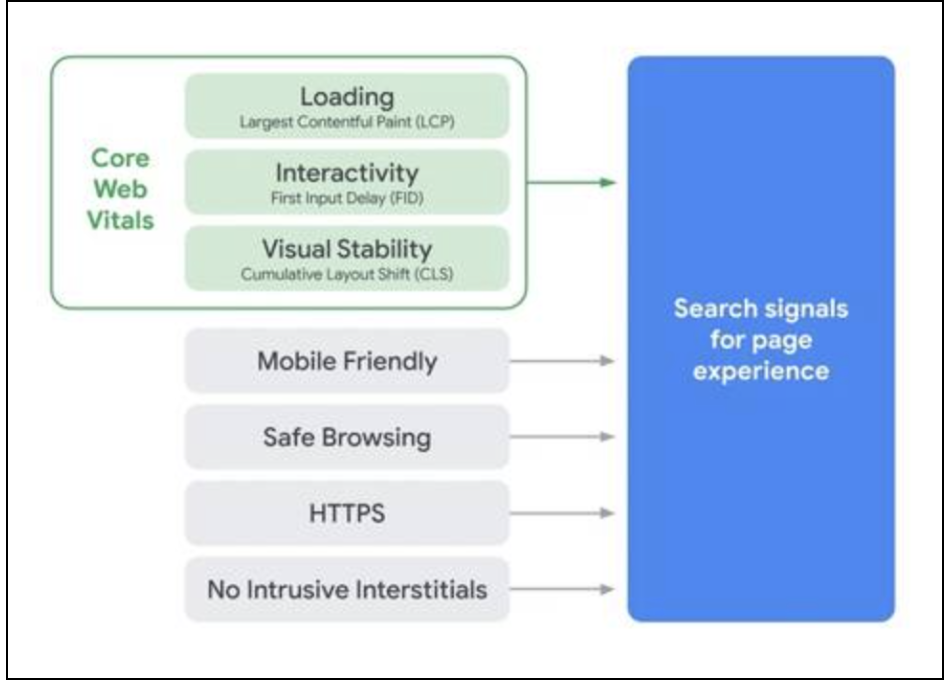
Core Web Vitals, or user experience vitals, are the set of metrics that measure and analyse the speed signals of a website that is very important in delivering a superior user experience. To sum up, these core vitals are factors that will influence google’s most important “user-experience” factor measuring a website’s speed, responsiveness and visual stability. These include mainly 3 user interaction and page speed metrics

  • Largest Contentful Paint (LCP)
  • First Input Delay (FID)
  • Cumulative Layout Shift (CLS)
Image Source: Google Search Central

Let’s deep dive into each of them in detail:

3. Core Web Vital Metrics

A) Largest Contentful Paint

The Largest Contentful paint (LCP) is the time from clicking on the particular link to viewing the content on-screen. In simple terms, it is the time taken for the primary content to load on a particular website.  For all the core web vital metrics Google has breakdown into 3 pillars :

  • Good
  • Needs Improvement
  • Bad

So how can you improve the website’s LCP? Here are a few tips that you can do to improve the LCP 

  • By removing unnecessary third-party scripts. 
  • Upgrade to a way better hosting service; It is proved that a better hosting service increase your loading time improving the website performance
  • Remove large page elements
  • Enable Lazy loading

An ideal LCP measurement should be 2.5 seconds or below

What is Lazy Loading? 

According to the web.dev, “Lazy-loading is a technique that defers loading of non-critical resources at page load time. Instead, these non-critical resources are loaded at the moment of need” 

B) First Input Delay

Now, let’s move into the second factor of the Core Web Vitals. First Input Delay (FID) is about the time it takes for your page to be interactive. This is a measurement of how responsive and interactive your page or website is. It is a very important factor as you don’t want your users to wait and bounce back simply because it takes a long time for the web page to become interactive. 

Here are the things that you can do to improve the First Input Delay (FID)

  • By Minimizing  the Javascript 
  • By removing unnecessary third-party scripts.
  • Using a Browser Cache

An Ideal FID measurement should be less than 100 ms

C) Cumulative Layout Shift (CLS)

Now we are moving on to the final metric of the core web vital i.e Cumulative Layout Shift (CLS). CLS indicates the stability of your page visually. If the elements on your page move around while the page is loading, then your website has a high CLS. Most times it will have an impact on the mobile user experience. Make sure that the page is stable so that the user doesn’t end up clicking on something that he doesn’t intend to.  The main reason for high CLS is not defining specific image sizes in the HTML code. 

Here are the things that you could do improve the Cumulative Layout Shift (CLS )

  • Use specific dimensions for Images, Videos, GIFS, Infographics etc.
  • Leave a space reserved for ads on the website
  • Make sure to add the new UI elements below the fold

An Ideal CLS measurement should be less than 0.1

4) To measure and fix Core Web Vitals

Now that you are aware of the three Core Web Vital signals, the most important thing is to analyse how you are performing on these signals. If you find an issue regarding the numbers, it is important to fix it. To fix it, you need to measure the same. How?

Since Google made the “Core Web Vitals” are critical factors for search engine ranking, they have also made measuring and analysing the core web vitals very easy. You can use the chrome user experience tool, page speed insights that give a detailed analysis and measure of the Core Web Vitals. One Important tool that you can make use of is the “Google Search console”

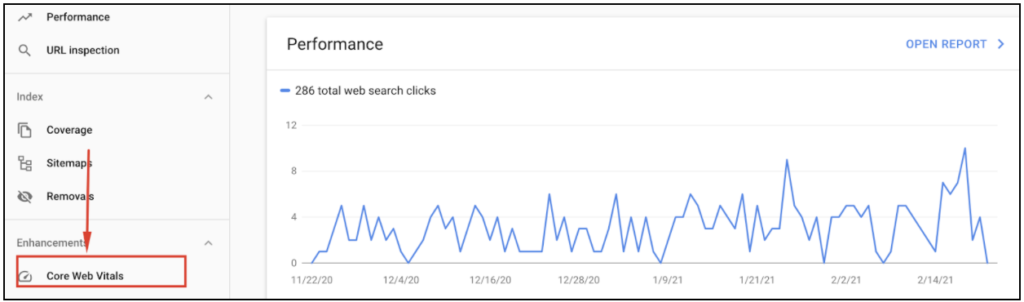
Navigate to

Google Search Console>>Click On the Property>>Core Web Vitals

If you find any “URL’s poor or needs improvement” in the web vital report, this is where you need to draw your attention. Dig deep in the report that gives you all the insights and act on the things that need to be done for the improvement of the same with the help of your developer.  

5) Achieving The Perfect Web Vital Score? 

There is a tendency that most SEO’s ignore the page speed factor. With the Core Web Vital update,  page speed demands much more attention. 

According to Google, as the page load time goes beyond 10 seconds the bounce rate increases by 123%. It is proven that the top-ranking websites load below 3 seconds. If your website is taking too long to load, you are probably losing a prospect who might tend to convert. 

From May, Core Web Vitals will influence Google algorithm in determining your ranking along with the current important SEO ranking factors.


Got questions? Reach out to us.


MENA 2020 Search Award Winner.

UAE [09/12/2020]:  The Annual MENA Search Awards returned last night, and we are delighted to announce that we won an award within the “Best use of Search- B2C” category. We were awarded for our work “HTMi” a premium hotel management institute in Dubai, offering courses related to hotel and hospitality management. For a new agency to be shortlisted for 6 categories in its first year is a big achievement, so to be winning an award is more special. 

To all our partners; Thank you for being a part of our journey and for believing in us all through to make this possible. 

ABOUT HOME OF PERFORMANCE

Home of Performance (HOP) is a full-scale boutique digital marketing consultancy guided by the true ‘Digital Partner’ approach for clients. We strive to offer tangible value in everything we do. We are data-driven, customer-focused, and creatively-fueled. 

As a full-service provider at the boutique level, we consist of a small, lean, and experienced team of digital experts that rapidly engage with clients and drive high-impact business growth in a short time. We have worked with 40+ brands across three continents.

Digital marketing is an ever-changing landscape. Trends that worked today may not work tomorrow. Commitment is the only way to stay ahead. We at HOP are pushing the boundaries and defining the trends that matter as recognized experts on best practices in the industry. 

ABOUT MENA SEARCH AWARDS

The MENA Search Awards celebrate the very best in PPC, SEO and Content Marketing from across the Middle East and North Africa. Brought to you by We Are Search and British events agency, Don’t Panic – reputable, ethical and credible awards organisers, who deliver the highly successful international awards series The Search Awards comprising the UK Search Awards, the European Search Awards, the US Search Awards, the Canadian Search Awards, the APAC Search Awards, and the Global Search Awards.


Got questions? Reach out to us.
 

Disavowing Links: The Do’s and Dont’s.

There is no denying that Link building plays a big part in your SEO strategy. But the fact is that not every website that links back to your site is not worth it. It can affect your overall rankings, domain authority and performance when there are too many low-quality links associated with your website. The best practise is to reach out to the website publisher manually and try removing the low-quality links if that is not working the next best option is to disavow backlinks. 

What is Link Disavowing?

As I mentioned earlier, disavowing links should always be your last option. Disavowing link is telling Google the particular link is harming your site in terms of overall performance. It doesn’t remove the links, but signals google not to consider any link from that site when it comes to ranking factors. Don’t prioritize disavowing across the board as it might hurt your own SEO. 

5 Types of Links you need to consider disavowing

Bad backlinks come in different types. Although this doesn’t include every type of link that you should disavow, the most common types that you have to consider as a starting point. 

  1. Forum Spam Links 

Google doesn’t encourage users linking back to random materials in forums or comments. If you think that this will help your backlink profile, you got this wrong. Say for example; in a popular forum like Quora or Reddit, if you try to flood with links back to your website without any context, Google will consider it as spam and penalize your website. 

  1. Expired Domain Links

If you have links that are coming from expired domains, this is a clear violation of webmaster guidelines and google can penalize you for the same. So if you have some backlinks that are coming from expired domains this is one category that you should seriously consider removing.  

  1. Low Quality & Spammy Site Links

Like the expired domain links, another category which you should consider disavowing is a low quality and spammy site backlinks. If you don’t consider removing these links, there is a chance that your website is being targeted by a negative SEO attack. So it is always important to keep an eye on the search console on the actions required. 

  1. Directory Submissions

Submitting your link to low-quality is not a good practice to follow when it comes to SEO. But that doesn’t say that directory submission doesn’t play any part in the same. Always try to acquire links from relevant and targeted directories. Especially when it comes to Local SEO, if you can get relevant backlinks it definitely improves your overall SEO performance. Here is a list of relevant directories as per Hubspot. 

  1. Links From Cheap Link Building Services

This is another Link building tactic you should certainly avoid. Even though they are not part of google’s guidelines, we suggest that you avoid this link building method. Links from fiver and other cheap link building services more often can do harm rather than proving beneficial to your SEO efforts.

Should You Disavow Backlinks?

This is a question that definitely needs clarity. If you get a manual action notification from Google or suspect one in the future, you should consider disavowing backlinks. 

This manual action message could be a warning sign of bad links, spammy links and other unhealthy links to your website. To avoid this scenario always follow the healthy link building strategy, regularly check your backlink profile and check out for the suspicious links that may lead to negative SEO attack that will harm your website overall performance.  

As mentioned in the beginning always follow the option of reaching out to the website publisher via email to remove the link directly. If that doesn’t work out, consider disavowing the links if you come across the following: 

  • You get a manual action message
  • Suspect a lot of spammy, low-quality backlinks to your website
  • A sudden drop in your performance due to these low-quality links. 

How To Disavow Using Google Search Console?

As you know Google search console is an important tool when it comes to SEO. GSC helps you manually select the links which Google should ignore to avoid potential negative effects. But if you don’t use it wisely for disavowing, it might affect you negatively. 

Here are the steps for disavowing backlinks in Google Search Console:

  • Download the backlink profile
  • Conduct a full backlink audit
  • Create a disavow file and upload it to the google search console

1) Download the backlink profile

Before you start considering disavowing backlinks, find out the links that are harming your website. Use tools like Ahrefs, Semrush, Moz to download your backlink profile. By using these tools you can keep track of the backlinks.

  2 ) Conduct a full backlink audit

Now that you have a backlink profile, conduct a detailed audit of the backlink profile to identify the spammy links that can harm your website performance. The Disavow tool helps to get rid of spammy and irrelevant links. 

3)  Upload the file in Google Search Console

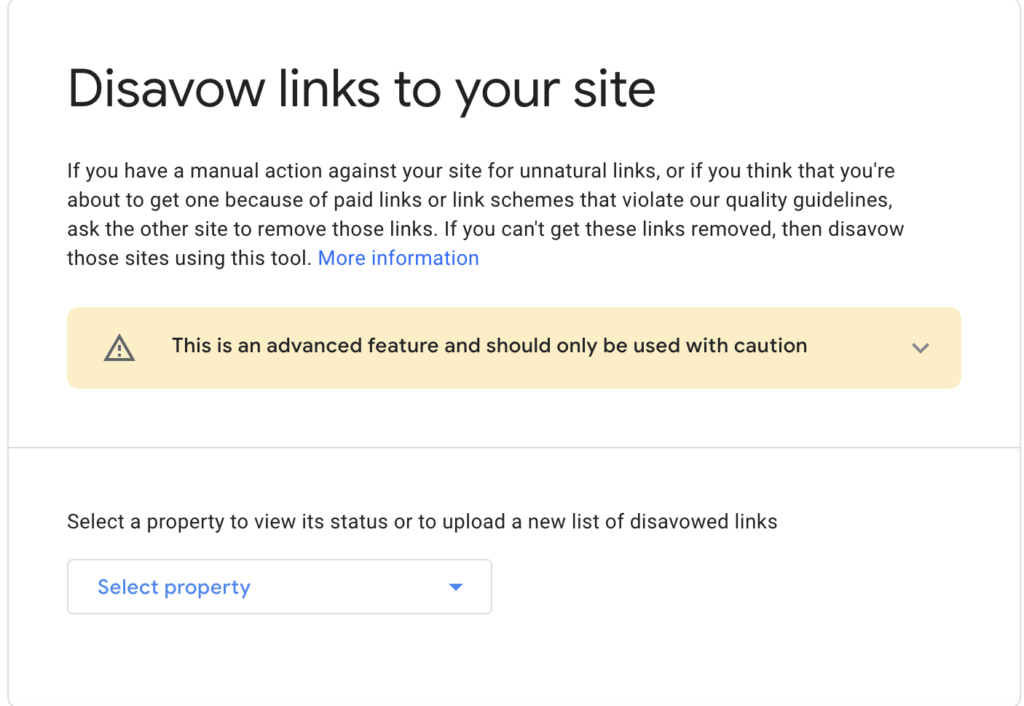
After you have a detailed list of your link profile, you can consider removing the links. This isn’t a too technical and complicated process.  It can be easily done using the disavow tool in Google Search Console. 

  • Go to Disavow tool in Google Search Console
  • Select your property
  • Upload your .txt file

To Conclude

As we say, when it comes to Link Building, Focus on quality rather than quantity of links. Be alert on the incoming links that can harm your site’s authority and reputation. You can use tools like Semrush, Ahrefs or Moz to do regular audits. Disavowing should be done based on your priorities, overdoing it might do more harm than good for your site.


Got questions? Reach out to us.


The 9 Most Important SEO Ranking factors

In this digital age, how do you think your prospects will find you: they go and search online. Say, for example, if they want to find an agency providing Local SEO services, they go online search for best “Arabic SEO services”. If you are spotted on the first page of Google, there is a higher chance that you will be converting that prospect into a client. How do you get yourself on the first page of google? 

Well paid ads are the best way to gain instant exposure, nothing can get better credibility than getting them in the top of the search engines organically. No matter what business you own, being there at the top of the search engine is important for the long run if you want to attract the prospects and drive revenue. 

What is SEO? 

Defined by Ahrefs,  SEO (Search Engine Optimization) is the practice of optimizing content to be discovered through a search engine’s organic search results. 

What are the ranking factors?

Ranking factors are certain aspects of your website that determines how well your page will perform in the organic search.  Well, there are more than 200+  factors that will have an impact on your search rankings. Not all are equally important, but some are very important enough to have an impact on your organic performance. In this blog, we are going to discuss those important factors.

How does google algorithm have an Impact on this? 

The reality is that no one could control the search engine algorithm. What you can focus on and what you should do is about optimising your website with various ranking factors. In this post, let’s look at some of the very important factors that you should take into account while optimising your website. 

Before we deep dive into details; these factors can change as google updates its algorithm very frequently to provide a better user experience. So it is important to stay up to date on the latest Google algorithm changes to ensure that you are up to date with the best SEO practises.

The Important 9 SEO Factors

  1. Security

In most of the updates, Google has stressed the importance of site security. Over the years now, it is one of the most important factors that can have an impact on your ranking. Always use HTTPS encryption, which gives an SSL certificate to your website, ensuring a secure connection between you and your end to end-users. Search engines always prefer to drive users to trusted websites.

  1. Crawlabity

Search engines cant rank your website if they can’t find it. Search engines must crawl your website to determine what the website is all about, review the content and determine how it should rank. There are certain steps you need to follow to allow search engines to crawl your website

  • Submit the sitemap
  • Use Google search console to find out the number of pages Google has crawled
  • Use robots.txt to tell search engines which pages they should consider and the pages they should ignore.
  1. Core Web Vitals

User experience is what matters most for google. Every factor that has a direct relation to user experience plays an important role in the ranking factor. In that case, page load speed is an important factor taken into account. Starting in May 2021, Google is rolling out the Core Web Vitals update which is said to have a significant impact on your SERP visibility. Read our blog to know more about what is core web vitals and their metrics.

Audience want answers and they want it quickly, search engines know that and they prefer to rank sites that load quickly to provide a better user experience. This is not only applicable to the desktop but the mobile version too since most of the searches are now happening in the mobile version.  Use Google page speed insights to determine the speed at which your website loads. 

  1. High-Quality Content

SEO is irrelevant without content. Quality content forms the crux of SEO as it is one of the most important factors which has an impact on ranking. To get the attention of the search engines you need to be consistent on posting content. Ensure that each page has a minimum of 300 words. Update all the existing thin content.

Google always prioritizes the users and they want to give the users the best search results. An in-depth, well-structured content always leads the race. Break down the content into shorter paragraphs, sub-headings, bullet points that make it easier for the users to consume the content and make it easy for Google to scan the content.  

  1. Content Optimization

Optimising the content is equally important as producing quality content. Optimising content doesn’t mean keyword stuffing. Optimize the page for one or two most important keywords that are relevant to the content on the page. Never optimise for the same keyword for more than one page. Avoid keyword cannibalization.  

Read our blog on the On-page SEO checklist to make sure you are aligned with the best on-page SEO practices. 

  1. Structured Data or Schema Mark-Up

Schema mark up is the data at the back end of your website. Implementing schema mark up tells search engines on how to classify and interpret pages and their intent. It can also contribute to the factor that your content can be featured in the rank zero or featured snippets which can improve the CTR. 

  1. Backlinks

Backlinks are one of the most important factors that will have an impact on your ranking. When you drive traffic back to your website from high authority websites it gradually increases your website DA. The higher the domain authority the more authoritative will be your website. So to improve your ranking it is important not to neglect this important off-page SEO tactic.

Plan your link building strategies through guest posting, directory submissions, digital PR and other link building techniques. But keep in mind when it comes to link building “Quality matters the most”.  

  1. User Engagement

What is the whole point of creating content if users are not engaging with the same? Google uses the advanced AI tool Rankbrain to determine user engagement. Click through rate and dwell time are two metrics that determine how engaging the content is. Use internal links throughout the content to keep the users engaged that will increase their time spent on the website. 

  1. Keywords

Create content around a cluster of keywords that can drive quality traffic to your website. Do proper keyword research and mapping before getting started with content creation. When doing keyword research and mapping keep three things in mind

  • Target long-tail keywords: With Alexa and Siri gaining popularity users are more likely to search for long phrases and questions. Structure the content with long-tail keywords in addition to the primary keyword to target the content. 
  • Focus on search intent: Matching the search intent boosts ranking for your page that matches the search intent.

To Conclude

SEO consists of several different acts but is not just a one-time thing or something you can buy off the shelf and expect it to work right away. Looking ahead, the Future Of Digital always remains bright. Who doesn’t want to invest in the bright future? SEO is always an investment for your business in the long term.


Got questions? Reach out to us.


An On-Page SEO Checklist – 15 Things You Should Know

According to Search Engine Journal, in this year of uncertainty SEO became the top priority as a marketing channel for brands and business. Studies and research shows that almost 70- 80% of the users  are focused on organic search results and they tend to convert into quality leads when compared to the paid ads.  So, is it all about organic traffic these days? Yes, with reduced marketing budgets, organic traffic is key to getting new sales and leads. Search Engine Optimization (SEO) plays a major role in your customer journey because it helps grow your organic traffic.  

For your website to gain visibility in the search results, you need to implement the on-page SEO elements making it easy for the search engines to understand, recognize and rank the content. To make this easy for you we are taking you through the important aspects of on-page SEO. Let’s dive in. If you are in a hurry, you can always bookmark this article for the future. 

What is ON-PAGE SEO?

On-page SEO is the process of optimizing your website for better visibility in search engines to rank higher by driving quality traffic. To get the best results for your website the on-page implementation should be supported by some technical SEO strategies. 

The ON-PAGE SEO Checklist

1.Keyword Research

The on-page SEO starts with the keyword research and finding the right primary keyword that needs to be mapped along with the relevant – content. Once you choose your primary keyword;

  • Assign that keyword to a specific page on your website  
  • Make sure you don’t assign that keyword to any other page of the content. Keyword cannibalization is something that can hurt your ranking in the SERP.

2. Optimize for the Titles & H1

Once you have assigned the primary keyword to a specific page, the next step is to optimize your title and H1 with the primary keyword that you have chosen. The title should be catchy enough to grab the attention of the search engine and the audiences. Add the primary keyword in the beginning and -get your audience  with a hook telling why you should not miss the content. 

3. Optimize the URLs

Every page of your website should have a unique URL that differentiates it from the other pages. The URL should be clean.  Clean? Okay let me simplify this:

  • The URL should include your primary keyword
  • Avoid using special characters
  • Keep your URL short this makes the users and search engines to remember your URL

4. Focus on your Meta Description 

Never ignore the Meta Description. What is a Meta Description? Defined by Moz, the meta description is an HTML attribute that provides a brief summary of a web page. Search engines such as Google often display the meta description in search results, which can influence the users to click through. – Include your primary keyword in the first few words of your meta description which helps create anticipation, and builds relevancy for the audience who is about to click through. 

5. Body Content 

Make sure that you have enough in your body content for Google and other search engines to understand what you are offering. The word count of the page depends on the purpose of the page and depth of the content. For example, if it is a blog, -you cannot have thin content. Based on the purpose of the content, if you are planning to write a long form,- it is recommended to have a word count more than 800 words. 

If it is the service page it is recommended to have a minimum of 300 words with the primary keyword positioned around the first 50 words and supported by strong semantic keywords. However, it is important to remember to not “stuff keywords.” You should avoid that at any cost. 

6. User Experience Matters

With all the updates Google has made, it is clear that only one thing matters –  the users. Are they finding the relevant information they need? It is important to provide a seamless experience to the users who visit your website. How can you make this possible? Here are a few things to consider:

  • Make sure your content is easy to understand
  • Ensure that there are no broken links
  • No one likes a slow loading website, improve your website speed both  for mobile and desktop
  • Make the website responsive

7. Provide High-Quality Content

Providing high-quality content means not to exhibit your flamboyant grammar skills. Make it as simple as possible.  A good yardstick is that even an eighth-grade level reader should be able to read and understand it. Avoid jargon. Create content that provides value for the users.  Evergreen content plays a major role in the SEO strategy.

8. Make the Content Scalable 

Content that is easy to scan and understand usually performs better in search engines. Once you are done creating the content; go through it and make sure the content is in a scannable format making it easy for the reader to understand. 

  • Break the content down into subheadings
  • Use short paragraphs 
  • Use bullet points to list the features and information as much as you can

9. Internal Linking

What is internal linking?  Internal linking is the process of linking your content to other pages or articles within your website. It is the best way to hook your audience to the website and encourage them to stay longer and explore. -This increases the over-all dwell time on your website. 

Use relevant and descriptive ‘anchor texts’ to make the reader understand what  the content and internal link is all about and how relevant it is.

10. Add External Links to High-Quality websites

External links leading to other quality sites helps the search engine to understand the content and also enables search engines to give  context. So, do not feel bad to include highly relevant and quality external links leading to high-quality websites where you mention the name of the resource within the content. In the process of doing this, you do not want your users to exit your website. Set each outbound link to open in another window with the goal that your site stays open regardless of whether the user visits another site.

11. Do Image Optimizations

Always make the content more visually appealing by adding images. But the job is not done yet. Make sure that you do proper image optimization. 

  • Add the primary keyword to the image file name
  • Add the primary keyword to the image title
  • Add the primary keyword to the image alt tag
  • Make sure to compress the image properly

12. Is it a Blog Post?

If yes, make sure to add relevant categories and tags to it to organize the content better. This helps search engines to understand the topic -You also need to be confident that the title tags and categories are relevant to the content. 

13. Implement Schema Markup

Schema markups help in organizing the data structure that enables search engines to read and rank in the Search Engine Results Pages (SERP). 

Referred to in MOZ, Schema.org is the result of the collaboration between Google, Bing, Yandex, and Yahoo! to help you provide the information their search engines need to understand your content and provide the best search results possible at this time. Adding a Schema markup to your HTML improves the way your page displays in SERPs by enhancing the rich snippets that are displayed beneath the page title.

14. Include Social Sharing 

Content distribution is as important as content creation. Your content must reach the right audience at the right time. There is no place better than social media channels for better visibility for your content. Add the social sharing buttons to make your content easily sharable.

15. Page Speed 

Research- shows that 50% of the users will exit the page if the page doesn’t load within 3 seconds. In this age of instant gratification,  users are searching for answers and they want it really quick. 

Page speed also contributes to one of the important ranking factors for Google.  Make sure that the website loads faster to get better visibility in the search engines. 

Find your page speed insights here.

To Conclude

These are some of the most important on-page SEO factors that you should start with your optimization. Always keep in mind that SEO has moved a long way from where it began. Always prioritize the target audience not Google and other search engines. The best way forward is to focus on trying to satisfy what you think your users need-By doing this you should definitely see quality traffic to your website. 

Do you think that any important elements were missed out? Let me know in the comments. 


Got questions? Reach out to us.


Conversational Marketing: Prioritize and why does it matter?

Today, when the world is going digital everyone has information at their fingertips. According to research, 82% of consumers look for an immediate response from brands. With so many options available it is a real challenge for brands to retain and attract the audience using the traditional methods. 

There are a lot of distractions all around the world that can deviate your target audience attention. Taking the most advantage of digital, there are plenty of ways that we could capture the attention of the audience. 

So what exactly is conversational marketing before we go deep into the detail?  This is the way you connect with the audience in the modern world, engaging with the audience and converts into the new leads. So let’s break into clusters what exactly is conversational marketing and how it will have an impact on your marketing strategy.

What is Conversational Marketing?

According to IBM-Watson, Conversational marketing is a method that engages consumers in dialogue-driven, personalized experiences at a one-to-one level, enabling brands to listen and gain unique customer insights while also providing value to the user. 

When you deliver the content to the audience and it answers the questions the moment they need it; you are creating a two-way communication channel. The target audience or the consumers in this digital world has all the resources at their fingertips to get what they want. This is one thing that the brands and services must ensure be ready when the audience needs it. They won’t wait for you. 

It is all about having a real-time conversation to capture, quality and convert the leads. It creates a loop between the customer and the brand. Listen to the audience and respond appropriately rather than bombarding them with irrelevant messages that kill the conversation.

In this digital world, the audience or the consumers expect a real-time interaction in a more personalized way. 

The  Key Elements of Conversational Marketing

There are 3 key elements that you need to consider to make the most out of conversational marketing

  • Real-Time Conversations

In Conversational marketing, everything happens in real-time. While businesses need to talk in real-time, it is also vital that they be prepared to end, at whatever pace the audience wants to finish a discussion.

  • Contextual

Conversations without context is irrelevant; it needs meaning and it will become more informed as you gather more knowledge. This is the expectation of the audience. Conversations that are relevant to the context helps in improving the user experience. The more contextual is the best way possible for a delightful customer journey.

  • Empathize and Optimise

Make sure that you emphasize the issue of the audience before providing a solution. This makes them feel valued and appreciated. Focus on the pain points. Optimize the strengths of the platform and respond – to address people in a true, human conversation.

Benefits of Conversational Marketing

A better conversational approach enables brands or services to deliver more of a personalized approach. This unique and personalized approach can be utilized all along the buyer’s journey across the various marketing platforms. So what exactly are the benefits of conversational marketing

  • Engage, Qualify and generate more Leads

Giving your visitors a way to initiate conversations immediately, and get the answers they are looking for is bound to result in higher conversion rates, opportunities, and seamless experience.

  •  Provides valuable insights about audience  

The more personalized and real-time the conversation is the more you will find valuable insights about the customer. Collecting mass information from lead forms doesn’t work anymore as they lack in context. Real-time conversations with customers will allow you to know more about the customer.

  • Provides better user experience

Conversational marketing is a bridge between the audience and the brand. It helps in providing a better user experience and understanding allowing real-time conversations. What’s better is a website with a generic landing page or a bot which initiates real-time human conversations. 

  • Builds customer relationships

Conversational marketing reaches new customers on different channels and drives lead generation by giving the customer a more simple and easy way to get in touch with your business and start building some level of trust. With well-designed conversation flows, you can leverage copywriting, images, GIFs, videos, and more, to give your chatbot the personality it needs and reinforce your brand.

Platforms for leveraging Conversational Marketing

What is one platform that comes to your mind when thinking about conversational marketing? I know you will be revolving around social media, community management. Yes, there is no denying that social media is one of the most powerful channels to leverage conversational marketing. But there are more channels that you can utilize in a more effective way to leverage the same. Okay here are some of the marketing channels that you can utilize to leverage conversational marketing.

  • Email Marketing 

Here we are talking about the most effective marketing channel where we can drive more meaningful conversations. But unfortunately for a very long time marketers have never realized the power of email marketing ending up with pushing out irrelevant updates, notifications and invitations. It was all a one-way channel communication.  There was hardly any communication happening. Now, this is really old school. 

The days are gone when you push a random email with a call to action waiting for the user to take any action, you are a lost swimmer. Initiate a conversation, drive them to your brand, provide value and ultimately they are going to get back to you. There is no better marketing channel than email to leverage conversational marketing if used wisely.

  • Chatbots

There has been a dramatic change in the way brands and customers have been interacting over the past few years. With everything going digital, consumers are increasingly opting for ways to make it more personalized. Now It is said that chatbots are the future of conversation. Chatbots are transforming customer experiences. Who doesn’t love a more personalized communication?

  • Social Media

Now, this is a platform that initiates a 2-way communication in real-time. You create more discussions by-polls, poll, or even track the group and connect with feedback and fans by gathering our audiences for their opinions. Implementing a successful strategy does not limit itself to audience preference. When used effectively you can turn your audience into brand advocates. From my personal experience apart from the Facebook messenger, WhatsApp and other platforms, Twitter is one powerful tool that can leverage real-time conversations. 

Why Conversational Marketing is the Future

With the implementation of conversational marketing, there has been a major shift in the way the companies interact with their audience. The conversations became more straightforward and faster.  Moving forward the businesses need a better conversational mode to keep their brand pro-active among the targeted audience. You will benefit when you deliver the right message, at the right time, to the right person, on the right channel most importantly relative to the context. Make them feel valued and heard, conversational marketing helps you get there.


Got questions? Reach out to us.


Home of Performance (HOP) Becomes Adjust Certified Solutions Partner

UAE, July 01, 2020: Dubai-based digital marketing agency, Home of Performance becomes Adjust Certified Solutions Partner in less than a year after the company’s inception in September 2019. 

Home of Performance operates as a full-service provider at boutique level, consisting of a small, lean and experienced team of digital experts that rapidly engage with clients and drive high impact in a short time. 

Being an official Adjust certified solutions partner, HOP has now successfully enabled access to the Adjust dashboard where mobile campaigns can be retargeted and tracked through visible measurement and data-driven analytics in a more efficient way.

About Home of Performance

Home of Performance is a full-scale boutique digital marketing consultancy that is guided by the realistic digital approach for our clients and strives to offer tangible value in everything we do. We are a data-driven, customer-focused and creatively fuelled team of passionate and well-experienced digital consultants with an aim to continuously deliver high impact for business progression.

About Adjust

Adjust Solutions is the market leader in mobile measurement. By making marketing simpler, smarter and more secure, adjust empowers data-driven marketers to succeed. Adjust helps you maximize the impact of mobile marketing providing detailed and accurate data-driven insights in the mobile app ecosystem.

To learn more on Home of Performance, visit: https://hop.rocks/

To learn more on partnerships with Adjust, visit: https://www.adjust.com/partners/


Got questions? Reach out to us.


Topical vs Evergreen Content: The Art Of Balancing In SEO.

When it comes to getting your site to dominate the search engine ranking there is a specific type of content that you must focus on. 

Don’t get me mistaken, I am not talking about the content mediums but how about we categorize the content. There are primarily two types of content 

  • Topical 
  • Evergreen

Both these types of content can add a definitive value to our content marketing efforts but in a totally different way. So depending on your goals you should choose which one works best for you. Let’s go, deep-dive.

What Is Topical Content

Topical content is something that you create instantaneously. It can be some news that is trending at the moment. People are talking about it that is trending. It just goes trending all over the social media platform. 

This is being tossed for a few days around the social media channels before being pulled back into the dark pit. 

The topical content is very useful in growing the audience, but it will be unsuccessful in the long run considering the fact for driving traffic back to the website. 

Topical content holds its relevance for a very short period of time. Once this type of content reaches its saturation point it decreases the value that it offers to the audience. 

Pros of Topical Content

  • Topical Content is something that has the ability to go “viral”. Just put it before the audience in the right way and they will take it from there.
  • Helps in maintaining the freshness of the brand keeping it relevant demanding to the situation.
  • It helps in driving seasonal traffic to your website and social media channels boosting the audience game.
  • Gives an impression to the audience that you keep yourself updated to the happenings.

 Cons of the Topical Content

  • It does not benefit in the long run in the SEO game.
  • Once it reaches the saturation point it loses its relevancy.
  • It can be relentless trying to stay ahead of the curve.

What is Evergreen Content

Evergreen content is something that has high relevancy irrespective of the time period. People constantly come in searching for it whenever they feel unanswered. It gives them value today and still, it will answer the question a year later. Audience constantly returns whenever they feel they need a solution.

While creating an evergreen content what you need to take care of it is it has to answer what your audience wants.

How long does evergreen material stay correctly relevant? Most SEO experts believe that while there is no widely accepted expiry date, any material that is valid for at least many years is always evergreen content. In reality, some evergreen pieces don’t like their relevance. Once published, visitors are indefinitely given meaningful value. 

These types of content always create a relationship between the reader and the content provider. It never gets outdated because people always come back for this type of content. This type of content includes;

  • Case studies
  • How to guides
  • A detailed walkthrough of subjects
  • Tutorials
  • Podcasts
  • Checklists 
  • Frequently answered questions or FAQ
  • Comparison Articles, Reviews

Pros of Evergreen Content

  • If done well, it has a magical ability to drive traffic to your website all year long, regardless of which topics are trending on social at any one point.
  • As long as you answer the questions the traffic doesn’t drop down for the evergreen content. 

Cons of Evergreen Content

  • You can’t focus on anything specific or timely, because it will ultimately become dated if you do.
  • Keeping it evergreen, chances are high you might have the case of delivering the content deviating from the context.  

Evergreen Content vs Topical Content; What Should You Choose?

Now you might be wondering what should best suit your audience. Choosing between the two completely depends on what is your objective, who is your target audience and what they are expecting from you. 

There is no constant shot that immediately you are going to dominate the search engine, one thing constant we can do is provide content that provides value that gets you more readers. 

Choosing between topical and evergreen content is purely down to you and what you’re trying to achieve, who your audience is and what they like to read.

A successful content marketing campaign is always a mix of evergreen content to topical content. The general rule of thumb is that one topical post to every four evergreen content. Always maintain a high ratio when it comes to a mix between evergreen and topical content. 

Content Marketing is never a one-way communication. Engage, ask and answer, build a better relationship between your prospects. 


Got questions? Reach out to us.