How To Setup Google Analytics 4 (GA 4) – A Detailed Guide

Easy Step-by-Step Guide on Setting up GA4: A Detailed Guide 

In the realm of digital marketing, understanding user behavior and tracking website performance is crucial for success. Google Analytics 4 (GA4) has emerged as a powerful tool for gathering insightful data and unlocking valuable information about your website visitors. In this step-by-step guide, we will walk you through the process of setting up GA4, empowering you to harness the full potential of this advanced analytics solution.

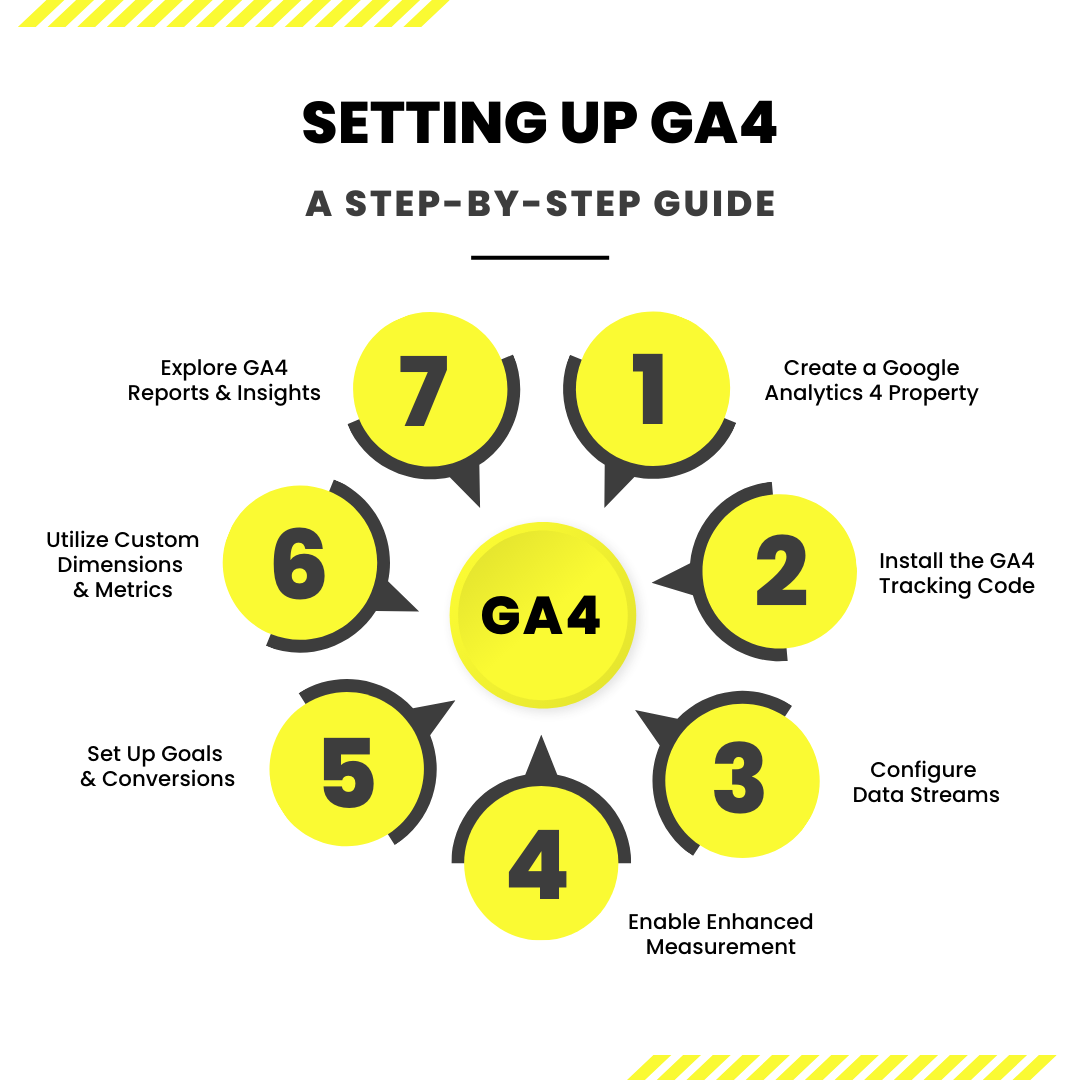
Step 1: Create a Google Analytics 4 Property

To begin, navigate to the Google Analytics website and log in with your Google account. Next, create a new property by clicking on the “Admin” tab and selecting “Create Property” under the “Property” column. Follow the prompts, providing relevant information such as property name, URL, and time zone.

Step 2: Install the GA4 Tracking Code

After creating the property, you will be provided with a Measurement ID. Copy this ID and paste it into the header section of your website’s HTML code. This allows GA4 to start collecting data from your website.

Step 3: Configure Data Streams

In GA4, data streams represent the various sources of data you want to track. To configure data streams, click on the “Data Streams” option under the “Property” column in the Admin tab. Add a new data stream for your website by providing the appropriate information, such as the data stream name and URL.

Step 4: Enable Enhanced Measurement

GA4 offers enhanced measurement capabilities, allowing you to automatically track events without manual implementation. To enable enhanced measurement, go to the “Data Streams” section, click on your website’s data stream, and toggle on the desired events you wish to track, such as page views, scrolls, outbound clicks, and more.

Step 5: Set Up Goals and Conversions

Define your goals and conversions to measure specific actions taken by your website visitors. In the “Property” column, click on “Conversions” and then “Goals.” Follow the prompts to create a new goal, specifying the desired action, such as form submissions, purchases, or newsletter sign-ups. GA4 provides various goal types and templates to choose from, making the process intuitive and flexible.

Step 6: Utilize Custom Dimensions and Metrics

Custom dimensions and metrics allow you to gather additional data tailored to your specific business needs. By defining custom parameters, you can capture valuable insights beyond the default tracking capabilities. In the “Property” column, click on “Custom Definitions” and explore the options to create custom dimensions and metrics that align with your unique requirements.

Step 7: Explore GA4 Reports and Insights

Once your GA4 setup is complete and data starts flowing in, you can access the Reports section to gain valuable insights into user behavior, audience demographics, acquisition channels, and more. GA4 offers a wide range of reports and visualization tools to help you understand the performance of your website and make data-driven decisions.

Setting up GA4 for your website is an essential step in unlocking the power of advanced analytics and gaining deeper insights into your audience. By following this easy step-by-step guide, you have equipped yourself with the knowledge to configure GA4, track relevant data, and utilize its powerful features to drive growth and make informed marketing decisions. Embrace the possibilities of GA4 and leverage its capabilities to propel your digital marketing efforts to new heights.

Got questions? Reach out to us

6 REASONS WHY YOU NEED TO UPGRADE TO GA4

In today’s digital age, data is the key to unlocking insights and making strategic business decisions. Google Analytics (GA) has long been a powerful tool for understanding website and app performance, however in 2020 Google launched its latest analytics tool, Google Analytics 4 (GA4), which was arguably the biggest update of the platform. Now after 3 years of GA 4 being around as an option alongside the default tool, Universal Analytics or GA3, Google is solidifying the status of the latest release by completely taking off Universal Analytics from its platform.

What is GA4?

Google Analytics is a free service that allows you to track any traffic and engagement that happens across your website and apps. GA4, or Google Analytics 4, is the latest version of the Google Analytics platform. It represents a significant upgrade and a shift from the previous version known as Universal Analytics. GA4 introduces several new features and capabilities designed to provide businesses with more comprehensive and insightful data analysis.

GA4 being a very advanced tool, introduces several new features and capabilities designed to provide businesses with more comprehensive and insightful data analysis.

When is it happening?

On 1st July 2023, all standard Universal Analytics properties will stop processing new data. This means that from July 2023, no website activity will be recorded through Universal Analytics. 

Furthermore, Google announced that existing Universal Analytics properties would only be able to be accessed for around 6 months after this date. This means that all historical data could be gone forever.

Why your business needs GA4?

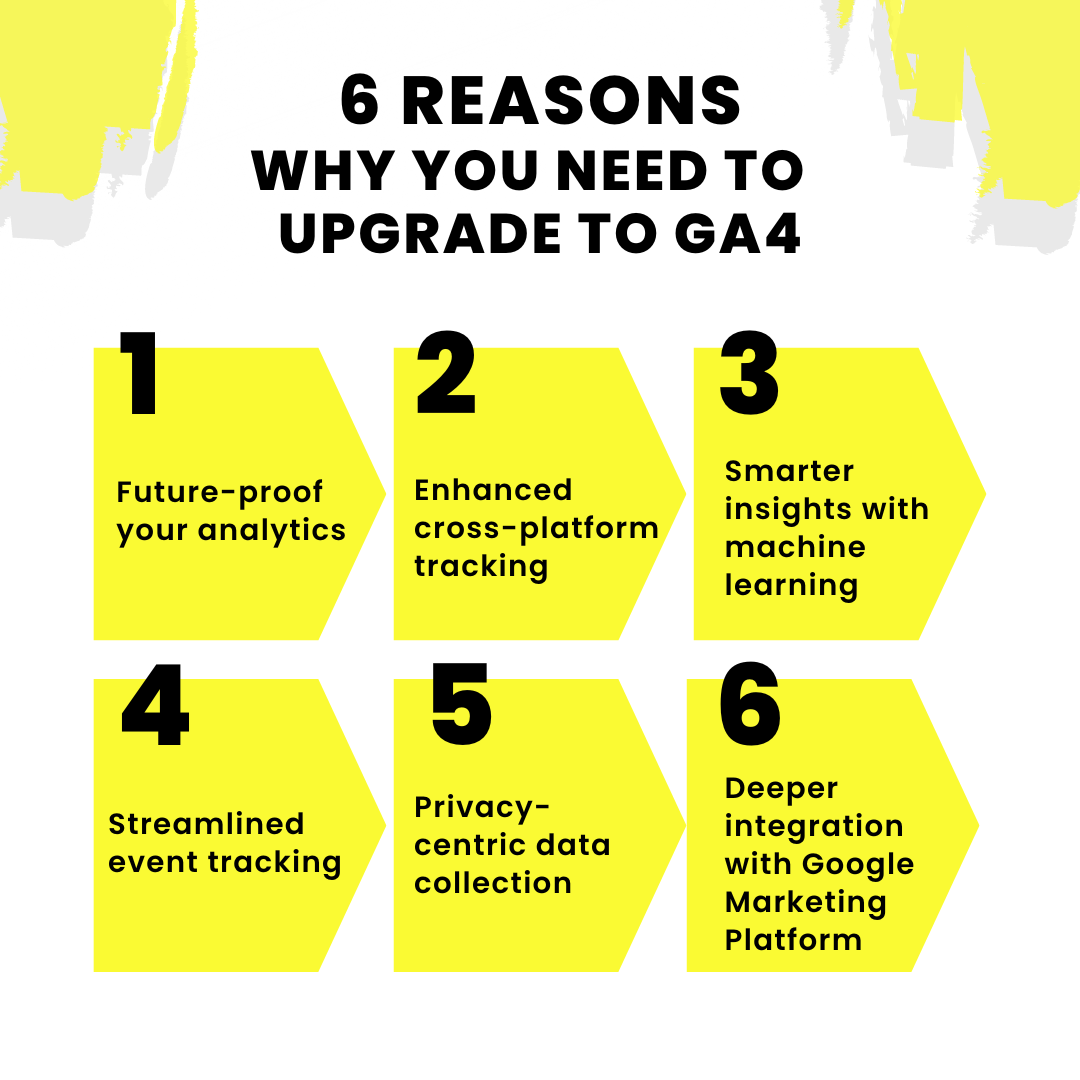
  1. Future-proof your analytics

GA 4 Analytics represents the future of Google Analytics. It is designed to adapt to the evolving digital landscape, including emerging technologies and privacy changes. By upgrading now, you ensure that your business remains at the forefront of analytics, ready to leverage new features and capabilities as they are introduced.

  1. Enhanced cross-platform tracking

One of the major advantages of GA 4 Analytics is its ability to track user interactions across multiple platforms, including websites, mobile apps, and offline touchpoints. This holistic view provides valuable insights into user behavior and engagement, allowing you to optimize your marketing efforts and improve the overall customer experience.

  1. Smarter insights with machine learning

GA 4 Analytics incorporates advanced machine learning capabilities that can automatically uncover meaningful trends and insights from your data. With the power of machine learning, you can identify hidden patterns, predict user behavior, and discover growth opportunities. These smart insights enable you to make data-driven decisions that drive results and improve your bottom line.

  1. Streamlined event tracking

Event tracking is a crucial aspect of understanding user interactions on your digital properties. GA 4 Analytics simplifies event tracking by introducing a more flexible and streamlined approach. The model uses an event-driven data model, allowing you to define and track events based on your specific business needs. This flexibility gives you granular control over the events you want to measure, ensuring you capture the most relevant data for analysis.

  1. Privacy-centric data collection

Privacy concerns are becoming increasingly important for businesses and users alike. GA 4 Analytics addresses these concerns by providing privacy-centric data collection methods. It aligns with emerging privacy regulations, such as the General Data Protection Regulation (GDPR), by providing more options for data control and consent management. By upgrading to GA 4 Analytics, you can ensure that your data collection practices are compliant with privacy regulations, enhancing trust with your customers.

  1. Deeper integration with Google Marketing Platform

For businesses already leveraging Google Marketing Platform (GMP), upgrading to GA 4 Analytics brings additional benefits. GA 4 Analytics seamlessly integrates with GMP, allowing you to combine data from various sources for a unified view of your marketing efforts. This integration empowers you to gain deeper insights into campaign performance, optimize your marketing spend, and deliver more personalized experiences to your target audience.

The transition to GA 4 Analytics is a proactive step for businesses looking to stay ahead in the world of data analytics. The key thing to remember is that you have time to get everything configured and familiarize yourself with the platform. But there is a defined deadline, so the sooner you act the better.
Don’t wait; make the move to GA 4 Analytics and unlock the full potential of your data-driven decision-making process.

Got questions? Reach out to us

Home of Performance Shines at Seamless Middle East 2023-The Future of Digital Commerce

The digital landscape is evolving at an unprecedented pace, and businesses across industries are compelled to adapt and embrace innovative solutions to stay competitive. Seamless Middle East 2023 which took place on the 23rd-24th May at the Dubai World Trade Centre, was a seminal event that brought together industry leaders, experts, and technology enthusiasts. In its 24th year, Seamless has been a meeting place for the brightest and most innovative minds across the payments, fintech, identity, banking, retail, e-commerce, home delivery, and digital marketing industries. It is renowned as one of the largest marketing events in the region and rightly so. This year it garnered over 30,000 attendees, 800+ exhibitors, and over 800 speakers over the course of two days.

We at Home of Performance proudly registered a remarkable presence at the event through our participation as an exhibitor and conference speakers.  Our experience of meeting so many enthusiastic visitors who came to meet us at our stand and presenting our range of innovative digital marketing solutions to them has been very rewarding. 

Let’s delve into our experience and the remarkable insights gained during this innovative dynamic gathering.

Embracing the Future of Digital Commerce

At Seamless Middle East 2023, the theme of “The Future of Digital Commerce” resonated with the Home of Performance team. We understand that the digital landscape is not just transforming businesses; it is also redefining customer experiences and expectations. By participating in this event, we aimed to showcase our expertise in leveraging digital marketing strategies and technologies to empower businesses in this evolving environment.

A Thriving Exhibition Stand

Our exhibition stand at the event served as a vibrant hub for engaging discussions and knowledge sharing. With eye-catching visuals and interactive displays, we captivated the attention of the visitors, enticing them to explore the services and solutions we provide. From search engine optimization, performance, and app marketing to social media management and creative content production, we highlighted our comprehensive suite of digital marketing offerings that are tailored to meet the diverse needs of businesses in the digital era.

Moderating a discussion panel on ‘Empowering Marketers with AI: Making Content Curation Smarter and More Efficient With Machines’

Our Strategy Director, Warren LaRey was a speaker and moderator for the Seamless Middle East Conference, where he moderated a discussion panel on the topic – Making Content Curation Smarter and More Efficient With Machines. He was joined by Antonio Ricciardi, SVP Consumer Intelligence & Engagement, Etisalat UAE By E&, Marwa Hassan, Head Of Marketing, Global Food Industries/ International Beverage and Filling Industries, and Ahmed El Gamal, Senior Director Of Marketing, Jumeirah Hotels & Resorts. It was a very insightful session attended by a packed hall and followed by a highly interactive audience interaction.

Engaging with Visitors

Seamless Middle East 2023 provided an excellent platform for us to connect with professionals from various industries and exchange insights on the future of digital commerce. We engaged in thought-provoking conversations with entrepreneurs, marketers, and technology enthusiasts, learning from their experiences and sharing our expertise. These interactions fostered valuable connections, opening doors to potential partnerships and collaborations.

Unveiling Innovative Solutions

Our participation in the event allowed us to showcase our latest innovative services that align with the future of digital commerce. We talked about our focus on employing data science to craft ROI-driven business marketing strategies for our clients. Additionally, we demonstrated the power of personalized marketing campaigns, leveraging data-driven insights and dynamic tracking and reporting to create tailored experiences for customers. By presenting these solutions, we aimed to inspire businesses to embrace the digital revolution and harness its potential for growth.

Key Insights and Takeaways

Seamless Middle East 2023 provided a rich environment for learning and gaining valuable insights into how the region is adapting to the advents of business automation and digital marketing. We observed a significant shift towards mobile commerce, with an increasing emphasis on frictionless, secure payment solutions. This directly ties in with our agile App marketing projects. Artificial intelligence and machine learning emerged as transformative technologies, enabling businesses to automate processes, analyze vast amounts of data, and deliver personalized customer experiences at scale. Furthermore, the importance of data privacy and security was highlighted, with businesses urged to prioritize the protection of customer information.

Looking Ahead

Participating in Seamless Middle East 2023 was an invigorating experience for us. It was an incredible platform for Home of Performance to showcase our digital marketing prowess and engage with industry leaders in exploring the future of digital commerce. We return from the event with valuable knowledge, new connections, and a reinforced commitment to empowering businesses in the digital era. Digital Marketing holds immense potential, now more than ever, and we are excited to continue partnering with organizations, leveraging our expertise to drive growth, innovation, and exceptional customer experiences. As we look ahead, we remain committed to empowering businesses, leveraging the transformative power of digital marketing to navigate the evolving landscape and embrace the opportunities that lie ahead.

We look forward to participating in the upcoming Seamless Saudi Arabia that is happening in Riyadh from the 4th-5th September 2023.

Got questions? Reach out to us

HOP Talent Shines in the CME Agency Faces To Watch Under 30 List 2023

Campaign Middle East, the leading source of media, marketing, advertising, and communications news and analysis for the MENA region recently released its Agency Faces To Watch Under 30 list for 2023. 

The list profiles the brightest and best young talent aged 30 and under working agency-side in the region. The list is divided into 4 categories – Creative, Media, Digital, and PR.

Home of Performance saw three of its exceptionally talented team members getting featured in Campaign’s Digital Faces to Watch 2023. 

Here are the winners –

Simon Ronaldo, Art Director 

Rana Tarabay, Social Media Director

Asjad Rahman, Digital Account Manager

Read more about it in the Campaign Middle East – April 2023 Issue

About Campaign Middle East

Campaign Middle East is the authority for the marketing and communications industry in the region. It provides essential and market-leading coverage of advertising, media, marketing, PR, events and experiential, digital, the wider creative industries, and more.

The Agency Faces To Watch Under 30 List is in association with Heriot-Watt University Dubai which also offers a chance to win 5 scholarships to a Master’s degree in Digital Marketing at its Edinburgh Business School.

Produced by leading Dubai publisher Motivate, Campaign Middle East builds on 50 years of brand legacy and expertise, while focusing on the MENA region. It celebrates all aspects of communications, putting the creative and commercial sides of the marketing communications industry into a wider business and social context.

Got questions? Reach out to us

3 Effective Ways To Transform The Digital Skills Of Your Workforce

In today’s digital age, it’s not enough to simply have a few tech-savvy employees – all staff members must be equipped with the necessary digital skills to thrive in a technology-driven workplace. However, with the constantly evolving digital landscape, it can be challenging for companies to keep up with the latest trends and technologies. This is why it’s crucial for businesses to have a strategy in place to transform the digital skills of their workforce. 

We will explore three effective ways to achieve this transformation and ensure that your company stays competitive in the digital marketplace.

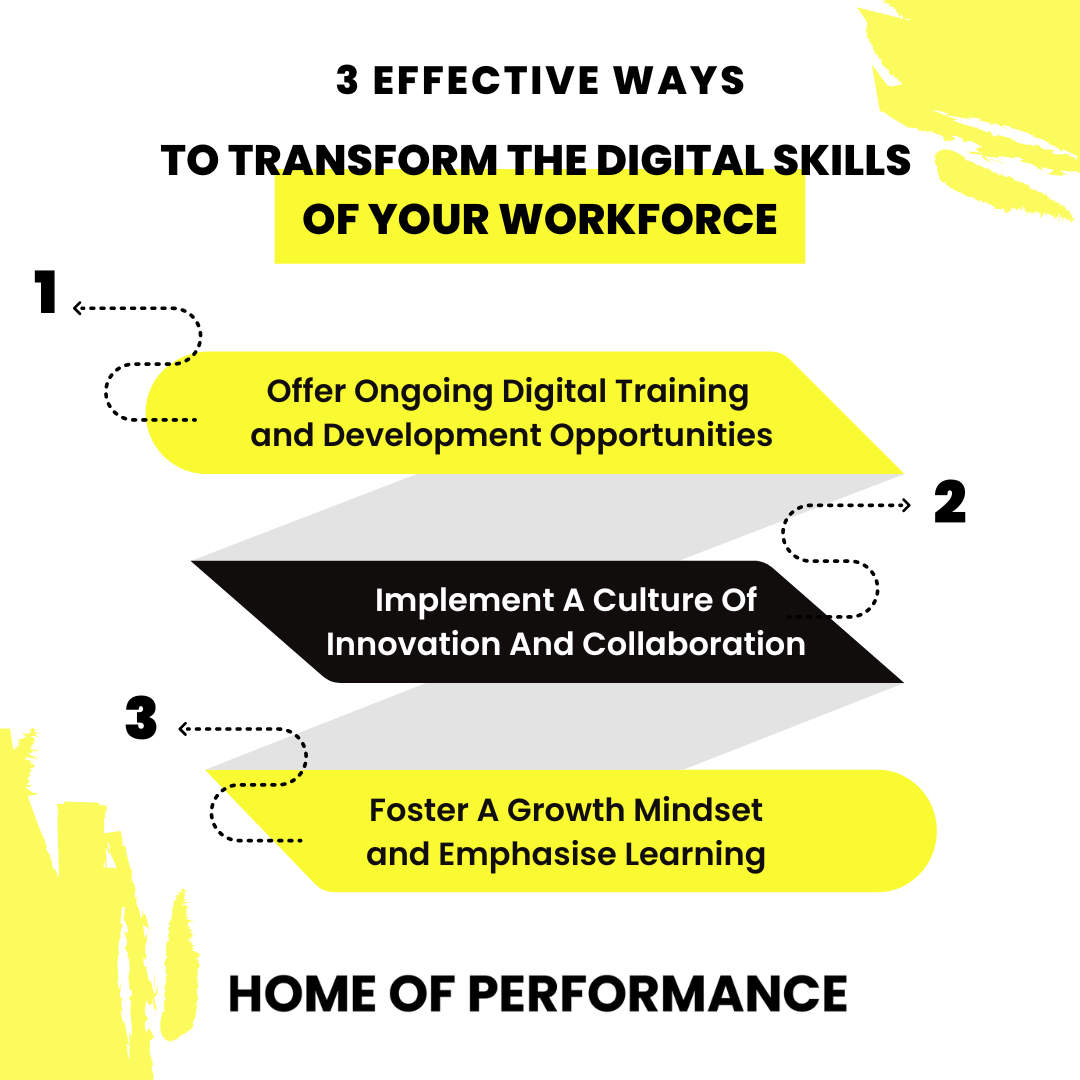
  1. Offer Ongoing Digital Training And Development Opportunities

With the emergence of new technologies and tools, it can be challenging for employees to keep up with the latest trends and best practices. To stay competitive, companies must make it a priority to invest in the digital skills of their workforce. One effective way to achieve this is through ongoing training and development opportunities. 

Providing workshops, seminars, and online courses can help businesses equip their employees with the latest digital skills and knowledge. This not only benefits the employees but also the company, as it ensures that the workforce is up-to-date with the latest trends and technologies. Moreover, offering ongoing training and development opportunities demonstrates the company’s commitment to investing in the growth and development of its workforce. This can help to boost employee morale and create a culture of continuous learning and development, which can have a positive impact on productivity, innovation, and overall business success.

  1. Implement A Culture Of Innovation And Collaboration

By fostering a culture of innovation and collaboration, companies can encourage their employees to think creatively and work together to solve complex digital challenges. One effective way to achieve this is to encourage employees to experiment with new technologies and tools.

To do this, businesses can set up cross-functional teams to work on digital projects. This allows employees from different departments to work together and bring their unique perspectives to the project. By doing so, they can pool their collective knowledge and experience to create more innovative and effective solutions. Additionally, companies can create a platform for employees to share their ideas and innovations. This can be done through regular brainstorming sessions, innovation workshops, or even online platforms. By creating an environment where employees are encouraged to share their ideas and innovations, businesses can foster a culture of continuous improvement and innovation. Furthermore, companies can encourage staff to explore and experiment with new digital tools. This can also help them identify new opportunities for innovation and growth, and take ownership of digital initiatives.

  1. Foster A Growth Mindset And Emphasise Learning

As a business, fostering a growth mindset and emphasizing learning is crucial to stay competitive in the digital marketplace. One effective way to achieve this is by setting up a mentorship program. This allows employees to learn from more experienced colleagues, who can provide guidance and support as they navigate digital challenges. This encourages the development of new skills and knowledge, as well as provides a supportive environment for personal and professional growth.

Another way to foster a growth mindset is by providing regular feedback and recognition. Feedback can be used to identify areas where employees need to improve their digital skills, while recognition can be used to acknowledge and celebrate their achievements. Moreover, businesses can reward employees who take the initiative to develop their digital skills. This can be done through promotions, pay raises, or even simply recognizing them publicly for their efforts. 

To Conclude

Transforming the digital skills of a workforce is essential in the digital age, and there are effective ways to achieve this. Providing ongoing training and development opportunities, implementing a culture of innovation and collaboration, fostering a growth mindset and emphasizing learning are all effective strategies. 

By investing in the digital skills of their workforce, businesses can ensure that their employees have the latest knowledge and tools to tackle digital challenges. Furthermore, fostering a culture of continuous learning and development can have a positive impact on productivity, innovation, and overall business success.

Got questions? Reach out to us

Native Content for Social Media

Native content has become an increasingly important topic in digital marketing strategy, particularly on social media platforms. 

The concept of native content refers to content that is designed and created specifically for a particular platform, optimized to fit the format, style, and user behavior of that platform. As social media algorithms prioritize native content that provides value and relevance to users, understanding and utilizing this approach can be a game-changer for businesses seeking to drive engagement and results. 

In this article, we’ll explore the benefits of using native content in social media, share some best practices for creating effective native content, and discuss the advantages of creating content through the platforms themselves.

What Exactly Is Native Content?

Native content is designed to complement the form and function of the social media platform where it appears. In other words, it appears and sounds exactly like any other content on the platform.

Marketers who understand each platform get the most out of social media. You can create fantastic content, but if you consistently disregard the context of each platform on which it appears, it will die.

The type of native content can vary depending on the social media platform used. For instance, on Instagram, native content may consist of high-quality images or visually appealing short-form videos. Twitter’s strict character limit makes short and impactful messages ideal for native content on the platform. On LinkedIn, long-form articles or thought leadership pieces focused on providing industry insights and education to users are suitable. Meanwhile, on TikTok, native content primarily revolves around short-form video content, emphasizing entertainment and humor.

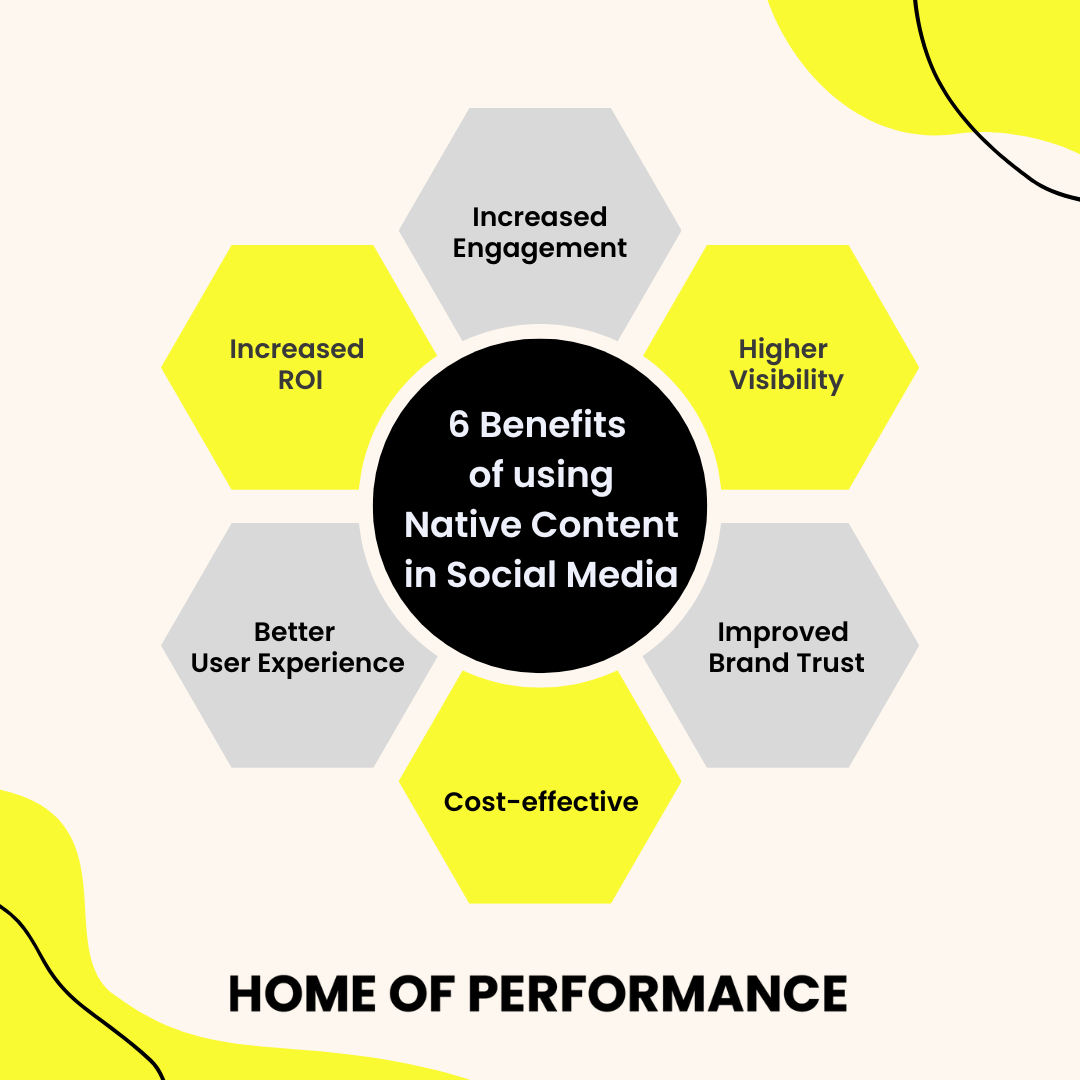
6 Benefits Of Using Native Content In Social Media:

There are several benefits of using native content in social media –

  1. Increased engagement: Native content is designed to fit seamlessly within the platform’s environment and user behavior, which makes it more engaging and relevant to the audience. According to a study by Sharethrough and IPG Media Lab, native ads receive 53% more views than traditional display ads.
  1. Higher visibility: Social media algorithms prioritize native content, making it more likely to be seen by the target audience. According to a study by IHS Technology, native content is 20-60% more likely to be shared than non-native content.
  1. Improved brand trust: Native content is seen as more authentic and trustworthy by social media users, as it is tailored to the specific platform and audience. A study by Forbes found that 43% of millennials trust native ads more than traditional banner ads.
  1. Cost-effective: Creating native content is often more cost-effective than creating multiple versions of the same content for different platforms. This is because native content is created once, but can be repurposed across multiple platforms, saving time and money.
  1. Better user experience: Native content is designed to blend seamlessly with the user experience on a particular platform, which leads to a better overall experience for the audience. A study by Facebook found that users are 40% more likely to watch native video content on the platform than non-native video content.
  1. Increased ROI: By increasing engagement, visibility, and brand trust, native content can lead to a higher return on investment for businesses. According to a study by Business Insider, native advertising is projected to reach $52.75 billion in 2025, indicating its increasing popularity among businesses and advertisers.

How To Create Effective Native Content For Social Media

Creating effective native content for social media is crucial for businesses to achieve their marketing goals. Here are some additional points to keep in mind:

  1. Use visually appealing content: Visual content is more engaging than text-based content, so it’s important to use visually appealing images and videos in your native content. Use relevant and eye-catching visuals to capture users’ attention and deliver your message effectively.
  1. Keep it short and sweet: Attention spans are getting shorter, so it’s essential to keep your content short and to the point. Use catchy headlines and captions to grab users’ attention and deliver your message in a concise and effective way.
  1. Use a consistent brand voice: Consistency is key when it comes to building a brand. Use a consistent brand voice across all your native content to help users identify and remember your brand.
  1. Test and optimize: The beauty of native content is that it can be easily optimized and tweaked to improve performance. Use analytics tools to track your content’s performance and adjust your strategy accordingly.
  1. Engage with your audience: Social media is all about engagement and building relationships with your audience. Respond to comments, ask questions, and encourage users to share their thoughts and opinions.
  1. Leverage user-generated content: User-generated content is a powerful tool for building trust and engagement with your audience. Encourage your followers to create and share content related to your brand and products.

Benefits Of Creating Content Through The Platforms Themselves

Creating content through the platforms themselves can offer several benefits that can help businesses optimize their social media presence. Here are some points to consider:

  • Maximise creativity: According to Hootsuite, Instagram filters can increase engagement by 21%, while videos with music on TikTok receive 28.6% more engagement than those without. By using these features, businesses can create native content that stands out and catches users’ attention.
  • Consistency in style and format: Creating content through the platforms themselves ensures that your content meets the technical specifications and requirements of the platform. For example, Instagram recommends using 1080 x 1080 pixels for square posts, 1080 x 1920 pixels for Instagram Stories, and 1080 x 1350 pixels for portrait posts. Creating content through the platform’s built-in tools ensures that your content fits these requirements, making it more likely to be shown to users by the algorithm.
  • Prioritized by the algorithm: Using the platform’s built-in tools signals to the algorithm that your content is specifically designed for the platform, increasing the likelihood of prioritization. According to Social Media Today, Meta’s algorithm prioritizes native videos, resulting in 186% more engagement than other types of posts.
  • Saves time and resources: Creating content through the platform’s built-in tools can be more time and cost-effective than using external software. By leveraging the platform’s tools, businesses can create native content quickly and easily, saving time and resources in the process.
  • Keep up with platform updates: Social media platforms frequently update their algorithms and features, which can affect how content is shown to users. By using the platform’s built-in tools, businesses can keep up with these changes and adapt their content strategy accordingly.

Conclusion

Native content has become an essential element of any successful social media marketing strategy. By creating content that is designed to fit seamlessly within the platform’s environment and user behavior, businesses can increase engagement, visibility, brand trust, and conversions, ultimately leading to a higher return on investment.

The benefits of using native content are supported by various statistics that demonstrate its effectiveness in driving engagement and results on social media platforms. From higher views and shares to better brand trust and more conversions, the advantages of using native content are significant and can help businesses achieve their marketing objectives.

As social media continues to evolve, businesses must stay up-to-date with the latest trends and best practices, including the use of native content, to remain competitive and relevant in the digital landscape. With the right strategy and approach, native content can be a game-changer for businesses seeking to increase their social media presence and drive results.

By Warren LaRey

Got questions? Reach out to us

How To Develop Your Brand’s Visual Language

A brand’s visual language is an important aspect of a content strategy that helps to establish a consistent and recognizable visual identity for a brand across all digital and offline channels. 

In the realm of branding, employing visual language can have an invisible and subliminal impact on your audience, tapping into their subconscious as you convey your brand’s message. Once harnessed, it can play a pivotal role in creating a lasting impression.

Simply, visual language is a philosophy that explains why things are put together in a certain way. It includes the use of design elements such as colours, typography, imagery, and other visual elements to create a cohesive and memorable brand image that resonates with your audience.

What is a Brand’s Visual Language? 

A brand visual language typically includes a set of guidelines or standards that dictate how these design elements should be used in all brand communications, including website design, social media posts, email marketing campaigns, and other marketing materials. These guidelines ensure that all brand communications are consistent in terms of look and feel, regardless of the platform or medium.

A well-defined brand visual language can help a business:

  • Stand out in a crowded marketplace: By creating a distinct visual identity, a brand can differentiate itself from competitors and make a strong impression on potential customers.
  • Increase brand recognition: Consistent visual language helps to reinforce a brand’s identity and make it more memorable to audiences.
  • Establish trust and credibility: A professional and consistent visual identity can help establish a sense of trust and credibility with customers and prospects.
  • Facilitate content creation: A well-defined brand visual language can serve as a guide for creating new content, making it easier for marketers and designers to create cohesive and effective content across different channels.

How To Create Your Brand’s Visual Language

The creation of a visual language does not happen by accident, as with all great things in life. In most cases, it is the result of a long and intensive process. 

It’s important to create a visual language guideline, which details the key design elements and standards needed to create a brand’s consistent visual identity, through a series of steps.

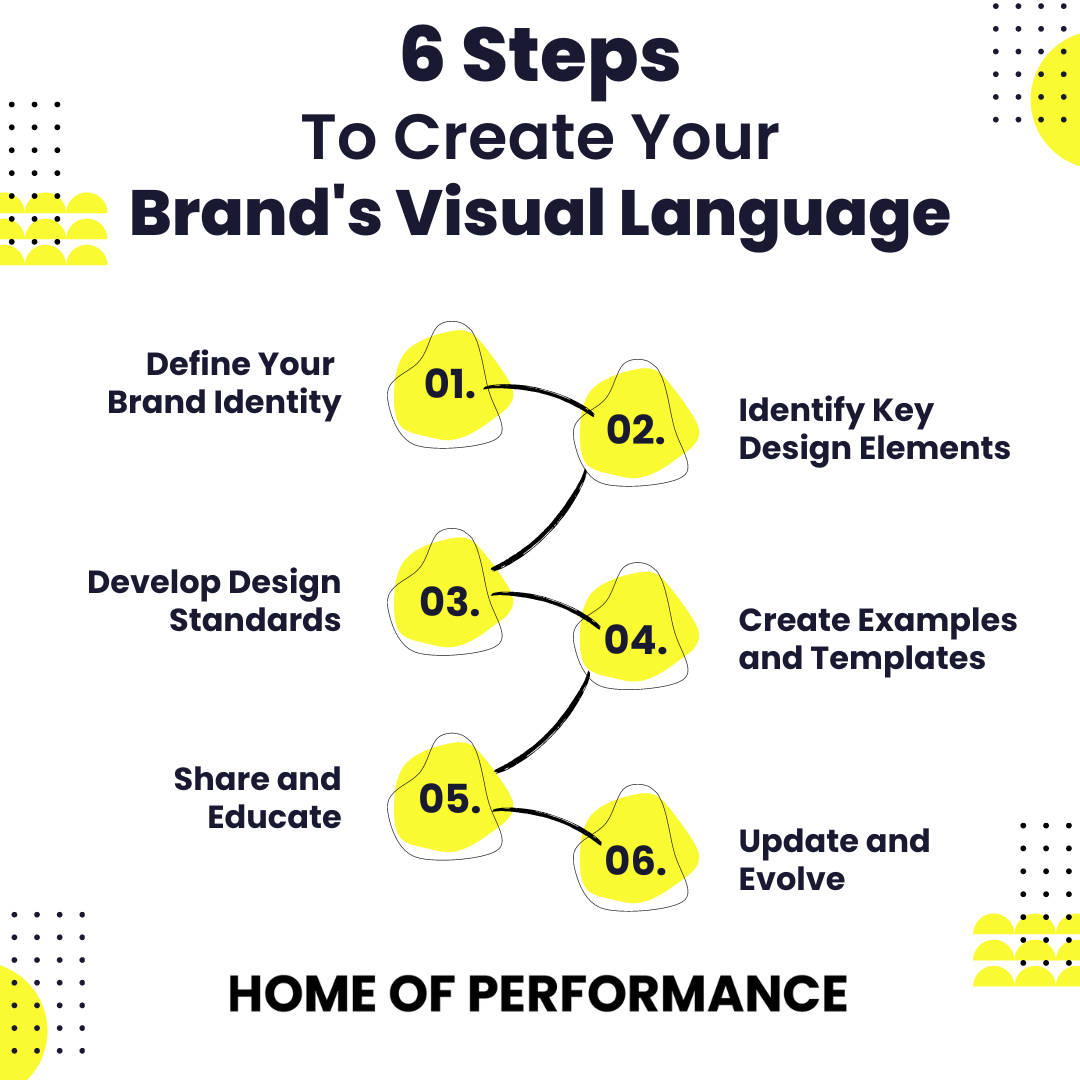
Here are 6 Steps to create a visual language for your brand:

  1. Define your brand identity: Before you can create a visual language guideline, you need to have a clear understanding of your brand identity, including your brand values, target audience, and unique selling proposition. This will help you to create a visual identity that aligns with your brand and resonates with your target audience.
  1. Identify key design elements: Once you have a clear understanding of your brand identity, you can start to identify the key design elements that will make up your visual language, including colours, typography, imagery, and other visual elements. Consider the emotions and associations that each element evokes and how they can be used to create a cohesive brand identity.
  1. Develop design standards: Once you have identified your key design elements, you can start to develop design standards that dictate how these elements should be used in your brand communications. This includes rules for typography, colour usage, imagery, and other visual elements, as well as guidelines for layout, composition, and other design considerations.
  1. Create examples and templates: To help ensure that your visual language is consistently applied across all brand communications, it can be helpful to create examples and templates that demonstrate how to use your design elements in different contexts. This can include social media posts, website layouts, email templates, and other marketing materials.
  1. Share and educate: Once you have created your visual language guideline, it’s important to share it with all relevant stakeholders, including designers, marketers, and other members of your team and agencies. You may also need to provide training or education to help ensure that everyone understands and can apply the design standards correctly.
  1. Update and evolve: A visual language guideline should be a living document that evolves over time as your brand and marketing needs change. It’s important to review and update your guidelines regularly to ensure that they remain relevant and effective in achieving your marketing goals.

At the onset of your journey, determining the most effective approach to building a robust brand can be intricate and demanding. Creating a brand visual language guideline involves careful consideration of your brand identity and key design elements, as well as the development of clear and actionable design standards that can be applied consistently across all brand communications. 

Get in touch with our team today, if you want your company to stand out from the crowd.

– Warren LaRey

Got questions? Reach out to us

News – LinkedIn’s Latest Update for Business Pages

With its most recent update, the B2B networking giant LinkedIn aims to enhance brand visibility, audience engagement, and hiring efficiency. Let’s take a look.

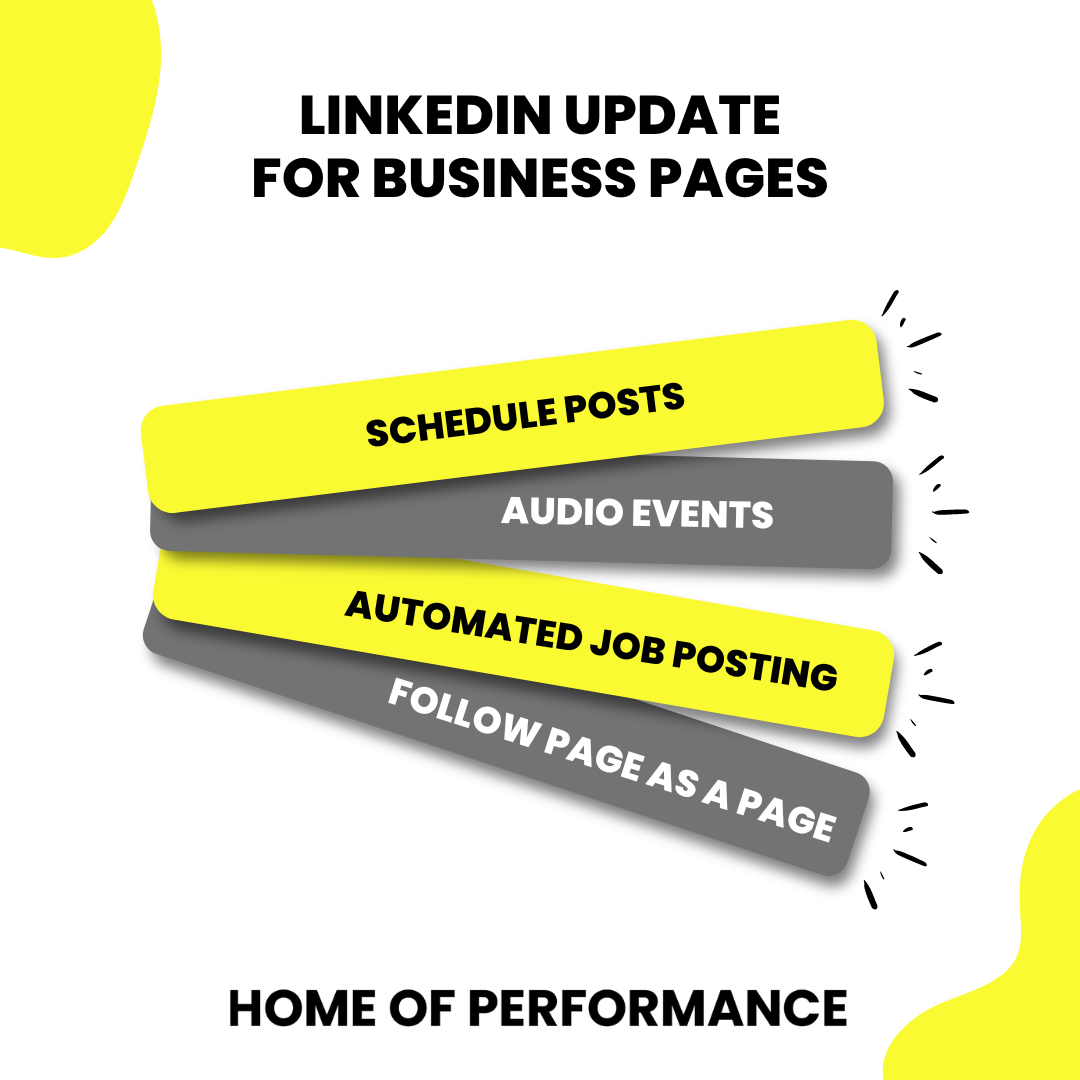
LinkedIn Pages enable organizations to showcase their purpose, values, culture, and what they have to offer as a product or service to their audiences while also providing an array of very helpful publishing and community-building tools. Here are some changes taking effect from March 2023 –

Reach your audience at the right time with scheduled posts

To help manage and share content at the right time, you can schedule your LinkedIn posts, all within the platform. There is no limit to the number of posts you can pre-publish,  and can do so up to three months in advance. This will help in scaling efficiency while building content consistency to keep the audience engaged.

Engage your community through live, audio-only conversations

This is the most exciting of them all. With LinkedIn Audio Events, businesses can now host and engage in live, audio-only conversations with their community from around the world. What makes it even better is that these audio events can be hosted directly from within the LinkedIn interface without any need for third-party broadcasting tools.

Attendees who wish to contribute to the conversation can do so by ‘raising their hand’ and then allowed by the host to participate. The ones not showing active interest, can be nudged by using emojis – a fun way to keep the audience engaged and get a pulse on what they are thinking.

If attendees are not actively a part of the conversation, they are free to navigate the platform without leaving the event. This will allow them to network with fellow participants, and speakers and even browse your page.

Reach more candidates by automatically sharing jobs as a Page post

For businesses with fewer than 1,000 employees, there is a new automatic job posting feature. Through this LinkedIn will automatically share one of your Page’s open roles per day as a pre-scheduled post to your Page. The post will have pre-populated text with an option to edit the description once it is shared. This new feature of automatic posting covers all open roles except basic jobs.

Discover and join more conversations relevant to your brand by following Pages as your organization

LinkedIn Pages can now follow other Pages in the same way as individual members can follow them. This feature makes it easier to join industry conversations with a feed dedicated to content from the businesses you’re following.

This not only will help businesses to distinguish their brand voice but also empower brands to collaborate, communicate, and build cohesive online communities.

Needless to say, these recent updates are most positively going to amplify marketing efforts by offering new options to efficiently share content, connect with the right audiences, attract new talent, and stay active with the industry.

Got questions? Reach out to us

How & Why Your Brand Should Use Social Listening

Social media has become a fundamental part of our daily lives in the digital age. Millions of people use social media platforms to communicate, share information, and express their opinions about brands and products. As a result, social media has become a valuable source of insights for businesses looking to understand their customers’ needs and preferences. Social listening, also known as social media monitoring, is a process that involves tracking and analyzing social media conversations and mentions of a brand, product, or service. It provides businesses with a wealth of information that can help them make informed decisions about their marketing strategies, customer service, and overall brand reputation. We will explore how and why your brand should use social listening to stay ahead of the competition and build a stronger relationship with your customers.

What Is Social Listening?

Social listening, also known as social media monitoring, is the process of monitoring and analyzing social media platforms to track and understand what people are saying about a brand, product, or service. Social listening involves using various tools to track and analyze social media conversations, mentions, and hashtags related to a specific topic or brand. This data can provide valuable insights into the customer’s needs, preferences, and opinions, which can be used to improve marketing strategies, product development, and customer service.

Social listening is an essential part of social media marketing and allows businesses to stay up-to-date with the latest trends and conversations happening in their industry. By monitoring social media conversations, businesses can identify potential issues before they escalate, respond to customer complaints or inquiries, and stay on top of their brand’s reputation. Overall, social listening is an effective way to stay connected with your audience and better understand their needs and preferences.

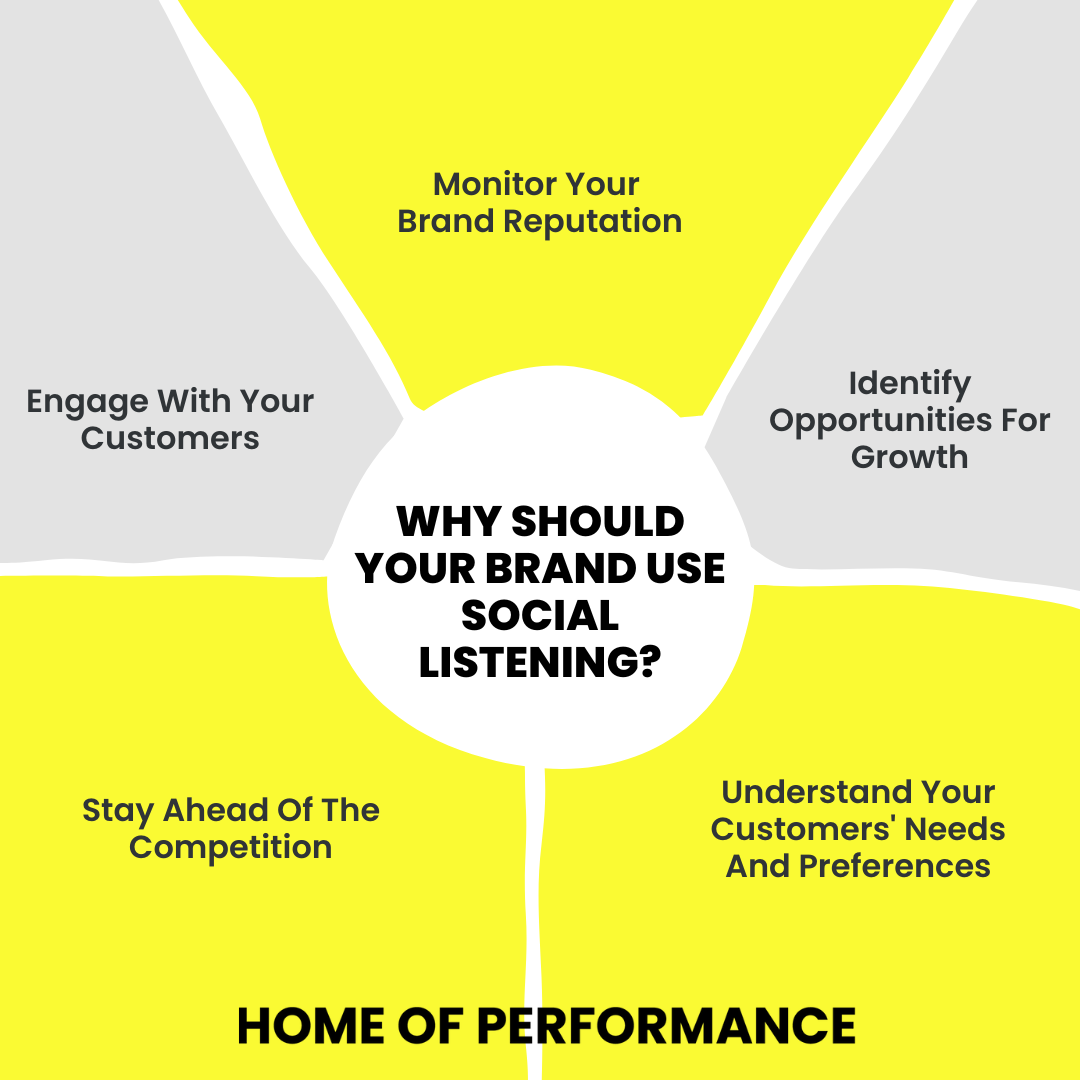
Why Should Your Brand Use Social Listening?

It is crucial for businesses to monitor social media conversations and mentions related to their brand to gain valuable insights and stay ahead of the competition. Here are some key reasons why your brand should use social listening and build a stronger relationship with your customers:

  • Understand Your Customers’ Needs And Preferences

Social listening can provide businesses with a wealth of information about their customers’ needs and preferences. By tracking social media conversations related to your brand, you can identify what your customers are saying about your products or services, what they like, and what they dislike. This data can be used to develop more targeted marketing strategies, improve product development, and enhance customer service.

  • Monitor Your Brand Reputation

Social media can be a double-edged sword for businesses. While it can be an effective tool for promoting your brand, it can also be a platform for customers to share their negative experiences or complaints. Social listening allows businesses to monitor their brand reputation and identify any potential issues before they escalate. By addressing negative comments or reviews in a timely and professional manner, businesses can demonstrate their commitment to customer service and improve their brand reputation.

  • Identify Opportunities For Growth

Social listening can help businesses identify new trends, opportunities, or areas for growth. By monitoring social media conversations related to their industry or product, businesses can gain insights into what their competitors are doing, identify new market niches, and adjust their strategies accordingly.

  • Engage With Your Customers

Social media is a two-way communication channel, and businesses should use it as an opportunity to engage with their customers. Social listening can provide businesses with real-time feedback and insights from their customers. By responding to their comments or inquiries, businesses can build stronger relationships with their customers and foster a sense of loyalty.

  • Stay Ahead Of The Competition

Social listening allows businesses to stay up-to-date with the latest trends and conversations happening in their industry. By monitoring their competitors’ social media activities, businesses can gain insights into their strengths and weaknesses, identify potential opportunities or threats, and adjust their strategies accordingly. Social listening can provide businesses with a competitive edge and help them stay ahead of the game.

How Can Your Brand Use Social Listening?

To effectively use social listening, businesses need to follow some best practices and strategies that can help them stay ahead of the competition and build stronger relationships with their customers:

  • Define Your Goals And Objectives

Before starting with social listening, businesses should define their goals and objectives. They should identify what they want to achieve through social listening and how it can help them improve their business. For example, a business might want to track customer sentiment about its products or services to improve its customer experience.

  • Choose The Right Tools

There are many social listening tools available in the market that businesses can use to track social media conversations and mentions related to their brand. Businesses should choose the tools that best suit their needs and provide the most relevant data.

  • Identify The Relevant Keywords And Topics

Businesses should identify the relevant keywords and topics related to their brand that they want to track. They should also track keywords related to their competitors and industry trends to gain insights into what their competitors are doing and what their customers are saying about their products or services.

  • Monitor Social Media Channels

Social listening involves monitoring multiple social media channels such as Facebook, Twitter, Instagram, LinkedIn, and others. Businesses should track conversations and mentions on all relevant channels to gain a comprehensive view of what people are saying about their brand.

  • Analyze The Data

Once businesses have collected the data, they should analyze it to gain insights into customer sentiment, preferences, and behaviour. They can use data analysis tools to identify patterns and trends and gain a deeper understanding of their customers.

  • Respond To Customer Feedback

Businesses should respond to customer feedback in a timely and professional manner. They should acknowledge customer complaints or issues and provide a solution or resolution to them. This can help build a positive image of the brand and improve customer loyalty.

  • Use The Insights To Improve Marketing Strategies And Customer Experience

Businesses should use the insights gained from social listening to improve their marketing strategies, product development, and customer experience. They can tailor their marketing messages to better resonate with their target audience, improve their products or services to meet customer needs, and enhance their customer service to provide a better overall experience.

To Conclude

In the current fast-paced digital world, social listening has emerged as a powerful tool for businesses to comprehend their customers’ requirements and choices. By scrutinizing social media conversations and references, companies can obtain significant insights into their brand reputation, customer behaviour, industry trends, and competitors. We have outlined the reasons why your brand should incorporate social listening, the recommended practices to follow, and the strategies to adopt. With the right tactics and tools, businesses can employ social listening to maintain a competitive edge and foster stronger relationships with their customers. In today’s digital era, social listening is an indispensable resource for businesses that want to remain pertinent, knowledgeable, and engaged with their audience.

Got questions? Reach out to us

7 Tips To Know Your Customers Better

A successful business puts its customers at the heart of everything it does. Understanding your customers’ needs wants, and preferences is crucial for creating products and services that meet their expectations, building strong relationships, and growing your business. This is why getting to know your customers better should be a top priority for any business.

Here are some helpful tips that will help you to gather valuable insights into your customers’ behavior, preferences, and feedback, enabling you to tailor your products and services to their needs and build a strong, loyal customer base. So let’s dive in!

#1 Conduct Customer Surveys

One of the most effective ways to get to know your customers better is by conducting customer surveys. Surveys allow you to gather valuable information about your customers’ preferences, opinions, and behaviors. This information can be used to improve your products and services, identify areas for growth, and build stronger relationships with your customers.

Here is how you can conduct a good customer survey:

  • Define your goals: Determine the specific information you want to gather from your customers, and what you plan to do with the results.
  • Choose your survey method: Decide on the type of survey you want to conduct – online, email, phone, or in-person – and choose the platform you’ll use to create and distribute the survey.
  • Create your questions: Design clear, concise, and relevant questions that will help you achieve your goals.
  • Test your survey: Before distributing the survey to your customers, test it on a small sample group to ensure it’s easy to understand and provides the information you need.
  • Distribute your survey: Send the survey to your customers via email, social media, or your website, and encourage them to participate.
  • Analyze your results: Once you have collected enough responses, analyze the data and identify key insights that will help you improve your products and services.
  • Take action: Use the insights gathered from the survey to make changes to your products or services and improve your customer experience.

#2 Monitor Social Media Activity

Social media is a valuable tool for businesses to connect with their customers and understand their needs and preferences. By monitoring social media activity, you can track customer feedback, identify trends, and respond to customer concerns in real-time. This can help you to build strong relationships with your customers and improve your brand reputation.

You can effectivley monitor social media activity by focusing on the following:

  • Identify the social media platforms your customers use: Determine which social media platforms your customers are active on, and focus your monitoring efforts on those platforms.
  • Set up monitoring tools: Use social media monitoring tools like Hootsuite, Buffer, or Sprout Social to track mentions of your brand, products, and services.
  • Monitor relevant hashtags: Monitor hashtags that are relevant to your brand or industry to stay up-to-date on customer trends and feedback.
  • Respond to customer feedback: When you receive feedback from customers on social media, respond in a timely and professional manner. Address any concerns they may have, and thank them for their feedback.
  • Use the insights gathered: Analyze the feedback and insights gathered from social media monitoring to identify areas for improvement and make changes to your products or services.

#3 Track Customer Behavior

Tracking customer behavior is an effective way to gain insights into how your customers interact with your products or services. By analyzing customer behavior, you can identify patterns and trends, understand what motivates your customers to make a purchase, and improve your customer experience.

Here is how you can track customer behavior:

  • Define your tracking goals: Determine the specific customer behaviors you want to track, such as website visits, product purchases, or email clicks.
  • Use analytics tools: Use analytics tools like Google Analytics or Adobe Analytics to track customer behavior on your website or app.
  • Set up tracking tags: Set up tracking tags on your website or app to monitor customer behavior across different channels and devices.
  • Analyze customer behavior data: Analyze the data collected from tracking customer behavior to identify patterns and trends in customer behavior.
  • Make changes to improve customer experience: Use the insights gathered from tracking customer behavior to make changes to your products or services that will improve the customer experience.

#4 Host Events

Hosting events is a great way to engage with your customers in person and create a memorable experience that will strengthen your brand. Events can also help you to gain insights into your customers’ preferences and behaviors, and provide opportunities to build strong relationships with your customers.

Here is a quick brief on hosting events that can help you in knowing your customers better:

  • Define your event goals: Determine the specific goals of your event, such as promoting a new product or service, building brand awareness, or networking with customers.
  • Choose your event type: Decide on the type of event you want to host, such as a product launch, open house, or customer appreciation event.
  • Set a budget: Determine how much you are willing to spend on the event, and allocate funds for venue rental, catering, and marketing materials.
  • Plan and promote your event: Select venue, catering, and entertainment, and develop a marketing plan to promote the event through email, social media, and other channels.
  • Collect customer feedback: During and after the event, collect feedback from customers through surveys, social media, or in-person conversations.
  • Follow up with customers: After the event, follow up with customers to thank them for attending and gather any additional feedback.

#5 Use Analytics Tools

Analytics tools can help you to track and analyze customer data, such as website traffic, customer behavior, and sales trends. By using analytics tools, you can gain valuable insights into your customers’ preferences and behaviors, and make data-driven decisions to improve your business performance.

Here is how you can use analytics tools optimally:

  • Identify your analytics needs: Determine the specific customer data you want to track, such as website traffic, customer behavior, or sales trends.
  • Choose the right analytics tool: Select the analytics tool that best suits your business needs and budget. Popular options include Google Analytics, Adobe Analytics, and Mixpanel.
  • Set up your analytics tool: Set up your analytics tool by installing tracking code on your website or app, and configuring the tool to track the data you want to analyze.
  • Analyze customer data: Use your analytics tool to track and analyze customer data, such as website traffic, customer behavior, and sales trends.
  • Use insights to improve your business: Use the insights gathered from your analytics tool to make data-driven decisions to improve your customer experience, marketing campaigns, and business operations.

#6 Encourage Feedback

Encouraging feedback is an effective way to gain insights into your customers’ experiences with your products or services. By gathering feedback, you can identify areas for improvement, address customer concerns, and build stronger relationships with your customers.

Here is you can encourage you customers to share regular feedback:

  • Create feedback channels: Create multiple channels for customers to provide feedback, such as email, social media, in-app feedback forms, or customer surveys.
  • Make feedback easy: Make it easy for customers to provide feedback by using short and simple forms, providing multiple feedback options, and ensuring that feedback channels are easily accessible.
  • Incentivize feedback: Provide incentives for customers to provide feedback, such as discounts, freebies, or entry into a prize draw.
  • Respond to feedback: Respond to customer feedback promptly and with empathy, and take action to address customer concerns or suggestions.
  • Use feedback to improve your business: Use the insights gathered from customer feedback to make improvements to your products or services, marketing campaigns, and customer experience.

#7 Create Buyer Personas

Buyer personas are fictional representations of your ideal customers based on research and data analysis. By creating buyer personas, you can better understand your customers’ needs, preferences, and behaviors, and tailor your marketing and sales strategies to meet their needs.

Here is how you can create insightful buyer personas:

  • Conduct research: gather data on existing customers using surveys, feedback, and social media analytics.
  • Identify patterns: group customers into segments based on shared characteristics found in the data.
  • Develop personas: create fictional representations of each segment with names, job titles, and relevant details.
  • Use personas to guide strategy: tailor marketing and sales strategies, personalize messaging, develop products, and address pain points based on buyer personas.

Getting to know your customers is essential for building successful partnerships,, improving customer experience, and driving business growth. Remember to continually monitor and analyze customer data to stay up-to-date with changing trends and preferences, and to make adjustments to your strategies as needed.

Got questions? Reach out to us